
Vikings

CITE
We have made every effort to follow citation style rules, but there may be some minor differences. If in doubt, please refer to the appropriate citation style manual.
Viking exploration. (2022). In Q-files Encyclopedia, History, Vikings. Retrieved from
https://www.q-files.com/history/vikings/viking-exploration
"Viking exploration." History, Vikings, Q-files Encyclopedia, 10 Feb. 2022.
https://www.q-files.com/history/vikings/viking-exploration.
Accessed 6 Aug. 2026.
Viking exploration 2022. History, Vikings. Retrieved 6 August 2026, from
https://www.q-files.com/history/vikings/viking-exploration
History, Vikings, s.v. "Viking exploration," accessed August 6, 2026.
https://www.q-files.com/history/vikings/viking-exploration


Viking exploration
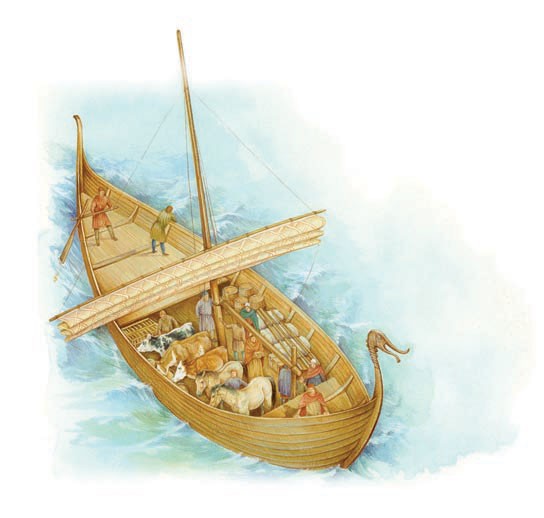
The sturdy and sleek design of their ships enabled the Vikings to make long voyages across seas and oceans as well as sail up the shallowest of rivers. The Vikings travelled all over Europe and beyond in their quest for trade and for new lands to settle. The Vikings were the first people to create permanent settlements on Iceland. During the 9th to 11th centuries, they also built settlements in Greenland, North America, the British Isles, northwestern France, Russia and along the southeastern coast of the Baltic Sea.

The Varangians
Around 860, Swedish Vikings began to venture across the Baltic Sea and along rivers, such as the Volga, into western Russia, Belarus and Ukraine. These people were known as the Varangians. Along the way they set up trading posts, where they collected furs and amber to trade for silver, silks and spices.
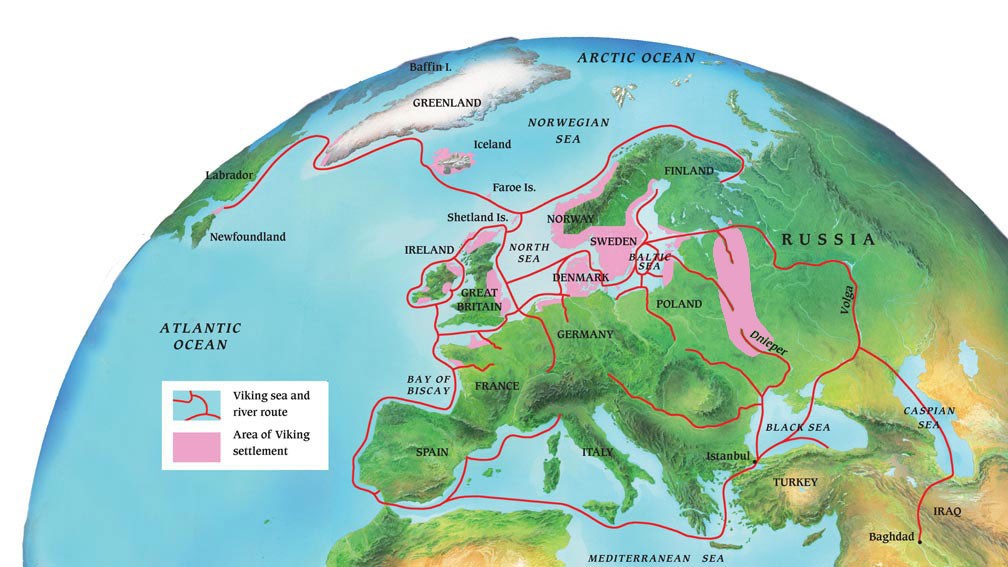
One group of Varangians, named after the Slavic name for the Vikings, the “Rus” (the origin of “Russia”), founded the towns of Novgorod and Kiev. These towns became major stations on the trading route between the Baltic Sea and the Caspian Sea. Varangian merchants also travelled down the River Dnieper and across the Black Sea to Byzantium (present-day Istanbul), the capital of the Byzantine Empire. Varangian warriors served as guards to the Byzantine emperors. Varangians even traded in Jerusalem, Baghdad and the wealthy Arab lands of the Middle East.
Iceland
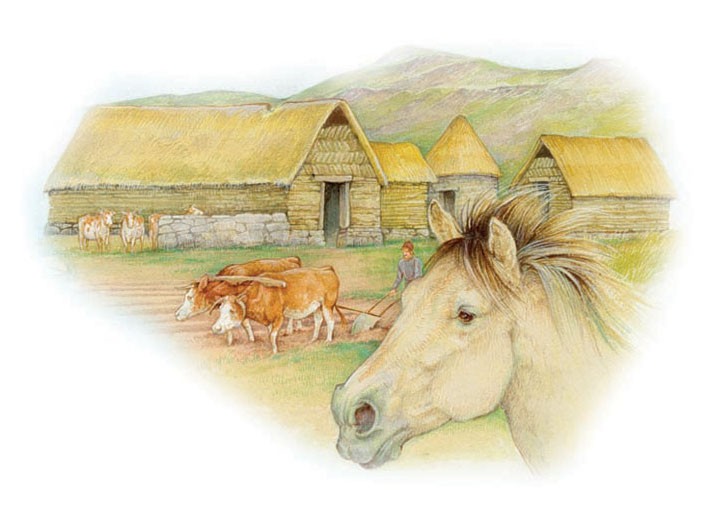
Iceland was discovered in the 860s, probably by Viking sailors from the Faroe Islands blown off course in an Atlantic storm. They called it Iceland because of the vast glaciers that covered much of the island. The first settlers came in 874, it was said to escape the rule of King Harald of Norway. In Iceland they could govern themselves.
Greenland
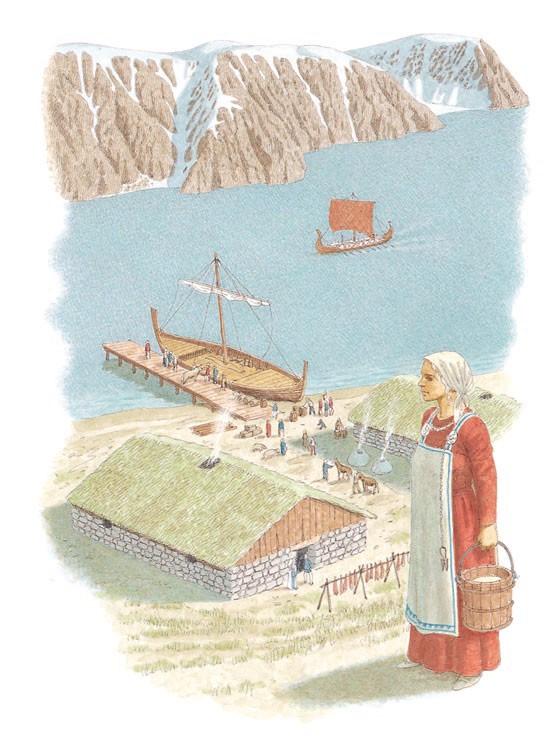
Banished from Norway, Erik the Red, a convicted murderer, arrived in Iceland around 965. In 982 he was exiled again and sailed in search of new lands. He returned to Iceland three years later with tales of a fertile “green land” to try to tempt others to join him there. Some Icelanders made the perilous journey to build new settlements on Greenland.
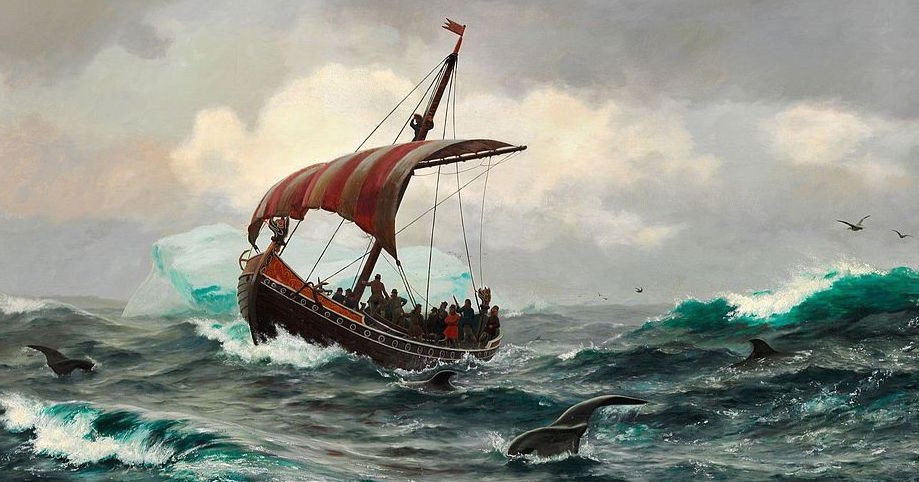
North America
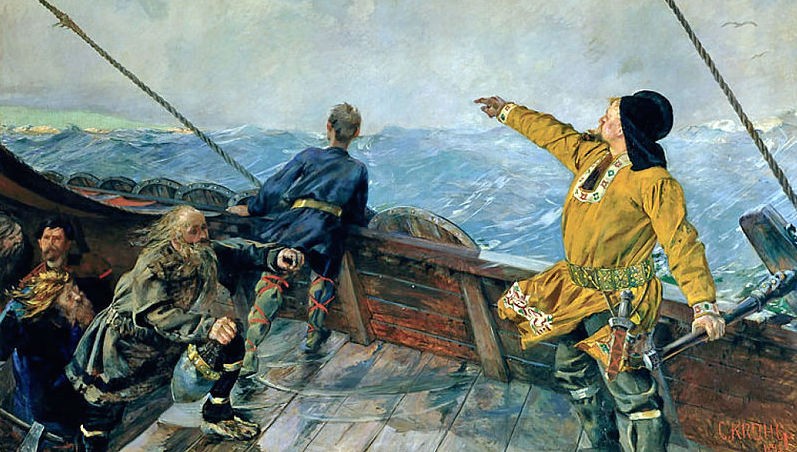
Druing the 990s, the Greenland Vikings started exploring the seas to the west. When Erik the Red’s son, Leif Ericsson, heard of a sighting of a distant shoreline made by Bjarni Herjolffson, he was determined to discover that land for himself. In around 1000, Leif crossed to Baffin Island, in northern modern-day Canada. The Vikings called this Helluland, or Land of the Flat Stones, after the shiny flat rocks they spotted on the coastline.

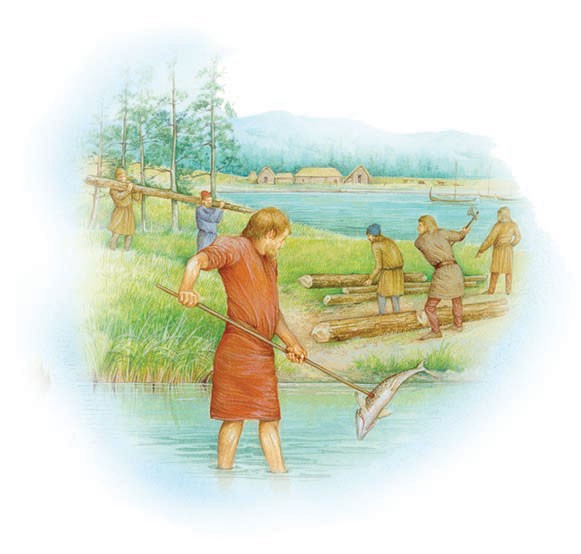
From there they travelled down the coast of Labrador, which they called "Markland" after the "mark" (woods) they found there. Here Lief became the first European to set foot on American soil. He spent winter in a place he called Vinland (probably present-day Newfoundland). Leif found grapes, salmon streams and pastures in Vinland (it may have been named after “vines”). Lief and his crew returned to Greenland the following spring.
Encounters with natives
According to Icelandic sagas (Old Norse tales and histories about Viking voyages and battles) Leif's brother Thorvald later repeated Leif’s voyage, this time encountering Native Americans (known to the Vikings as Skraelings) who attacked him and his men with stones and clubs. The Vikings drove them off, but not before Thorvald was shot with an arrow. This made him the first European to die in North America.
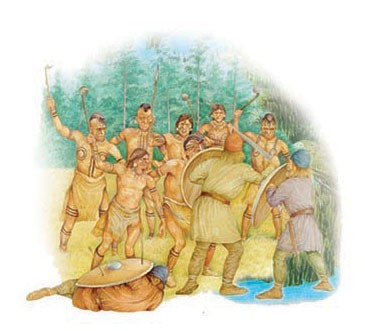
A later expedition, led by Thorfinn Karlsefni, lasted only three years. Far from home and outnumbered by the Skraelings, the Vikings left America forever. It would be almost 500 years before Europeans would try to settle in the Americas again.
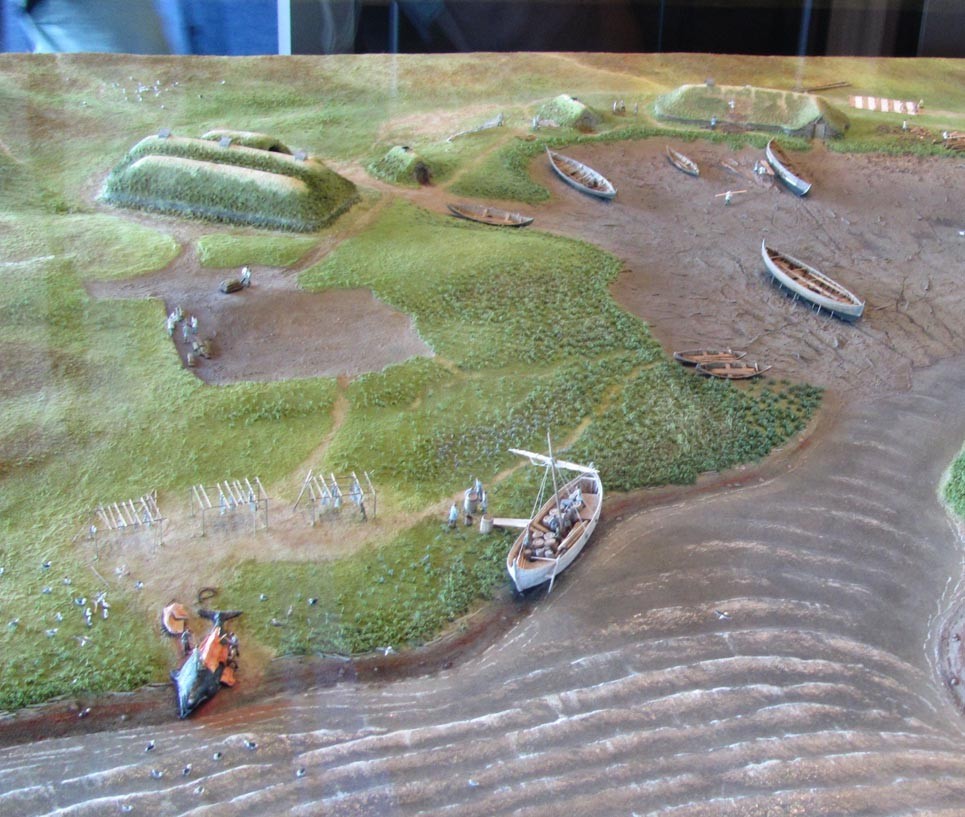
L'Anse aux Meadows
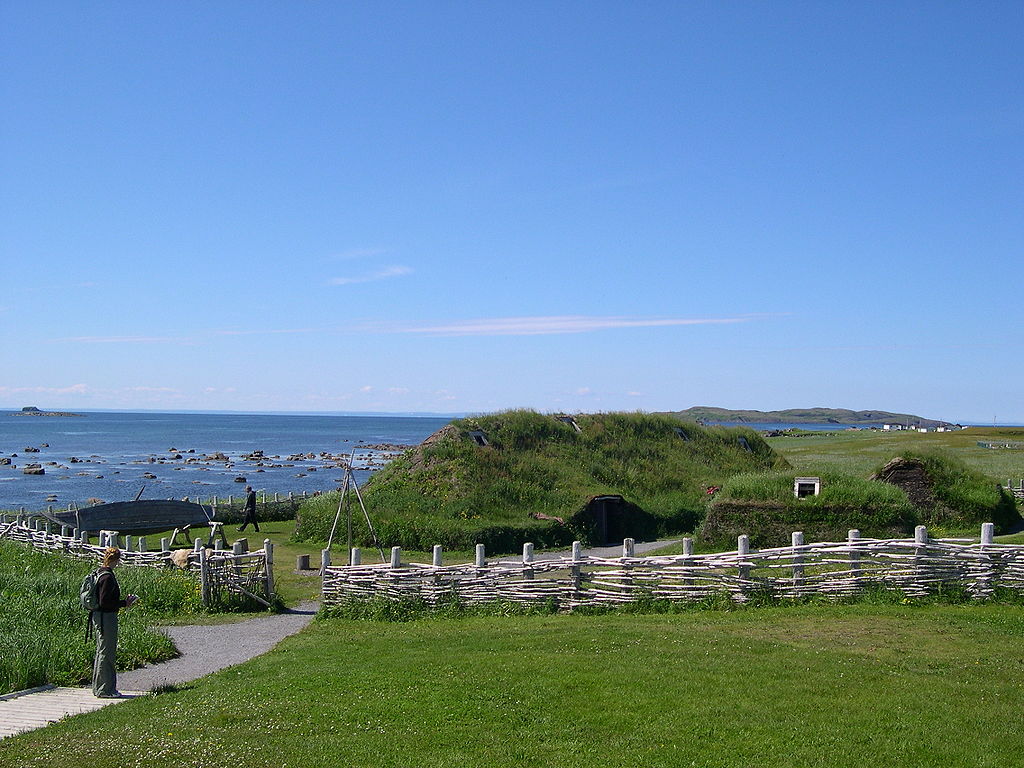
The remains of a Viking settlement, known today as L'Anse aux Meadows, were found at the northernmost tip of Newfoundland in 1960, leading many to think that this was Vinland. From the study of Icelandic sagas, which were written down in the 1200s, and dating artefacts (objects made by humans) discovered at the site, historians estimated that the settlement of L’Anse aux Meadows was occupied by Norse settlers between the years 990 and 1050. In October 2021 scientists announced they had established that L’Anse aux Meadows settlement was definitely occupied by the Vikings in 1021.
Logs used for buildings were excavated from the site and examined for traces of radiation released during a solar storm (a sudden burst of energy from the Sun, causing electrically charged particles that make up the solar wind to surge out across the Solar System) known to have occurred in the year 993. Each of the samples showed 28 growth rings had been formed after the one that bore evidence of the storm, meaning the trees were cut in the year 1021. There is also proof that they were cut by the Vikings and not by Native Americans: the logs had clean, low-angle cuts which could have been made only by metal tools. The indigenous inhabitants of the area did not have these, but the Vikings did.

Consultant: Philip Parker
pics
Without in any way limiting Q-files Ltd’s exclusive rights under copyright, any use of this publication to “train” generative artificial intelligence (AI) technologies to generate text is expressly prohibited. Q-files Ltd reserves all rights to license use of this work for generative AI training and development of machine learning language models.