
Europe

CITE
We have made every effort to follow citation style rules, but there may be some minor differences. If in doubt, please refer to the appropriate citation style manual.
Iceland. (2026). In Q-files Encyclopedia, Geography, Europe. Retrieved from
https://www.q-files.com/geography/europe/iceland
"Iceland." Geography, Europe, Q-files Encyclopedia, 31 Mar. 2026.
https://www.q-files.com/geography/europe/iceland.
Accessed 1 Nov. 2026.
Iceland 2026. Geography, Europe. Retrieved 1 November 2026, from
https://www.q-files.com/geography/europe/iceland
Geography, Europe, s.v. "Iceland," accessed November 1, 2026.
https://www.q-files.com/geography/europe/iceland


Iceland
The island of Iceland lies between Norway and Greenland in the North Atlantic Ocean, just south of the Arctic Circle. In geological terms, Iceland is recent in origin. Made entirely of volcanic rock, it first pushed up above the ocean's surface between 16 and 18 million years ago. More land is still being created, at a rate of about 5 centimetres each year. Iceland is made up of mountains and volcanoes, plateaus and wide valleys. In between the mountains are long fjords and sweeping glaciers. There are very few trees; the land is mostly covered with tundra vegetation: tough grasses and moss. Despite its northerly latitude, Iceland’s climate is mild. A warm ocean current, the Gulf Stream, helps keep its winters from becoming too cold. The weather is often wet and misty at the coast.
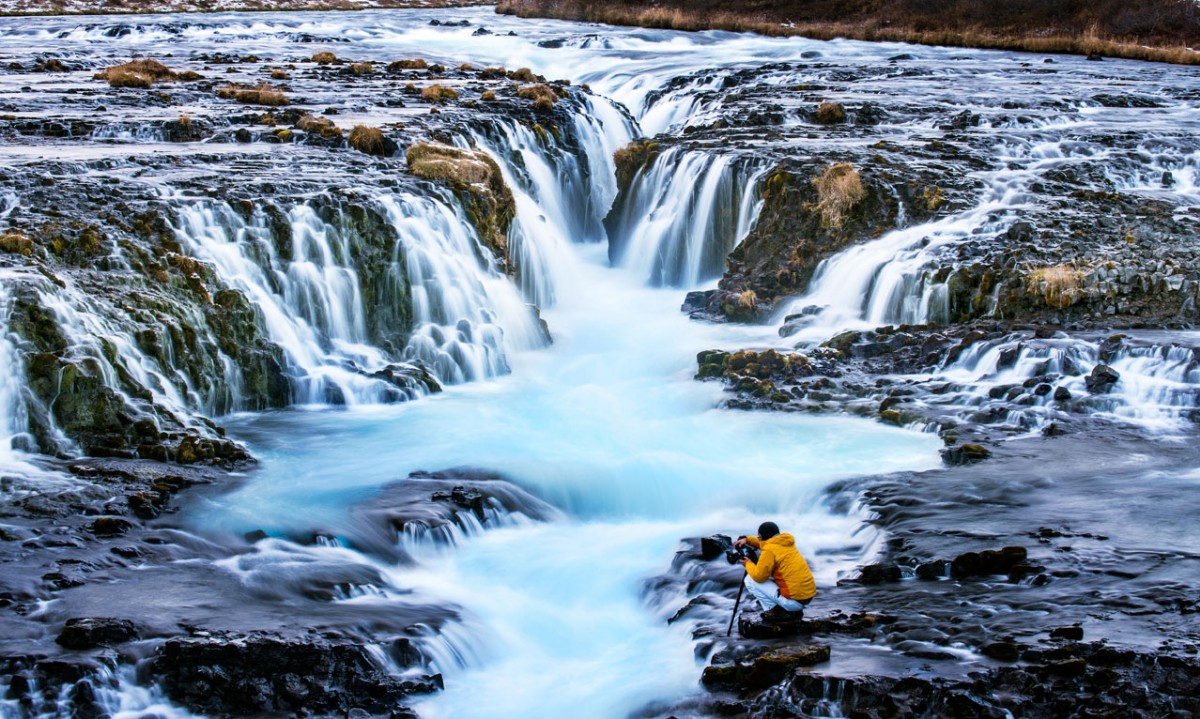


Volcanic Iceland
Iceland lies on the Mid-Atlantic Ridge, the boundary where the Eurasian and American tectonic plates meet. It is what geologists call a divergent boundary: the plate edges spread apart from one another as magma (melted rock) pushes up from beneath the Earth's crust to fill the gap. There are around 200 volcanoes in Iceland—and a number of them are highly active.

When Eyjafjallajökull, a volcano in southern Iceland, erupted in 2010, all the surrounding farms and 600 people who lived nearby had to be evacuated. Flights all over Europe were disrupted for months by the huge cloud of ash (forced higher by the steam plumes created as glacial ice melted) it threw up.

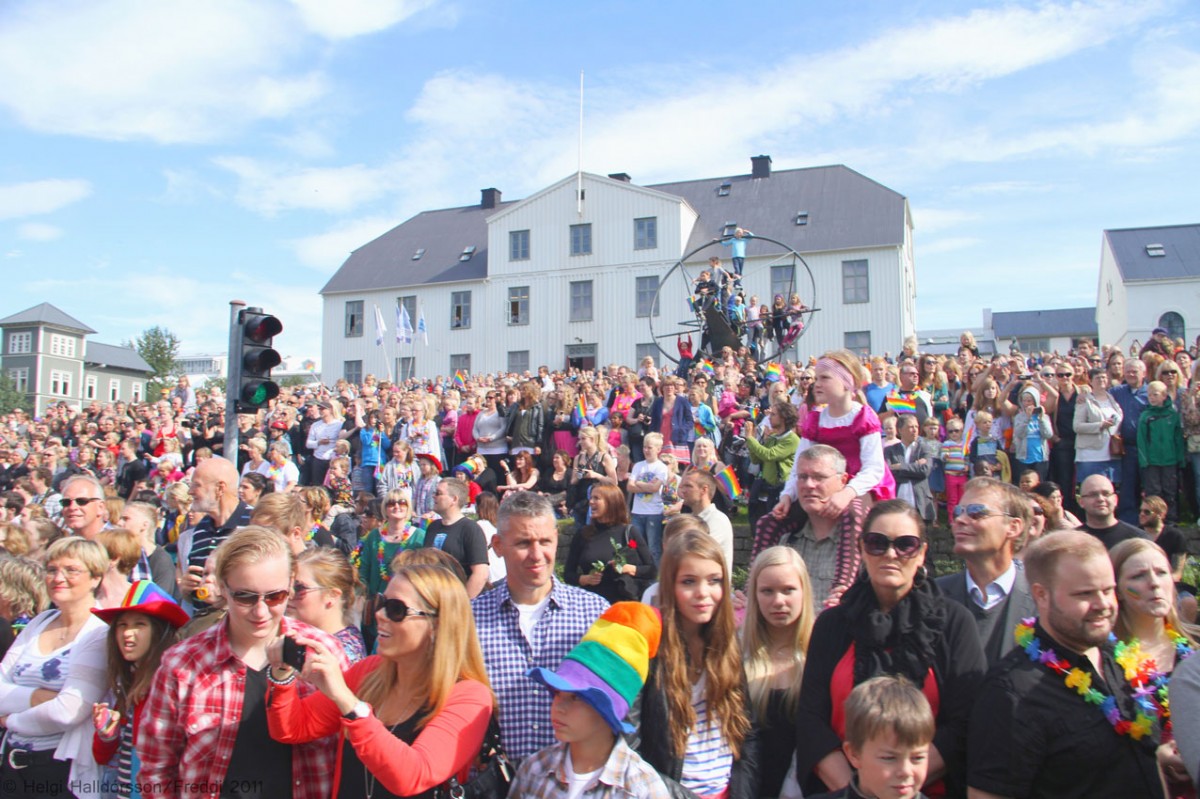
People
Iceland is the least densely populated country in Europe. It is home to fewer than three people per square kilometre. Icelanders have a high quality of living. Two-thirds of the population lives in and around the capital, Reykjavik.


Because Iceland has been isolated for much of its history, its ethnic make-up has remained unchanged for a long time. This means it has a “homogenous” population. As a result scientists and geneticists often study Icelanders to learn about how diseases run in families, for example.

Economy
At the end of 2008, Iceland’s three major banks collapsed and were taken over by the government. The collapse of its banking system sparked a serious economic crisis. Today, it is recovering. Most Icelanders work in services, such as education, retail, tourism and healthcare. Fishing is a very important industry: fish, such as cod, makes up around three-quarters of Iceland’s exports.


In rural areas, Icelandic farmers keep dairy cattle and sheep for their meat and wool. The growing season is very short—Iceland’s climate is best suited to hardy crops such as potatoes and turnips. Some fruits and vegetables can be grown in greenhouses; the rest of the country’s food has to be imported.
Green energy
Iceland has vast resources of renewable or “green” energy. Naturally (geothermally) heated water is used to heat most buildings in the capital, Reykjavik, and about 90% of all homes in Iceland. It is even used in underground pipes to heat the pavements and keep Reykjavik’s main squares free of ice and snow in winter.

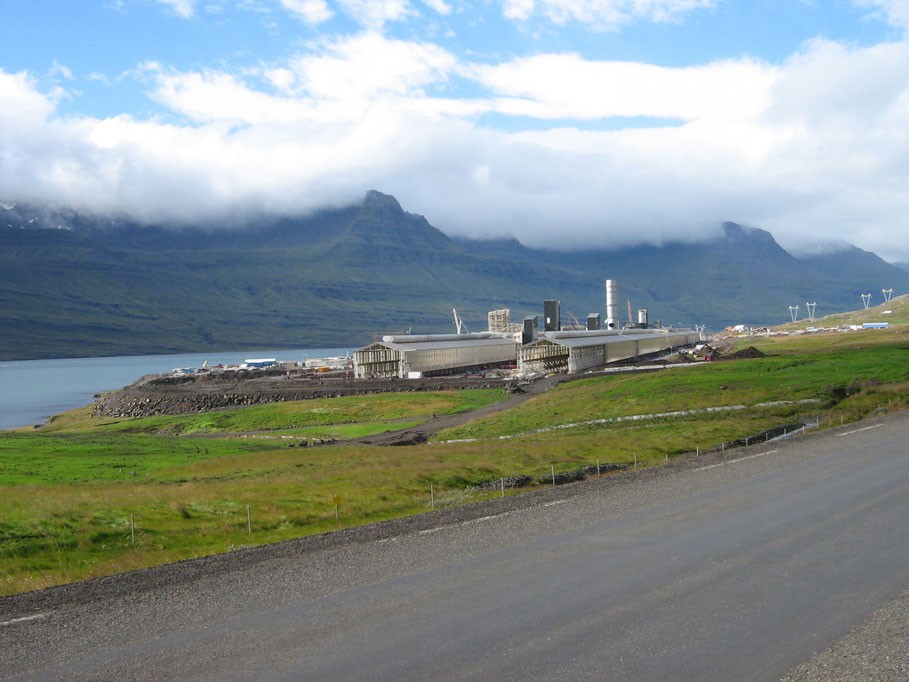
Iceland’s other major resource is hydro-electric power, generated by its fast-flowing rivers and waterfalls. This cheap, “green” energy has attracted manufacturing industries that use a lot of electricity to set up factories in Iceland, such as aluminium plants, because it reduces their energy costs.

Consultant: Nicholas Harris
Facts about Iceland
Population 383,726 (2024 estimate)
Area 100,250 sq km
Highest point Hvannadalshnúkur 2110 m (6923 ft) (Vatnajökull glacier)
Capital Reykjavik, population 139,875; Capital region pop. 247,590
Other major cities Akureyri (pop. 17,693)
Language Icelandic
Religions Christian (Lutheran) 76%, Christian (Roman Catholic) 3%, others and none 21%
Ethnicity Icelandic (Norse/Celtic) 94%, others 6%
Currency Icelandic króna (ISK)
Chief exports fish, seafood, aluminium, wool, animal feed, aircraft, medicines


History of Iceland
860
Norsemen from Scandinavia discover the island. The first Norse settlers arrive in 874.
930
A parliament, the Althing, is set up to make laws and settle disagreements
986
Erik the Red leads a party of Icelandic settlers to travel to Greenland
1000
Christianity is introduced to Iceland
1262
Iceland comes under Norwegian rule
1380
Norway and Denmark form a union when King Olaf of Denmark inherits the crown of Norway. Thus Norway's overseas colonies (then including Iceland) come under Olaf's rule
1402–04
Devastating plague hits Iceland, killing more than half of the island’s population. The plague returns in 1494–95 with an equally devastating effect.
1550
King Christian III of Denmark introduces Lutheran Christianity to Iceland; it replaces Catholicism as the country’s main religion
1602
Denmark places harsh trade restrictions on Iceland
1627
Hundreds of Icelanders are kidnapped by Barbary pirates.
1783
Laki volcano erupts, poisoning 50% of the country’s livestock and causing a huge famine
1787
The Althing, Iceland's parliament, is abolished (it is restored in 1845)
1814
The union between Norway and Denmark is broken up and Iceland becomes part of Denmark
1880
Iceland’s climate becomes colder and harsher, causing one quarter of its population to emigrate, mainly to Canada and the USA
1918
(1st December) Iceland becomes an independent nation. The Danish King remains head of state.
1939–45
Iceland remains neutral during World War II
1941
UK invades and occupies Iceland during World War II but it remains neutral
1944
Iceland becomes an independent republic, severing its last political ties to Denmark. Sveinn Björnsson becomes president.
1966
First broadcast of Icelandic state television
1970s
“Cod Wars”: Iceland extends the limits of its fishing grounds (50 nautical miles in 1972, 200 nautical miles in 1975) and comes into conflict with the UK
1973
Volcanic eruption in Vestmannaeyjar
1980
Vigdís Finnbogadóttir becomes president of Iceland, the first woman in the world to become elected head of state
1994
Iceland joins the European Economic Area
2002–07
Iceland’s economy becomes based on the financial sector and it becomes one of the world’s richest countries
2008
Iceland’s financial sector is thrown into crisis as its major banks collapse; 5000 people emigrate abroad
2009
Jóhanna Sigurdardóttir becomes Iceland’s first female prime minister (and the world’s first openly gay prime minister)
2010
Eyjafjallajökull, a volcano covered by an ice cap in southern Iceland, erupts, creating a vast ash cloud that disrupts European flights for several months
2023
Sundhnúkur crater chain, north of the town of Grindavík on the Reykjanes Peninsula, erupts with lava spewing from fissures in the ground; it erupts for a second time in January 2024
pics


Without in any way limiting Q-files Ltd’s exclusive rights under copyright, any use of this publication to “train” generative artificial intelligence (AI) technologies to generate text is expressly prohibited. Q-files Ltd reserves all rights to license use of this work for generative AI training and development of machine learning language models.