
Russia

CITE
We have made every effort to follow citation style rules, but there may be some minor differences. If in doubt, please refer to the appropriate citation style manual.
Early history of Russia. (2025). In Q-files Encyclopedia, History, Russia. Retrieved from
https://www.q-files.com/history/russia/early-history-of-russia
"Early history of Russia." History, Russia, Q-files Encyclopedia, 20 Jun. 2025.
https://www.q-files.com/history/russia/early-history-of-russia.
Accessed 21 Sep. 2026.
Early history of Russia 2025. History, Russia. Retrieved 21 September 2026, from
https://www.q-files.com/history/russia/early-history-of-russia
History, Russia, s.v. "Early history of Russia," accessed September 21, 2026.
https://www.q-files.com/history/russia/early-history-of-russia


Early history of Russia
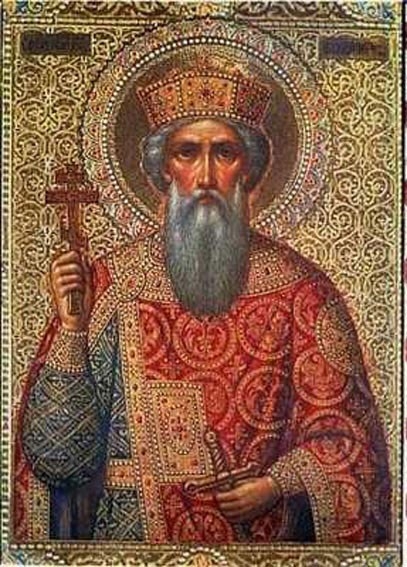
The name Russia comes from the Viking people who arrived at the town of Novgorod (in northwestern Russia) in the 860s. These Vikings were known as the “Varangian Rus”. They settled in the area between Novgorod and Kiev (known today as Kyiv), and it became known as the “land of the Rus”. Under the rule of the Varangian Rurik dynasty, the princely states of Kievan Rus expanded, eventually stretching from the White Sea in the north to the Black Sea in the south. Kievan Rus was united for a time under Prince Vladimir I (ruled 980–1015). He became a Christian in 988, and made Orthodox Christianity the official religion of his new state.
Mongol rule
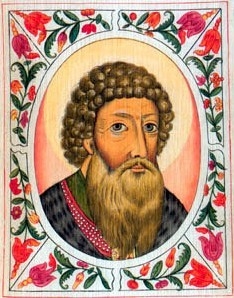
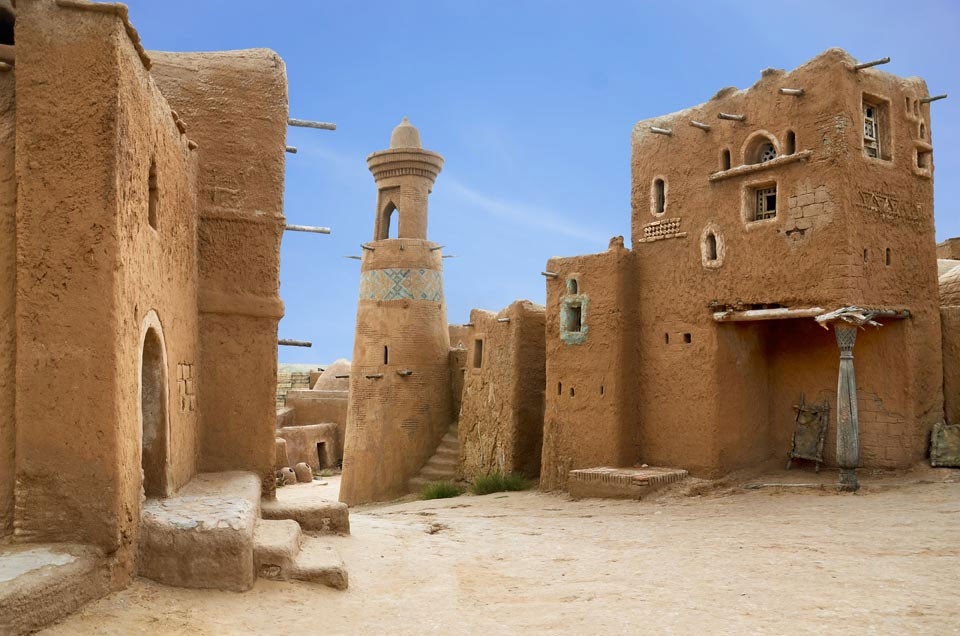
In 1223 Mongols (who were originally from Central Asia) attacked Russia, nearly reaching the capital city of Kiev. In further attacks in 1240 the Mongols sacked the city and devastated much of the land. Russia became part of the Mongol Empire, included in a region known as the “Golden Horde”. The Mongols forced their subject peoples to pay heavy taxes and in 1331 they began to entrust the task of collecting these taxes to the Prince of Moscow, Ivan I. At around the same time, the leader of the Orthodox Christian Church in Russia made Moscow his main centre. Kiev declined as the power of Moscow increased.
Defeat of the Mongols
The Mongols’ control over the Golden Horde grew weaker in the 1300s. In 1380 an army led by Prince Dmitri of Moscow defeated the Mongols at Kulikovo, near the River Don. A century later (in 1480), under the rule of Ivan III (ruled 1460–1505), Grand Prince of Moscow, Mongol power in Russia finally came to an end. Having annexed the Novgorod Republic, Ivan declared himself “Tsar of all Russia”, using the Slav version of the name of the Roman emperor, Caesar. From this time, all Russian leaders were known as tsars (or czars).

Ivan the Terrible
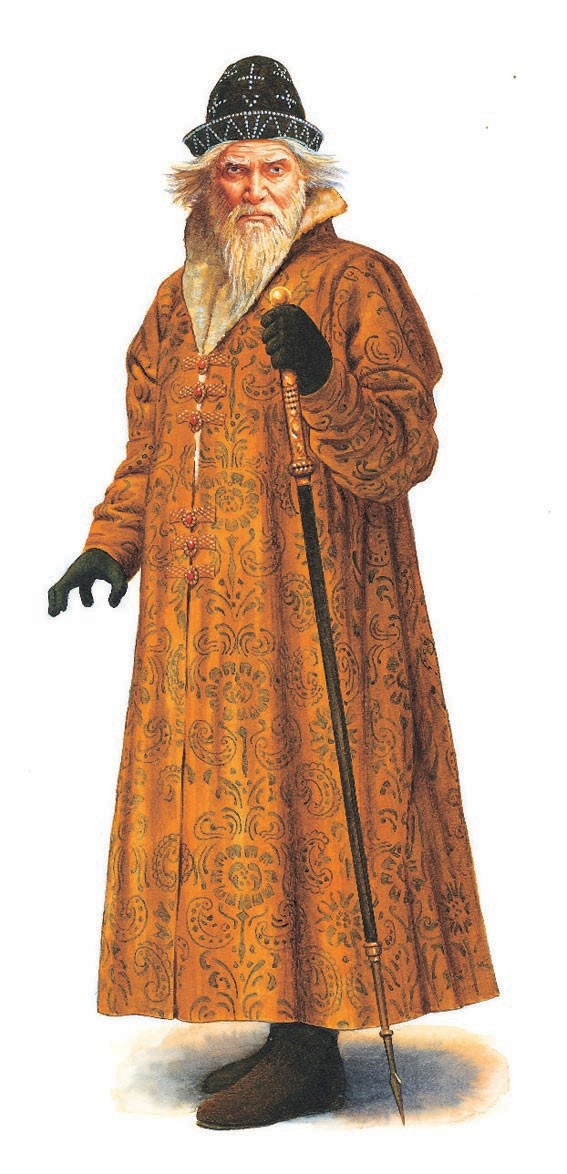
Ivan IV (ruled 1533–84) was the first Russian ruler to be crowned tsar, in 1547. He was the grandson of Ivan III (known as “Ivan the Great”). During Ivan IV's reign of terror, he ordered the murder of anyone he considered a threat. He even killed his own son in a fit of rage, in 1581.
The power of the new tsar extended across all of Russia, and his brutality was soon being felt by many of his subjects, earning him the name “Ivan the Terrible”. In 1565 Ivan set up a special police force in order to break the power of the Russian nobility. Noble landowners were thrown off their estates, and many were murdered. Ivan gave these estates to his officials. Many people fled from the area around Moscow.
From his palace in the state of Muscovy, Ivan set about expanding the Russian Empire. In 1552, his armies attacked and defeated the Tatars who ruled from their capital of Kazan in the east, and, four years later, he also conquered Astrakhan in the south. Russian forces drove on. Ivan also tried to expand Russia’s lands in the west, but his soldiers were beaten back by Polish and Swedish forces.
Cossacks
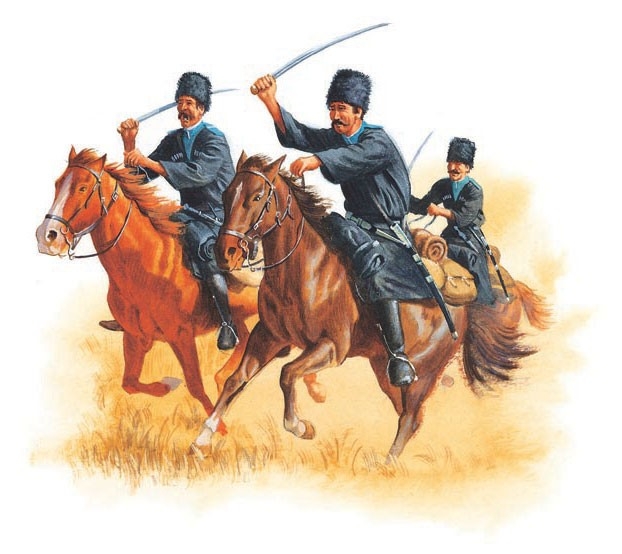
To help him take control of new lands and expand his empire, Ivan relied on the skills of Cossack soldiers (Cossack means “free warrior”). The Cossacks were from the regions of Ukraine and southern Russia.
The Cossacks were willing to fight on the side of Ivan in return for special privileges. They were well known for their bravery in battle and excellent horse-riding skills.
St Basil's Cathedral
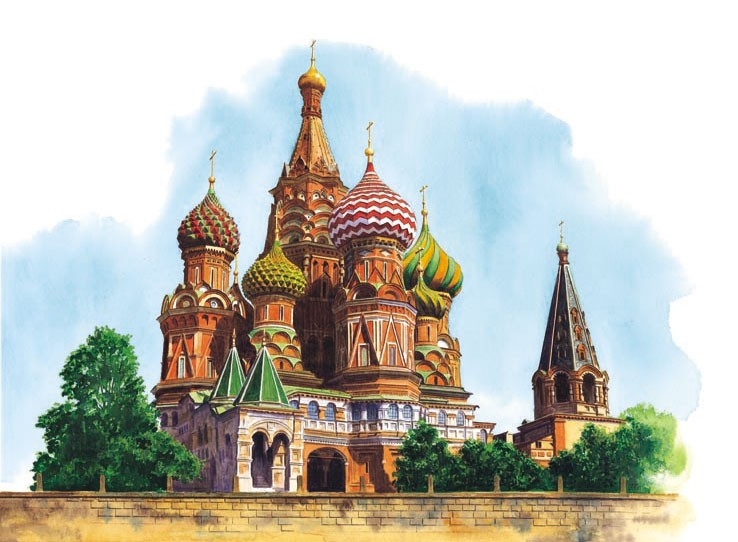
Ivan the Terrible ordered the building of St Basil’s Cathedral in Moscow. Work started on it in the 1550s. It was built to celebrate Ivan’s victories over the Tatars. St Basil’s stands inside the Kremlin, a fortified citadel in the centre of Moscow. Originally its towers were not so colourful—they were painted red with white decorations.
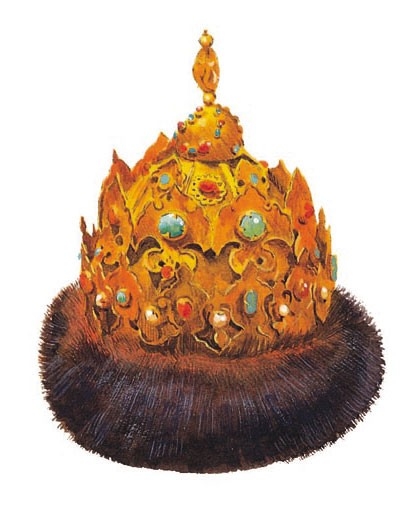
Crown of Kazan
Ivan’s “Crown of Kazan” commemorated the defeat of the Tatars of Kazan. Lined with sable fur, and made with gold and jewels such as pearls, rubies, red tourmalines and blue turquoise, the crown represented the great wealth Russia had gained through Ivan’s victories. It is on display in the Kremlin today and is the oldest crown in Russia.
The Romanovs
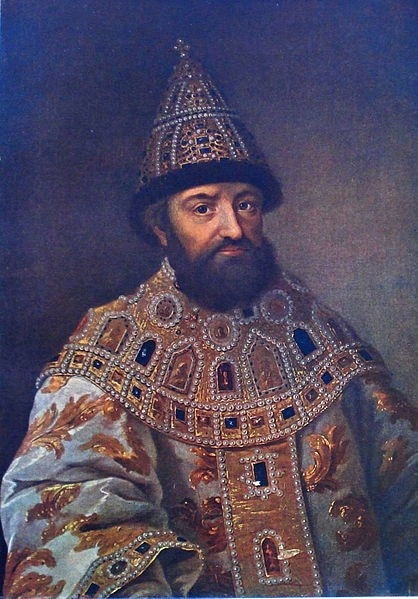
After the death of Ivan the Terrible in 1584, Russia entered a period known as the “Time of Troubles”, when civil wars and invasions rocked the whole of Russia. This period came to end in 1613 after the defeat of Polish invaders, and the election of Michael Romanov as the new tsar. The Romanov tsars were to rule Russia for the next 300 years.
Consultant: Philip Parker
pics
Without in any way limiting Q-files Ltd’s exclusive rights under copyright, any use of this publication to “train” generative artificial intelligence (AI) technologies to generate text is expressly prohibited. Q-files Ltd reserves all rights to license use of this work for generative AI training and development of machine learning language models.