
Famous leaders

CITE
We have made every effort to follow citation style rules, but there may be some minor differences. If in doubt, please refer to the appropriate citation style manual.
Franklin D. Roosevelt. (2022). In Q-files Encyclopedia, History, Famous leaders. Retrieved from
https://www.q-files.com/history/famous-leaders/franklin-d-roosevelt
"Franklin D. Roosevelt." History, Famous leaders, Q-files Encyclopedia, 5 Dec. 2022.
https://www.q-files.com/history/famous-leaders/franklin-d-roosevelt.
Accessed 21 Sep. 2026.
Franklin D. Roosevelt 2022. History, Famous leaders. Retrieved 21 September 2026, from
https://www.q-files.com/history/famous-leaders/franklin-d-roosevelt
History, Famous leaders, s.v. "Franklin D. Roosevelt," accessed September 21, 2026.
https://www.q-files.com/history/famous-leaders/franklin-d-roosevelt


Franklin D. Roosevelt
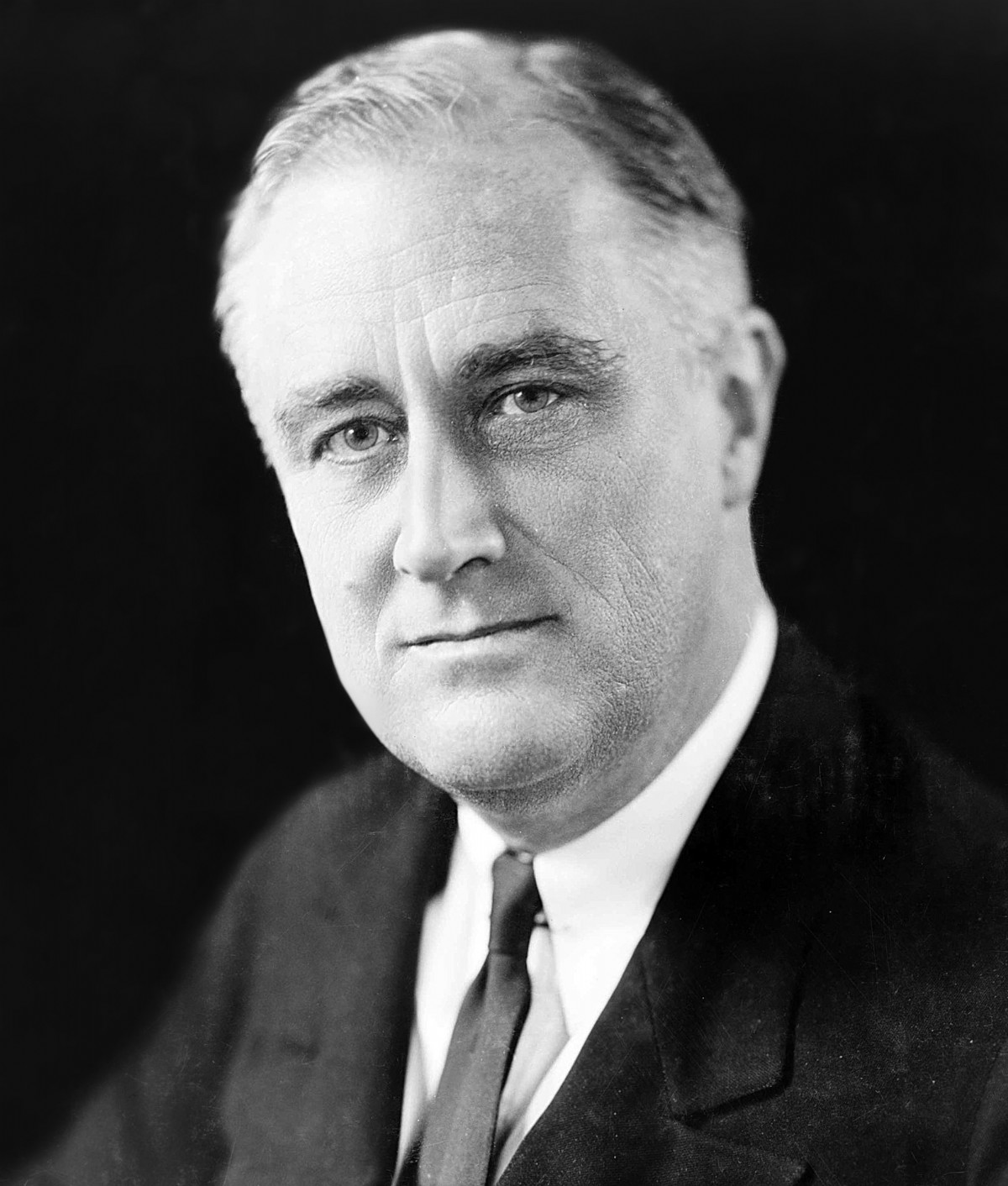
Franklin D. Roosevelt (1882–1945) was the 32nd president of the United States, and the only US president to be elected to office four times. Roosevelt—often known by his initials FDR—led the United States through the crisis of the Great Depression with his reforms and programmes known as the New Deal. He took the United States into World War II after the Japanese attack on Pearl Harbor, and was an active and skilful military commander. He also played an important role in setting up the United Nations. A central figure in world events of the 20th century, Roosevelt is considered by many historians to be one of the greatest US presidents.
Early life
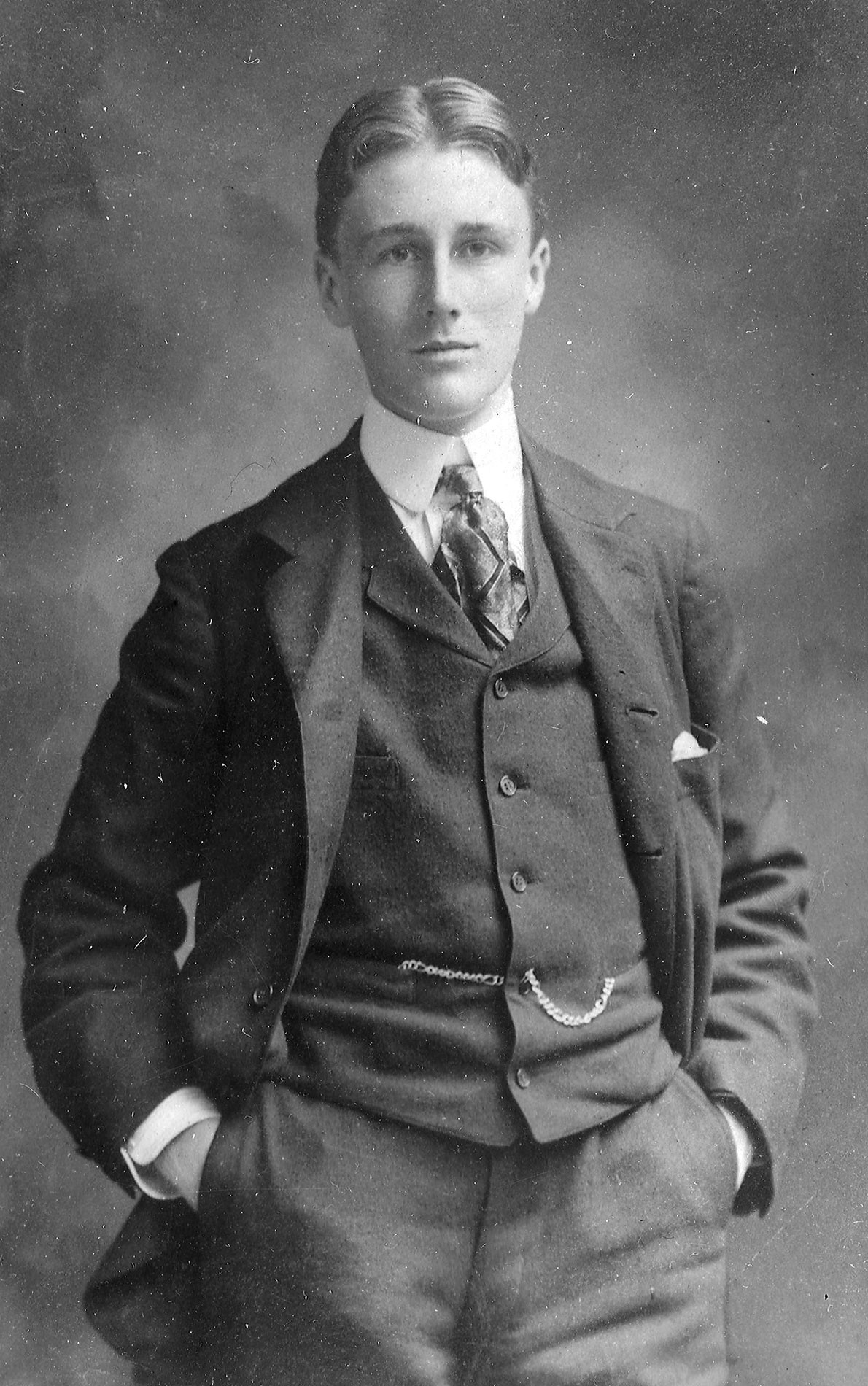
Franklin Delano Roosevelt was born on 30th January 1882 into a wealthy New York family. Both at home and at school he was taught the Christian duty of looking after those less fortunate than himself. Roosevelt went to Harvard University in 1900. In 1901, Theodore Roosevelt, a distant relative, became US president. In 1902, Franklin met Theodore’s niece, Eleanor Roosevelt. The two became engaged, and were married in March 1905. Eleanor and Franklin had six children, one of whom died in infancy.
Polio
After graduating from Harvard, Roosevelt started on a career in law. But, inspired by the example of Theodore Roosevelt, he began to pursue a career in politics as a Democrat. He was elected state senator for New York in 1910, and later rose to become assistant secretary to the US Navy, a post he held throughout World War I. In 1920, Roosevelt was chosen to be candidate for US vice-president, although the Democrats were defeated on this occasion.
In August of the following year, disaster struck when Roosevelt fell ill with polio, a disease that attacks the nervous system and often causes paralysis. Roosevelt lost the use of his legs, and, although he was able to walk with help in later years, he used a wheelchair for the rest of his life. Although a terrible blow, Roosevelt refused to allow this disability to end his career.

Great Depression
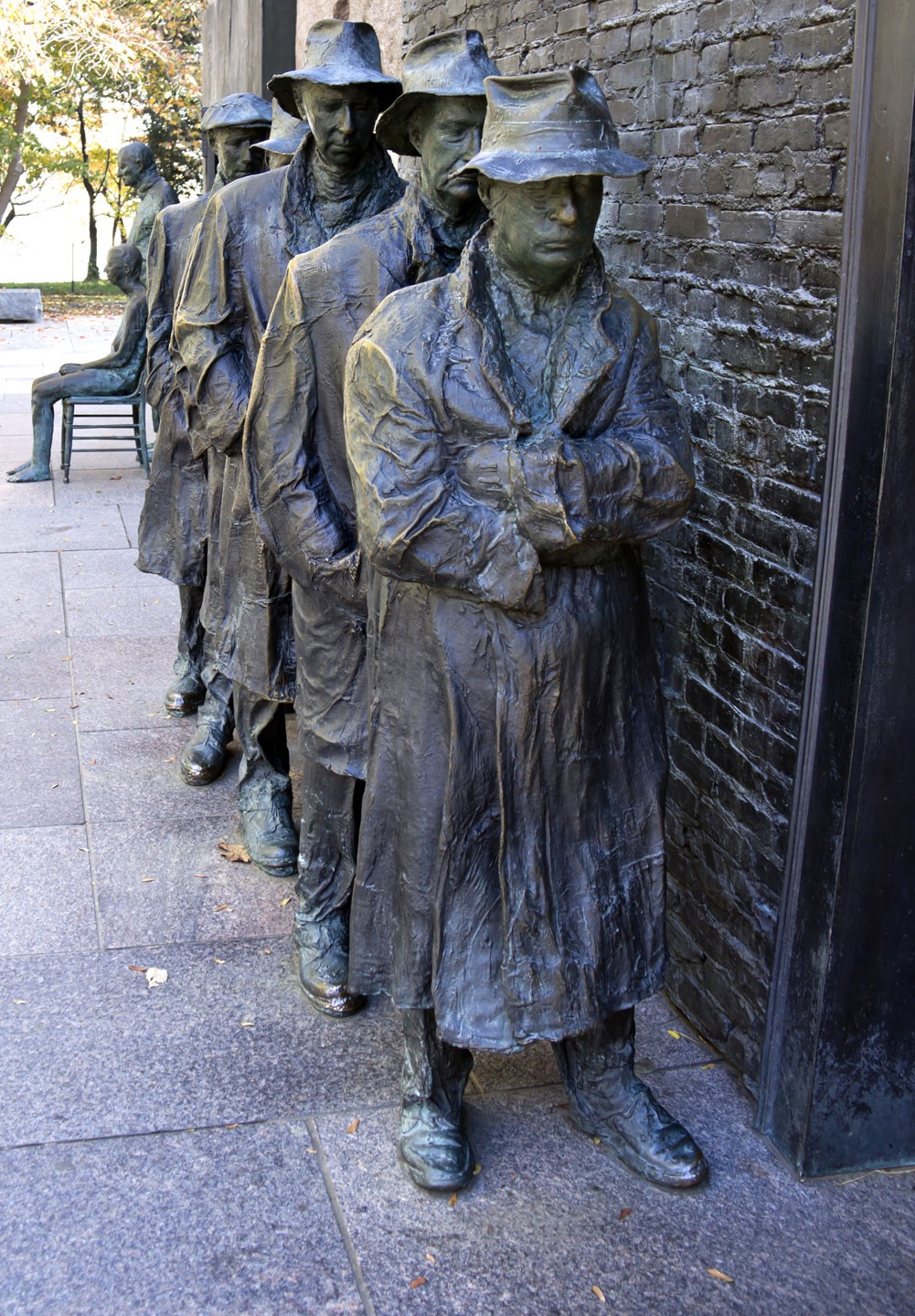
In 1929, the New York stock market crashed, throwing the US economy into chaos and marking the beginning of the Great Depression. Millions of Americans lost their homes and their savings. Millions more found themselves unemployed as factories shut down and businesses became bankrupt.
In 1932, Roosevelt defeated Herbert Hoover to become US president. Roosevelt offered the American people a strategy for economic recovery. In his acceptance speech he said: “I pledge myself to a new deal for the American people ... This is more than a political campaign; it is a call to arms.”
New Deal
Roosevelt’s New Deal strategy was to provide relief to the poor and unemployed, but he also knew that recovery would be impossible unless people had confidence to spend and invest. He took emergency measures to prevent people from taking all their money out of the banks, which threatened to shut down the entire banking system.

Recovery was driven by programmes that pumped huge amounts of money into the economy, for example through the Tennessee Valley Authority, a scheme to build dams and improve flood control in the Tennessee river basin. Reforms included the National Industrial Recovery Act (NRA), which forced businesses to accept controls on prices. In 1936, Roosevelt ran for president a second time, and despite some opposition to the New Deal, he won the election easily. He pressed on with more programmes, including laws to establish maximum working hours and minimum wages.
Lend-Lease
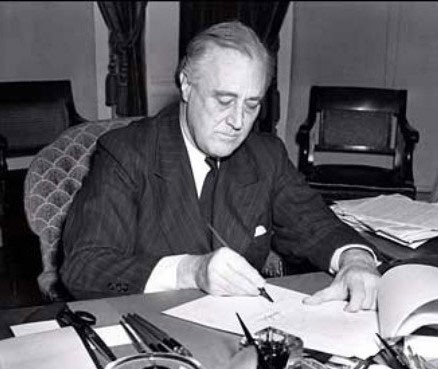
In 1939, World War II broke out in Europe. While remaining neutral, Roosevelt allowed the Allies (Britain and France) to buy arms and supplies from the USA. Roosevelt also became a close personal friend of the British prime minister, Winston Churchill. As France fell to Nazi Germany, and Britain became isolated, Roosevelt offered further help to the Allies. In 1941 he passed the Lend-Lease Act, by which the USA provided Britain, China and later the Soviet Union with military supplies, which they could pay for at a future date.
The Four Freedoms
In 1940, Roosevelt stood again for president, stressing his intention to do everything he could to keep the USA out of the war. He was elected to serve a third term, but he was soon arguing the case for US involvement in the war. In January 1941 he made a speech outlining the "Four Freedoms": freedom of speech, freedom from want, freedom of worship, and freedom from fear. These freedoms should be enjoyed by people everywhere in the world—and they were worth fighting for.

Pearl Harbor
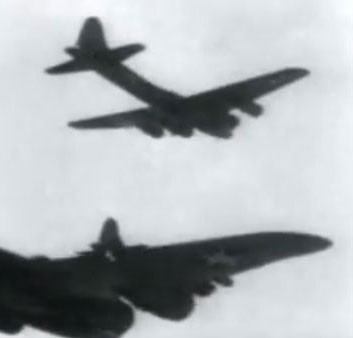
During 1940, Japan began to occupy parts of Southeast Asia. In response, Roosevelt cut off supplies of oil to Japan. Then, on 7th December 1941, the Japanese launched an attack on the US Pacific Fleet at Pearl Harbor in Hawaii. The attack crippled the fleet and killed thousands of US military personnel and civilians. This action brought the USA into World War II. Roosevelt worked closely with his military leaders on battle tactics. He also met frequently with Churchill, and with the Soviet leader Stalin, to plan the defeat of the Axis Powers: Germany, Italy and Japan.
Failing health
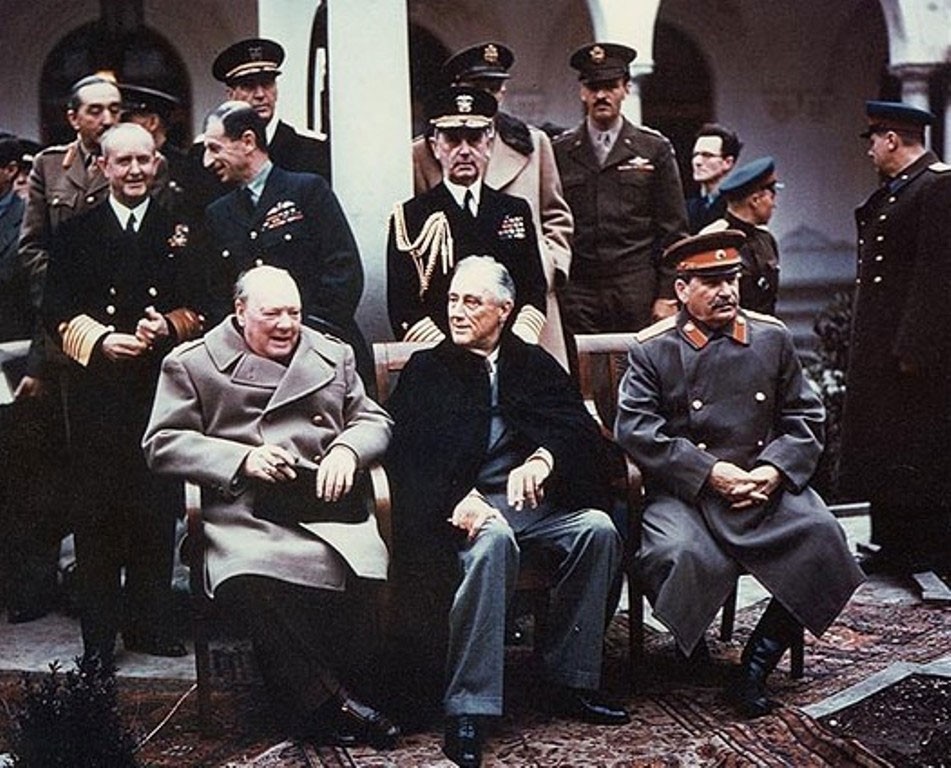
At the election of 1944, Roosevelt was elected for a fourth term, something that had never happened before. He campaigned for the setting up of the United Nations. In spite of failing health, he attended the Yalta Conference in the Crimea in February 1945, where he, Churchill and Stalin discussed plans for the peace after the war. On 12th April 1945, Roosevelt was taking a rest at Warm Springs, Georgia, when he suddenly collapsed. He died soon afterwards. His death was greeted with shock and grief by a public that had known little about his failing health. Vice-president Harry S. Truman was quickly sworn in as the new president of the USA. Less than a month later, the war in Europe came to an end.
Consultant: Philip Parker
pics
Without in any way limiting Q-files Ltd’s exclusive rights under copyright, any use of this publication to “train” generative artificial intelligence (AI) technologies to generate text is expressly prohibited. Q-files Ltd reserves all rights to license use of this work for generative AI training and development of machine learning language models.