
Construction

CITE
We have made every effort to follow citation style rules, but there may be some minor differences. If in doubt, please refer to the appropriate citation style manual.
Roads. (2026). In Q-files Encyclopedia, Technology, Construction. Retrieved from
https://www.q-files.com/technology/construction/roads
"Roads." Technology, Construction, Q-files Encyclopedia, 13 Mar. 2026.
https://www.q-files.com/technology/construction/roads.
Accessed 21 Sep. 2026.
Roads 2026. Technology, Construction. Retrieved 21 September 2026, from
https://www.q-files.com/technology/construction/roads
Technology, Construction, s.v. "Roads," accessed September 21, 2026.
https://www.q-files.com/technology/construction/roads


Roads
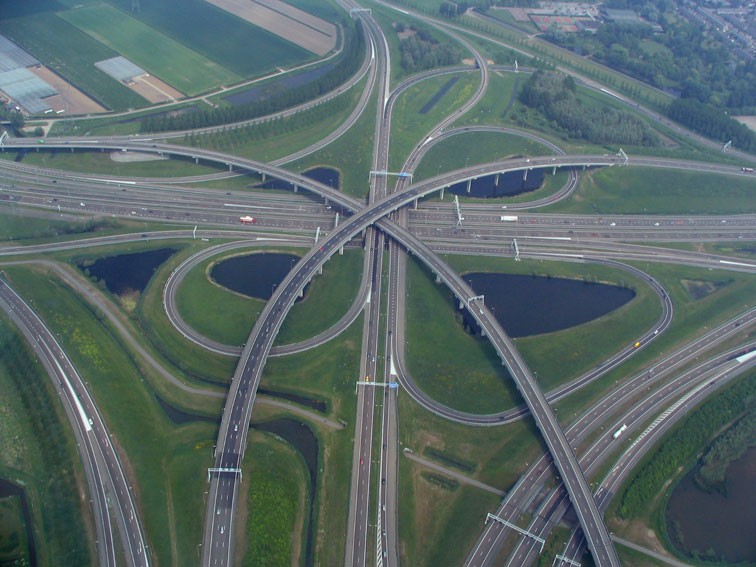
A road is a wide route or passageway which has been smoothed and often surfaced to allow people, animals or vehicles to travel more easily across the ground. Roads can be single-track or have a number of carriageways (lanes or roadways) for vehicles to travel along. In ancient times, roads were built as trade routes, allowing merchants to travel between the towns and cities, in, for example, the Roman and Persian empires. Because road-building was expensive, the number and quality of roads were a reflection of an empire’s wealth and power. In many parts of Europe, there are Roman roads still in use today, although they have all been resurfaced many times.
Early road-building
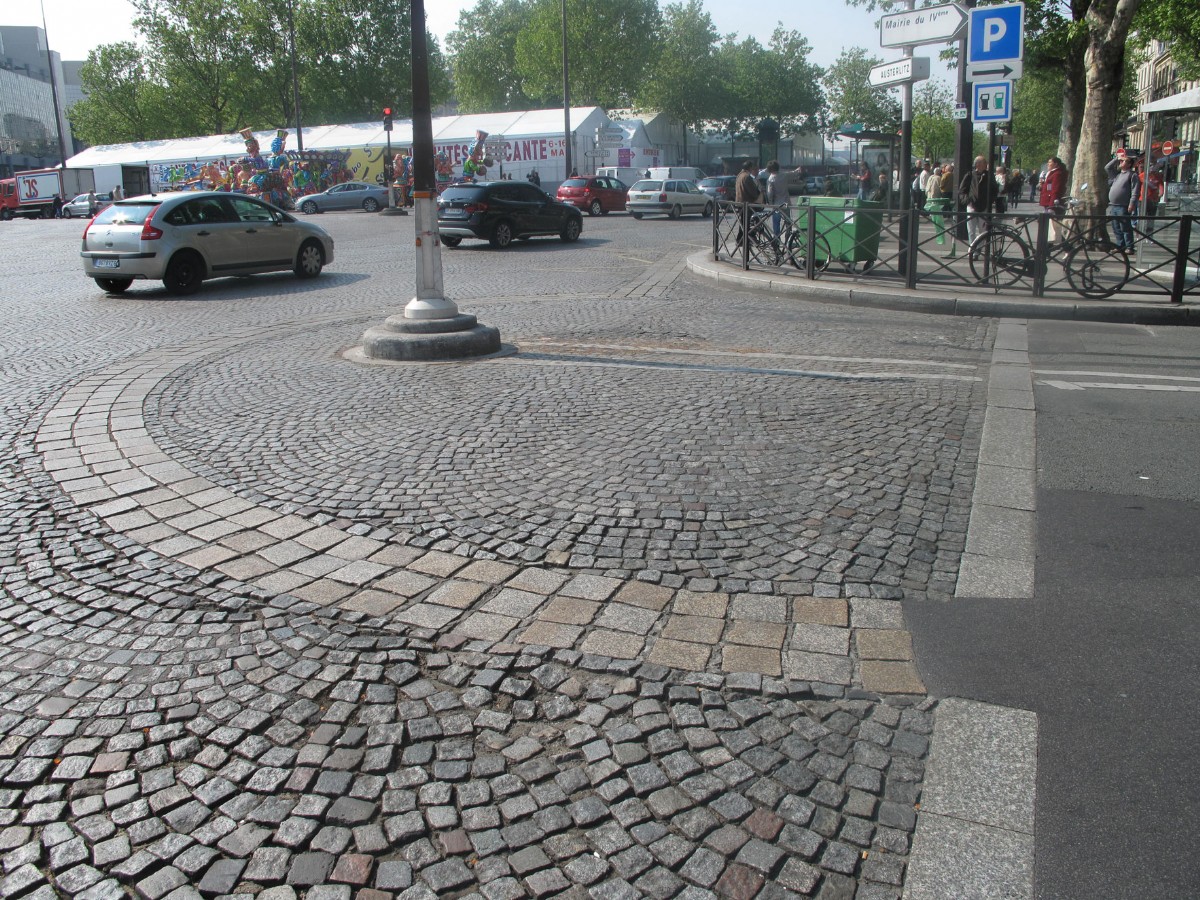
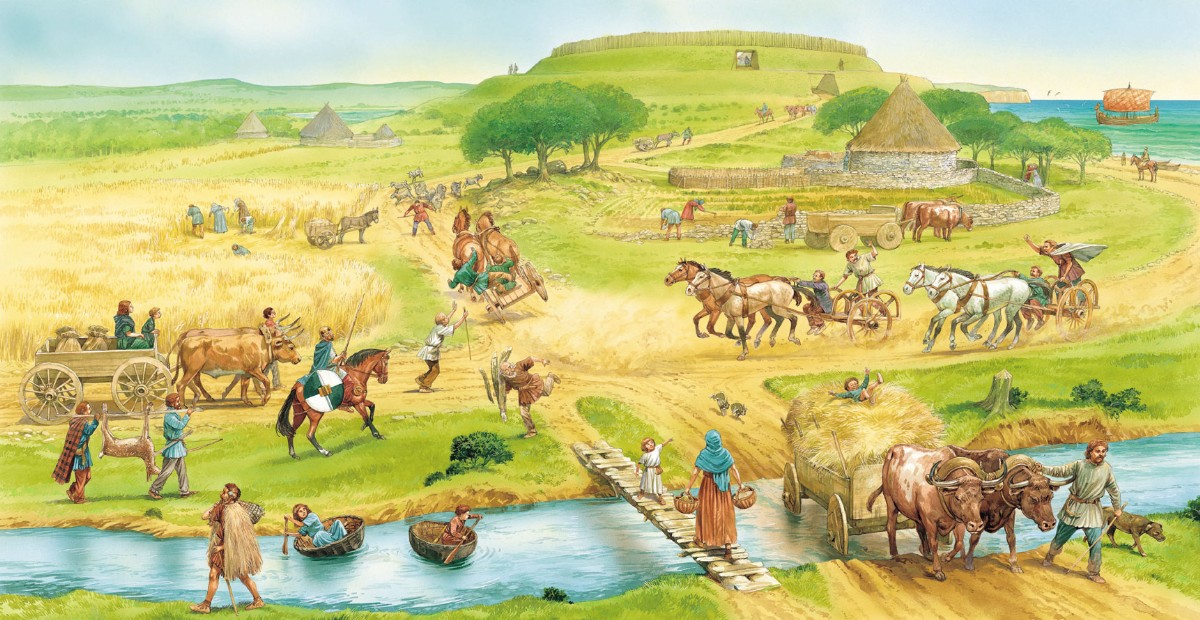
The first roads were little more than dirt tracks. During the Stone Age, people used pack animals such as horses or donkeys to drag heavy loads on sleds. For this, it was necessary improve the tracks’ surfaces by making them flatter and wider so the animals could walk along them safely. By around 2000 BC, vehicles with wheels had been invented, so a new type of road was needed, with flat, level surfaces for wheels to run over smoothly. Some roads were paved with cobblestones: large rounded pebbles gathered from beaches or river beds. The stone-cutting tools invented during the Bronze Age enabled workers to cut stone more easily, so roads paved with stone, often granite slabs known as setts, became more common.
Roman roads
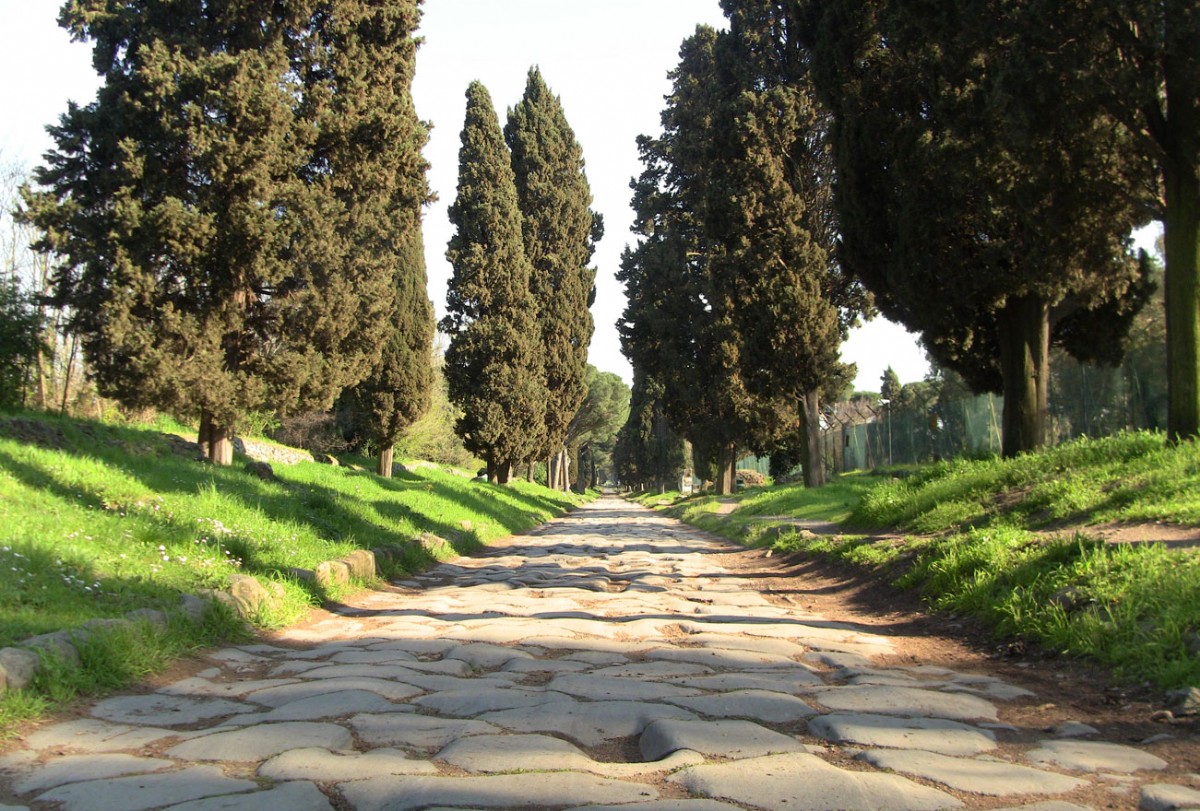
The Romans used their engineering expertise to build long-lasting, straight roads. First, surveyors plotted the course of the road, making it as straight as possible, as this would be the shortest route between places and minimize both the amount of material needed to build them and the repairs that might later be required.
Then the workers dug out a trench which they partially filled with rubble. Next, they added layers of stones and gravel, before creating a top layer of flat stone slabs set in cement. This they tamped (pushed) down so the slabs were firm and even. Finally, they dug ditches along either side of the road to serve as drains. Workers could construct up to 300 metres (1000 feet) of road per day.


Road surfaces
Methods of road-building hardly changed until the early 19th century, when a Scottish engineer, Thomas Telford (1757–1834) came up with an improvement. Telford’s design raised the centre of the road's foundations slightly so that water could drain away to either side. This building technique is still used today.
At around the same time, another Scottish engineer, John Loudon McAdam (1756–1836), designed a road which was paved with several layers of increasingly smaller stones, produced from crushed rock. As the traffic—mostly wheeled horse-carts—used the road, the stones settled and locked together to form a smooth surface, which became known as “macadam”, after its inventor.
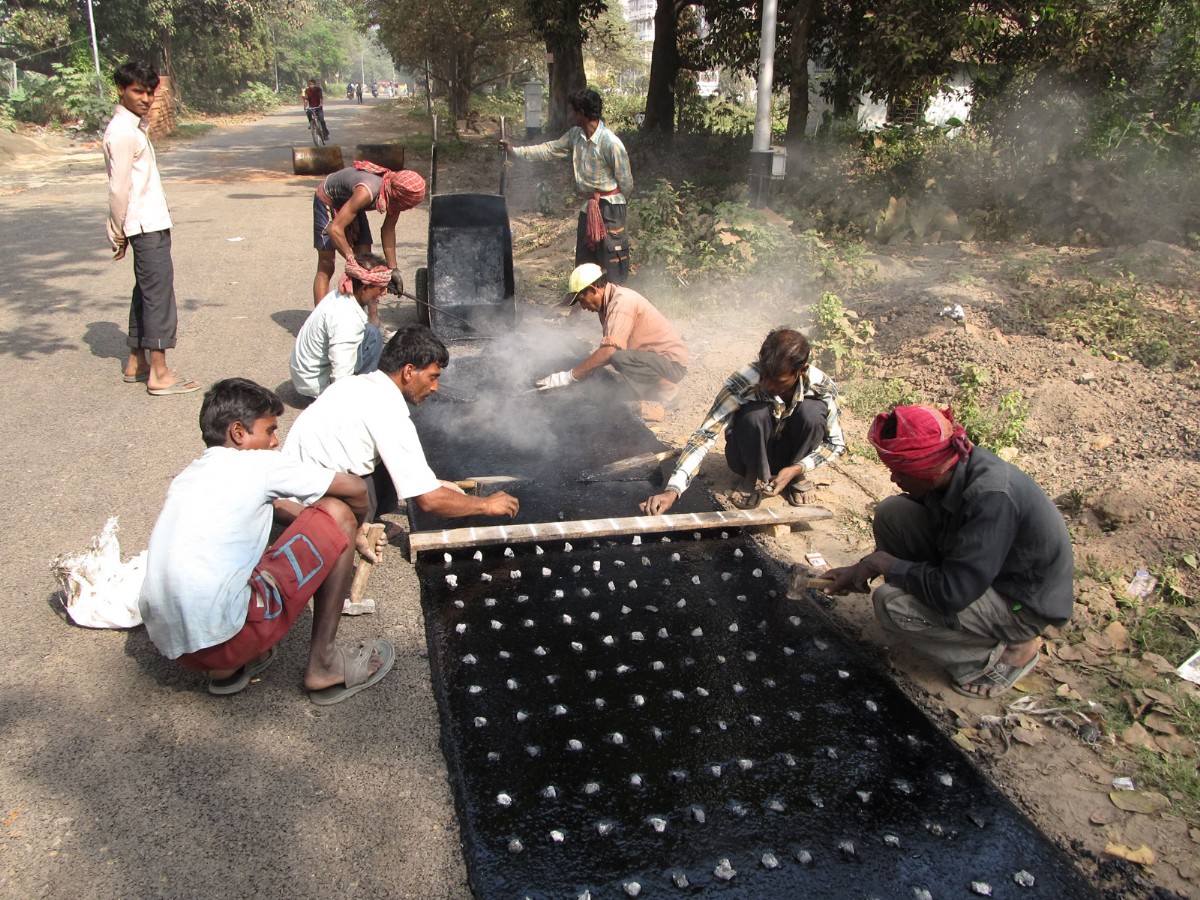
Macadam roads became easily rutted and dusty, so a few roads were sealed with a mixture of tar (a thick, oily, dark substance left over from the process of producing gas (for heating and lighting) from coal and sand. By the early 20th century and the invention of the motor car, “pitch macadam” surfaces, as they were known, had become much more common. In 1901, tarmac (tarmacadam) was patented: a mixture of small stones and tar that was spread on the road and pressed flat by a steamroller.
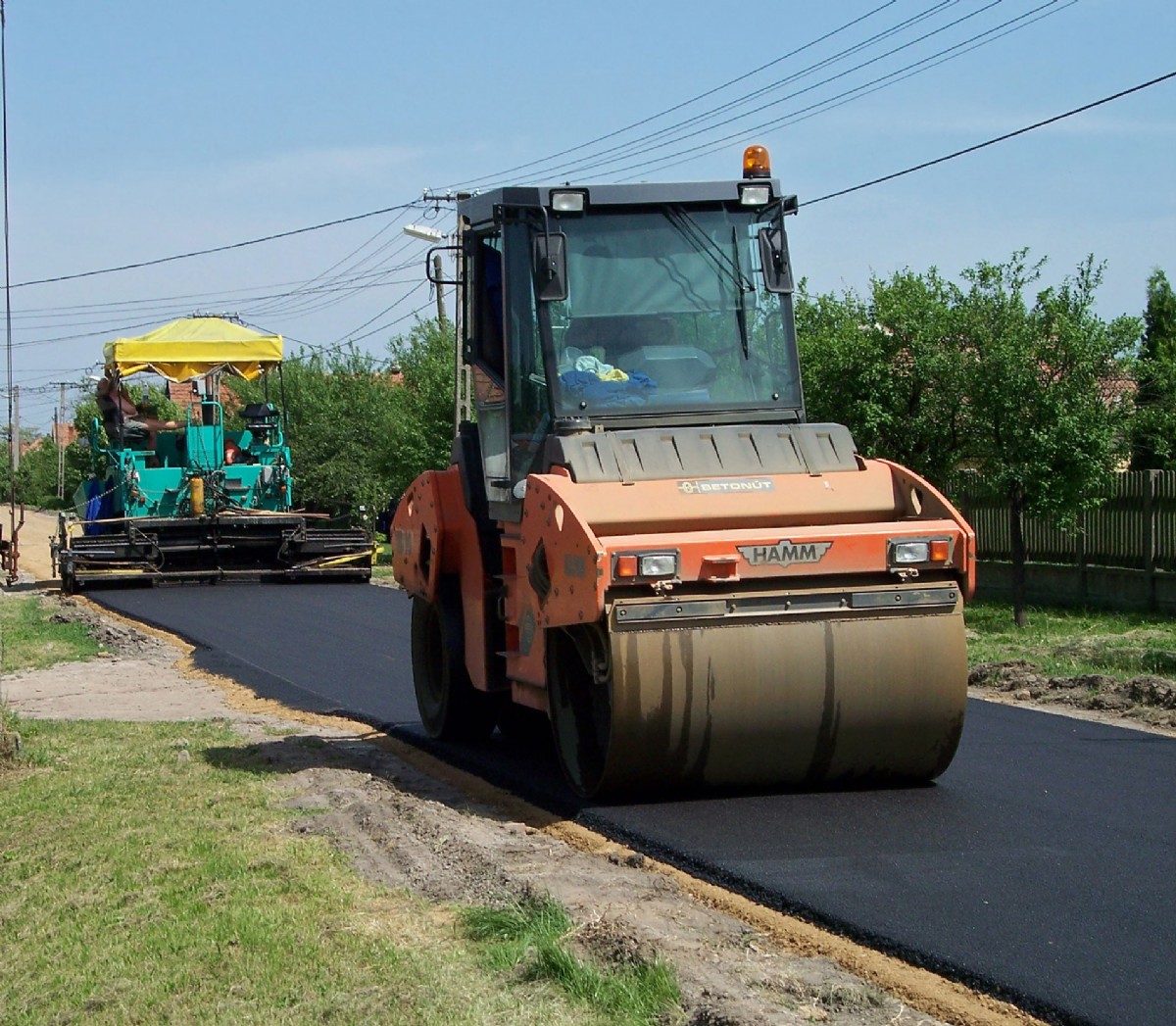
As oil production increased, the by-product asphalt (also known as bitumen)—which is less likely to melt at high temperature than tar—was used instead. Asphalt is used as a binder that mixes with particles of crushed stone, called aggregate, to create what is known as asphalt concrete. This largely replaced tarmac.
Porous asphalt
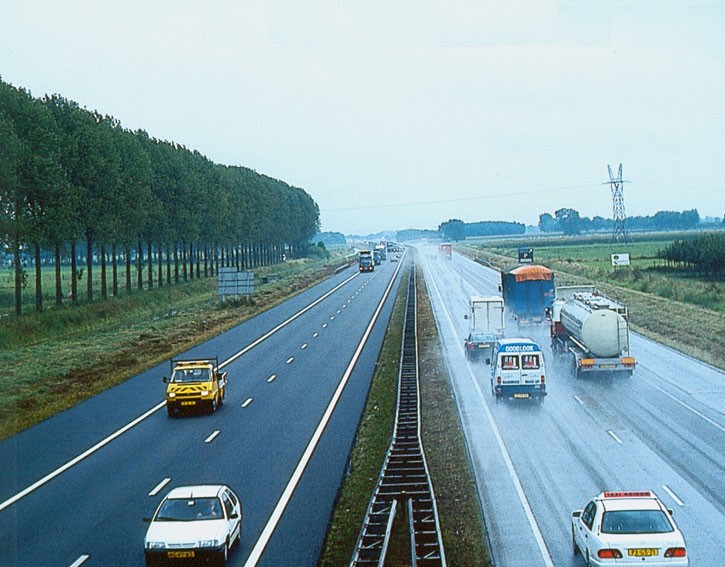
To reduce the noise made by vehicles on roads—especially in wet conditions—porous asphalt is now often used as a surface material when building new roads. Fine aggregates are left out of the asphalt mixture, leaving open small gaps in the material, called pores. Water passes through the pores into a reservoir beneath the surface, where it evaporates or seeps slowly into the soil. To ensure the surface material keeps its strength, fibre is added to the asphalt mix.
Designing a road
A road is designed by civil engineers, who decide on the exact route it will take. They take into account how much traffic will pass along the new road as well as how to make it as safe as possible for vehicles and pedestrians to use. They come up with a design for the road that ensures that bends will not be too sharp and hills not too steep. After the design is approved, the exact route, including the details of its curves (alignment) and its ups and downs (profile), is marked out by a surveyor.


Construction
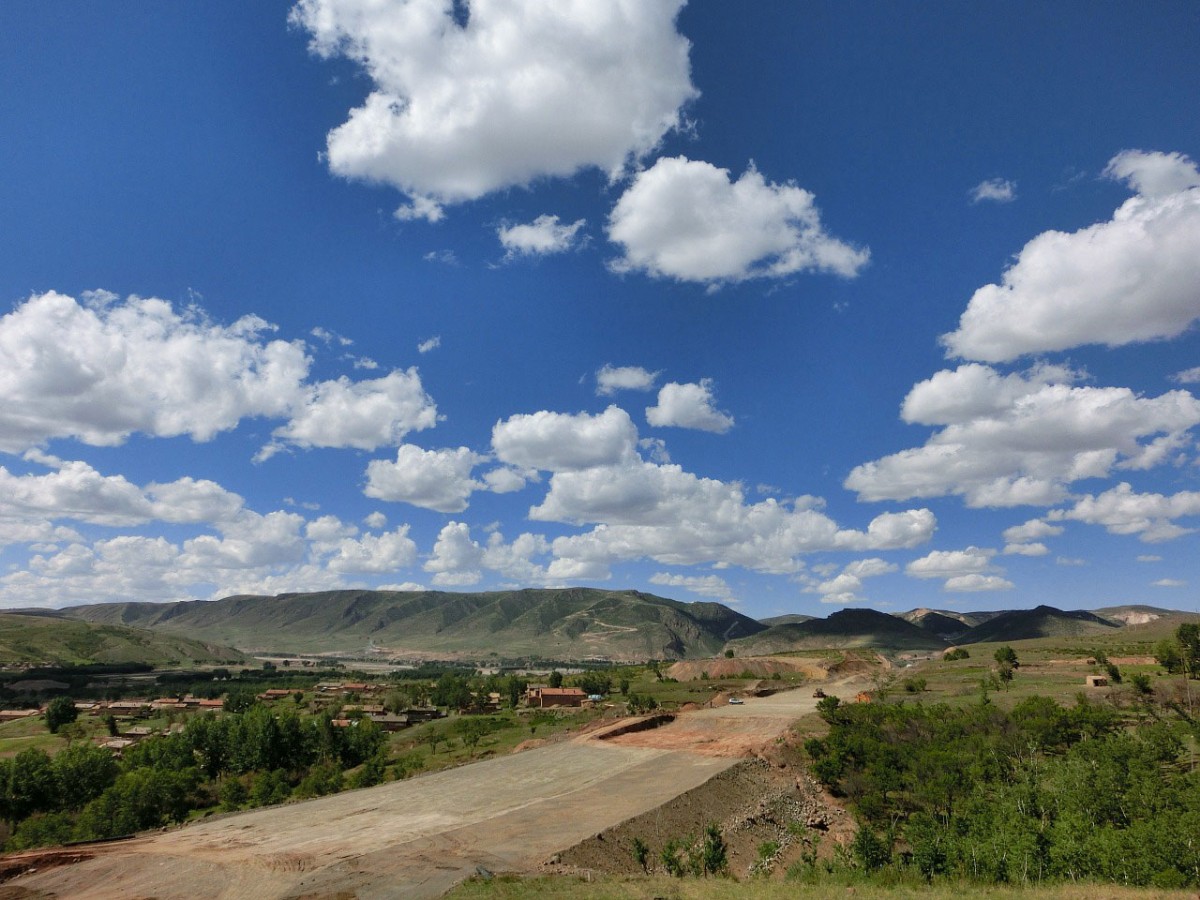
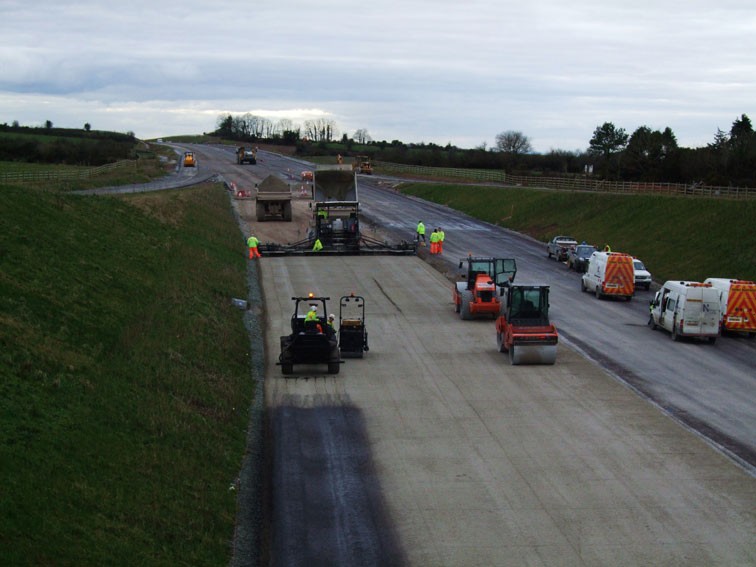
The first stage of construction is to clear a path for the new road and build solid foundations. This process is called earthwork. Earth and rock are dug out. This same material is often used to build raised banks (embankments) so the road can run at the same level over undulating land. Next, a bulldozer flattens the new road base to compact it down and make it completely level. Drains, sewers and pipes are built and laid on the road base at this stage, before layers of gravel are added on top and compacted until the road is the correct height. Then, the road is surfaced with either asphalt or concrete paving. Finally, the workers paint road markings which mark out the edges, carriageway lanes and centre lines, as well as provide traffic instructions or warnings.
Maintenance
Roads need to be kept in good condition to avoid damaging the vehicles that travel along them. Much of the damage comes from the wear and tear of daily use. Environmental effects, such as rain and snow, can also damage a road over time as the water gets into the cracks in the road, loosening the surface and causing potholes, or freezing and causing the road surface to crack due to the expansion of ice.
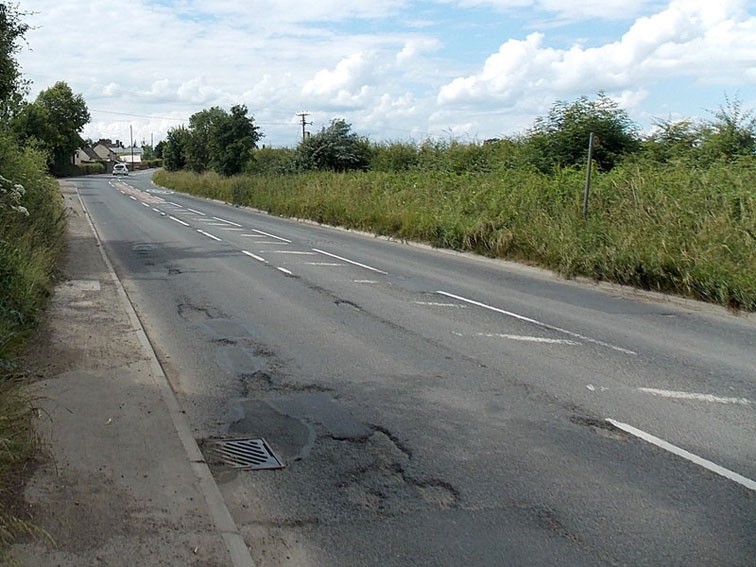

Small cracks can be mended by patching it (filling it in) and then applying a layer of protective asphalt or concrete over the top. If the road is more badly damaged it may need to be completely resurfaced: its top layer is removed altogether and replaced. This type of repair can extend the life of a road by at least 15 years.
Cat's eyes
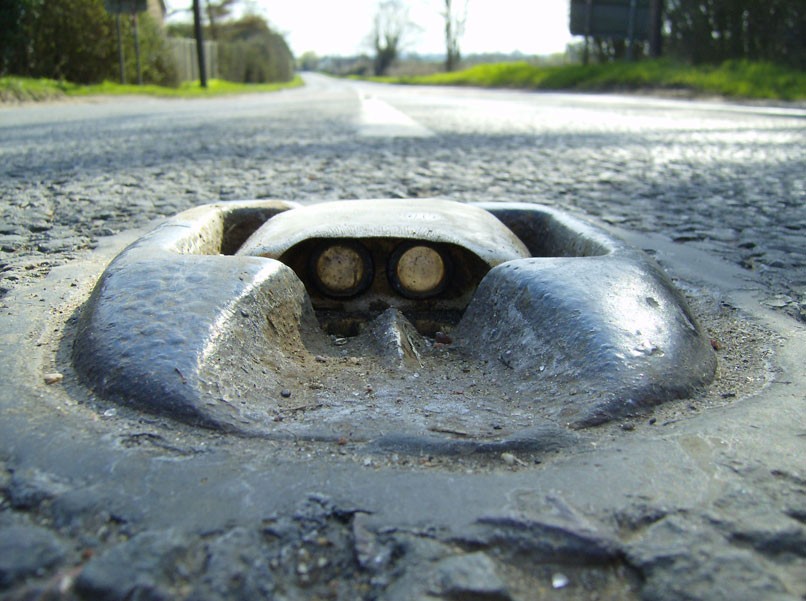
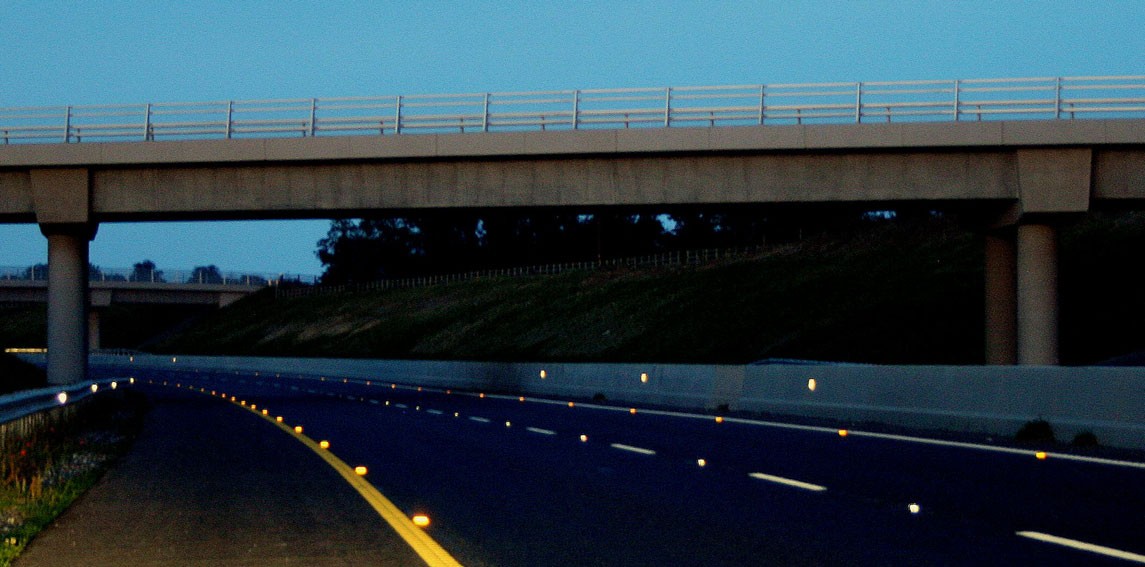
Many roads have reflective studs known as “cat’s eyes” to mark out lanes so they can be seen at night. Cat’s eyes were invented in 1934 by the English inventor Percy Shaw (1890–1976), and are made up of a pair of glass reflectors set into a rubber dome. A key feature is that they are self-cleaning: when wheels drive over them, the reflectors are pushed temporarily beneath the surface of the road where they pass over a rubber wiper. This cleans the glass before they pop back up.
Consultant: Mike Goldsmith
pics
Without in any way limiting Q-files Ltd’s exclusive rights under copyright, any use of this publication to “train” generative artificial intelligence (AI) technologies to generate text is expressly prohibited. Q-files Ltd reserves all rights to license use of this work for generative AI training and development of machine learning language models.