
North America

CITE
We have made every effort to follow citation style rules, but there may be some minor differences. If in doubt, please refer to the appropriate citation style manual.
Costa Rica. (2026). In Q-files Encyclopedia, Geography, North America. Retrieved from
https://www.q-files.com/geography/north-america/costa-rica
"Costa Rica." Geography, North America, Q-files Encyclopedia, 1 Apr. 2026.
https://www.q-files.com/geography/north-america/costa-rica.
Accessed 13 Sep. 2026.
Costa Rica 2026. Geography, North America. Retrieved 13 September 2026, from
https://www.q-files.com/geography/north-america/costa-rica
Geography, North America, s.v. "Costa Rica," accessed September 13, 2026.
https://www.q-files.com/geography/north-america/costa-rica


Costa Rica
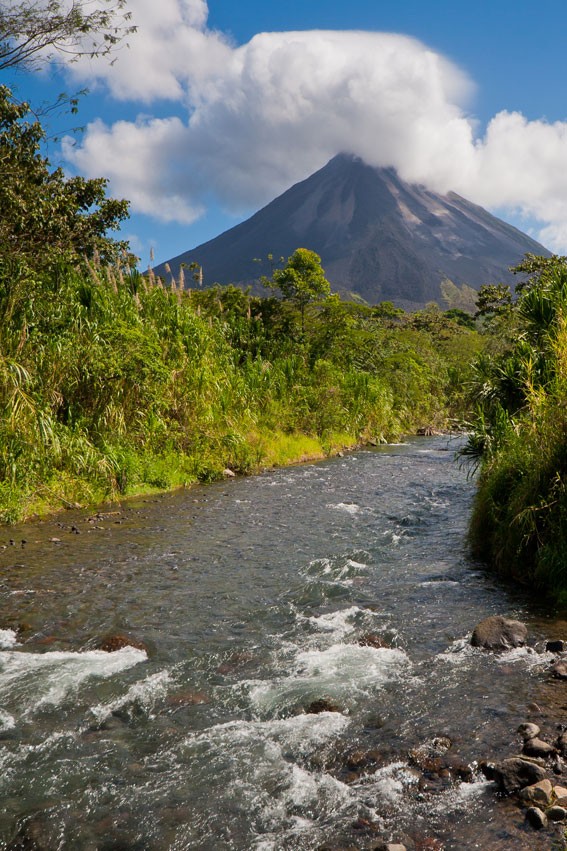
Costa Rica is one of the most stable and well-developed countries in Central America. It stretches from the Pacific Ocean to the tropical lowlands of the Caribbean coast. In between these coasts is a chain of mountains and volcanoes: the highest reach over 3350 m (11,000 ft). A valley in this upland region, the Meseta Central, is the most heavily populated part of the country. The hot, humid lowlands of Costa Rica are home to some of the world’s richest and least spoiled rainforests. High in the mountains are cooler temperatures and cloud forests, where tree canopies are frequently veiled in mist.


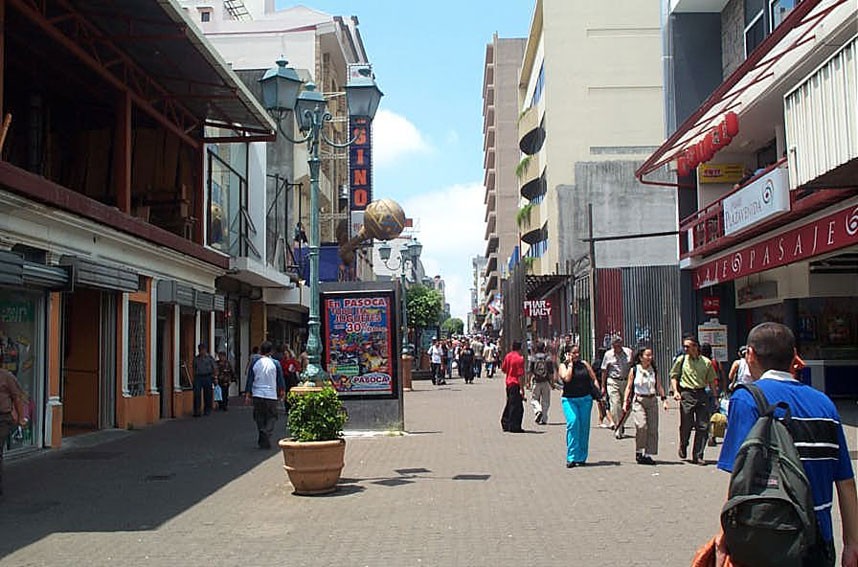
People
Costa Rica’s population is largely mestizo: nearly all its people are descended from a mix of native Americans and Spanish settlers who arrived in the 16th century. Compared to its neighbours, Costa Rica is a relatively wealthy country. Although there is some poverty, most Costa Ricans enjoy a good standard of living. The government has invested much money in education, meaning that almost everybody can read and write. Hundreds of thousands of refugees, most of them from Nicaragua, have come to live in Costa Rica in search of a higher standard of living.

Economy
For much of the 19th and 20th centuries, Costa Rica’s economy relied heavily on the export of coffee—grown on plantations in the central highlands—and bananas, grown along the southern Pacific coast. Today, these and other crops, such as pineapples, are still major exports, but manufacturing is becoming increasingly important. International computer companies, among them Intel, have factories in Costa Rica, where skilled workers assemble microprocessors for export.


Rainforest
Between 1973 and 1989, Costa Rica had one of the worst rates of deforestation in the world. Since then, it has managed to lower that rate to almost zero, and today a quarter of the country’s land area is protected by national parks and nature reserves.
The government’s efforts to make Costa Rica an environmentally-friendly country have led it to become a leading site for ecotourism; over 2 million tourists visit the country each year, many of them to visit the rainforests. The challenge now faced by the government is to ensure that the rainforest plants and animals remain undisturbed from the ever-increasing numbers of visitors.

Consultant: Nicholas Harris
Facts about Costa Rica
Population 5,044,197 (2022 census)
Area 51,100 sq km
Highest point Cerro Chirripo 3819 m (12,526 ft)
Capital San José, population 352,381
Other major cities Limón (pop. 63,081), San Francisco (55,923), Alajuela (47,494),
Language Spanish
Religions Christian (Roman Catholic) 76%, Christian (Evangelical) 14%, other Christian 2%, others and none 8%
Ethnicity mestizo (mixed Spanish / Native American) 84%, Native American 2.5%, others 13.5%
Currency Costa Rican colon (CRC)
Chief exports bananas, coffee, pineapples, melons, plants, sugar, beef, electronic components, medical equipment

History of Costa Rica
3000 BC
Settlers begin farming the land in the region
1502
Christopher Columbus lands on the country’s eastern shores, naming it Costa Rica, meaning “rich coast”.
1540
Costa Rica becomes a colony of the Spanish Empire, but with few natural resources, it is largely neglected by the Spaniards
1821
Costa Rica gains its independence from Spain and joins the Mexican Empire
1823
The Mexican Empire collapses and Costa Rica becomes a province of the Federal Republic of Central America, along with Guatemala, Honduras and others
1838
Costa Rica leaves the union and declares itself fully independent
1840s
Coffee is shipped to Europe for the first time and quickly becomes Costa Rica’s largest export
1871–90
Atlantic Railway is built to transport coffee from inland plantations to the coast (most of today's African Costa Ricans descend from the Jamaican immigrants who worked in the construction of the railway)
1874
US-owned United Fruit Company takes over a large area of land and uses it to grow bananas; they soon become a major export
1917–19
Military dictator General Federico Tinoco Granados rules Costa Rica until he is overthrown and forced into exile
1948
About 2000 people are killed during six weeks of civil war. At the end, Costa Rica decides it will no longer have an army
1949
Everyone over the age of 18 is able to vote in elections
1987
Costa Rica’s president, Óscar Arias, is awarded Nobel Peace Prize for his efforts to put an end to civil war in neighbouring countries
2010
Laura Chinchilla becomes Costa Rica’s first female president
2012
Costa Rica becomes the first country in the Americas to ban recreational hunting
pics


Without in any way limiting Q-files Ltd’s exclusive rights under copyright, any use of this publication to “train” generative artificial intelligence (AI) technologies to generate text is expressly prohibited. Q-files Ltd reserves all rights to license use of this work for generative AI training and development of machine learning language models.