
North America

CITE
We have made every effort to follow citation style rules, but there may be some minor differences. If in doubt, please refer to the appropriate citation style manual.
Cuba. (2026). In Q-files Encyclopedia, Geography, North America. Retrieved from
https://www.q-files.com/geography/north-america/cuba
"Cuba." Geography, North America, Q-files Encyclopedia, 1 Apr. 2026.
https://www.q-files.com/geography/north-america/cuba.
Accessed 30 Oct. 2026.
Cuba 2026. Geography, North America. Retrieved 30 October 2026, from
https://www.q-files.com/geography/north-america/cuba
Geography, North America, s.v. "Cuba," accessed October 30, 2026.
https://www.q-files.com/geography/north-america/cuba


Cuba
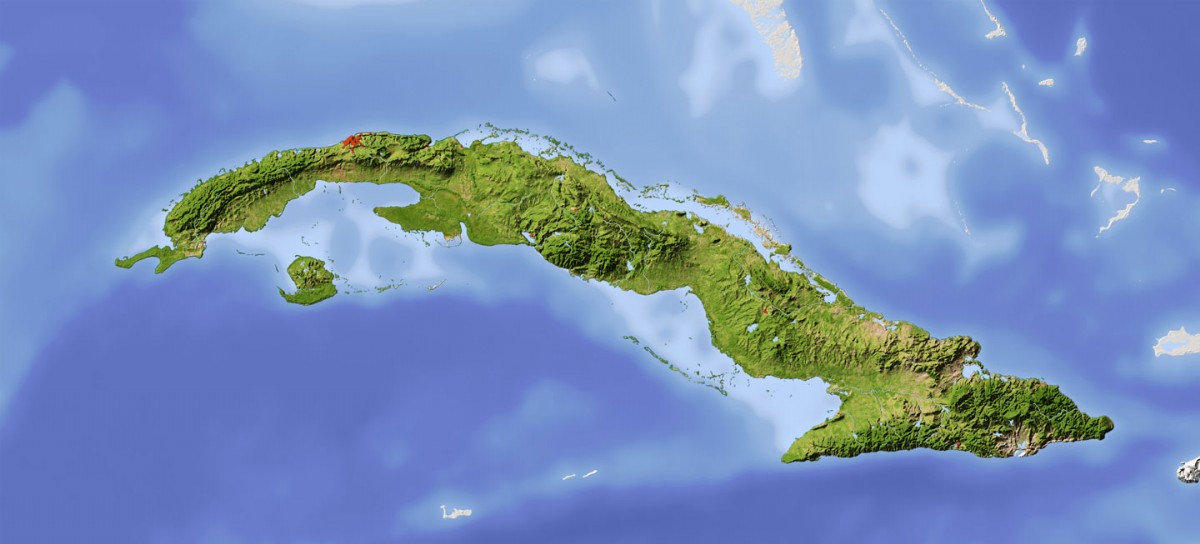
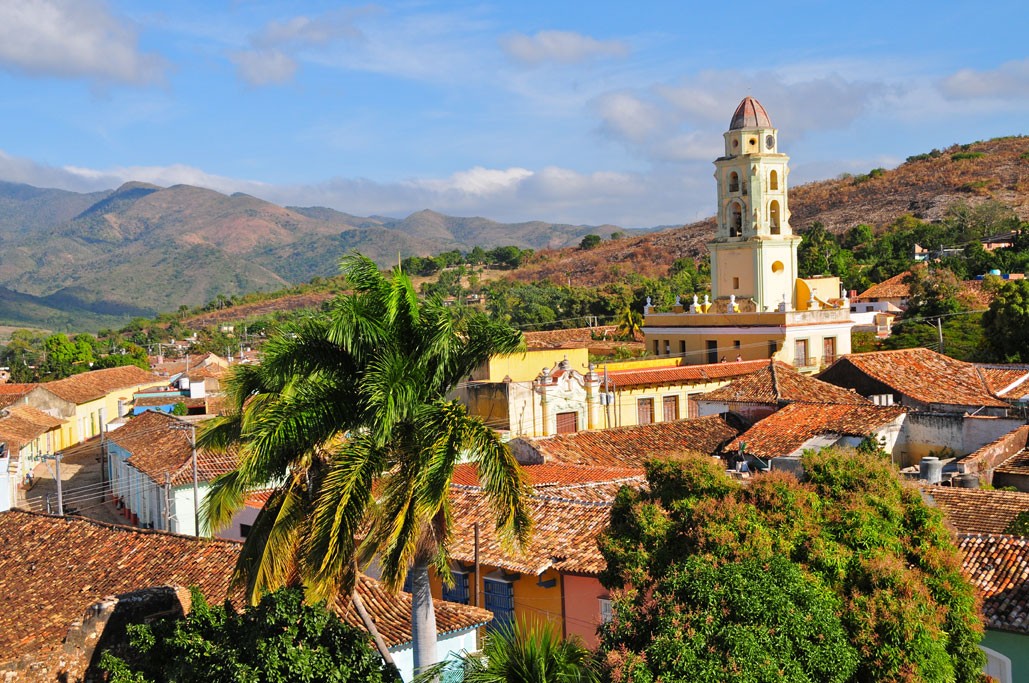
Along with the Cayman Islands, Hispaniola, Puerto Rico and Jamaica, Cuba is part of the Greater Antilles. About one third of Cuba is covered by high mountains and hills; they rise to their highest in the east. The rest of the island is made up of rolling, green plains, used mainly as farmland. Cuba has a warm tropical climate. The island is sometimes hit by hurricanes, usually in September and October, at the end of the rainy season.

People
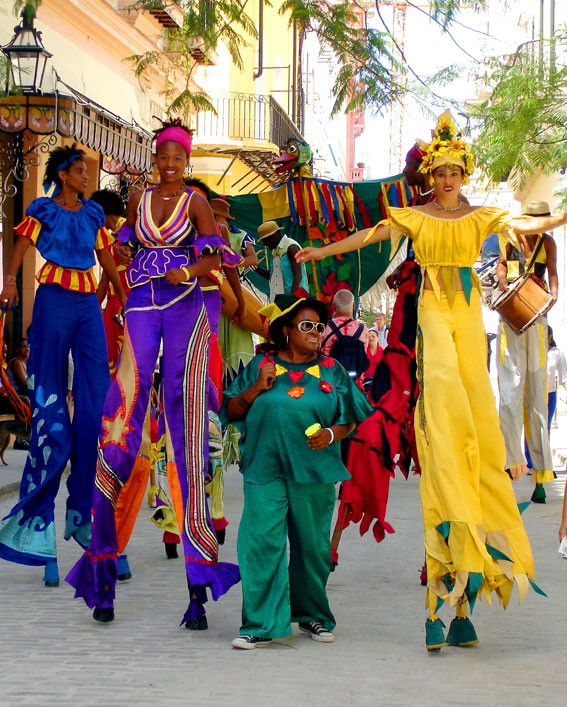
Cubans are descended from a mixture of the Spanish, African and Native American peoples who have settled on the island over the centuries. Their different cultures have influenced Cuba’s colourful carnivals, music and dance.
Since 1961 Cuba has been a socialist state. Although Cubans vote for their leader, they can only stand for election if the Communist Party—the only political party—approves them. Cuba has a very high standard of health care, and most people receive a good education. Cuban families receive ration books and coupons from the government which can be used to buy basic goods (such as rice and sugar) at low prices. This system of rationing is called the libreta.

Economy
During the second half of the 20th century, Cuba’s government took over ownership of all businesses, farms and services. It was supported by the Soviet Union. In the early 1990s the Soviet Union collapsed, plunging Cuba into economic crisis. New laws were introduced allowing a few people to set up their own small businesses and farms. This helped the economy to begin to recover.
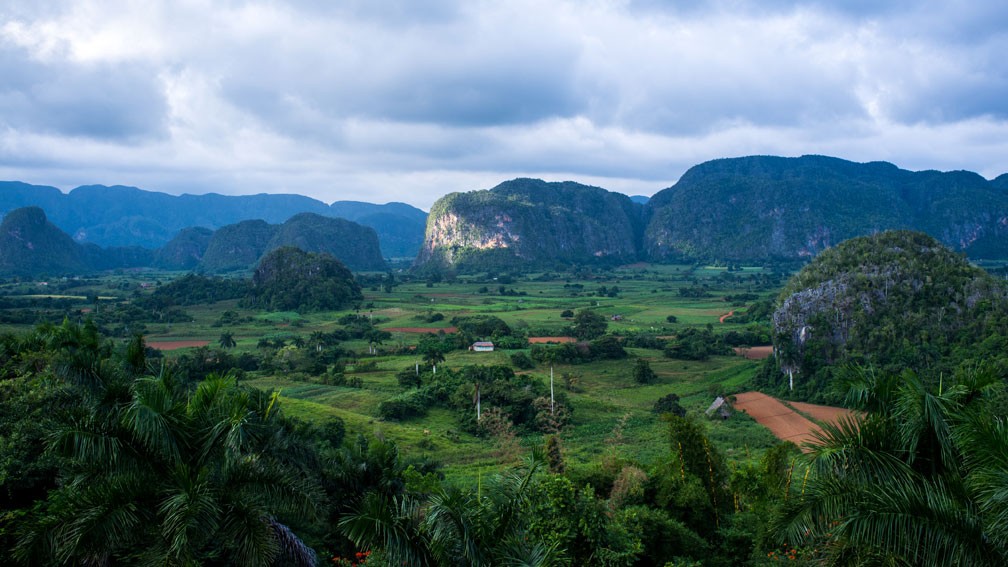
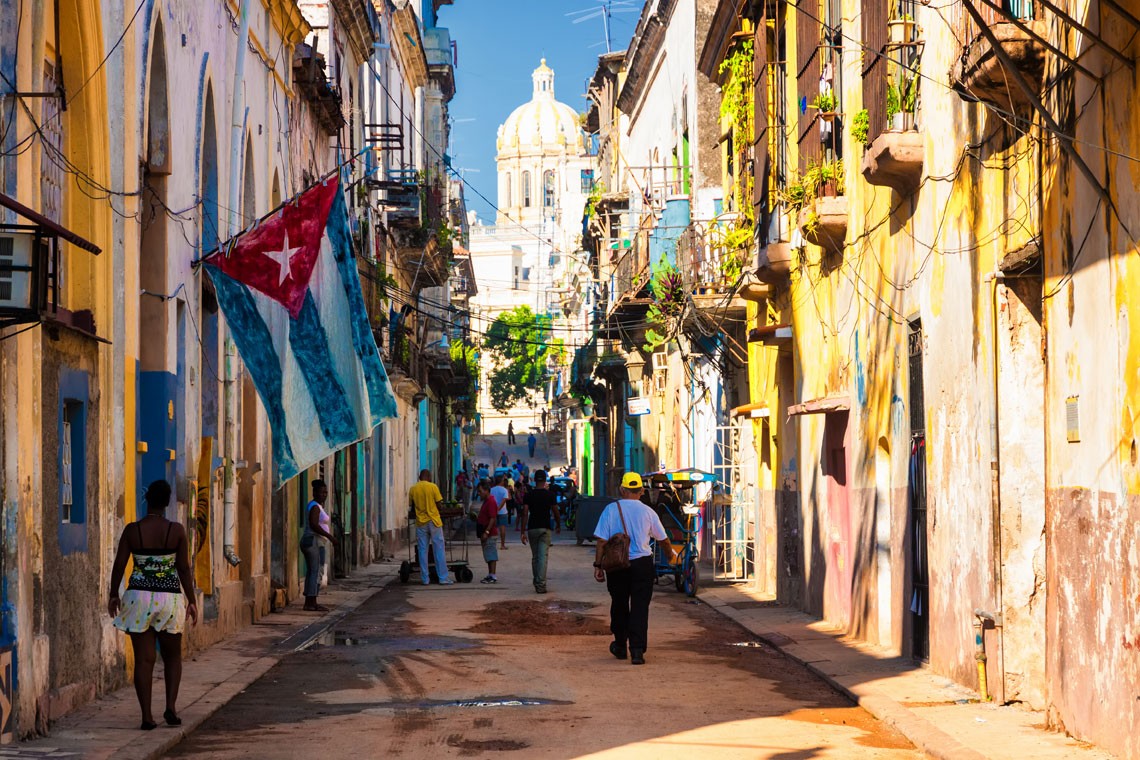
Today, Cuba still has a planned economy—most of its industries remain under government control. Much of its foreign income is from the export of sugar cane, tobacco and nickel, a valuable metal. Hand-rolled Cuban cigars are famous all over the world, and have long been a major export. Tourism, however, is Cuba’s largest industry: around 3 million tourists visit each year.
Consultant: Nicholas Harris
Facts about Cuba
Population 10,055,968
Area 109,820 sq km
Highest Point Pico Turquino 2005 m (6578 ft)
Capital Havana, population 2,137,847 (2023 estimate)
Other major cities Santiago de Cuba (pop. 431,411), Camagüey (310,819), Holguín (302,890), Santa Clara (217,907), Guantánamo (213,375),
Language Spanish
Religions Christian (Roman Catholic) 85%, others 15%
Ethnicity white European 64%, mestizo (mixed Spanish/native American) 27%, black 9%
Currency Cuban Peso (CUP)
Chief exports petroleum, nickel, medical supplies, sugar cane, tobacco, fish, citrus fruits, coffee

History of Cuba
7th–15th centuries
Guanajatabey, Ciboney and Taíno peoples live on the island
1492
Christopher Columbus is the first European to visit Cuba and claim it for Spain
1511
First Spanish settlement built at Baracoa
1514
Havana is founded by the Spaniard Diego Velázquez as San Cristóbal de la Habana (Saint Christopher of the Habana). Habana is the name of the people indigenous to the area
1520s
Two-thirds of Cuba’s native people die from European diseases such as measles and smallpox
1526
Spanish begin to transport thousands of Africans to the island to work as slaves
1762
After British victory over France and Spain in the Seven Years' War, Havana is briefly occupied by Britain, before being returned to Spain in exchange for Florida
late 18th century
Thousands of slaves from West Africa are transported to Cuba to work on the sugar plantations, especially after the Haitian Revolution in the 1790s
1868
Carlos Manuel de Céspedes, a sugar plantation owner, leads a movement calling for Cuba’s independence from Spain; it sparks a rebellion known as the Ten Years' War
1878
Spain agrees to give Cuba more powers to govern itself
1895–98
José Martí leads a second battle for independence. USA helps the rebels to defeat Spain. It takes control of the island after victory in the Spanish-American War of 1898.
1902
Cuba becomes independent but remains under the protection of the USA
1903
Cuban-American Treaty: USA leases Guantanamo Bay at the southeastern tip of the island
1934
Cuba grants USA a permanent lease and full control over Guantanamo Bay
1952
Fulgencio Batista comes to power in a military coup and rules as a dictator
1953–59
Cuban Revolution: Fidel Castro and his brother Raúl led an armed attack on the Cuban army (26th July 1953) but the attack fails. After fleeing to Mexico, Castro forms the 26th of July Movement (M-26-7) and returns to Cuba with Argentine revolutionary Che Guevara aboard the yacht Granma in 1956. After a two-year guerrilla campaign, Batista's forces are defeated. He flees and Castro takes power (January 1959).
1961
Castro declares Cuba a Communist State and allies with the Soviet Union; a US invasion at the Bay of Pigs fails to overthrow Castro
1962
Cuban missile crisis: the US becomes aware that the USSR is building nuclear missile sites on Cuba. After 13 days of tense negotiations in October, an agreement is reached between US President Kennedy and Soviet President Khrushchev, and the Soviets dismantle their sites.
1991
Soviet Union collapses, plunging Cuba’s economy into crisis
1993
Cuba introduces new laws allowing people to run some of their own (previously state-owned) businesses and farms
2008
President Fidel Castro retires and his brother, Raúl Castro, takes over; Hurricanes Gustav and Ike leave 200,000 people homeless
2011
New laws allow people to buy and sell private property for the first time in 50 years
2015
US embassy in Havana is reopened following US President Barack Obama announcement of plans to re-establish diplomatic relations. After allegations of "health attacks" (causing an illness in staff known as Havana Syndrome) in 2017, the US withdraws most of the personnel from the embassy.
2016
US eases a number of trade restrictions with Cuba (January). Fidel Castro dies (November).
2021
Protests erupt over shortages of food and medicines and the government's response to the Covid-19 pandemic
2022
(September) Hurricane Ian causes catastrophic damage, leaving the entire country without power
pics


Without in any way limiting Q-files Ltd’s exclusive rights under copyright, any use of this publication to “train” generative artificial intelligence (AI) technologies to generate text is expressly prohibited. Q-files Ltd reserves all rights to license use of this work for generative AI training and development of machine learning language models.