
North America

CITE
We have made every effort to follow citation style rules, but there may be some minor differences. If in doubt, please refer to the appropriate citation style manual.
Nicaragua. (2026). In Q-files Encyclopedia, Geography, North America. Retrieved from
https://www.q-files.com/geography/north-america/nicaragua
"Nicaragua." Geography, North America, Q-files Encyclopedia, 1 Apr. 2026.
https://www.q-files.com/geography/north-america/nicaragua.
Accessed 13 Sep. 2026.
Nicaragua 2026. Geography, North America. Retrieved 13 September 2026, from
https://www.q-files.com/geography/north-america/nicaragua
Geography, North America, s.v. "Nicaragua," accessed September 13, 2026.
https://www.q-files.com/geography/north-america/nicaragua


Nicaragua
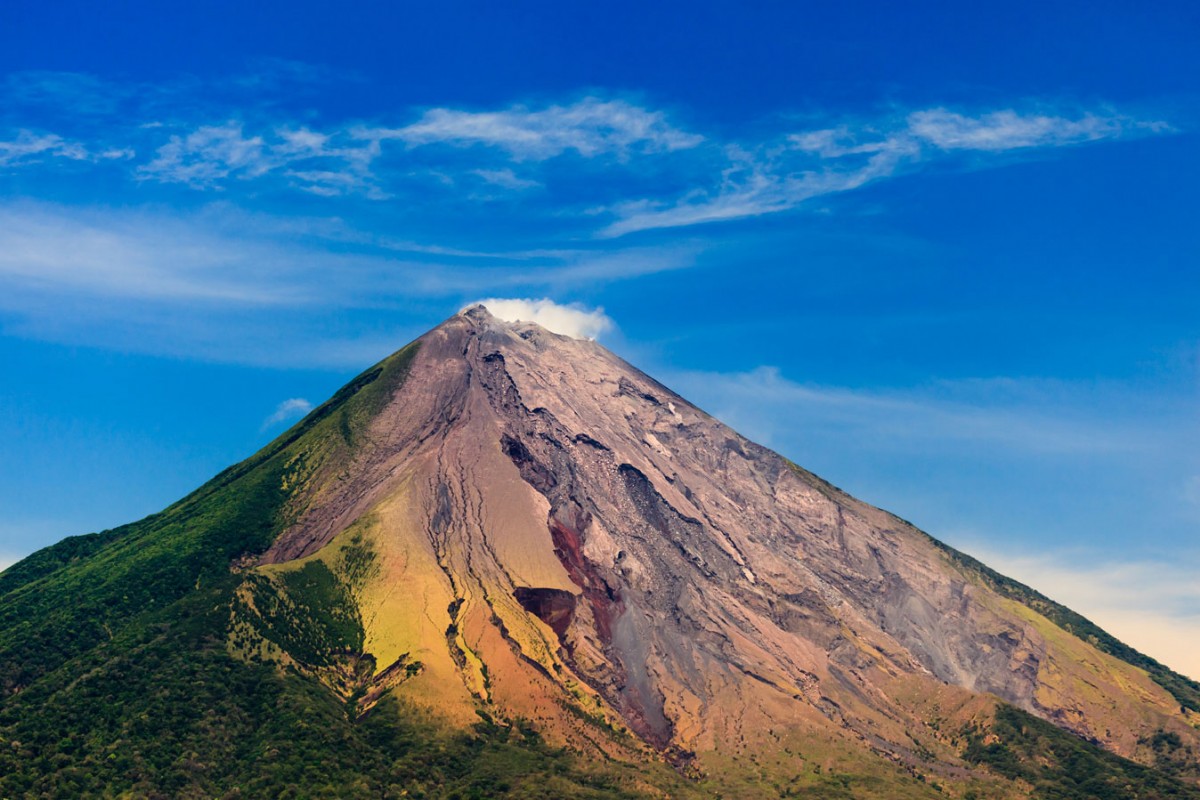
Nicaragua is the largest country by area in Central America. In the east, an area of hot, swampy rainforest fringes the Caribbean coast, known as the Mosquito Coast. Inland, the land rises to the cooler highlands. Western Nicaragua, bordering the Pacific, is made up of flat lowlands and scattered volcanoes. Most of the country’s people live here; the rich volcanic soil and warm climate provide ideal conditions for farming. Also in this area are two large freshwater lakes, Lake Nicaragua and Lake Managua. Nicaragua lies at the point where two of the Earth’s tectonics plates meet, making it prone to earthquakes and volcanic eruptions. Its capital, Managua, was almost completely destroyed by a powerful earthquake in 1972.


People
A large number of Nicaraguans are mestizo—of mixed Spanish and Native American descent. Along the Caribbean coast, many more people are descended from Africans who were brought to the Caribbean ports as slaves from the 17th century onwards. These people speak English or Kriol, often with Spanish as a second language.
Nicaragua has suffered a long history of war and natural disaster; today, it is the poorest country in Central America. Many people live in small, crowded houses and work on their families’ farms. Others move from place to place, finding seasonal work at harvest time. The promise of a better lifestyle has led many people to emigrate to Costa Rica, El Salvador and the USA.
Economy
Since the 1870s, Nicaragua’s most important crop has been coffee, which is grown on the cool slopes of the central highlands. The Pacific lowlands are some of the country’s most productive farmland; here, farmers grow maize, rice, beans and bananas and raise cattle for their meat and milk. Tourism is a growing industry in Nicaragua: its beaches, lakes, rainforests and volcanoes attract over a million tourists each year. As it becomes a more popular tourist destination, more and more foreign companies are investing in the country, helping to boost its economy.


Nicaragua Canal
Plans for a new canal to be built across Nicaragua, linking the Caribbean Sea with the Pacific Ocean, have recently been proposed. The 278-kilometre (172-mile) waterway would be longer, deeper and wider than the Panama Canal. The route would pass through Lake Nicaragua. There are concerns over the environmental impact on the lake, the loss of rainforest and wetland habitats and the effects on local inhabitants. Construction works have, for now, been abandoned.


The Mosquito Coast
Nicaragua's Caribbean coast is known as the Mosquito Coast. It was named not after the insect, but the local Miskito people. They were descended from the survivors of a slave ship that had sailed from Africa and was wrecked off the coast in the mid-17th century, and who later intermarried with the local people. The Spanish failed to conquer the region, and so it became a haven for English, Dutch and French privateers and pirates, who attacked Spanish treasure ships in the Caribbean.
The British government signed a treaty with what was known as the "Miskito Kingdom" in 1740. British set up plantations of mahogany trees there, to grow and export the valuable wood. The labour was supplied by African and local slaves. For years afterwards, Britain dominated the region. The Mosquito Coast was eventually incorporated into Nicaragua in 1894. In 1960, the northern part was granted to Honduras.

Consultant: Nicholas Harris
Facts about Nicaragua
Population 7,142,529 (2024 estimate)
Area 130,370 sq km
Highest point Mogoton 2438 m (7997 ft)
Capital Managua, population 1,055,247
Other major cities León (pop. 213,718), Masaya (191,574), Tipitapa (156,523)
Languages Spanish, English, native American languages
Religions Christian (Roman Catholic) 59%, Christian (Protestant) 23%, others and none 18%
Ethnicity mestizo (mixed European / Native American) 69%, white European 17%, black 9%, Native American 5%
Currency Nicaraguan córdoba (NIO)
Chief exports coffee, beef, sugar, peanuts, gold, shrimp, tobacco, cigars, textiles, cotton


History of Nicaragua
Before 16th century
Western Nicaragua is inhabited by several indigenous peoples related to the Mesoamerican civilizations of the Aztec and Maya.
1522
Spanish conquistador Gil González de Ávila conquers the region for the Spanish Empire and names it Nicaragua
1524
Francisco Hernández de Córdoba founds the two first Spanish towns in Nicaragua: Granada, on Lake Nicaragua, and León
1538
Nicaragua leaves becomes fully independent.
1740
Under the Treaty of Friendship and Alliance, the Mosquito Coast (Nicaragua's Atlantic coast) becomes a British protectorate
1821
Nicaragua becomes independent from Spain and joins the Mexican Empire
1823
Nicaragua becomes part of the United Provinces of Central America, which also includes Costa Rica, El Salvador, Guatemala and Honduras.
1830s
First plans laid for a canal linking Atlantic and Pacific Oceans through Nicaragua
1849
Nicaragua signs contract allowing US company to build a canal and operate an existing land trade route; but plans are interrupted and it is never completed
1860
Britain hands over partial control of the Caribbean coast, (the Mosquito Coast, previously a British protectorate) to Nicaragua
1893–1909
Dictatorship of General José Santos Zelaya; US troops help to end his rule
1894
Nicaragua fully annexes the Mosquito Coast
1912–33
US troops occupy Nicaragua. From 1927 to 1933, rebel general Augusto César Sandino leads a guerrilla war both against the government and the US troops.
1927–79
Somoza family rules Nicaragua as a dictatorship
1972
Major earthquake kills over 6000 people and destroys the capital city, Managua. Aid money intended to rebuild the city is stolen by President Somoza.
1979
Nicaraguan Revolution: a socialist political group, the Sandinistas, take control of the country (the Sandinistas are named after Augusto César Sandino, who led the Nicaraguan resistance against the US occupation of Nicaragua in the 1930s)
1979–90
Thousands are killed in fighting between the forces of the Sandinista government and a rival right-wing group, the Contras backed by the US
1990
A coalition of anti-Sandinista parties win the Nicaraguan general election; their leader. Violeta Chamorro, becomes the first woman president democratically elected in the Americas
1998
Hurricane Mitch causes widespread damage in Nicaragua, killing 3000 people and leaving thousands more homeless.
2006
Former president, the Sandinista leader Daniel Ortega, is returned to power in elections.
2014
Work is scheduled to begin on the Nicaragua Canal, a new waterway linking the Caribbean Sea with the Pacific Ocean, but is suspended, later abandoned
2018
Demonstrators in several cities of Nicaragua protest against reforms decreed by President Ortega that increase taxes and decrease benefits. Ortega cancels the reforms; however, the protesters demand Ortega's resignation.
2020
(November) Nicaragua is battered by two severe hurricanes, the second, Hurricane Iota, the strongest ever to hit the country
pics
Without in any way limiting Q-files Ltd’s exclusive rights under copyright, any use of this publication to “train” generative artificial intelligence (AI) technologies to generate text is expressly prohibited. Q-files Ltd reserves all rights to license use of this work for generative AI training and development of machine learning language models.