
North America

CITE
We have made every effort to follow citation style rules, but there may be some minor differences. If in doubt, please refer to the appropriate citation style manual.
El Salvador. (2026). In Q-files Encyclopedia, Geography, North America. Retrieved from
https://www.q-files.com/geography/north-america/el-salvador
"El Salvador." Geography, North America, Q-files Encyclopedia, 18 May. 2026.
https://www.q-files.com/geography/north-america/el-salvador.
Accessed 13 Sep. 2026.
El Salvador 2026. Geography, North America. Retrieved 13 September 2026, from
https://www.q-files.com/geography/north-america/el-salvador
Geography, North America, s.v. "El Salvador," accessed September 13, 2026.
https://www.q-files.com/geography/north-america/el-salvador


El Salvador
El Salvador is the smallest—and most densely populated—country in Central America. It lies on the Pacific coast, in a volcanic region known as the Pacific Ring of Fire: it is constantly at risk from earthquakes. Along the coast there is a narrow strip of lowlands where farmers grow cotton and sugar cane. Inland, the land rises to a plateau with low mountains and volcanoes. El Salvador was once covered by thick rainforests, but these have been almost completely cleared to make way for farmland. The country has a tropical climate with hot, humid weather all year round; high up on the plateau, temperatures are cooler.


People
El Salvador’s population is mostly mestizo: people of mixed Spanish and Native American ancestry. Overcrowding and a shortage of land and resources have meant that a large number of Salvadorans are poor, especially those who live in the countryside. Many people have emigrated to the USA to work and send money home to their families.

Economy
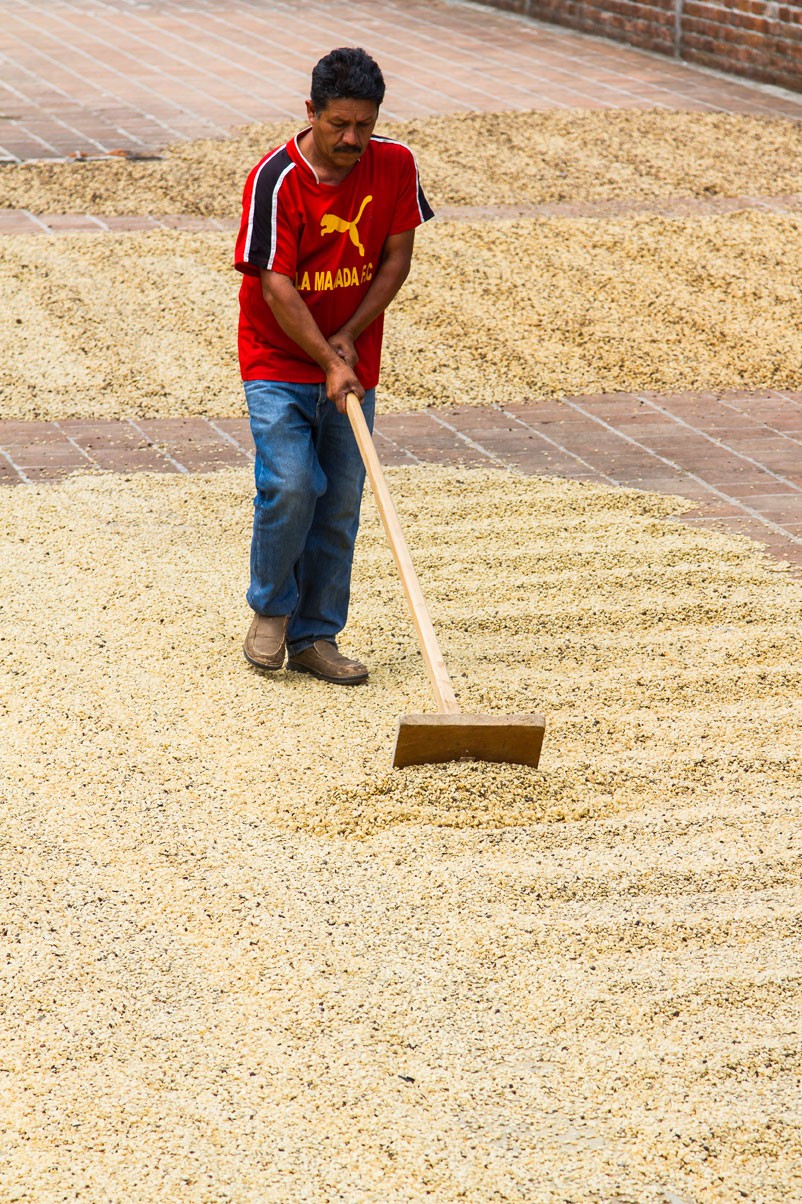
Farming is still El Salvador’s biggest industry: three-quarters of its land is used for farmland and pasture. Most of the land is owned by a few wealthy landowners who employ people to work on large plantations. Since the mid-1800s, coffee has been El Salvador’s most important crop; the plants are grown on the rich soil of the volcanic slopes. Today, the country is trying to re-develop its manufacturing industries, which were disrupted as a result of civil war (1979–92) and natural disasters, including earthquakes and flooding.

Consultant: Nicholas Harris
Facts about El Salvador
Population 6,029,976 (2024 census)
Area 21,041 sq km
Highest point Cerro El Pital 2730 m (8954 ft)
Capital San Salvador, population 525,990
Other major cities Soyapango (pop. 329,708), Santa Ana (176,661), San Miguel (161,880), Mejicanos (160,317)
Language Spanish
Religions Christian (Roman Catholic) 57%, Christian (Protestant) 21%, other Christian 2.5%, others and none 19.5%
Ethnicity mestizo (mixed Spanish / Native American) 86%, white 13%, Native American 1%
Currency United States dollar (USD)
Chief exports coffee, sugar, clothing and textiles, gold, chemicals, electricity


History of El Salvador
800 AD
Native American peoples live in the region, including the Pipil, who name their land Cuzcatlán, and the Lenca
1486–1519
Cuzcatlán is part of the Aztec Empire
1520
Smallpox epidemic kills thousands of the region's inhabitants
1524
Spanish explorer Pedro de Alvarado conquers Cuzcatlán and founds the city of San Salvador
1527–37
The Lenca people fight the Spanish, preventing them from settling on their land. Eventually their resistance, especially under the command of Lempira, is crushed and the Spanish build the town of San Miguel.
1821
El Salvador becomes independent from Spain, joining Costa Rica, Guatemala, Honduras and Nicaragua in a union named the Federal Republic of Central America.
1841
El Salvador declares its independence from the Federal Republic of Central America
1859
Coffee-growing is introduced to the country; it quickly becomes a major cash crop
1896–98
El Salvador join Honduras and Nicaragua to form the short-lived Greater Republic of Central America
1932
La Matanza: 30,000 rural Salvadorans are killed by the military during a peasant uprising
1969
War with Honduras over land ownership and immigration. Known as the Football War, the conflict began after tensions were heightened by rioting during FIFA World Cup qualifier matches between the two countries.
1979–92
Salvadoran Civil War, a conflict between the military-led government of El Salvador and the Farabundo Martí National Liberation Front (FMLN), a coalition left-wing guerrilla groups; United Nations estimate that 75,000 people perish during the conflict, most of them killed by the Salvadoran armed forces and death squads
1992
Chapultepec Peace Accords, signed by all sides in Mexico City, formally ends the Salvadoran Civil War
2001
Major earthquakes leave 1 million Salvadorans homeless
2012
Human Rights Court for the Americas finds El Salvador government guilty over the civil war massacre at El Mozote in 1981
2019
Nayib Bukele becomes the president of El Salvador. He implements policies which reduce the murder rate by 50% during his first year in office, and which lead to the arrests of over 91,900 people alleged to be members of gangs (as of May 2026). Bukele passes a law in 2021 that makes the cryptocurrency bitcoin legal tender in El Salvador.
2026
Mass trial of 486 suspected members of MS-13 gang, with charges of murder and arms trafficking among more than 47,000 crimes allegedly committed between 2012 and 2022.
pics
Without in any way limiting Q-files Ltd’s exclusive rights under copyright, any use of this publication to “train” generative artificial intelligence (AI) technologies to generate text is expressly prohibited. Q-files Ltd reserves all rights to license use of this work for generative AI training and development of machine learning language models.