
Fish

CITE
We have made every effort to follow citation style rules, but there may be some minor differences. If in doubt, please refer to the appropriate citation style manual.
Sharks. (2026). In Q-files Encyclopedia, Life, Fish. Retrieved from
https://www.q-files.com/life/fish/sharks
"Sharks." Life, Fish, Q-files Encyclopedia, 23 Mar. 2026.
https://www.q-files.com/life/fish/sharks.
Accessed 20 Sep. 2026.
Sharks 2026. Life, Fish. Retrieved 20 September 2026, from
https://www.q-files.com/life/fish/sharks
Life, Fish, s.v. "Sharks," accessed September 20, 2026.
https://www.q-files.com/life/fish/sharks


Sharks
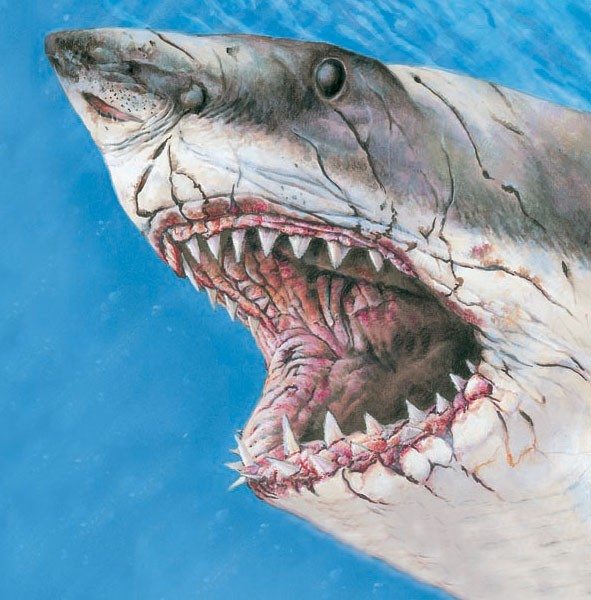
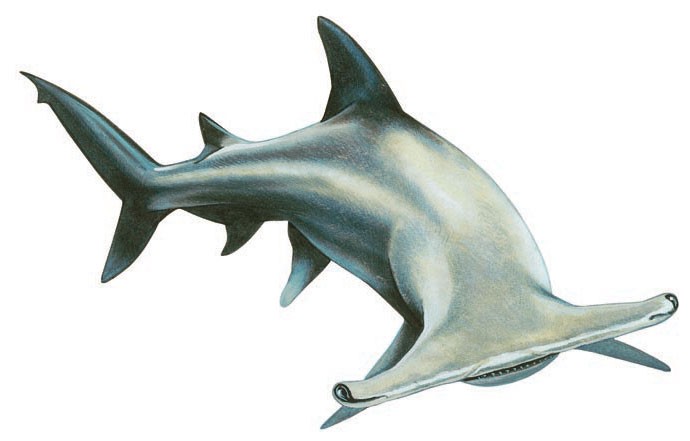
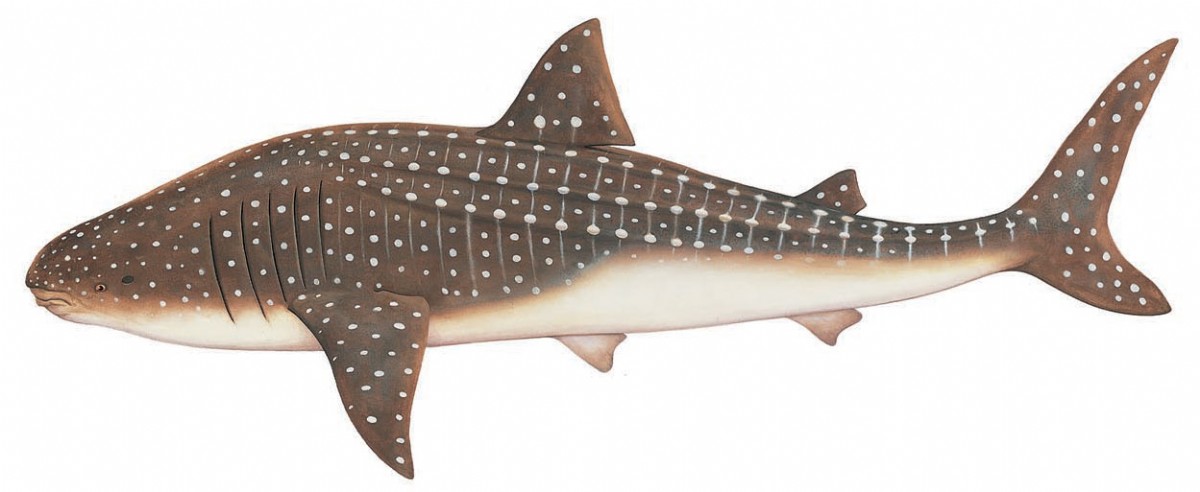
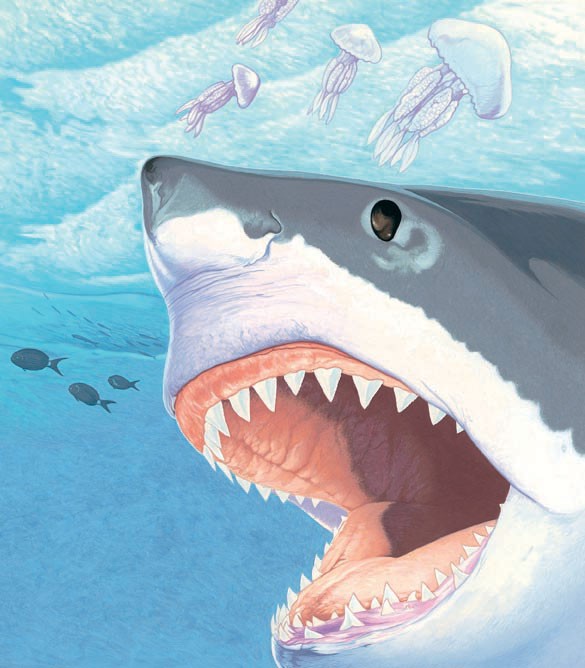
Sharks are a kind of cartilaginous fish: they have skeletons made of soft cartilage (gristle) rather than rigid bone. They live in all the world’s oceans. Sharks are mostly predators, although the largest kinds of all, including the whale shark and basking shark, feed only on krill or small fish. Sharks rely on their sense of smell and their ability to detect movement in the water to hunt their prey. They also have special sense organs that sense electrical currents made by the muscle movements of prey. Many sharks have large, razor-sharp teeth set in rows.


Skin and bones
A shark’s skin feels like sandpaper to touch. It is covered by tiny, teeth-like scales called dermal denticles. Each scale is even made of dentine with an outer covering of enamel—just as teeth are. The covering makes the shark more streamlined in the water.
Sharks do not have any bones in their bodies. Instead, their skeletons are made of tough, flexible gristle or cartilage. Cartilage is much lighter than bone, significantly reducing the shark's weight and thus saving it energy when swimming.
Young sharks
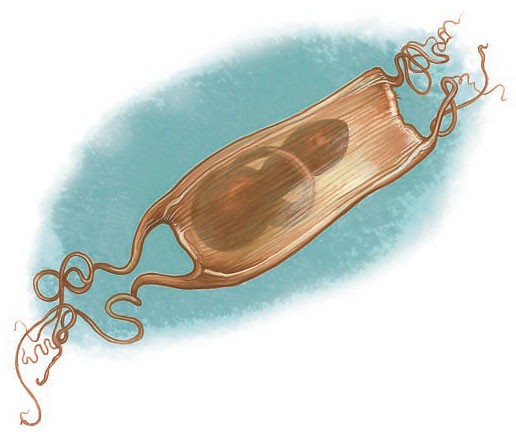
Most sharks are viviparous: they give birth to live young. They then brood them in sheltered bays or coral reefs where there is some protection from predators (other sharks) and where food is plentiful. A few species of shark lay their eggs inside leathery, protective cases. These are deposited on the ocean floor or pushed into rock crevices for protection. Empty cases that wash up ashore are called mermaid's purses.

Shark attack
Despite their reputation, only the largest predatory sharks are dangerous to humans. But most attacks are accidents. Sharks cannot see well in murky waters and may mistake humans for their usual prey: seals and sealions. Humans are about the same size as seals, and sharks can only see the shape from below. Sometimes they might bite a human out of curiosity, but it is thought they dislike the way we taste: we do not have enough fat. Sharks prefer seals, which have plenty of blubber.
Bull shark

The bull shark is a large, aggressive shark that grows up to 3.5 metres (11.5 feet) long. It is usually found along warm coasts but is also known to swim up rivers, and can tolerate fresh water for long periods. Its name comes from its stocky build, broad snout and unpredictable behaviour. It is one of the most dangerous species to humans.
Mako shark
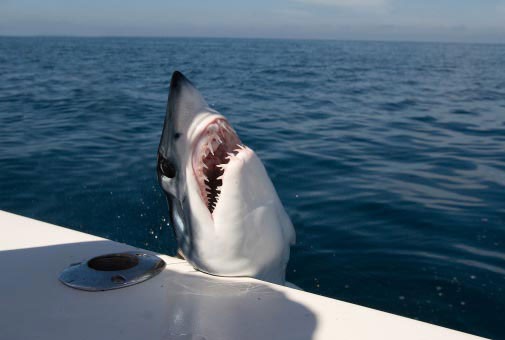
The fastest of all the sharks, the mako shark can swim in bursts of up to 32 km/h (20 mph). It can even leap into the air. It has a powerful, streamlined body, with indigo-blue colouring and grows up to 4 metres (13 feet) long. It hunts by swimming below its prey, then, on spotting a likely victim, lunging upwards to tear off chunks of flesh before it even notices it is under attack.
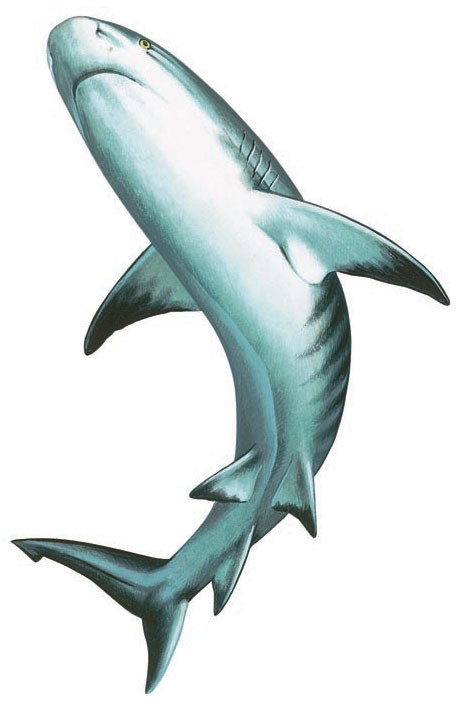
Tiger shark
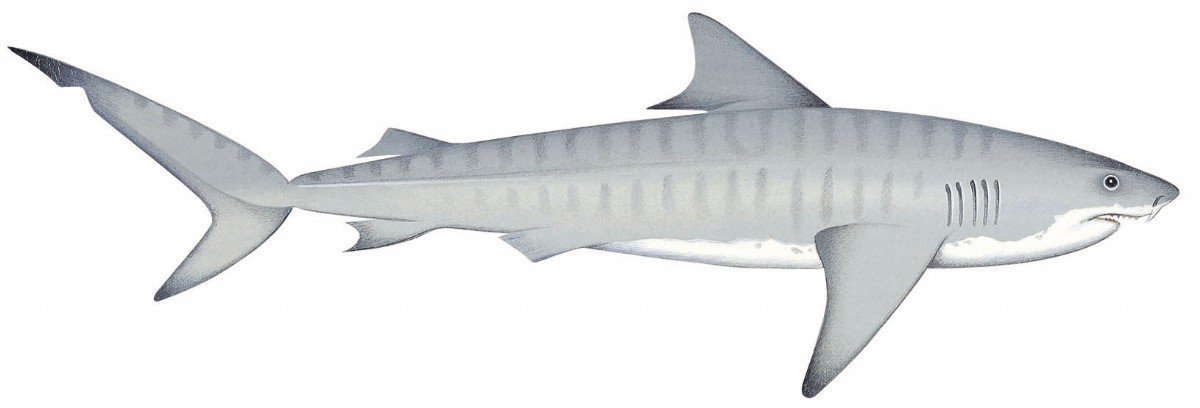
The tiger shark is up to 7.5 metres (24.5 feet) long with dark, tiger-like stripes on its back. It hunts in tropical oceans near coral reefs. Tiger sharks swim close to the surface looking for prey. They eat almost anything at the water’s surface—including land animals that stray too near to the water's edge, along with rubbish, metal objects and car tyres that it mistakes for food—and can be dangerous to humans.
Reef shark
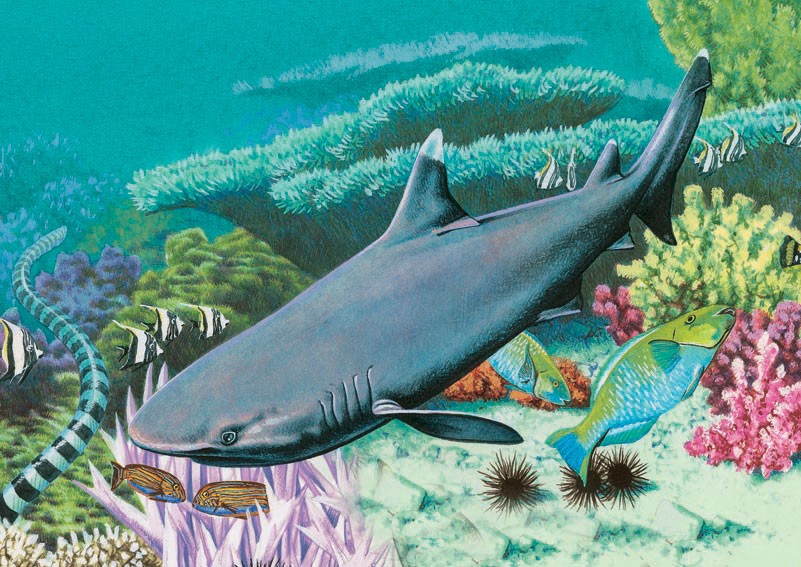
Reef sharks are one of a group of sharks commonly found near coral reefs. They are all fast and generally no more than 3 metres (10 feet) long. They include: white-tip reef sharks; black-tip reef sharks; Caribbean reef sharks and silvertip reef sharks.
Nurse shark
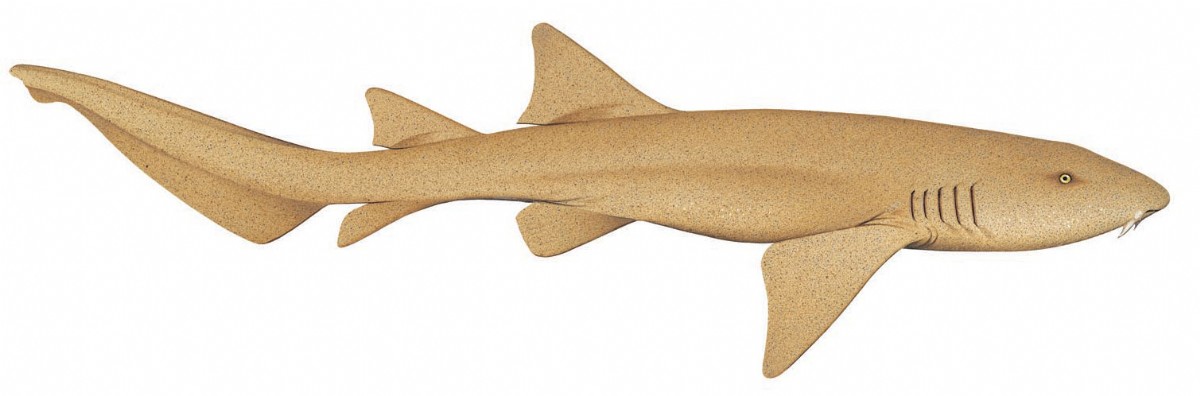
Commonly seen resting on the seabed by day, the nurse shark roams coral reefs at night, feeding on crustaceans, molluscs and slow fish. It may have got its name from the suckling noise it makes while feeding.
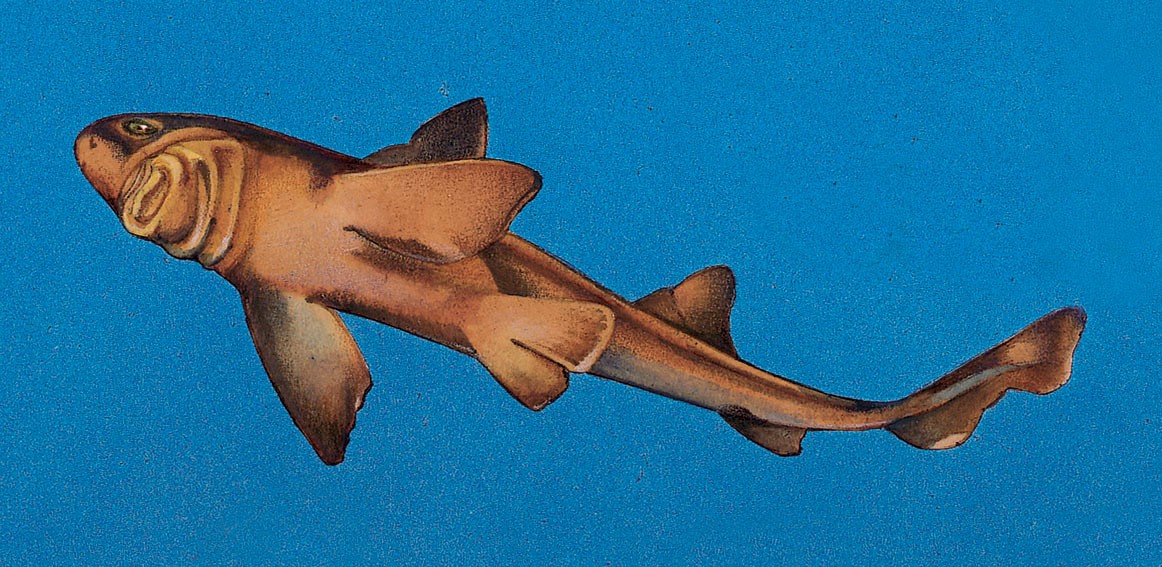
Goblin shark
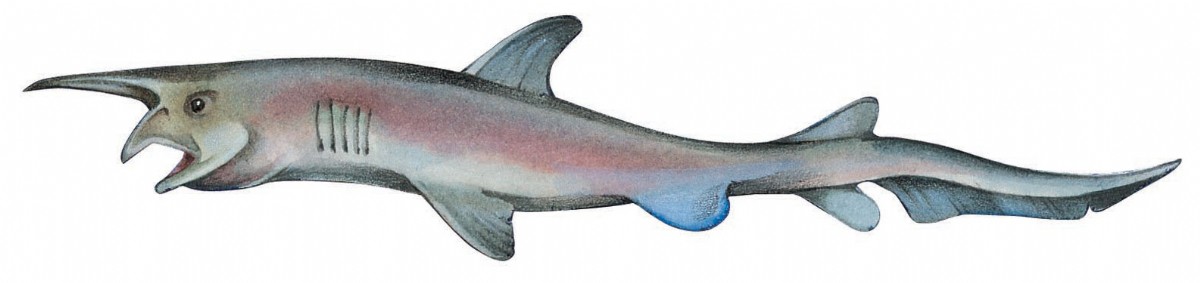
The goblin shark lives on the ocean bed in deep waters, at depths of up to 1300 metres (4200 feet). It has a bizarre shape: its long, dagger-like snout, flattened like a paddle, sticks out in front of its mouth. Inside its jaws are long, needle-like teeth at the front, and small, crushing teeth at the back.
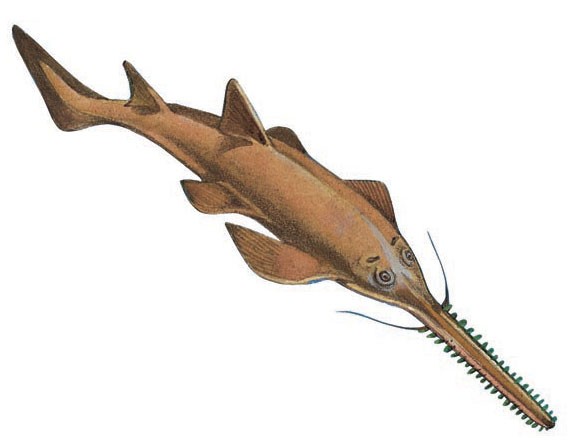
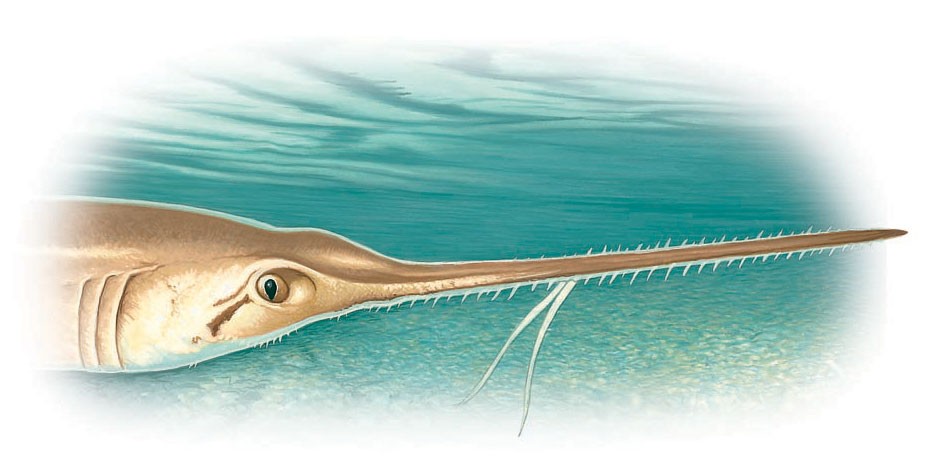
Sawshark
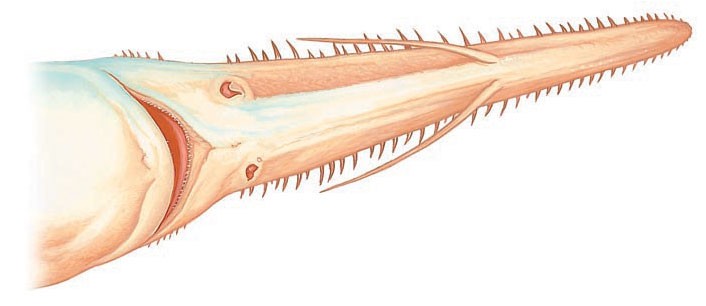
The sawshark is distinguished by its long snout, lined with sharp teeth on both edges like a saw. Two feelers hang down from the snout and graze the seabed, seeking out hidden fish and squid. Once the sawshark feels prey, it digs down with its snout, forces it up and eats it. Its small mouth is on the underside of its snout.
Basking shark
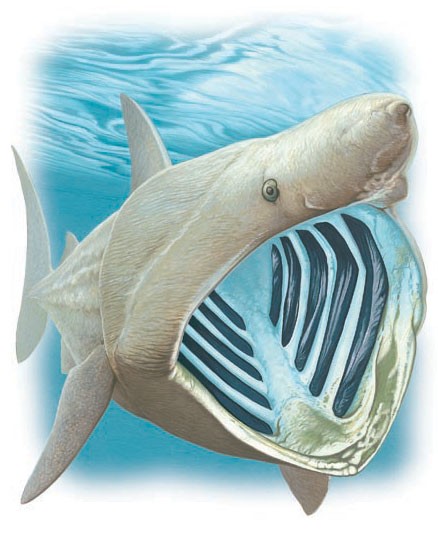
The basking shark is the second largest of all the sharks, measuring up to 12 metres (40 feet) long. It swims in temperate surface waters, holding its metre-wide mouth wide open to filter plankton from the water. Inside are large, bristly gill rakers. These are used to trap the plankton as water passes through its mouth and over its gills. It is often visible apparently "basking" on the water's surface close to shore, which is where the highest concentration of plankton is found. The basking shark is docile and harmless to large fish or humans.
Angel shark
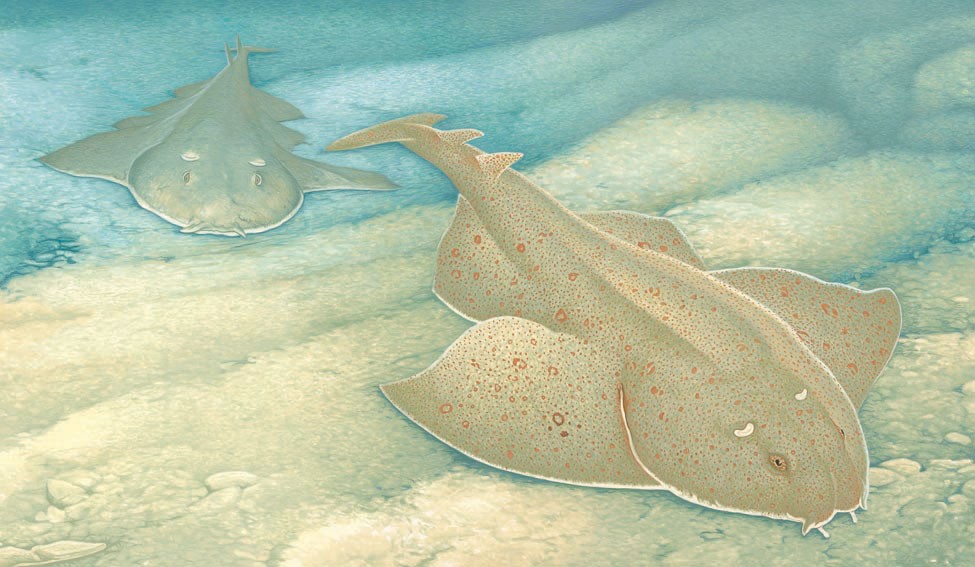
The angel shark is a flattened type of shark, resembling a ray, with markings that camouflage it well for life on the seabed. During the daytime, the angel shark lies motionless on the sea floor, buried under the sand with only its eyes showing. At night, it ambushes passing fish, bursting out to grab them in its sharp teeth.
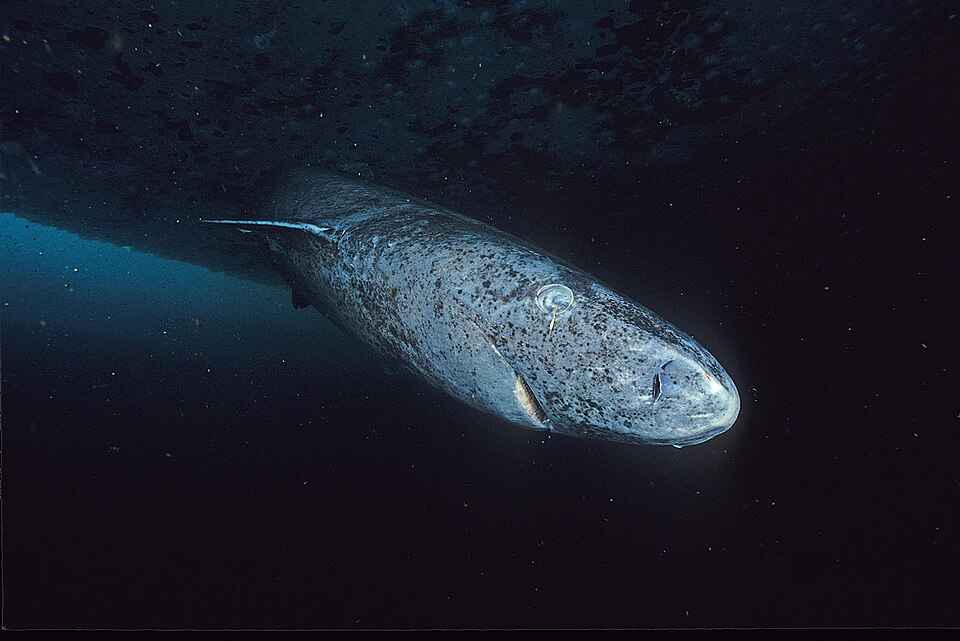
Greenland shark
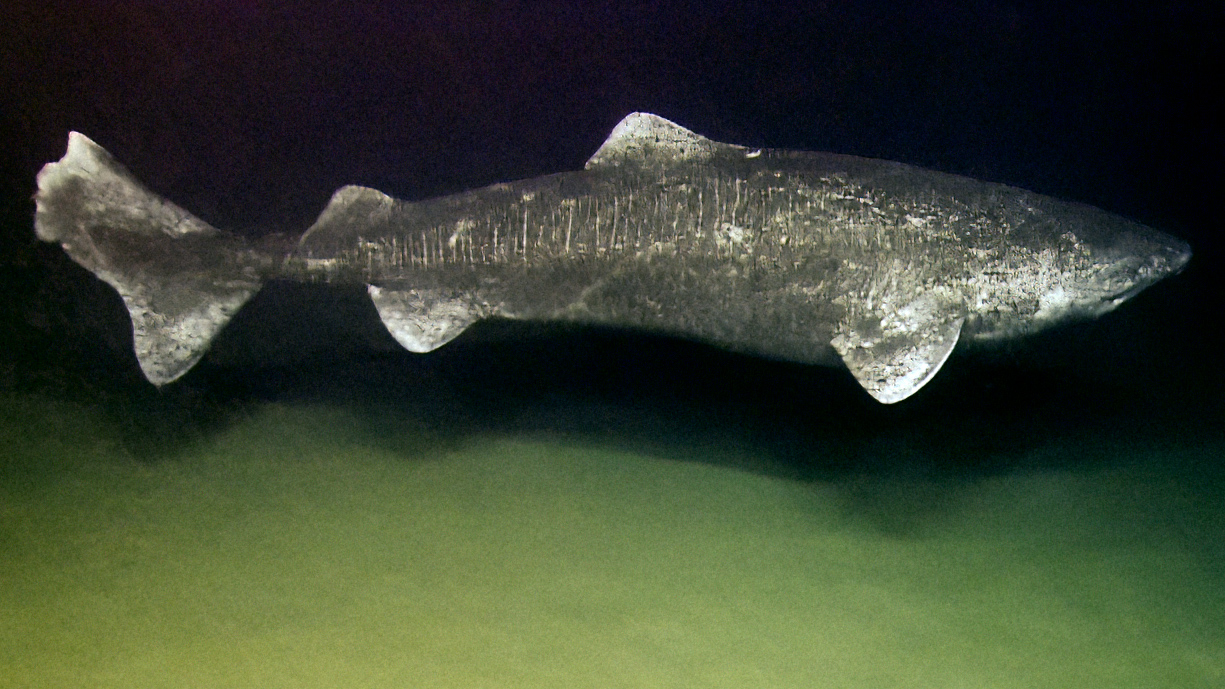
The Greenland shark, which grows to over 7 metres (23 feet) in length, is the largest known deep-sea fish, swimming in depths of up to 1200 metres (4000 feet). During the winter, the sharks gather in the shallow Arctic coastal waters for warmth. They migrate in summer to deeper waters, reaching as far south as the Caribbean—and probably much further afield.
The Greenland shark is the world's longest-living vertebrate. In 2016 a study found that one living individual was likely to be 392 years old. Females reach sexual maturity around 150 years of age and their pups are born alive after developing in the womb for between 8 and 18 years.
A generalist predator, the shark feeds on a wide range of marine life, including fish, seals and other whales. It also scavenges on carrion: Greenland sharks have been found with the remains of moose, reindeer and polar bear in their stomachs.
Consultant: Chris Jarvis
pics



Without in any way limiting Q-files Ltd’s exclusive rights under copyright, any use of this publication to “train” generative artificial intelligence (AI) technologies to generate text is expressly prohibited. Q-files Ltd reserves all rights to license use of this work for generative AI training and development of machine learning language models.