
Fish

CITE
We have made every effort to follow citation style rules, but there may be some minor differences. If in doubt, please refer to the appropriate citation style manual.
Rays and skates. (2026). In Q-files Encyclopedia, Life, Fish. Retrieved from
https://www.q-files.com/life/fish/rays-and-skates
"Rays and skates." Life, Fish, Q-files Encyclopedia, 23 Mar. 2026.
https://www.q-files.com/life/fish/rays-and-skates.
Accessed 30 Oct. 2026.
Rays and skates 2026. Life, Fish. Retrieved 30 October 2026, from
https://www.q-files.com/life/fish/rays-and-skates
Life, Fish, s.v. "Rays and skates," accessed October 30, 2026.
https://www.q-files.com/life/fish/rays-and-skates


Rays and skates
Rays and their relatives, the skates, are cartilaginous fish with flat bodies and long, narrow tails. Flattened relatives of sharks, most live on the sea floor in coastal waters. Only a few species, such as manta rays, live in the open sea. Rays' gills and mouths are on the undersides of their bodies. They have large, wing-like fins that they flap as they swim, making them look as if they are flying through the water. They feed on fish and shellfish near the seabed using their rounded teeth for crushing shells. Sometimes they hide in the sand to ambush passing prey.
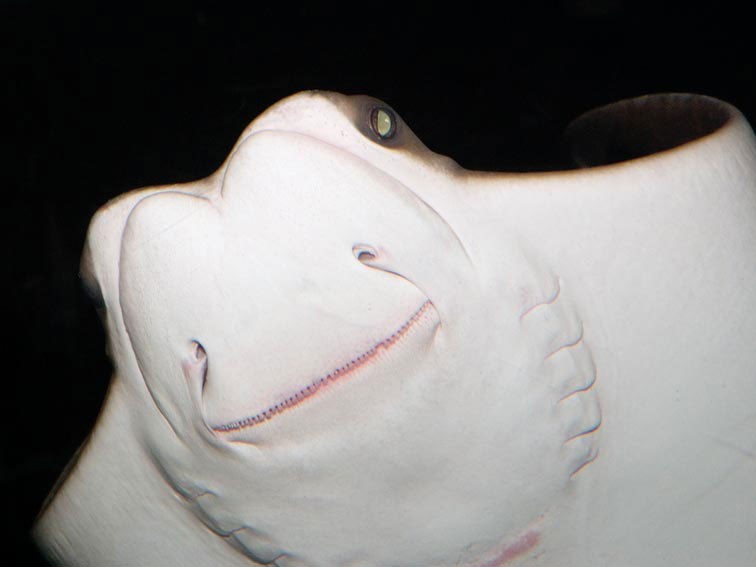
Manta ray
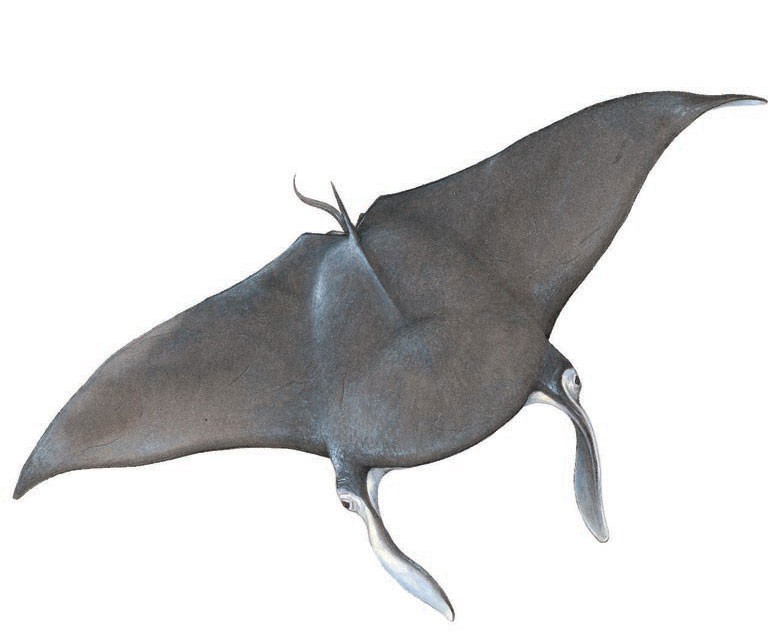

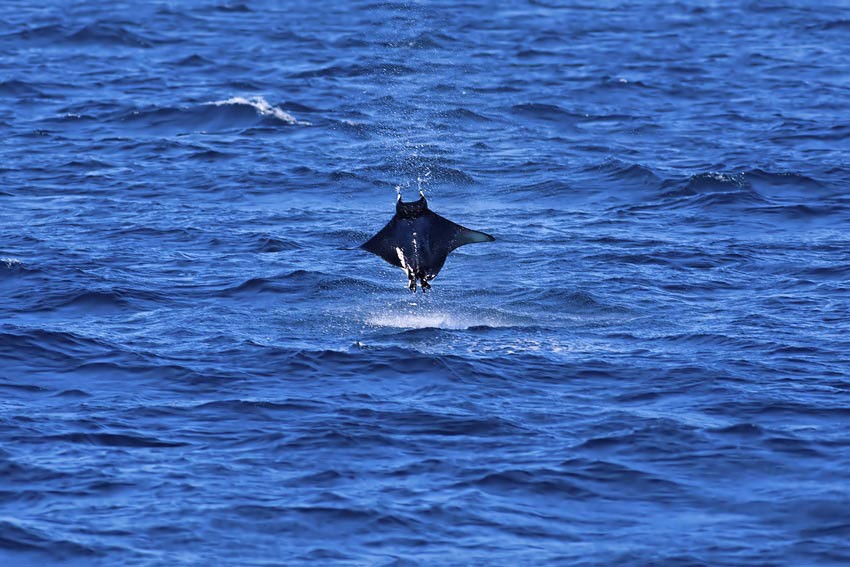
The largest of the rays, the manta ray grows up to 9 metres (30 feet) across. Its name means “mantle” in Spanish and refers to its cloak-like appearance. It is also called the “devil fish” after its two fins, which look like horns. Dark grey or black on its topside, the manta is pure white on its underside. It has a long, whip-like tail.
A native of tropical oceans, it sometimes floats on the water’s surface, basking in the hot sun. The manta swims by flapping its huge “wings”. It can even leap right out of the water. Like the blue whale and other ocean giants, the manta ray filters the water for small animals to eat, using its sieve-like gills as a strainer.
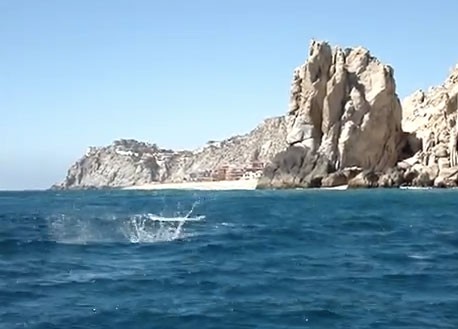
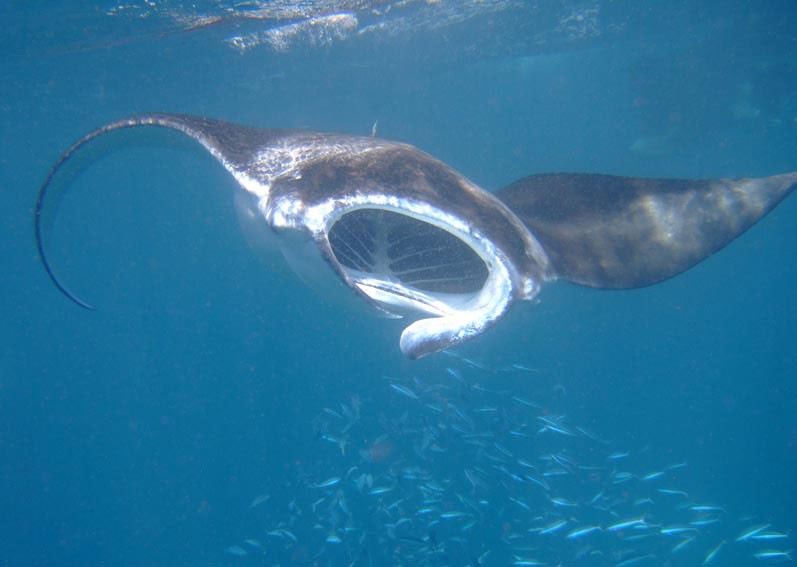
Each year, hundreds of manta rays migrate from the east coast of Africa across the Indian Ocean to the waters around the Maldive Islands, where they breed. Females are pursued through the water by groups of males. The males copy every move the female makes as part of an elaborate courtship dance. Only the most persistent and attentive male will win her favour. Several months later, the females give birth to one or two pups. When the pups are born, their wings are rolled up and can take several hours to flatten out completely.

Stingrays
Stingrays are a family of rays with spines in their tails that can inject a painful poison. This sting is painful to humans, but it is deadly to other fish. Stingrays live mostly in shallow, tropical waters. Their colouring often reflects that of the local sea bed, camouflaging them from predatory sharks.
Golden ray
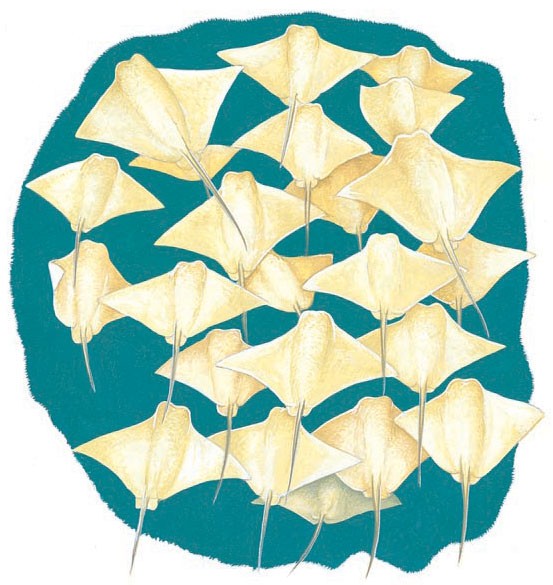
Golden rays are also known as cownose rays because of their domed heads. With their large “wings”, they are able to cover long distances easily. Attached to their tail is a venomous stinger, nearly 40 centimetres (16 inches) long, but the rays only use them if attacked.
Unlike other rays, golden rays seldom rest on the seabed; they prefer to stay on the move. Swimming in groups, their flapping action stirs up sand on the seabed, exposing clams and oysters for the rays to eat.
Electric ray
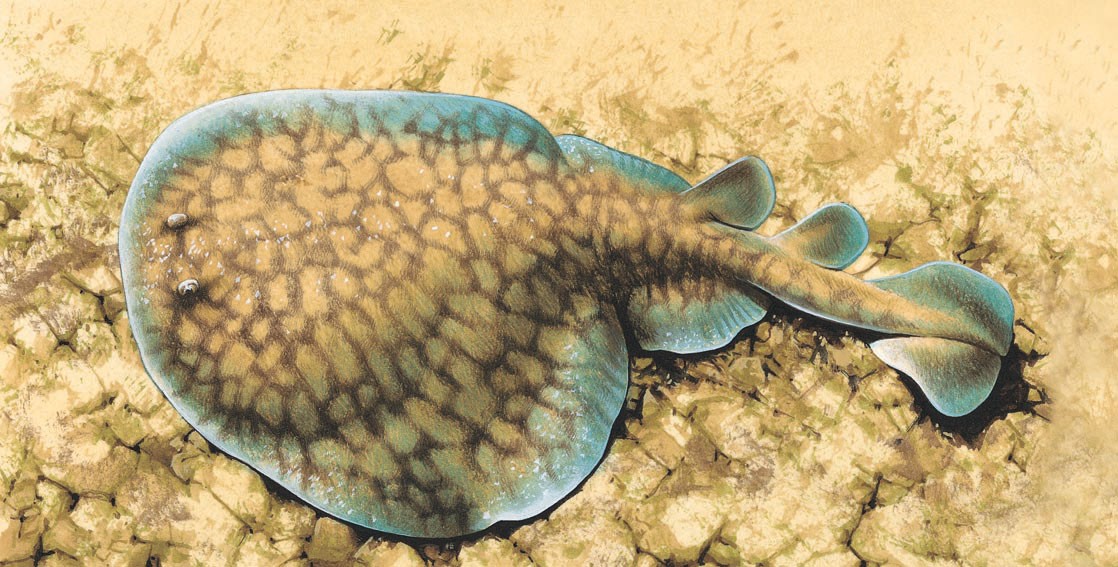
The electric ray gives out electric shocks. It has two special organs that generate electricity. It can direct an electric charge downwards, to stun and kill prey, or upwards, to ward off likely predators. Electric rays, also known as torpedo rays, lie camouflaged on the seabed. They live in warm waters and grow up to 1.8 metres (6 feet) long.
Skates
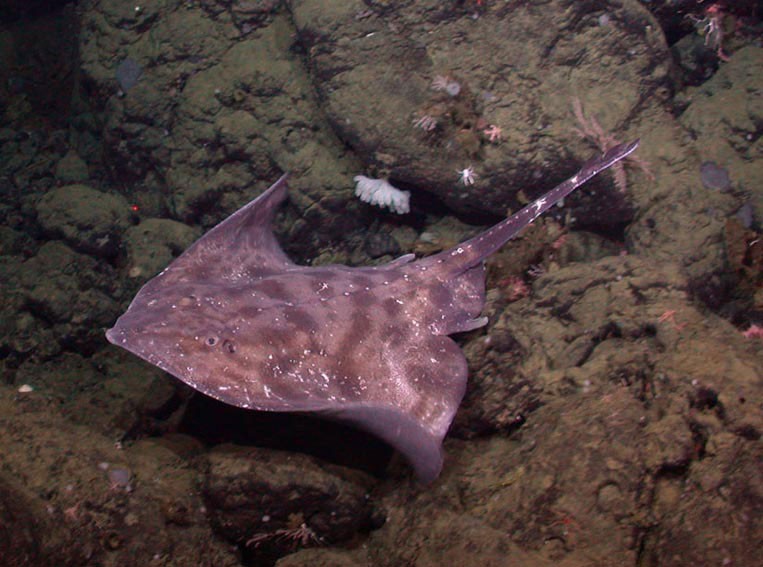
Skates are a group of flat, cartilaginous fish that are relatives of rays. Like rays they have wide "wings" and a long tail, but, unlike rays, they have long snouts. Skates lay eggs (they are oviparous), in a protective hard case called a mermaid's purse, whereas rays give birth to live young (they are viviparous).
Consultant: Chris Jarvis
pics


Without in any way limiting Q-files Ltd’s exclusive rights under copyright, any use of this publication to “train” generative artificial intelligence (AI) technologies to generate text is expressly prohibited. Q-files Ltd reserves all rights to license use of this work for generative AI training and development of machine learning language models.