
Fish

CITE
We have made every effort to follow citation style rules, but there may be some minor differences. If in doubt, please refer to the appropriate citation style manual.
Seahorses. (2026). In Q-files Encyclopedia, Life, Fish. Retrieved from
https://www.q-files.com/life/fish/seahorses
"Seahorses." Life, Fish, Q-files Encyclopedia, 23 Mar. 2026.
https://www.q-files.com/life/fish/seahorses.
Accessed 30 Oct. 2026.
Seahorses 2026. Life, Fish. Retrieved 30 October 2026, from
https://www.q-files.com/life/fish/seahorses
Life, Fish, s.v. "Seahorses," accessed October 30, 2026.
https://www.q-files.com/life/fish/seahorses


Seahorses
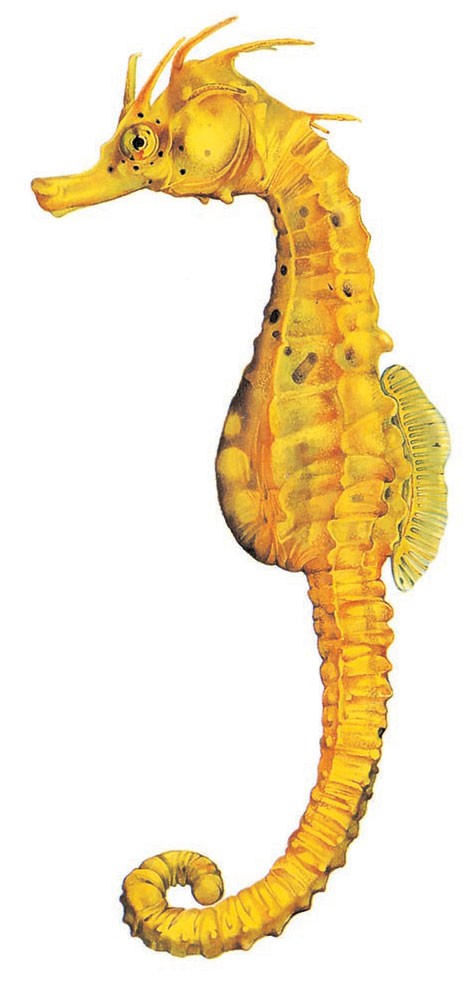
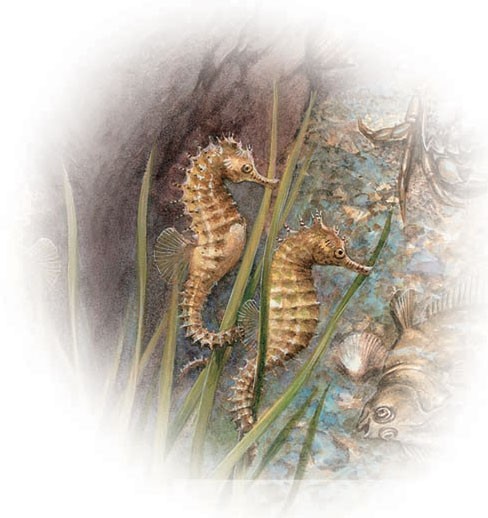
Seahorses are small fish with horse-shaped heads and curled tails. There are 54 species of seahorse. They are found in shallow temperate and tropical seas across the world, living in sheltered areas such as estuaries, mangroves, coral reefs and seagrass meadows. Seahorses swim along in an upright position, propelling themselves using a small fin on their back. They are, however, poor swimmers so, in order to stop themselves from being swept away in fast-flowing water, they curl their long tails around plant stems. For protection, seahorses are camouflaged to match their surroundings, and can change colour in seconds. When danger approaches, they hide in nooks and crannies in the coral or among fronds of seagrass.They feed on small crustaceans that float or crawl within striking range. Males stay within a territory of between 0.5 and 1 square metres (5.5–11 square feet).
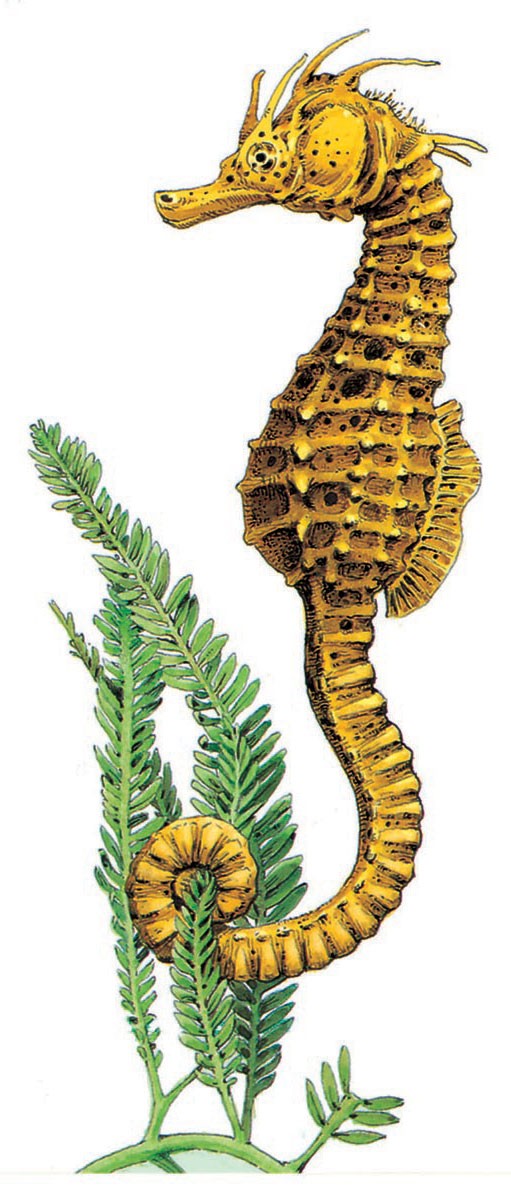


Pregnant males
Seahorses are among the very few animal species on Earth in which the male bears the young. Before mating, the male and female perform a "dance" lasting several hours. The male then pumps water through the pouch on his belly causing it to open and display its emptiness. The female seahorse then lays her eggs into his pouch. There they develop for up to 45 days until the male “gives birth” to 50 or more fully developed, tiny baby seahorses.
Baby seahorses are known as fry. Vulnerable to predators, less than one in a thousand will survive into adulthood.
Weedy seadragon

The weedy seadragon is an Australian relative of the seahorse. It is covered in strange, weed-like projections. These help it to blend in with the seaweed around it.
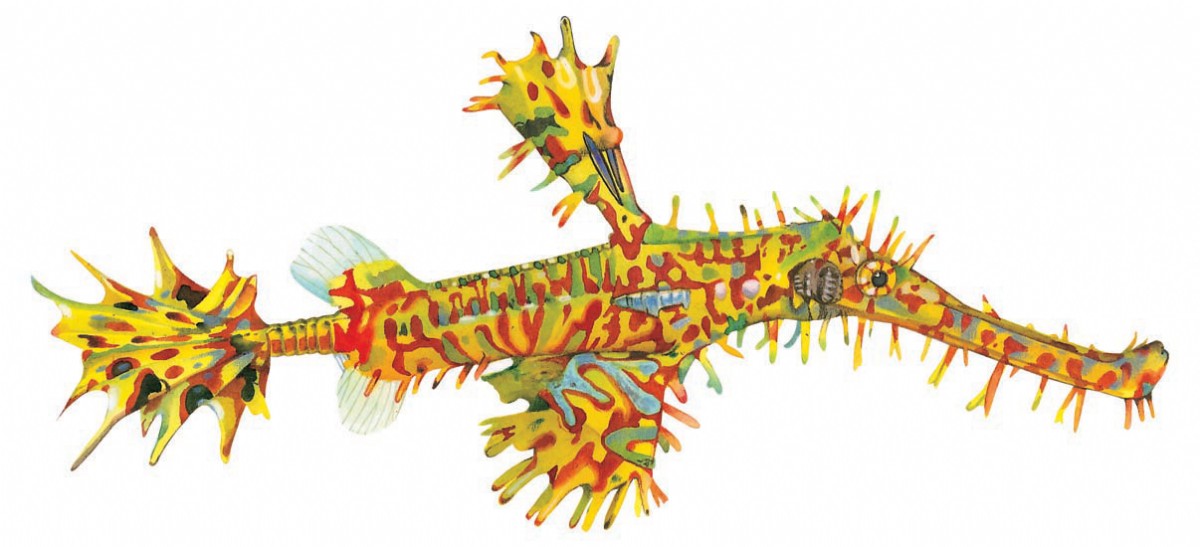
Pipefish
The harlequin ghost pipefish is covered in bony plates. This relative of the seahorse is camouflaged to look like a piece of coral, making it difficult to spot by attackers. It feeds on zooplankton and shrimps, which it sucks in through its tube-like mouth.
Consultant: Chris Jarvis
pics

Without in any way limiting Q-files Ltd’s exclusive rights under copyright, any use of this publication to “train” generative artificial intelligence (AI) technologies to generate text is expressly prohibited. Q-files Ltd reserves all rights to license use of this work for generative AI training and development of machine learning language models.