
Fish

CITE
We have made every effort to follow citation style rules, but there may be some minor differences. If in doubt, please refer to the appropriate citation style manual.
Hammerhead shark. (2026). In Q-files Encyclopedia, Life, Fish. Retrieved from
https://www.q-files.com/life/fish/hammerhead-shark
"Hammerhead shark." Life, Fish, Q-files Encyclopedia, 23 Mar. 2026.
https://www.q-files.com/life/fish/hammerhead-shark.
Accessed 6 Aug. 2026.
Hammerhead shark 2026. Life, Fish. Retrieved 6 August 2026, from
https://www.q-files.com/life/fish/hammerhead-shark
Life, Fish, s.v. "Hammerhead shark," accessed August 6, 2026.
https://www.q-files.com/life/fish/hammerhead-shark


Hammerhead shark
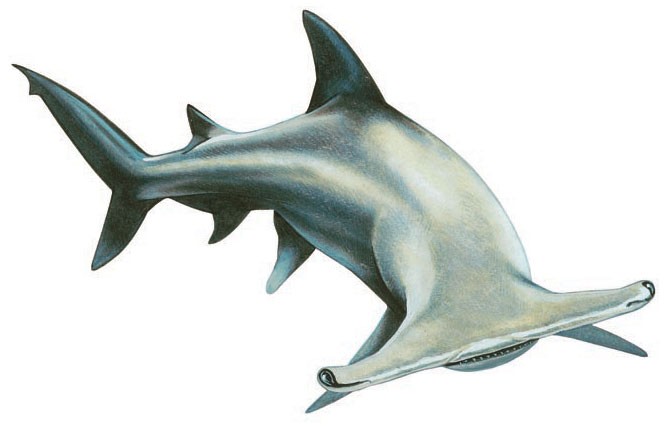
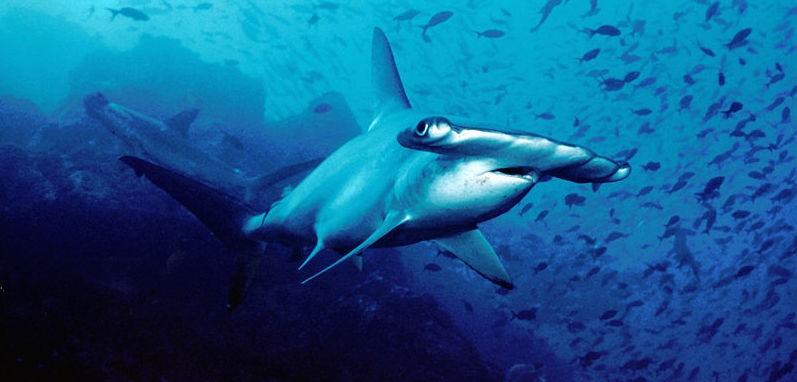
Hammerhead sharks are a family of sharks that are distinguished by their extraordinary hammer-shaped heads, with eyes at each end. This unusual design gives them the widest field of vision of any shark—allowing them to spot prey easily. Most species feed on fish, squid or crustaceans, but larger species, the scalloped, great and smooth hammerhead sharks, are known to attack humans. There are nine species of hammerhead in all.

Head shape
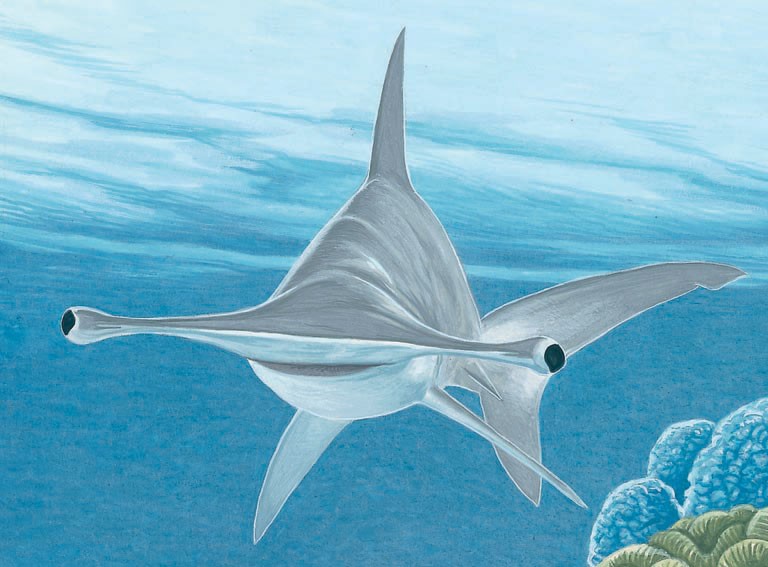
The unusual shape of the hammerhead shark’s head, with one eye sticking out on each side, gives it nearly 360-degree vision, which helps it to look out for prey all around it. Like all sharks, its head also contains sensors, which detect electrical signals given off by other creatures. These can help the shark locate stingrays that hide under the mud on the sea floor. When a hammerhead young (called a pup) is born, its head is more rounded than its parents' head shape. The head may also be used to pin down the shark's prey on the seabed while it eats it. The shape is the perfect design for this use.
Schooling
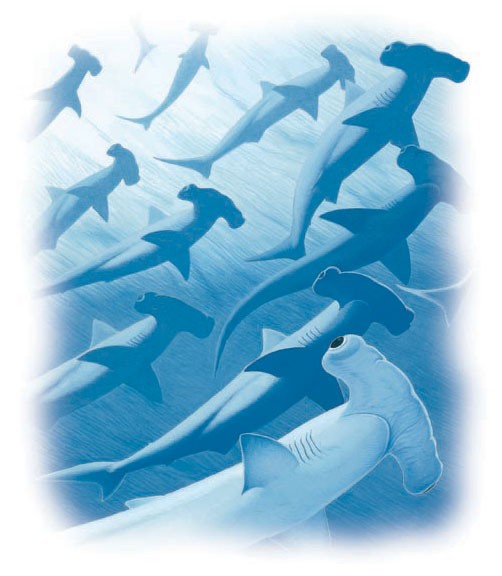
During autumn and winter, huge schools of scalloped hammerhead sharks congregate in the waters off Central America. The sharks gather in deep waters around seamounts, close to their main feeding areas.
By day, groups of up to 500 sharks, mostly females, cruise together. Individuals use displays, such as sudden twisting or thrashing movements, to win the best positions at the centre of the school. During the day, the sharks show no interest in food, but at night they become lone hunters, preying on squid and stingrays.
Consultant: Chris Jarvis
pics
Without in any way limiting Q-files Ltd’s exclusive rights under copyright, any use of this publication to “train” generative artificial intelligence (AI) technologies to generate text is expressly prohibited. Q-files Ltd reserves all rights to license use of this work for generative AI training and development of machine learning language models.