
Fish

CITE
We have made every effort to follow citation style rules, but there may be some minor differences. If in doubt, please refer to the appropriate citation style manual.
Coral reef fish. (2026). In Q-files Encyclopedia, Life, Fish. Retrieved from
https://www.q-files.com/life/fish/coral-reef-fish
"Coral reef fish." Life, Fish, Q-files Encyclopedia, 23 Mar. 2026.
https://www.q-files.com/life/fish/coral-reef-fish.
Accessed 21 Sep. 2026.
Coral reef fish 2026. Life, Fish. Retrieved 21 September 2026, from
https://www.q-files.com/life/fish/coral-reef-fish
Life, Fish, s.v. "Coral reef fish," accessed September 21, 2026.
https://www.q-files.com/life/fish/coral-reef-fish


Coral reef fish
Coral reefs are found in the warm, clear, shallow waters around volcanic islands or rocky coastlines of tropical seas. The reefs teem with wildlife, including many species of brightly coloured fish. Many of the smaller kinds feed on tiny plants called algae inside the coral. The coral itself is consumed by some fish. Predators, such as sharks, rays and barracudas, prey on coral reef fish. Most fish that live on coral reefs have sharp, bony spines, called "rays", in their fins, which provide defence from these predators. In some species of these ray-finned fish, the spines are venomous.

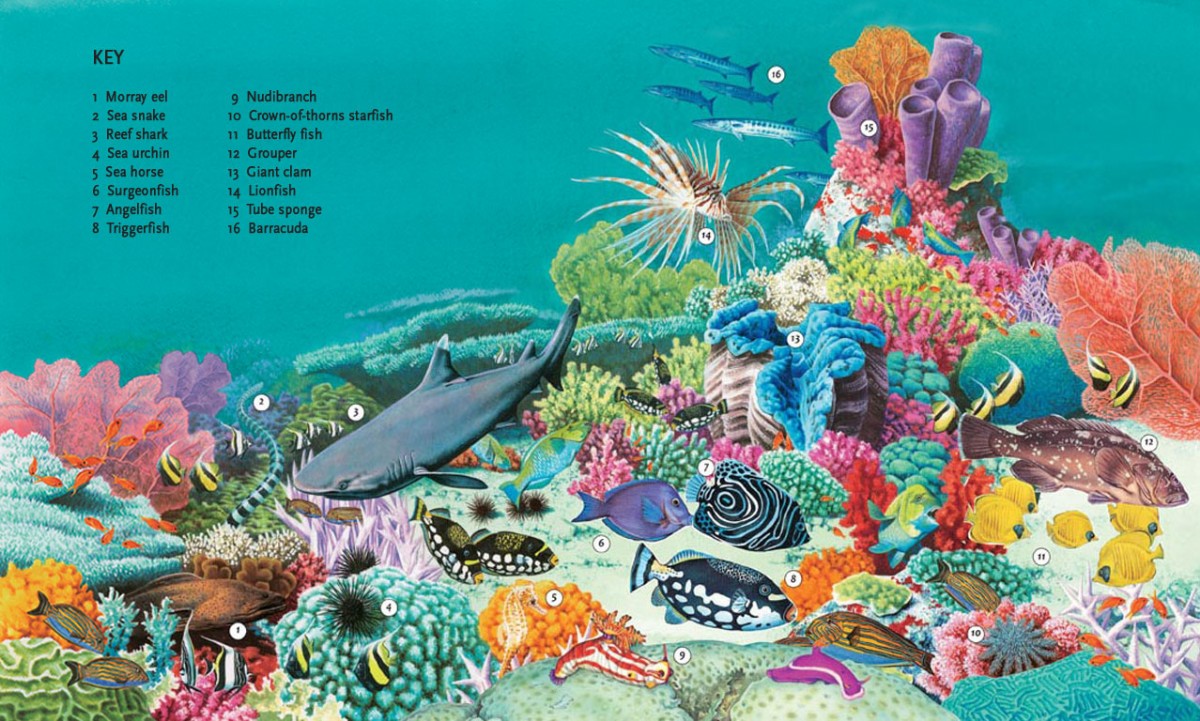

Angelfish
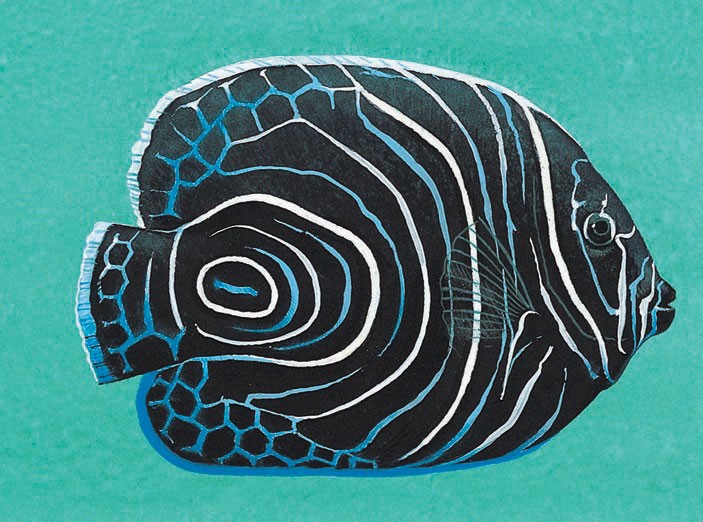
Angelfish have very narrow bodies, so that when viewed from the front, they seem almost to disappear. There are many different kinds of angelfish, and they often have striking patterns and beautiful, bright colours. Angelfish make sure that they are always near a clump of seaweed or rocks. If threatened by predators, they will quickly dart into this shelter.
Parrotfish
Parrotfish are brightly coloured fish, so called because their mouths are shaped like the short, powerful beak of a parrot. Parrotfish scrape algae from the coral reefs where they live, biting off chunks of coral as they do so. Bony plates in their throats grind down the coral into grains of sand. Some species can produce up to 90 kilogrammes (200 pounds) of sand a year.


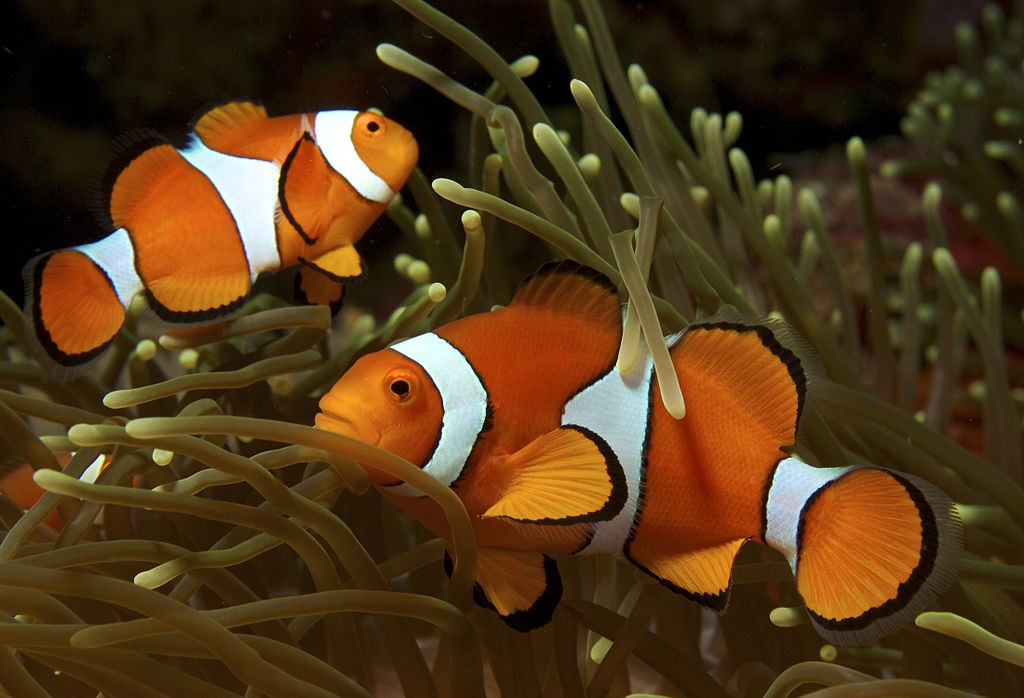
Clownfish
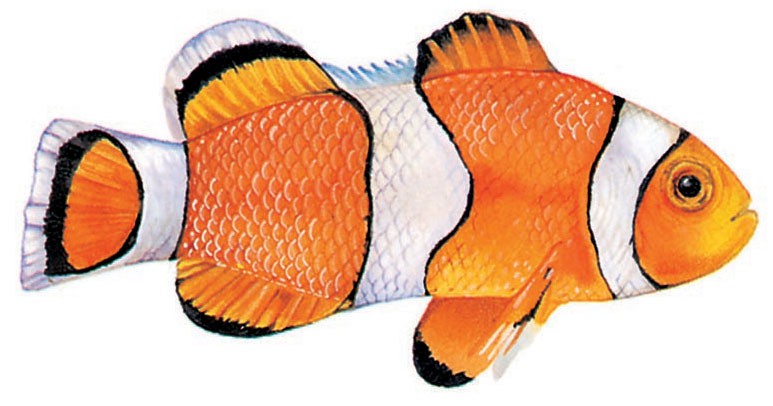
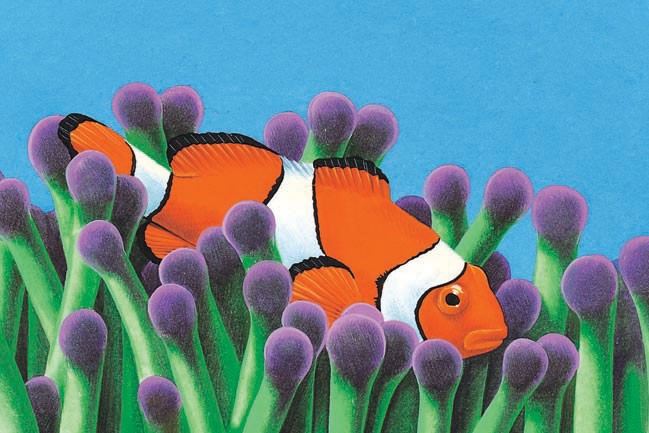
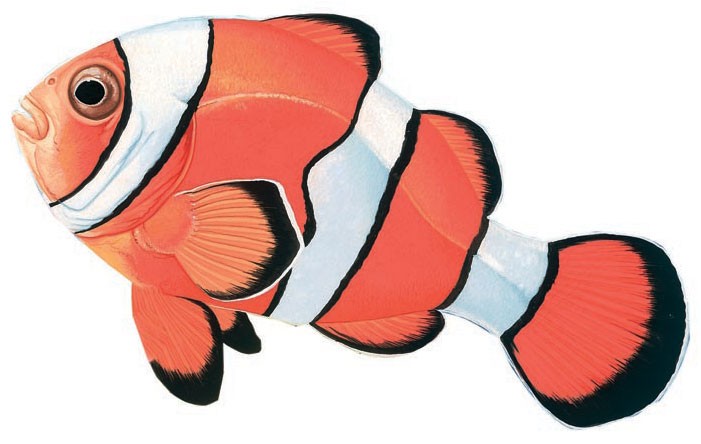
The clownfish is a small orange and white fish that lives inside the poisonous tentacles of sea anemones. The fish is protected from the poison by a layer of mucus, but its enemies would be stung to death. In return, the fish keeps the anemone clean. Clownfish live in family groups where the leader is a female. Every fish grows up as a male, but if the female dies, one of the males will turn into a female to replace her.
Butterflyfish
Butterflyfish are small, brightly coloured fish, often with eye-like markings on their tails. Predators are not sure which end is which—especially as the butterflyfish can swim backwards as well as forwards. If a predator goes for its tail, a fish can escape easily.


Lionfish
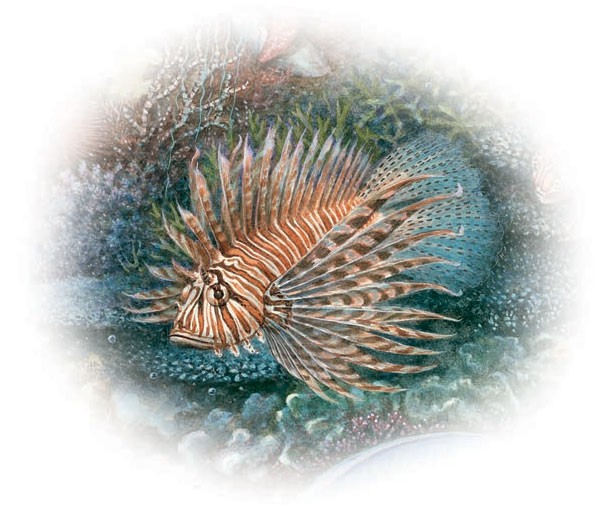
Bright colours are often a warning signal to predators. The markings of the lionfish warn that its long, spiny fins are equipped with deadly venom. They are deadly to touch, each fin containing enough lethal venom to kill its prey. Lionfish sometimes blow jets of water at their prey, so it can be more easily snapped up.
Barracuda
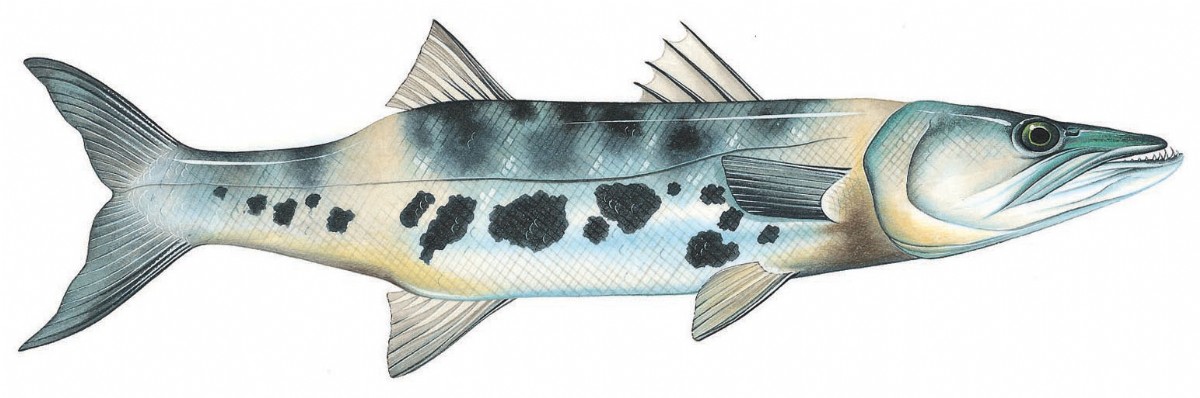
A large predator—some species can reach 1.8 metres (6 feet) in length—the barracuda strikes at great spead with its powerful jaws lined with sharp-edged, fang-like teeth. It is known for its fearsome appearance and ferocious behaviour. The barracuda preys mostly on fish—including those bigger than itself. It kills and eats larger prey by tearing chunks of flesh out of their bodies.
Stonefish
The stonefish is the most venomous fish in the world. Camouflaged on the seabed, stonefish lie in shallow water around coral reefs. If the stonefish senses danger, it raises 13 venomous spines on the fin on its back and locks them in position, ready to spear any unwary predator. It can injure or even kill any person that steps on it.

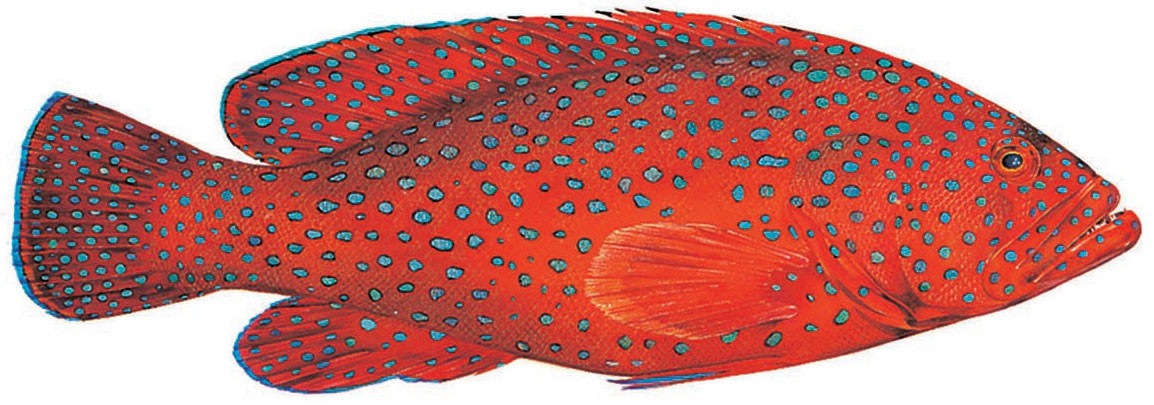
Coral hind
The coral hind is a member of the grouper family. It is a predator that lives among the coral in the warm seas of Africa and Asia. It lies in wait for small fish and crustaceans, picking its moment to seize them with its large, teeth-lined mouth.
Consultant: Chris Jarvis
pics

Without in any way limiting Q-files Ltd’s exclusive rights under copyright, any use of this publication to “train” generative artificial intelligence (AI) technologies to generate text is expressly prohibited. Q-files Ltd reserves all rights to license use of this work for generative AI training and development of machine learning language models.