
Marine invertebrates

CITE
We have made every effort to follow citation style rules, but there may be some minor differences. If in doubt, please refer to the appropriate citation style manual.
Sea anemones. (2026). In Q-files Encyclopedia, Life, Marine invertebrates. Retrieved from
https://www.q-files.com/life/marine-invertebrates/sea-anemones
"Sea anemones." Life, Marine invertebrates, Q-files Encyclopedia, 24 Mar. 2026.
https://www.q-files.com/life/marine-invertebrates/sea-anemones.
Accessed 6 Aug. 2026.
Sea anemones 2026. Life, Marine invertebrates. Retrieved 6 August 2026, from
https://www.q-files.com/life/marine-invertebrates/sea-anemones
Life, Marine invertebrates, s.v. "Sea anemones," accessed August 6, 2026.
https://www.q-files.com/life/marine-invertebrates/sea-anemones


Sea anemones
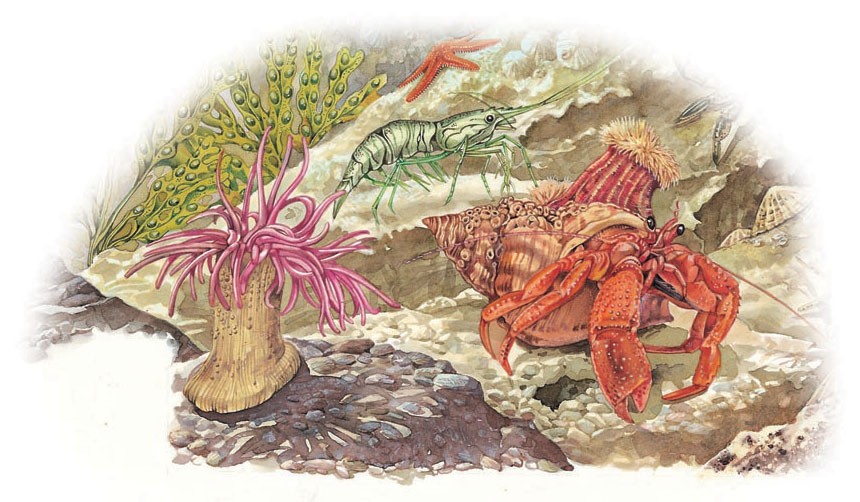
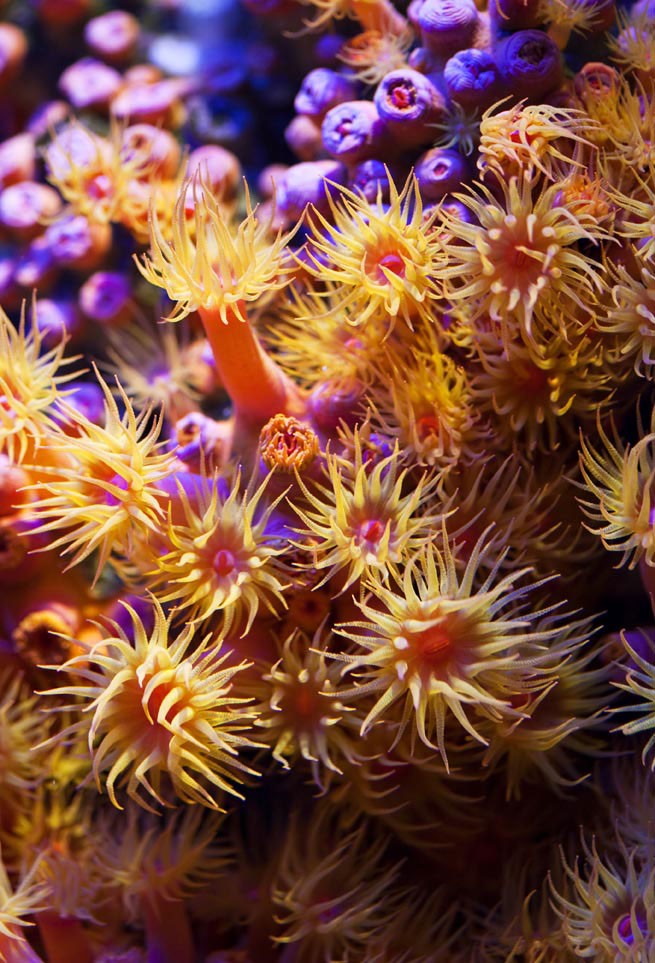
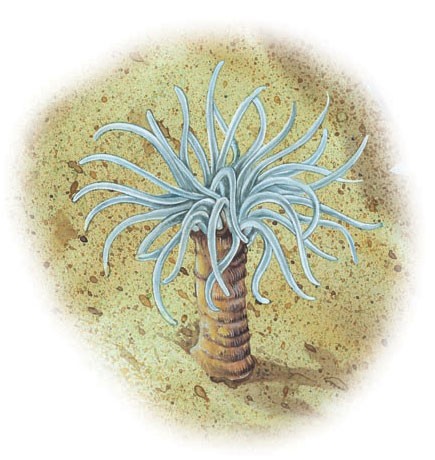
Sea anemones belong to the cnidarian group of invertebrates, which also includes jellyfish and coral polyps. Looking like flowers, their bodies consist of a sticky foot ("pedal disc"), a column-like body and a set of stinging tentacles grouped around a central mouth. The tentacles are used both to paralyse and capture prey, and to fend off enemies. Although they generally stay in one place, sea anemones can move if conditions become unfavourable to them. They can creep slowly about on their foot, or by swimming, either by flexing their bodies or using their tentacles.
Tentacles
Sea anemones anchor themselves to rocks with their stinging tentacles pointing upwards. The tentacles are used to catch zooplankton and shrimps (larger species can prey on fish), paralyse them and draw them into the anemone's mouth. The tentacles are lined with hairs. When a hair is touched, it shoots out a tiny venomous "harpoon", called a nematocyst, which attaches itself to the animal that triggered it.
Avoiding danger

Although anemones can move about very slowly, they spend most of their life fixed to rocks in shallow water. When they sense danger, anemones pump water out of their bodies and flatten themselves against the rock. They also use this method to ensure they do not dry out when the tide goes out and they are left above water.
Clownfish
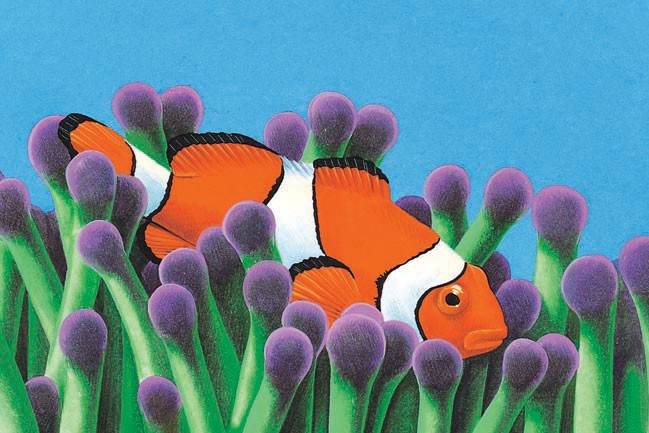
The clownfish lives inside the poisonous tentacles of sea anemones. The fish is protected from the poison by a layer of mucus on its body, but its enemies would be stung to death by the anemones. In return for its protection, the fish keeps the anemone clean. The anemone also feeds on the scraps left over from the clownfish’s meals.
Consultant: Chris Jarvis
pics
Without in any way limiting Q-files Ltd’s exclusive rights under copyright, any use of this publication to “train” generative artificial intelligence (AI) technologies to generate text is expressly prohibited. Q-files Ltd reserves all rights to license use of this work for generative AI training and development of machine learning language models.