
Marine invertebrates

CITE
We have made every effort to follow citation style rules, but there may be some minor differences. If in doubt, please refer to the appropriate citation style manual.
Octopuses. (2026). In Q-files Encyclopedia, Life, Marine invertebrates. Retrieved from
https://www.q-files.com/life/marine-invertebrates/octopuses
"Octopuses." Life, Marine invertebrates, Q-files Encyclopedia, 24 Mar. 2026.
https://www.q-files.com/life/marine-invertebrates/octopuses.
Accessed 6 Aug. 2026.
Octopuses 2026. Life, Marine invertebrates. Retrieved 6 August 2026, from
https://www.q-files.com/life/marine-invertebrates/octopuses
Life, Marine invertebrates, s.v. "Octopuses," accessed August 6, 2026.
https://www.q-files.com/life/marine-invertebrates/octopuses


Octopuses
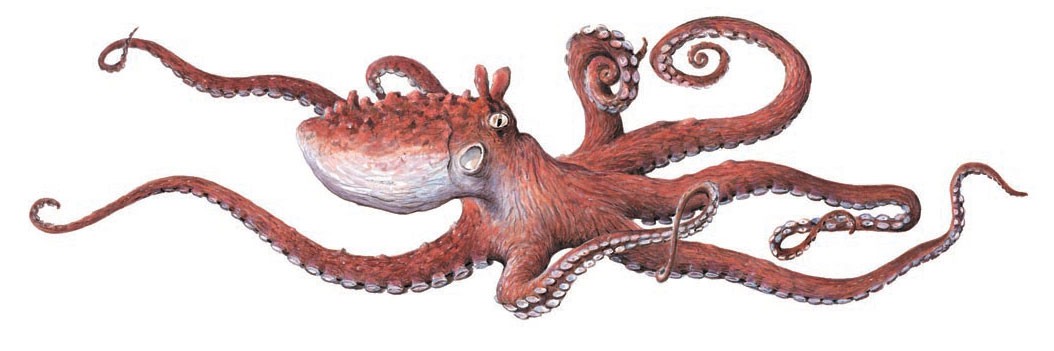
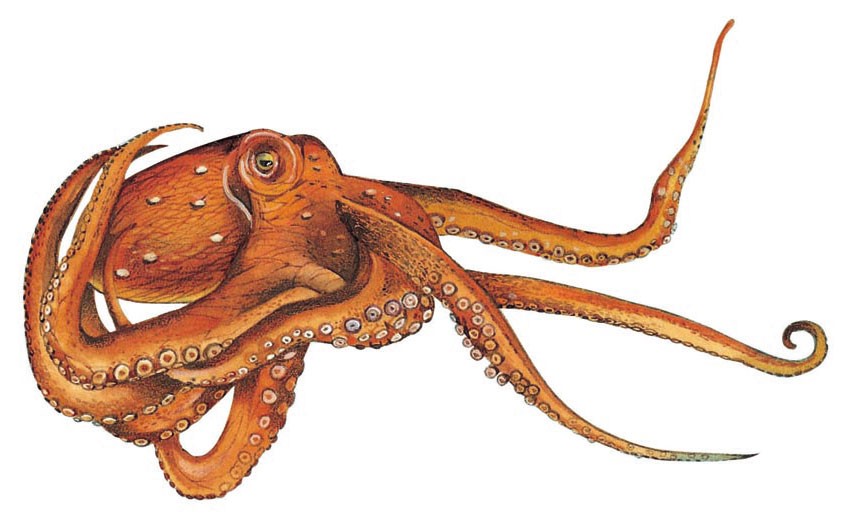
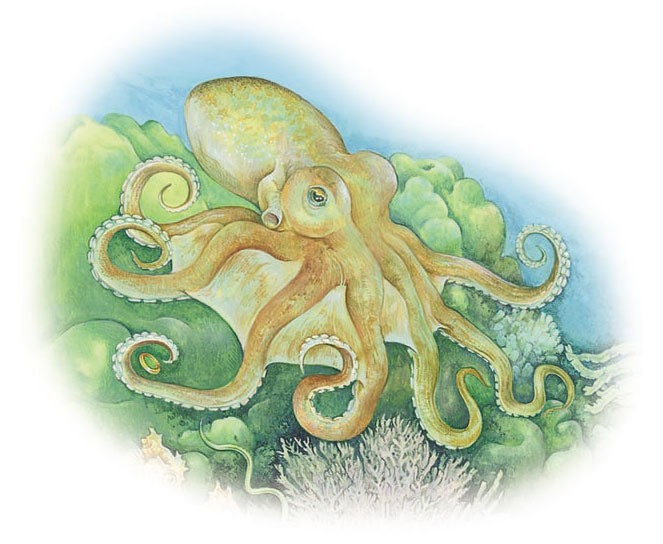
Octopuses belong to a family of molluscs called cephalopods, a group which also includes squid, cuttlefish and nautiluses. They have bag-shaped bodies and eight arms. Octopuses live in all of the world’s seas and oceans. The smallest species are only the size of a fingernail, while the largest have an arm span of up to 9 metres (30 feet). Octopuses use their sucker-covered arms to clamber around the seabed and seize their prey of crabs and lobsters. They have large eyes and excellent eyesight, the best of any invertebrate. Like humans, they can see in colour, which many other sea creatures cannot. Octopuses are considered the most intelligent of all invertebrates.
Arms

Octopuses have eight muscular arms used for gripping, touching, fighting and walking along the seabed. Suckers along the underside of these arms help them to grip prey and force it into their beak-like mouth.
Beak
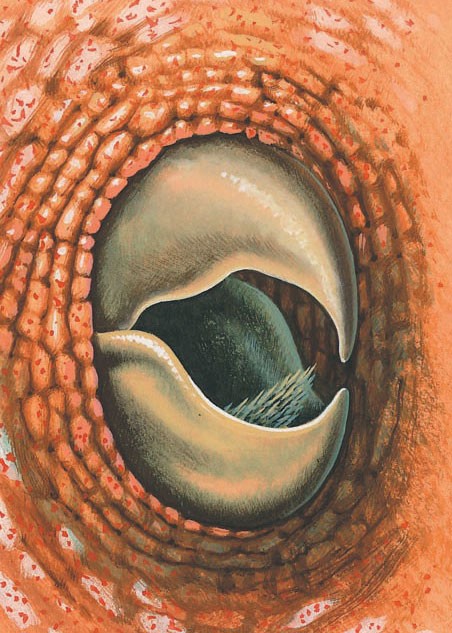
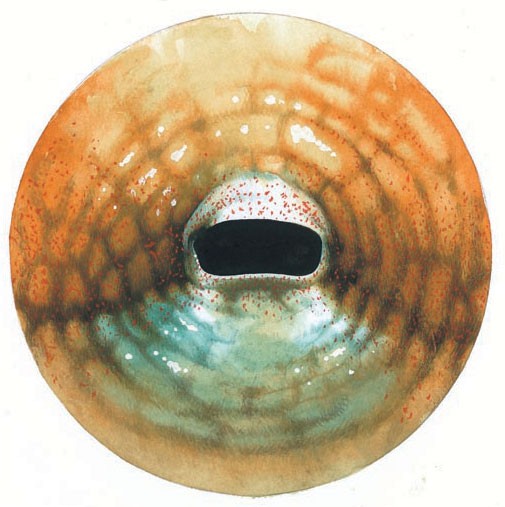
An octopus's mouth is in the centre of its body. Instead of jaws it has a hard, sharp beak, like a parrot's. This beak is tough enough to break open crab shells. Octopuses normally inject their prey with a paralysing saliva before breaking it up into small pieces with their beaks. They have rough tongues, called radulas, which grate their food and draw it down towards their stomachs.
Changing colour
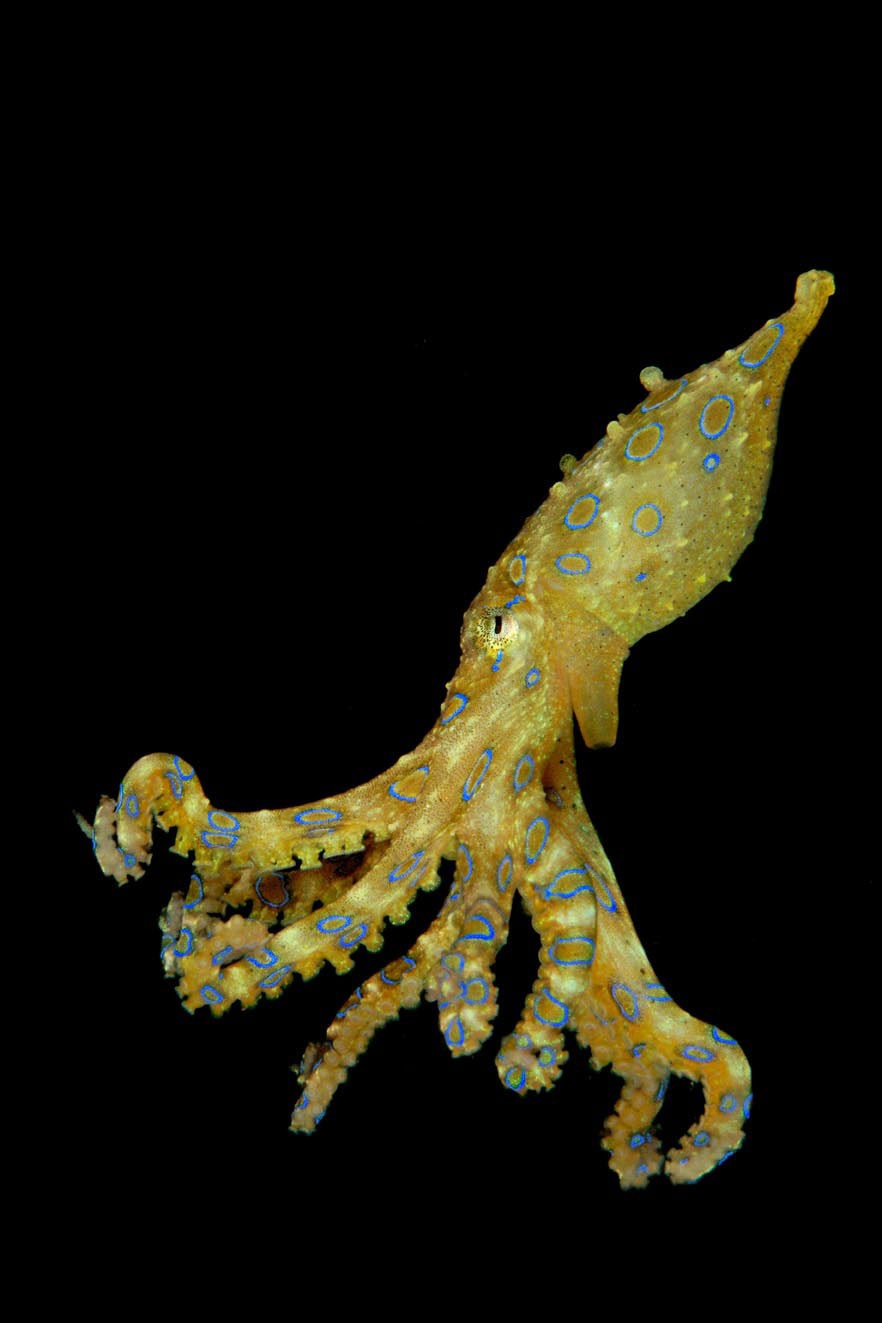
Colour is very important to octopuses. They can rapidly change the colour of their skin to match their surroundings. Octopuses also use skin colour changes to signal to each other. Their colours tend to get brighter when they are startled or frightened. The blue-ringed octopus, for example, becomes bright yellow with blue rings when alarmed, giving warning of its highly venomous bite.

Jet propulsion
To make a quick escape, octopuses may use jet propulsion. They suck water into the body sac behind their eyes, then squirt it out. As the water shoots out backwards, the force of it pushes the animal forwards. It swims off head first, with its arms trailing behind.

When an octopus is startled or is trying to escape from a predator, it ejects clouds of black or brown ink into the water. This confuses its pursuers and gives the octopus a chance to get away.

Breeding
Octopuses do not live long—a year or two at most—and they reproduce just once in their lives. Females lay thousands of eggs, which they hang on a rock out of sight. The mother guards her eggs until they hatch between six and eight weeks later. It is the last thing she does before she dies. The tiny hatchlings drift with sea currents. Many will be eaten before they can grow into adults.

Consultant: Chris Jarvis
pics

Without in any way limiting Q-files Ltd’s exclusive rights under copyright, any use of this publication to “train” generative artificial intelligence (AI) technologies to generate text is expressly prohibited. Q-files Ltd reserves all rights to license use of this work for generative AI training and development of machine learning language models.