
Environment

CITE
We have made every effort to follow citation style rules, but there may be some minor differences. If in doubt, please refer to the appropriate citation style manual.
Coral bleaching. (2026). In Q-files Encyclopedia, Geography, Environment. Retrieved from
https://www.q-files.com/geography/environment/coral-bleaching
"Coral bleaching." Geography, Environment, Q-files Encyclopedia, 1 Apr. 2026.
https://www.q-files.com/geography/environment/coral-bleaching.
Accessed 21 Sep. 2026.
Coral bleaching 2026. Geography, Environment. Retrieved 21 September 2026, from
https://www.q-files.com/geography/environment/coral-bleaching
Geography, Environment, s.v. "Coral bleaching," accessed September 21, 2026.
https://www.q-files.com/geography/environment/coral-bleaching


Coral bleaching
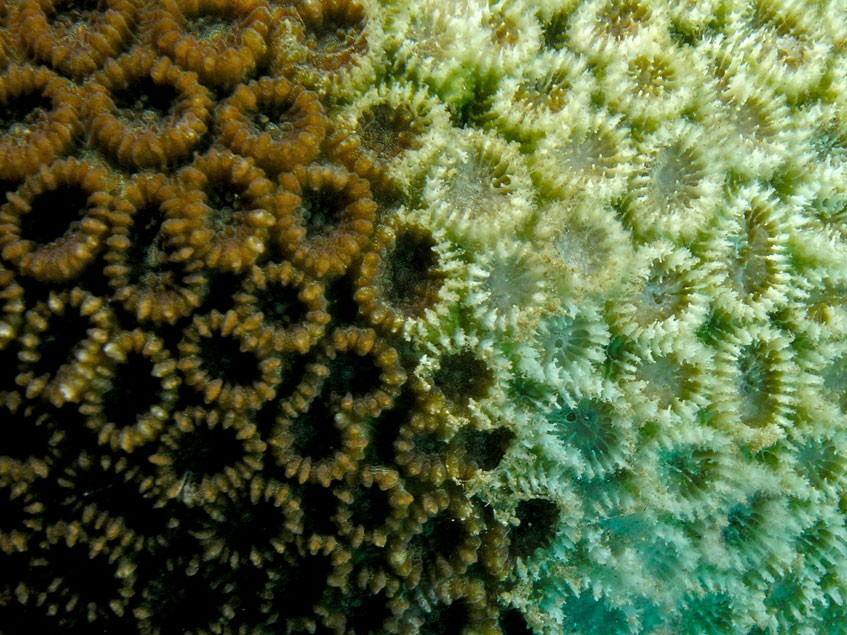
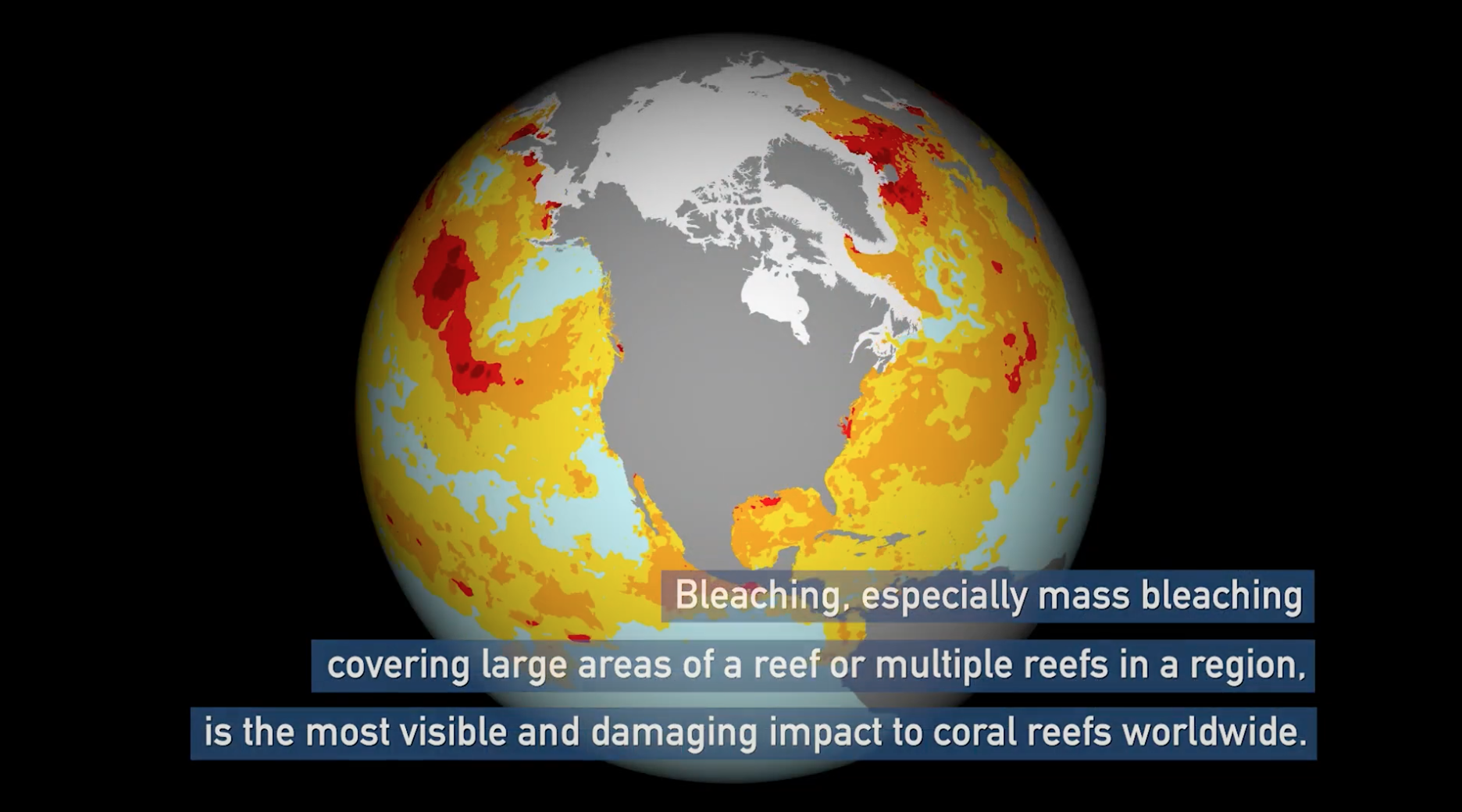
If the ocean waters around corals become too warm, the corals expel the algae that live inside them. Since the algae are responsible for their brilliant colours, the corals turn white without them. This is called coral bleaching. If the algae do not return to the reef within a few weeks, the corals will starve and die. The corals and their algae have become adapted over thousands of years to living in certain water temperatures. In the past, coral have lived in both much warmer and much colder waters, because, over time, they have adapted to past climate change. The bleaching we see today is because the temperature of the water is rising very fast—over a few decades rather than thousands of years. This is too fast for the corals to adapt.
Updated 5th August 2025
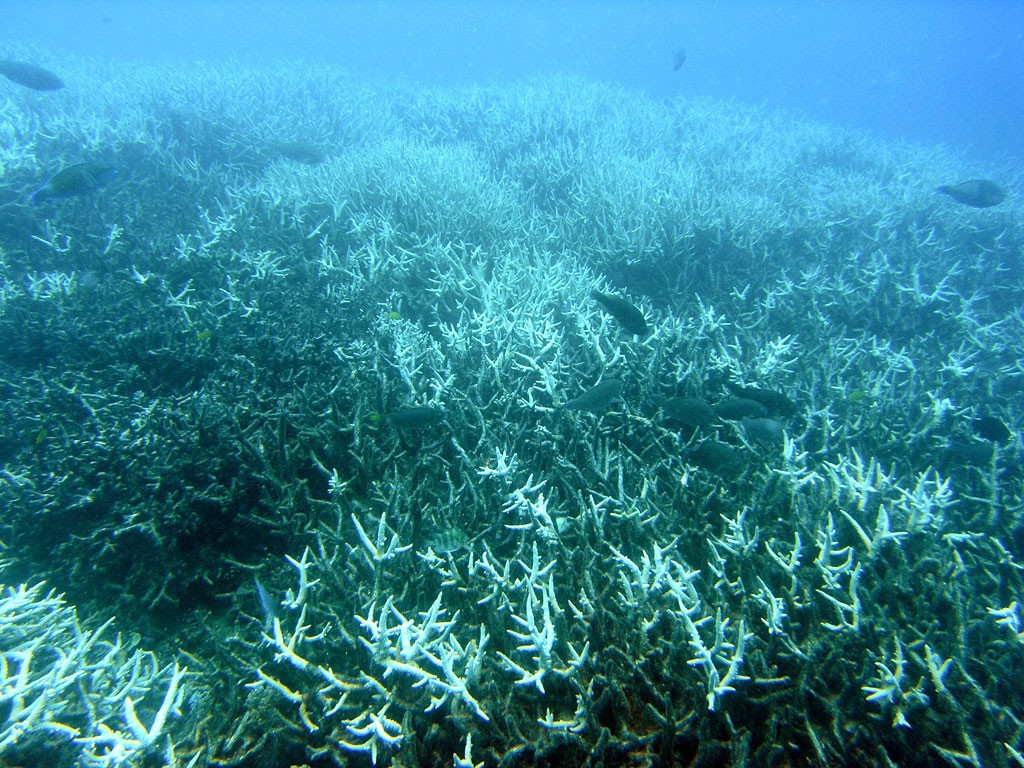

Coral
A coral reef is is formed from the hard skeletons of tiny animals: coral polyps, or corals for short. They live together in colonies of millions of individuals. Corals, each just a few millimetres across, are marine invertebrates, related to sea anemones and jellyfish. Algae called zooxanthellae (kinds of dinoflagellate) actually live inside the bodies of the corals. In return for providing them with a habitat, the corals receive nutrients from the algae.
Effects on ocean life
Rising temperature of ocean waters triggered coral bleaching across tropical parts of the Pacific, Indian and Atlantic oceans between 2014 and 2017, damaging over 70% of the world's reefs. Even though they cover only 0.1% of the sea bed, coral reefs, often called the “rainforests” of the ocean, are home to 25% of ocean species, which rely on them for their food. Corals are vital to ocean ecosystems, with even many non-reef species dependent on them. Most open-ocean fish, such as tuna, start their lives as larvae feeding in the waters of coral reefs. The disappearance of coral would have devastating effects on ocean life.


Bleaching events
The 2014–17 bleaching event was closely linked to El Niño, an unusually warm ocean current that appears about every seven years off the Pacific coast of South America. It causes above-average warming of Pacific surface waters for a prolonged period. Tropical ocean temperatures have already risen by more than 2°C. Corals cannot survive such extreme fluctuations in water temperature, on top of the rapid rise due to global warming.
Scientists fear the world may lose all its coral by 2050 because of bleaching.
The previous global bleaching events were in 1998 and 2010. About 11% of the world’s coral reefs was lost in the 1998 event; the Maldives lost about 90% of its reefs. The 2014–17 event was worse than the previous two, with 70% of the planet’s reefs damaged or killed off entirely. Around 22% of the Great Barrier Reef's shallow water coral died. The loss of reef-building corals, such as elkhorns, which help protect coastlines and support other marine life, is the most damaging consequence.
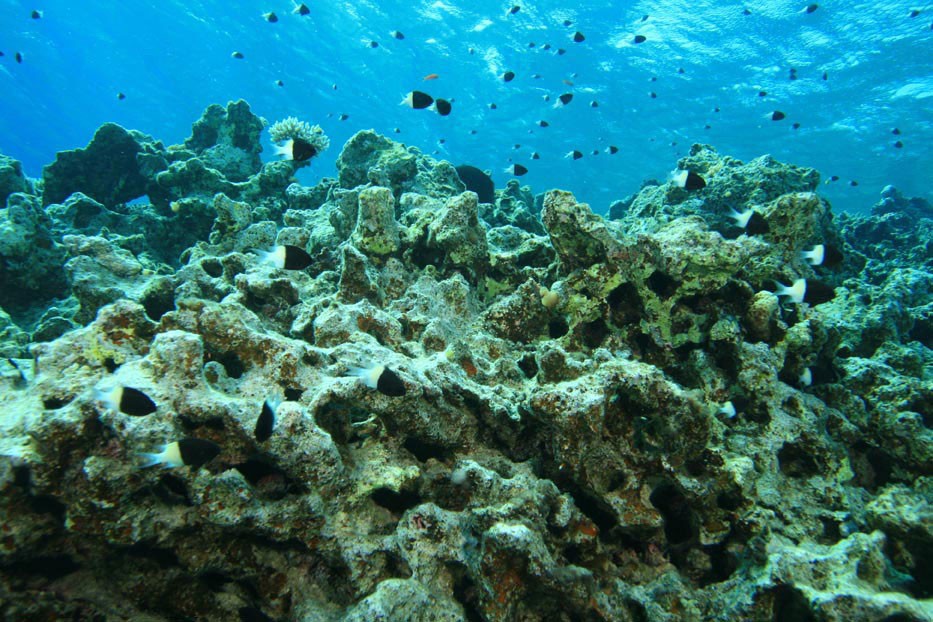
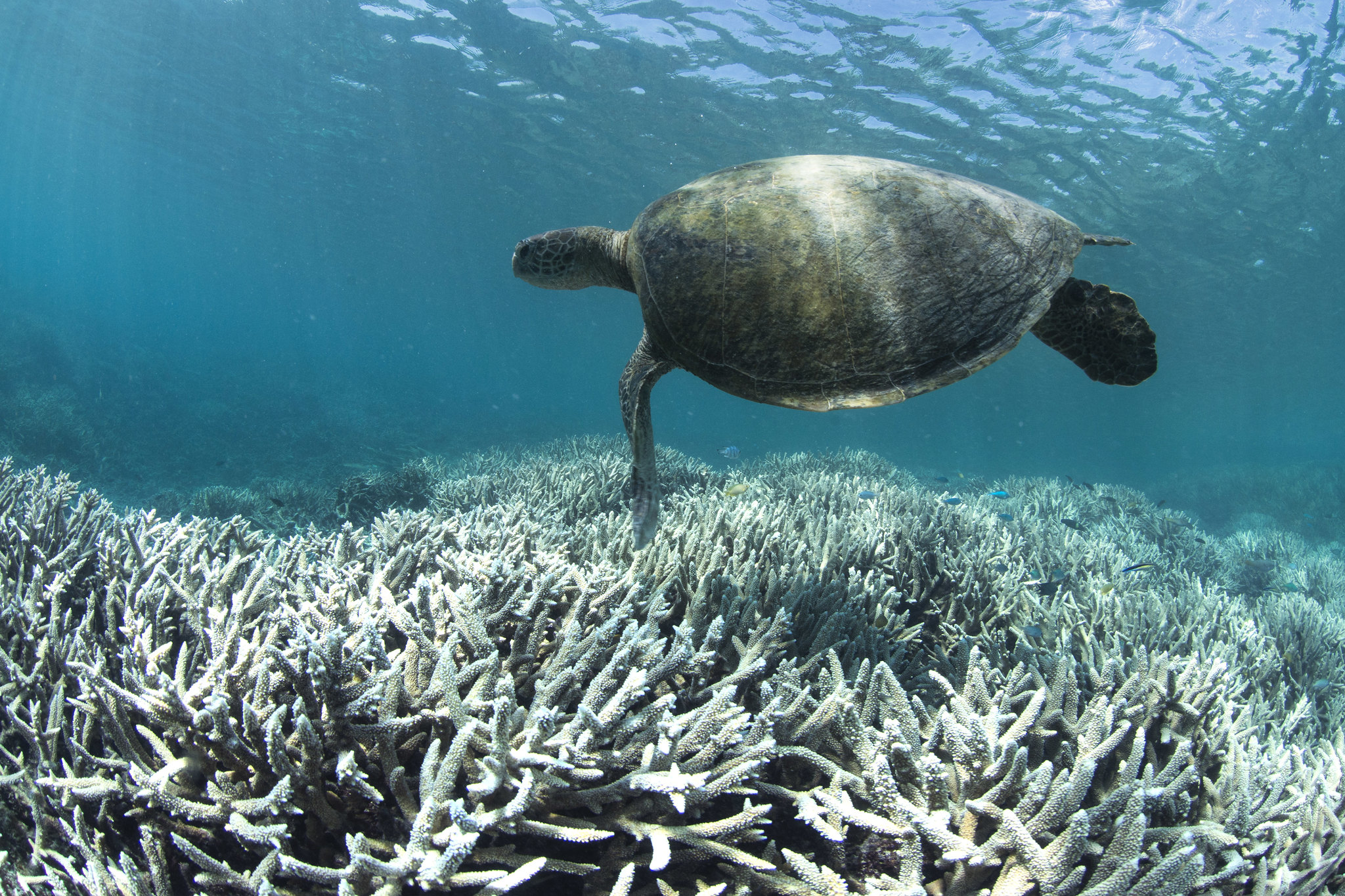
The fourth global coral bleaching event began in February 2023 and is still going on as of August 2025. Mass bleaching was initially observed across the Caribbean, the waters off Florida and Brazil and in the eastern tropical Pacific Ocean. By the end of May 2025, 84% of the world's reefs had been exposed to bleach-level heating. This makes the current even the most intense and widespread coral bleaching event on record. Scientists say there is no clear indication of when it might end.
The consequences have been particularly severe for the Great Barrier Reef. Drone footage showed that at least 97% of corals on Lizard Island reef, in the north, died between March and June 2024. More than 40% of bleached corals monitored near One Tree Island, an island in the southern reef, had died in 2024. Experts said it was the most "severe and widespread bleaching" ever to hit the area.
Coral nurseries
In November 2022 it was reported that corals grown in an offshore “coral nursery”, at Fitzroy Island on the Great Barrier Reef, spawned for the first time, four years after being planted. It is hoped the eggs will develop into larvae that form new coral colonies when they settle on the ocean bed. The coral were grown from fragments that had survived a mass bleaching event in 2018, with the hope that they would be more able to cope with marine heatwaves in future. More than 30 nurseries have been established, but scientists are aware that restoring damaged corals on this small scale is nowhere near enough to overcome the harmful effects of climate change on the many millions of corals of the Great Barrier Reef.

Consultant: Chris Jarvis
pics
Without in any way limiting Q-files Ltd’s exclusive rights under copyright, any use of this publication to “train” generative artificial intelligence (AI) technologies to generate text is expressly prohibited. Q-files Ltd reserves all rights to license use of this work for generative AI training and development of machine learning language models.