
Environment

CITE
We have made every effort to follow citation style rules, but there may be some minor differences. If in doubt, please refer to the appropriate citation style manual.
Bee numbers in sharp decline. (2026). In Q-files Encyclopedia, Geography, Environment. Retrieved from
https://www.q-files.com/geography/environment/bee-numbers-in-sharp-decline
"Bee numbers in sharp decline." Geography, Environment, Q-files Encyclopedia, 23 Jul. 2026.
https://www.q-files.com/geography/environment/bee-numbers-in-sharp-decline.
Accessed 22 Sep. 2026.
Bee numbers in sharp decline 2026. Geography, Environment. Retrieved 22 September 2026, from
https://www.q-files.com/geography/environment/bee-numbers-in-sharp-decline
Geography, Environment, s.v. "Bee numbers in sharp decline," accessed September 22, 2026.
https://www.q-files.com/geography/environment/bee-numbers-in-sharp-decline


Bee numbers in sharp decline
In May 2015, beekeepers in the US reported that 42% of honeybee colonies died off in a single year. The states of Delaware, Illinois, Iowa, Maine, Maryland, Oklahoma, Pennsylvania and Wisconsin all saw more than 60% of their hives die since April 2014. Surprisingly, the survey, which was conducted by a partnership that included the US Department of Agriculture, showed that, for the first time, the majority of the bees died in the summer, rather than winter as they would normally do.
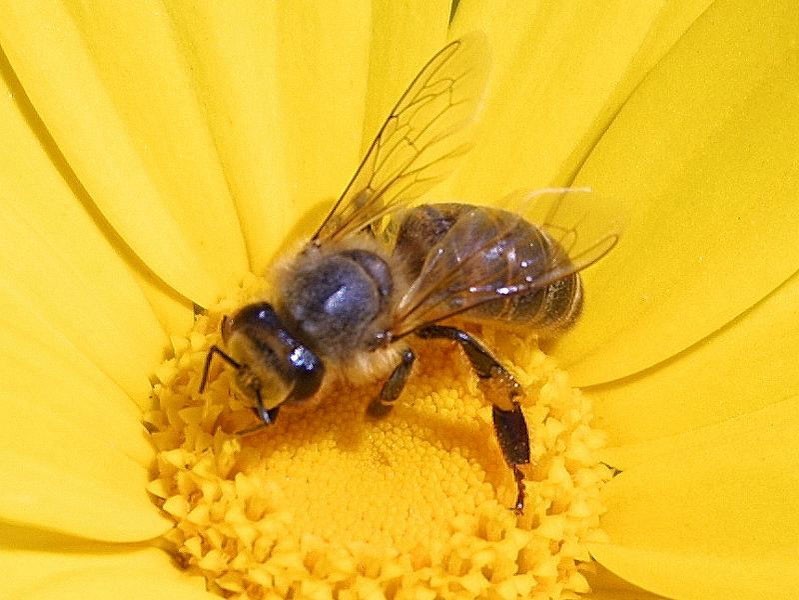

The situation is not as catastrophic as it sounds: after a hive colony dies, beekeepers start new ones by taking bees from their surviving colonies. The numbers then go back up again. Nevertheless, entomologists (scientists who specialize in the study of insects) say that honeybees are now dying off at too high a rate for their long-term survival to be guaranteed. They believe that a combination of mites, poor nutrition and pesticides are to blame for the bee deaths. About a quarter of America's food crop, including almonds, apples and beans, depends on pollination from honeybees.
A number of studies have linked the collapse of honeybee populations to the extensive use of insecticides called neonicotinoids. These either kill the bees directly or make them more vulnerable to pests (such as mites) and disease. The insecticides are used by farmers to increase crop yields. The European Union banned most neonicotinoids in 2014, but the chemicals are still in use in the US.

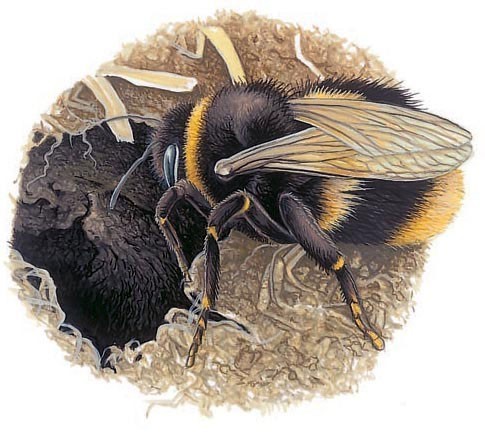
In the first ever study of Europe’s 2000 wild bee species, all were found to be in steep decline. Nearly one in 10 species face the threat of extinction. Another 5% are likely to be threatened in the near future. About 26% of bumblebee species are threatened with extinction.
For nearly 80% of Europe's pollinating insects—mostly wild honeybees—very little is known about whether their numbers are rising or falling. But those bee populations for which data has been collected were shown to be in sharp decline.
The study, carried out by the International Union for the Conservation of Nature (IUCN), said that numbers of wild flowers, the sources of food for the bees, had been hit by the switch to silage production from haymaking for feeding livestock during the winter. The widespread use of insecticides and herbicides has also generally reduced the abundance of flowering plants.
Scientists believe that climate change may have also contributed to the dip in bee numbers, with heavy storms, droughts and generally higher temperatures having a significant effect on habitats.

pics
Without in any way limiting Q-files Ltd’s exclusive rights under copyright, any use of this publication to “train” generative artificial intelligence (AI) technologies to generate text is expressly prohibited. Q-files Ltd reserves all rights to license use of this work for generative AI training and development of machine learning language models.