
Land invertebrates

CITE
We have made every effort to follow citation style rules, but there may be some minor differences. If in doubt, please refer to the appropriate citation style manual.
Mites and ticks. (2026). In Q-files Encyclopedia, Life, Land invertebrates. Retrieved from
https://www.q-files.com/life/land-invertebrates/mites-and-ticks
"Mites and ticks." Life, Land invertebrates, Q-files Encyclopedia, 24 Mar. 2026.
https://www.q-files.com/life/land-invertebrates/mites-and-ticks.
Accessed 6 Aug. 2026.
Mites and ticks 2026. Life, Land invertebrates. Retrieved 6 August 2026, from
https://www.q-files.com/life/land-invertebrates/mites-and-ticks
Life, Land invertebrates, s.v. "Mites and ticks," accessed August 6, 2026.
https://www.q-files.com/life/land-invertebrates/mites-and-ticks


Mites and ticks
Mites and ticks are tiny arachnids. They all have a single body segment and eight legs. Mites live in soil, water and even inside other animals. Some feed on insects or blood, while others feed on plants. Many mites are only visible with the use of a microscope. All ticks feed on the blood of other animals. They may carry blood-borne diseases.
Varroa
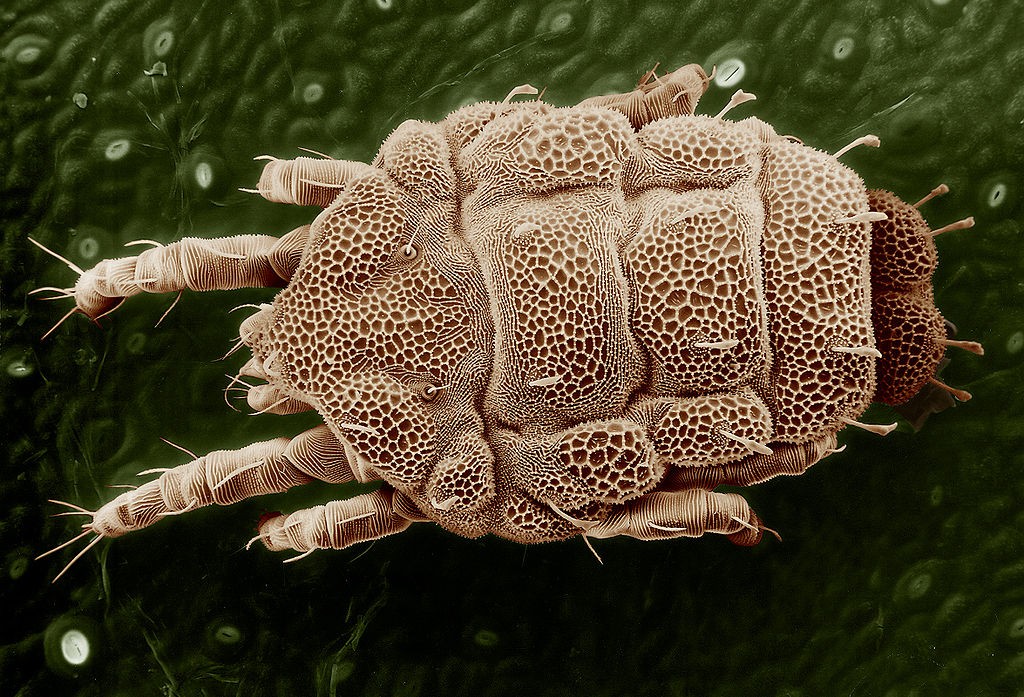
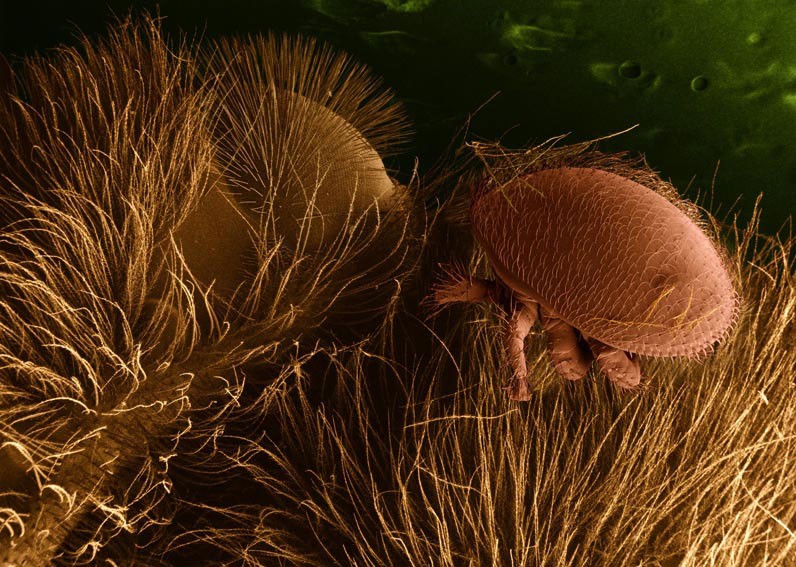
Varroa destructor is the scientific name of a mite that attacks honeybees. The mite lays its eggs in the bees' larva cells. The mites hatch out at the same time as the bees and they remain living on their hosts throughout their lives. By sucking the bees' blood, they cause varroatosis, a disease that is thought to wipe out colonies of honeybees across the world. By destroying the bee colonies and severely reducing bee numbers, the mites threaten the pollination of plants, including agricultural crops, worldwide.
Red velvet mite
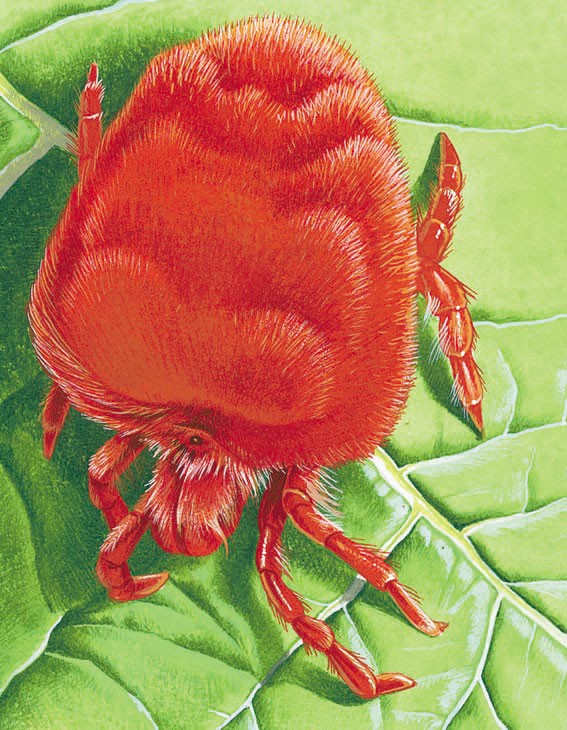
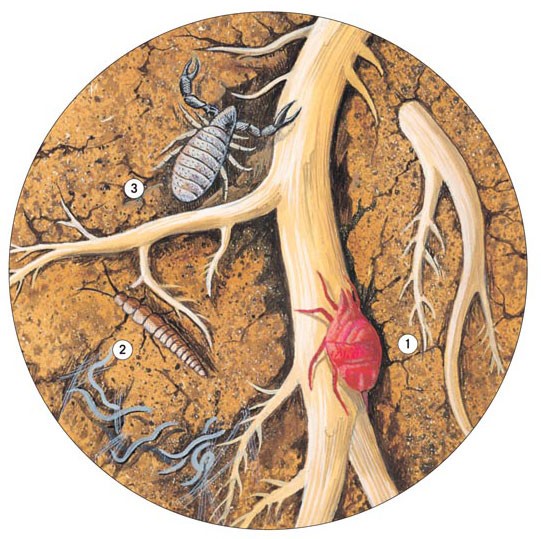
The red velvet mite is just the size of a pinhead. It has small eyes on stalks and a furry body. It lives in the soil and leaf litter on the woodland floor, eating insects and their eggs. Its bright red colour indicates to predators that it is toxic, deterring them from attacking it.
The adult mites move around freely, but their larvae attach themselves to insects, such as grasshoppers, or other arachnids, including spiders, and feed off their body fluids.
Dust mites
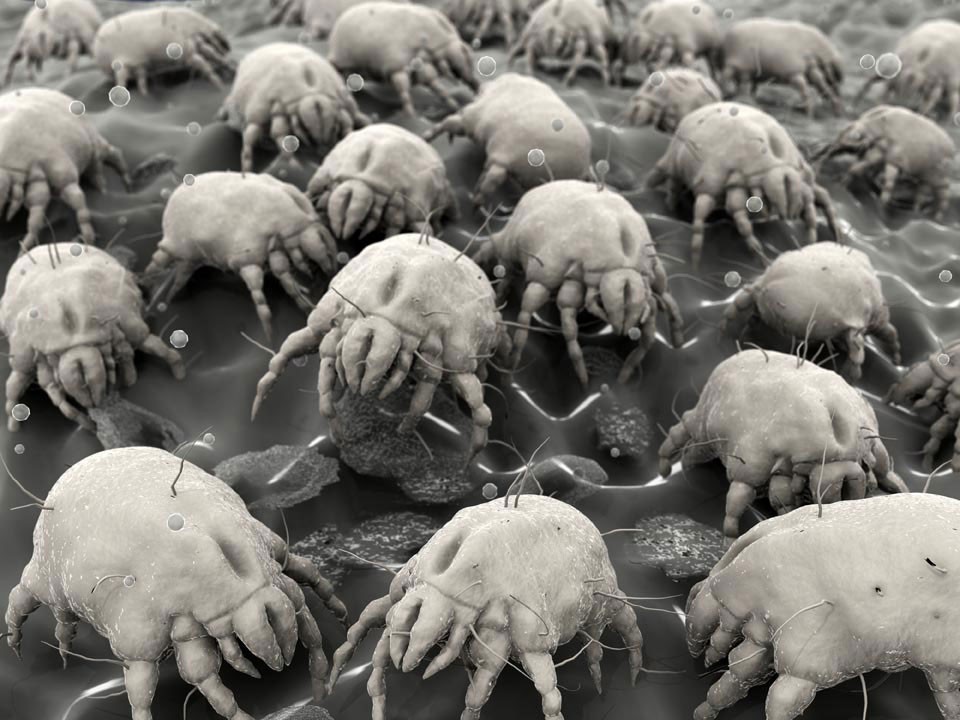
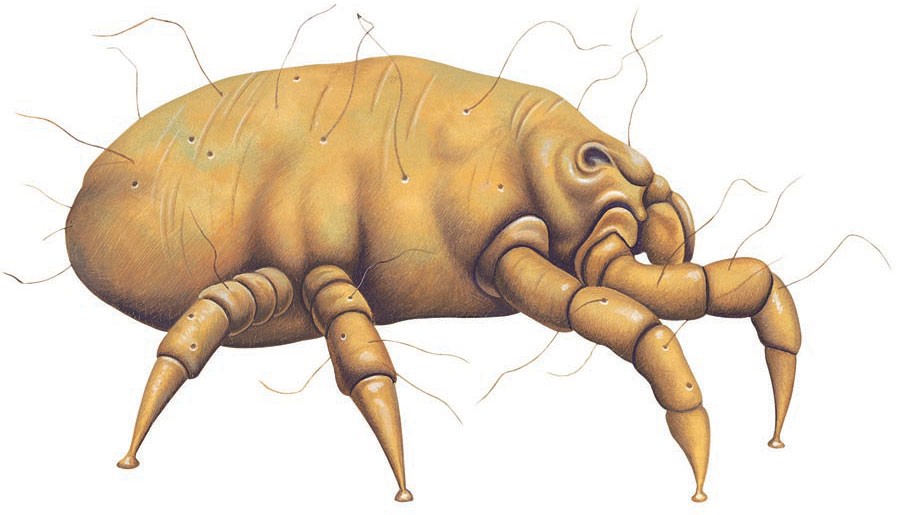
Much of the dust that settles inside our houses is made up of flakes of human skin: between 75 and 80%. The remainder includes plant pollen, fungal spores, soil, human and animal hairs, fibres from textiles—and the droppings of dust mites. Dust mites are often, themselves, wafted up into the air to join the dust particles, although they cannot fly and soon return to the ground. They feed on flakes of shed human skin and other organic particles in dust. No more than 0.4 millimetres long (just visible), they especially favour warm, humid places, such as beds.
Ticks
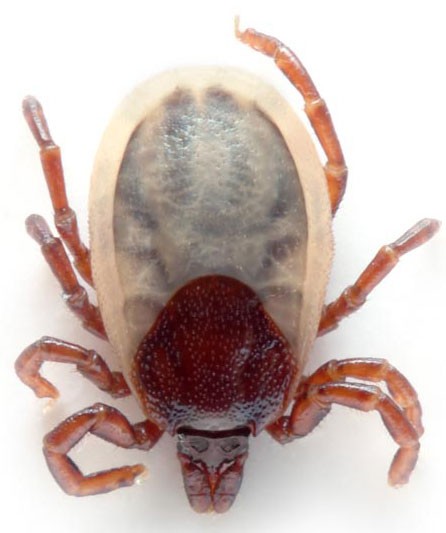
Ticks are parasites. They live by feeding on the blood of other animals: mostly mammals (including humans) and birds. They can neither fly nor jump, but wait to climb on to their host when it comes close. Nibbling a hole in their host's skin, they anchor their mouthparts inside and suck out the blood. Carriers of bacteria, viruses and protozoa in the blood they suck, ticks cause diseases in both humans and domestic animals. Ticks are found all over the world, but especially in warm, humid climates.
Consultant: Chris Jarvis
pics
Without in any way limiting Q-files Ltd’s exclusive rights under copyright, any use of this publication to “train” generative artificial intelligence (AI) technologies to generate text is expressly prohibited. Q-files Ltd reserves all rights to license use of this work for generative AI training and development of machine learning language models.