
Natural history of the British Isles

CITE
We have made every effort to follow citation style rules, but there may be some minor differences. If in doubt, please refer to the appropriate citation style manual.
Freshwater fish of the British Isles A-Z. (2026). In Q-files Encyclopedia, Life, Natural history of the British Isles. Retrieved from
https://www.q-files.com/life/natural-history-of-the-british-isles/freshwater-fish-of-the-british-isles-a-z
"Freshwater fish of the British Isles A-Z." Life, Natural history of the British Isles, Q-files Encyclopedia, 24 Apr. 2026.
https://www.q-files.com/life/natural-history-of-the-british-isles/freshwater-fish-of-the-british-isles-a-z.
Accessed 21 Sep. 2026.
Freshwater fish of the British Isles A-Z 2026. Life, Natural history of the British Isles. Retrieved 21 September 2026, from
https://www.q-files.com/life/natural-history-of-the-british-isles/freshwater-fish-of-the-british-isles-a-z
Life, Natural history of the British Isles, s.v. "Freshwater fish of the British Isles A-Z," accessed September 21, 2026.
https://www.q-files.com/life/natural-history-of-the-british-isles/freshwater-fish-of-the-british-isles-a-z


Freshwater fish of the British Isles A-Z
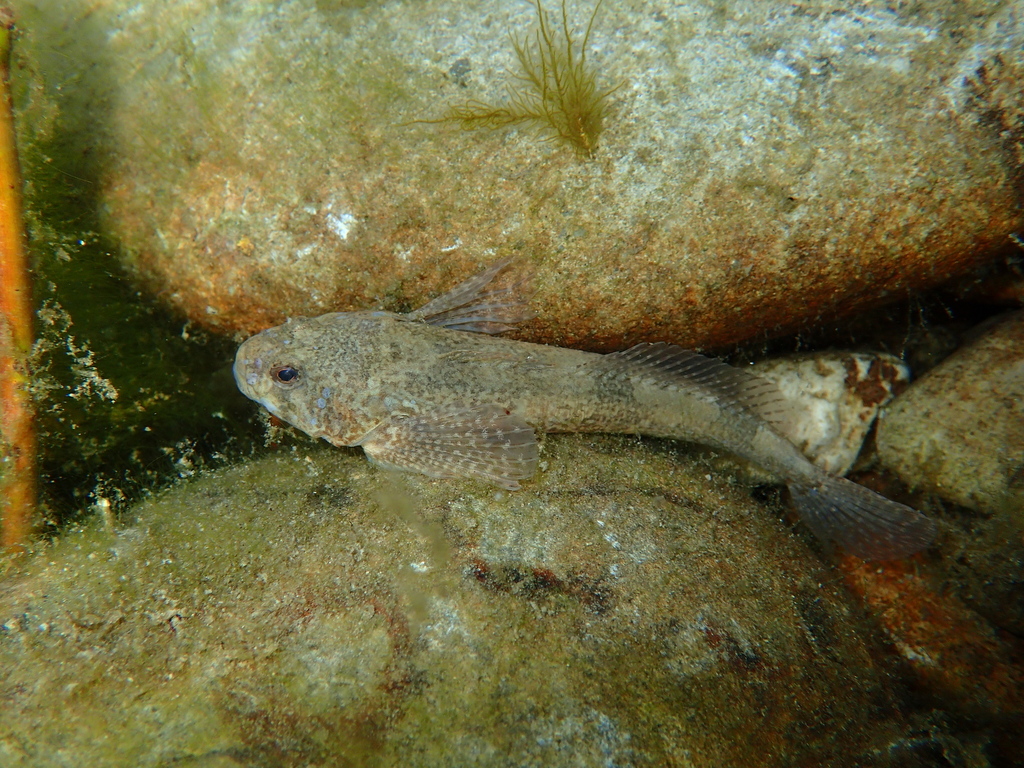
Bullhead
Cottus gobio
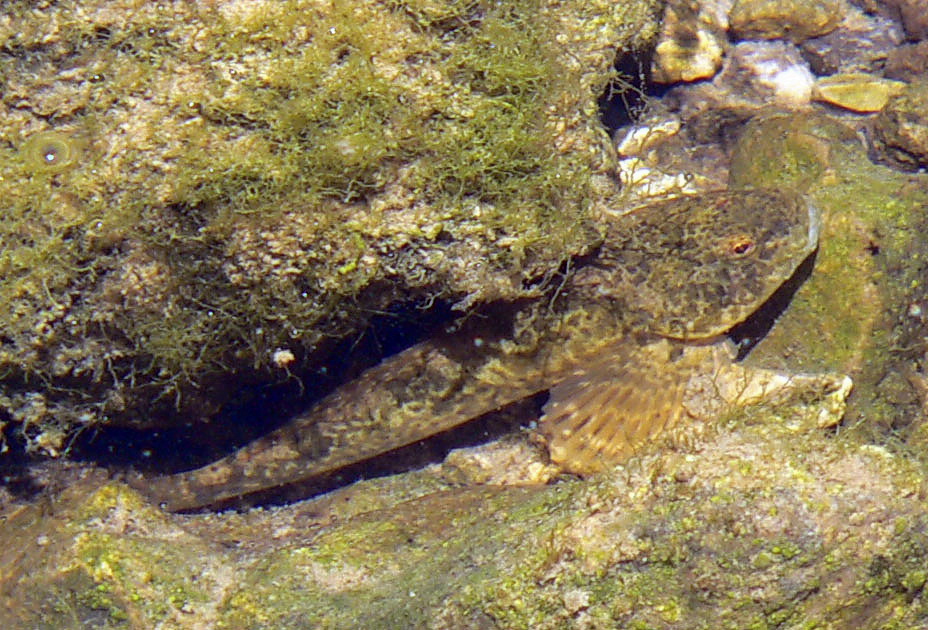
Bullheads live in fast-flowing rivers and streams, where they hide underneath stones during the daytime. These small fish are brown with large heads and bodies that taper (become smaller) towards their tails. Length: 8–12 cm (3–5 inches). Eats: fish eggs, insect larvae.
Carp
Cyprinus carpio (common carp), Abramis brama (bream), Leuciscus leuciscus (dace), Squalius cephalus (chub), Rutilus rutilus (roach), Scardinius erythrophthalmus (rudd)
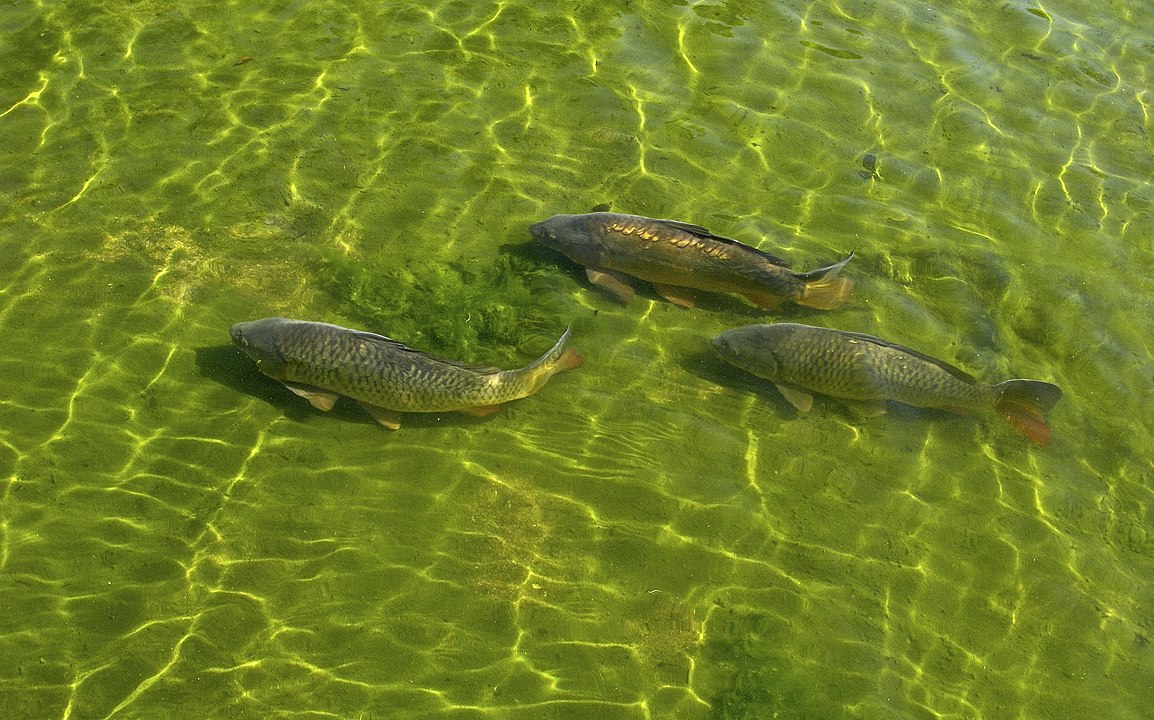
Many of the British Isles’ freshwater fish belong to the carp family. The common carp was first introduced in the Middle Ages as a food fish. Its scales are greyish-brown to bronze and it can grow to huge sizes, sometimes over a metre (3 feet) long. It lives mainly in lowland rivers of England. Length: 25–80 cm (10–30 inches). Eats: plants, algae, small fish, freshwater mussels.
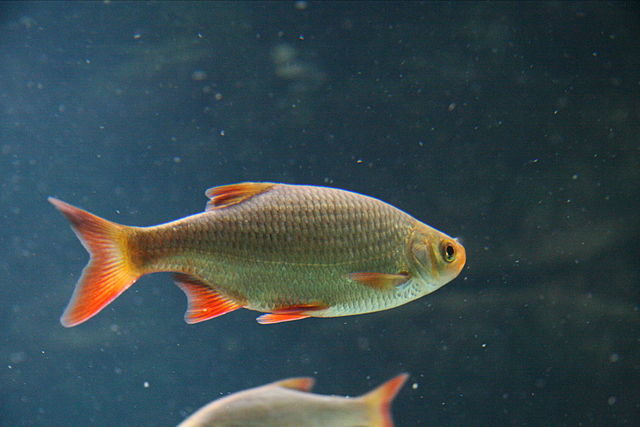
The rudd is a small, bronze-coloured carp with red fins which lives in clear waters. The roach looks similar, but has red eyes. Roach can be found almost everywhere, but especially in rivers with lots of vegetation, in which they feed and hide. Length: 20–40 cm (8–16 inches) (rudd); 10–40 cm (4–16 inches) (roach); Eats: plants, algae, invertebrates, small fish, seeds (roach); insects, fish (rudd).
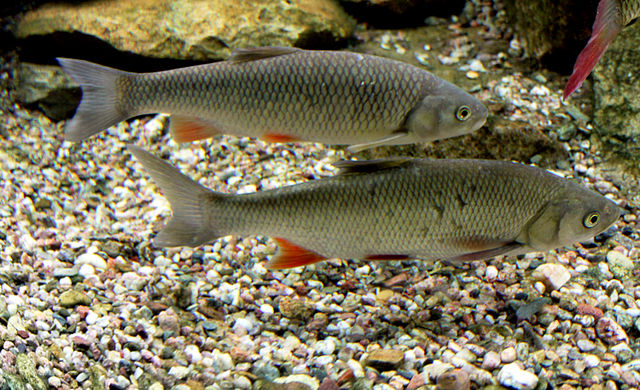
Dace are small, silvery fish that shoal together in large numbers, especially in shady areas. Chub look very similar, but are larger, with redder fins. The bronze-coloured bream lives in areas of slow-flowing water and feeds on the river bottom. Length: 15–25 cm (6–10 inches) (dace), (12– 16 inches) (chub), 30–40 cm (12–16 inches) (bream) Eats: plants, algae, invertebrates, small fish, seeds (dace, chub); worms, snails, mussels (bream).
Catfish
Silurus glanis
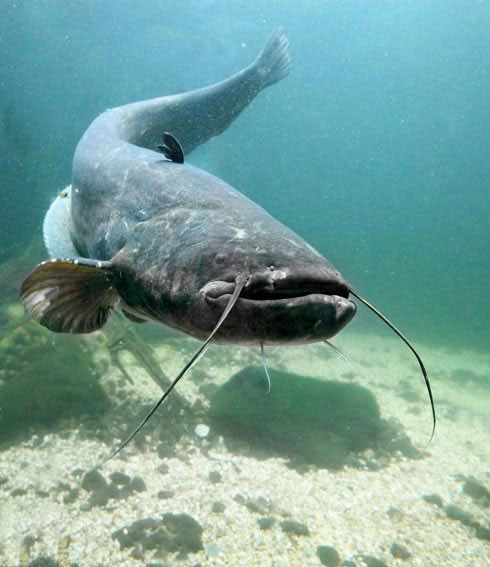
Catfish are the largest and heaviest freshwater fish in the British Isles. They were introduced for sport fishing in the late 19th century. Catfish have long, slim bodies and whiskers called barbels on their lower jaws, which help them to detect prey. They have several rows of small, sharp teeth inside their mouths, making them fierce, powerful predators. In their native environments (the rivers and lakes of eastern Europe and Asia) catfish can grow to a length of around 2 m (6.5 feet), and have been known to prey on water birds and small mammals. Length: 80 cm (31 inches). Eats: worms, crustaceans, fish.
Eel

Anguilla anguilla
Eels are snake-like fish that live in rivers, streams and ditches. European eels are known for the amazing migration they make during their lives. When they are about six years old, eels travel downriver to the sea and swim more than 6000 kilometres (3700 miles) out across the Atlantic Ocean to the Sargasso Sea where they lay their eggs. Their young then drift back to Europe in the Gulf Stream, a journey that takes them about 10 months.
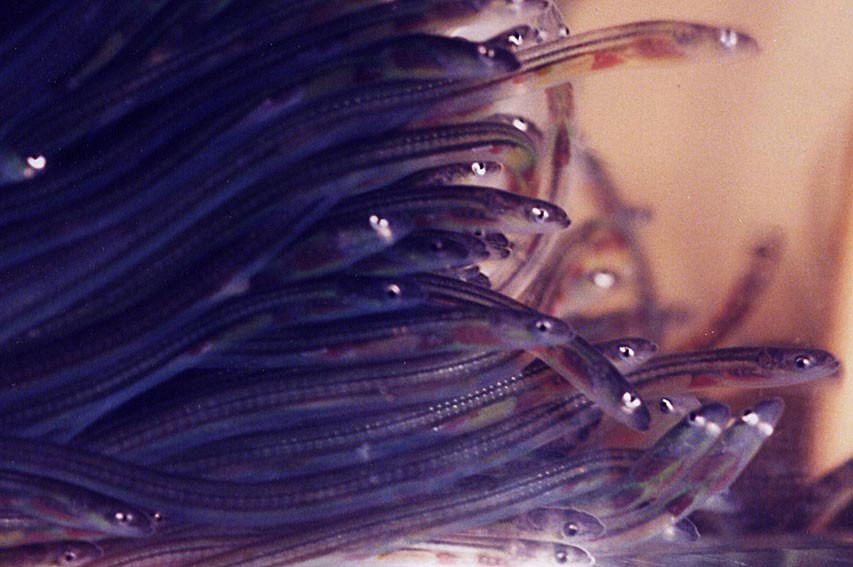
As the young eels enter estuaries and migrate upstream they turn into "glass eels" (so-called because of their transparent bodies). They then grow into elvers, miniature versions of the adults. As they get larger, they become known as "yellow eels", after their brownish-yellow sides and bellies. Over several years, they turn silvery-white and are known as "silver eels". They are now ready to begin their long journey back to the Sargasso Sea to spawn. Length: 60–80 cm (2–2.6 ft). Eats: other fish, molluscs, crustaceans, insects, worms and carrion.
Gudgeon
Gobio gobio
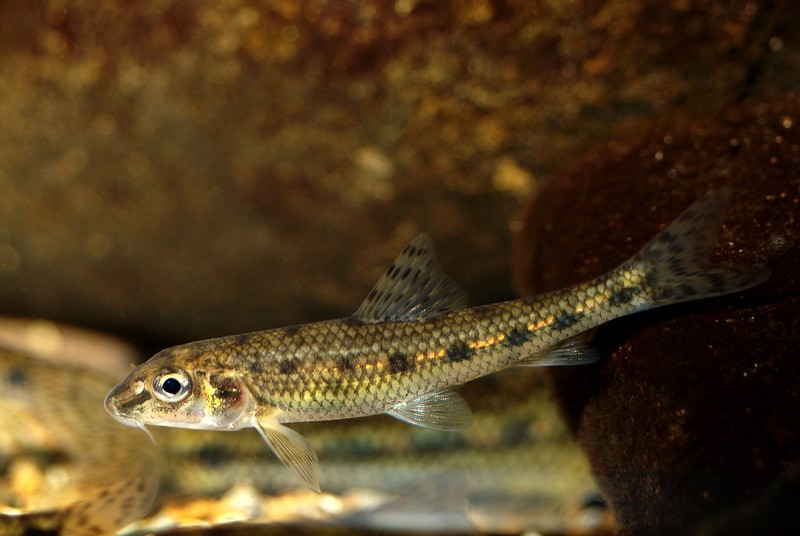
The gudgeon is a small, spotted fish that lives on the river bottom. It uses a pair of whiskers on its lower jaw called barbels to help it detect its food on the river bed. Gudgeons are common in rivers and streams in lowland parts of England that have sandy soil. Length: 7–15 cm (3–6 inches). Eats: mayfly larvae, fish eggs, shrimps.
Grayling
Thymallus thymallus
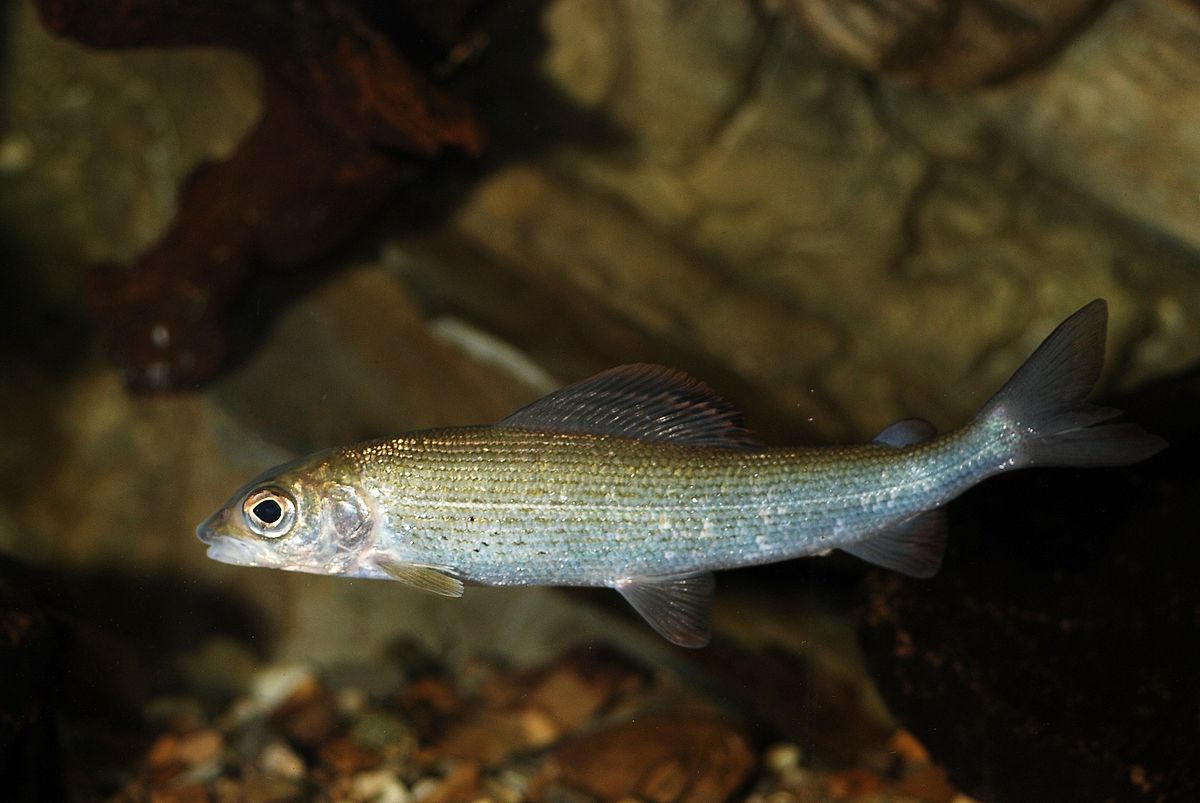
The European grayling is part of the salmon family. This silver fish is native to England and Wales, and has been introduced into Scotland. It lives in clear, fast-flowing cold rivers and streams. Adults can be easily recognized by their large dorsal fin, which is striped with bands of red, purple and green. Length: 60 cm (24 inches). Eats: plant material, insects, crustaceans, small fish such as minnows.
Minnow
Phoxinus phoxinus
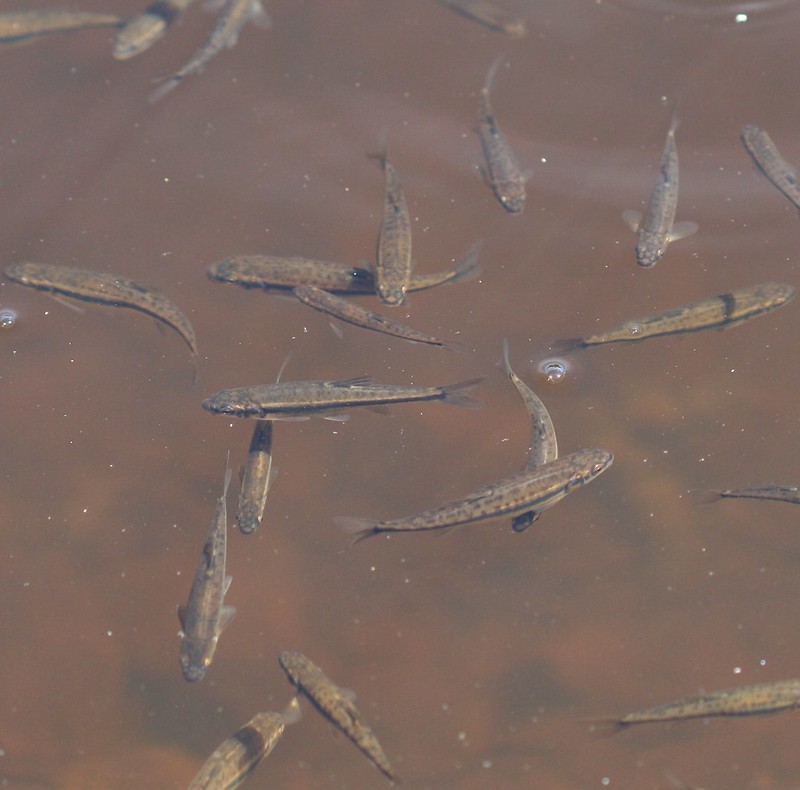
This tiny fish is common in rivers and streams all over the British Isles, where it gathers in large shoals. It is greenish-silver with a dark stripe on each side. In early summer, minnows travel upstream to lay their eggs in shallow, gravelly areas. Length: 4–10 cm (2–4 inches). Eats: insects, fish eggs, plant material.
Perch
Perca fluviatilis
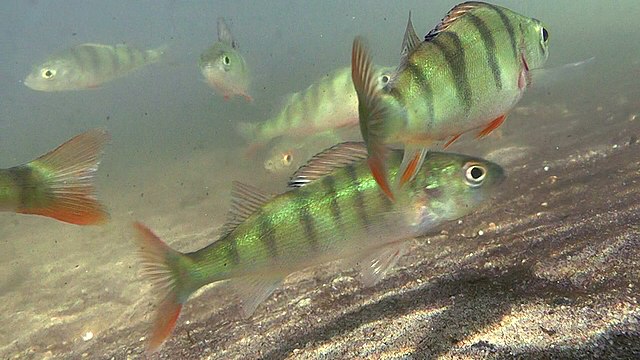
The perch’s greenish colour, dark stripes and red fins make it easy to recognize. Swimming in shoals in lowland rivers and lakes, they prefer slow-moving water, where they hunt for smaller fish such as minnows and sticklebacks. Length: up to 20 cm (8 inches). Eats: fish, crayfish.
Pike
Esox lucius
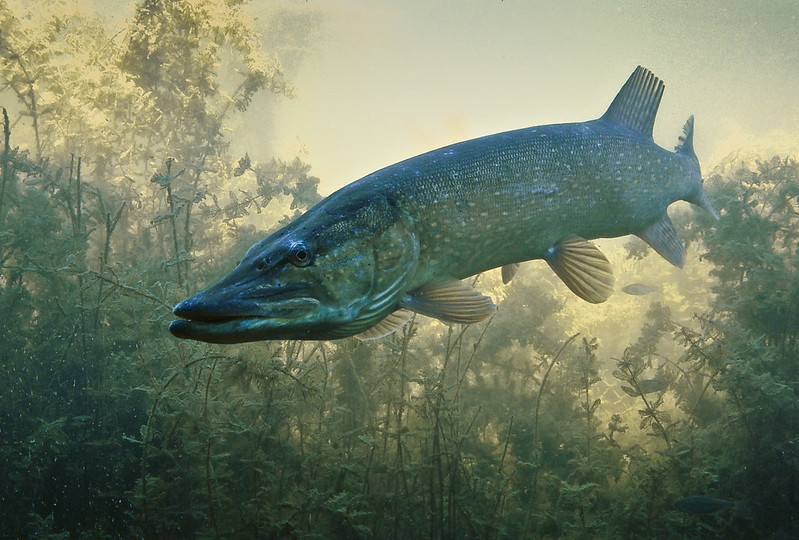
This fearsome, fast predator has a long, narrow body and sharp teeth. It lives in lakes and slow-moving rivers, where it lurks in vegetation near the water’s edge. When it spots its prey, it lunges out of the water to catch it with its strong jaws. Pikes can eat prey up to half their own bodyweight—a diet of frogs, ducklings and even small ducks is common. Length: up to 1.5 m (5 feet). Eats: fish, frogs, ducklings and small water birds.
Salmon
Salmo salar
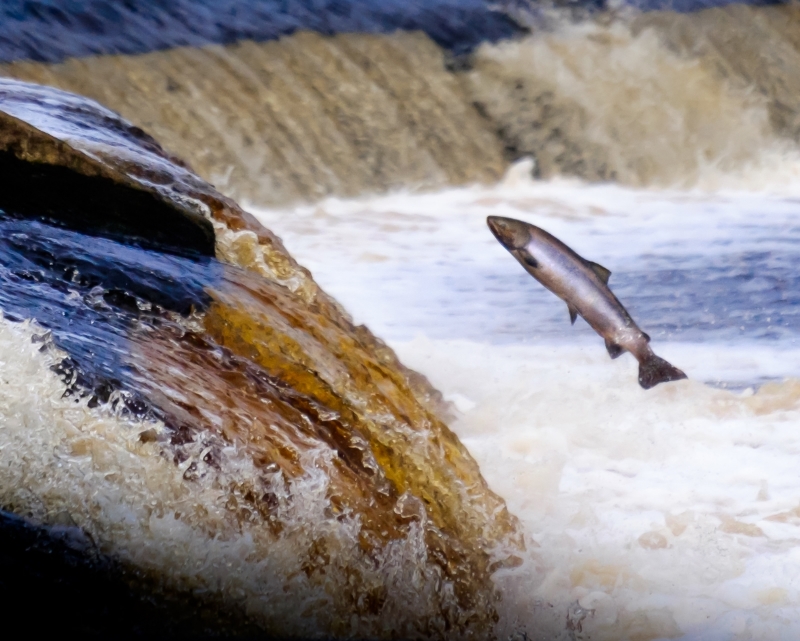
Atlantic salmon spend most of their lives at sea, but swim inland to spawn in rivers. In the British Isles they are found in Irish, Scottish and Welsh rivers, as well as in rivers in western England. In the winter months salmon swim upstream to reach the same breeding grounds where they were born. Powerful swimmers, they can battle against fast-flowing currents and jump up to 3 metres (10 feet) into the air to leapfrog waterfalls. Young salmon, known as parr, live in fresh water for the first six years of their lives. During this time their bodies change to enable them to live in salt water, after which they venture out into the Atlantic Ocean. Length: up to 1.5 m (5 feet). Eats: insects, insect larvae (as young), fish (as adults)
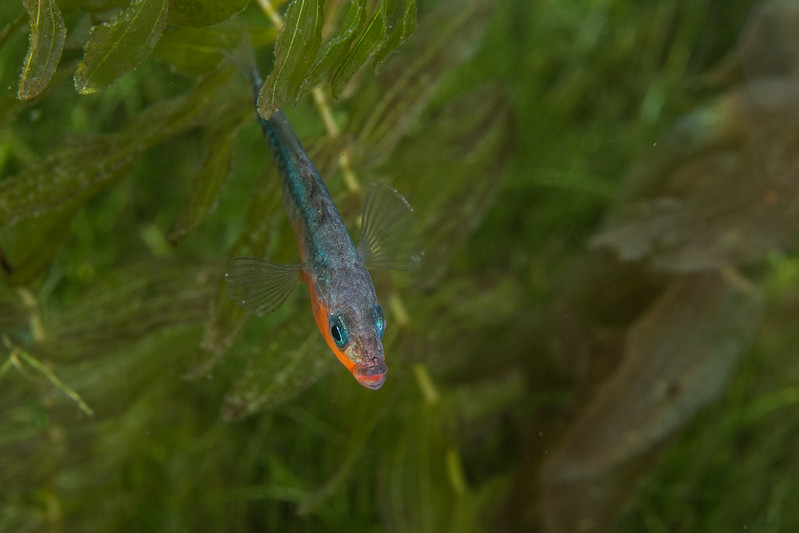
Stickleback
Gasterosteus aculaeatus
The three-spined stickleback is one of the British Isles’ commonest freshwater fish. It can be found wherever there is slow-moving, clear water with plenty of weeds to hide in, usually in the shallows. Sticklebacks are usually brown with silver sides, but males develop bright red thorats and bellies during the breeding season in spring. The three spines along the tops of their backs protect them from predators by making them an unappealing meal. Length: 3.5 cm (1.4 inches). Eats: insect larvae, invertebrates, tadpoles, small fish.
Stone loach
Barbatula barbatula
Stone loach live in clear rivers and streams. These small fish have dappled greenish-brown scales, which camouflage them well against the colours of the river bed. They are nocturnal and rest during the day, partially burying themselves in sand and gravel to hide from predators. Length: 6–10 cm (2–4 inches). Eats: mayfly larvae, shrimps.

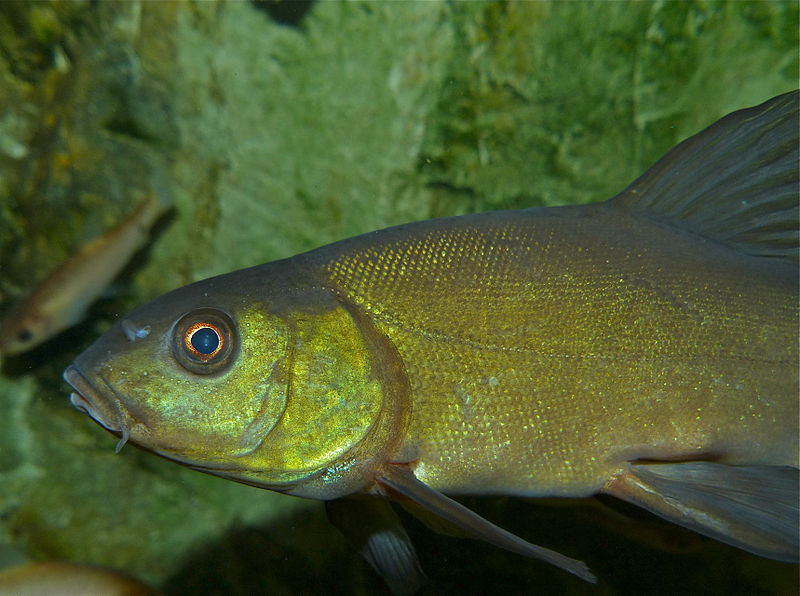
Tench
Tinca tinca
The tench is a medium-sized, dark green fish. It lives in slow-moving waters with plenty of vegetation to hide in. The tench was traditionally known as the “doctor fish” because it was thought to be able to heal the injuries of other fish that brushed against its scales. Length: 40–70 cm (16–28 inches). Eats: invertebrates such as freshwater mussels and snails.
Trout
Salmo trutta (Brown trout), Oncorhynchus mykiss (Rainbow trout)
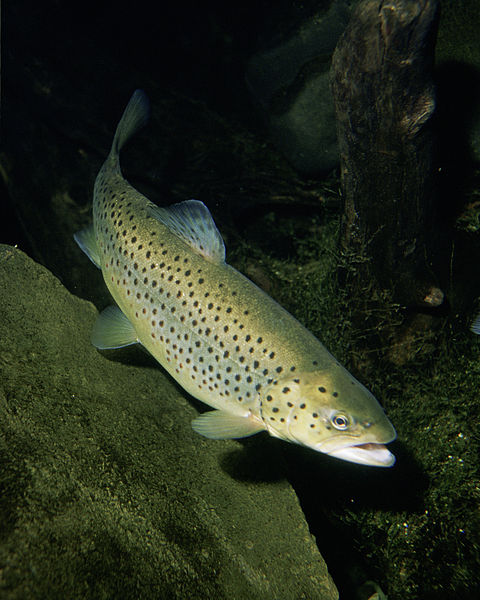
Brown trout are easy to recognize with their golden-brown bodies and distinctive dark spots. They live in fast-flowing rivers with stony or gravelly river beds, where they lay their eggs in late winter, burying them in the gravel. Brown trout are native to the rivers of the British Isles. They can leap out of the water to catch insects. Length: 50–80 cm (20–30 inches). Eats: insect larvae, flying insects (mayflies, damselflies), small fish such as minnows.
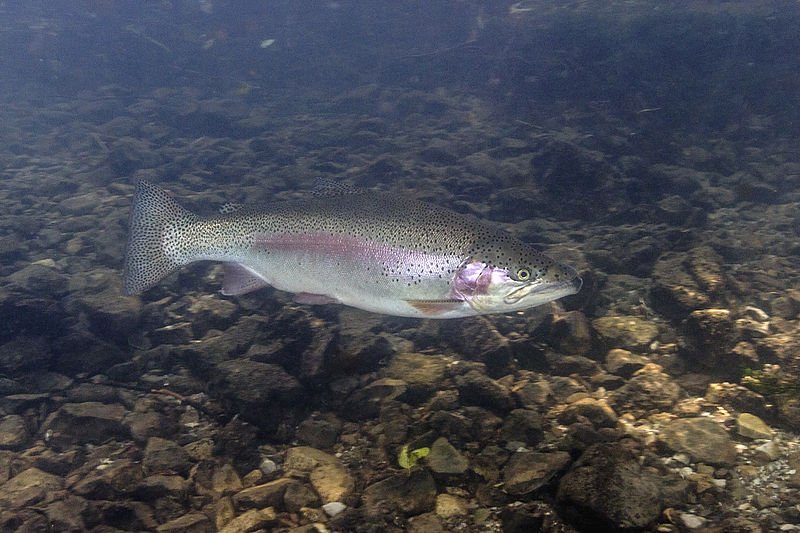
Rainbow trout were introduced from North America in the early 20th century. Today they are found in rivers and lakes throughout the British Isles. The rainbow trout is named after its multi-coloured appearance—its silvery scales are streaked with blue, pink and purple along its sides. Length: 50–70 cm (20–28 inches). Eats: insect larvae, flying insects (mayflies, damselflies), small fish such as minnows.
Consultant: Chris Jarvis
pics
Without in any way limiting Q-files Ltd’s exclusive rights under copyright, any use of this publication to “train” generative artificial intelligence (AI) technologies to generate text is expressly prohibited. Q-files Ltd reserves all rights to license use of this work for generative AI training and development of machine learning language models.