
South America

CITE
We have made every effort to follow citation style rules, but there may be some minor differences. If in doubt, please refer to the appropriate citation style manual.
Argentina. (2026). In Q-files Encyclopedia, Geography, South America. Retrieved from
https://www.q-files.com/geography/south-america/argentina
"Argentina." Geography, South America, Q-files Encyclopedia, 1 Apr. 2026.
https://www.q-files.com/geography/south-america/argentina.
Accessed 6 Aug. 2026.
Argentina 2026. Geography, South America. Retrieved 6 August 2026, from
https://www.q-files.com/geography/south-america/argentina
Geography, South America, s.v. "Argentina," accessed August 6, 2026.
https://www.q-files.com/geography/south-america/argentina


Argentina
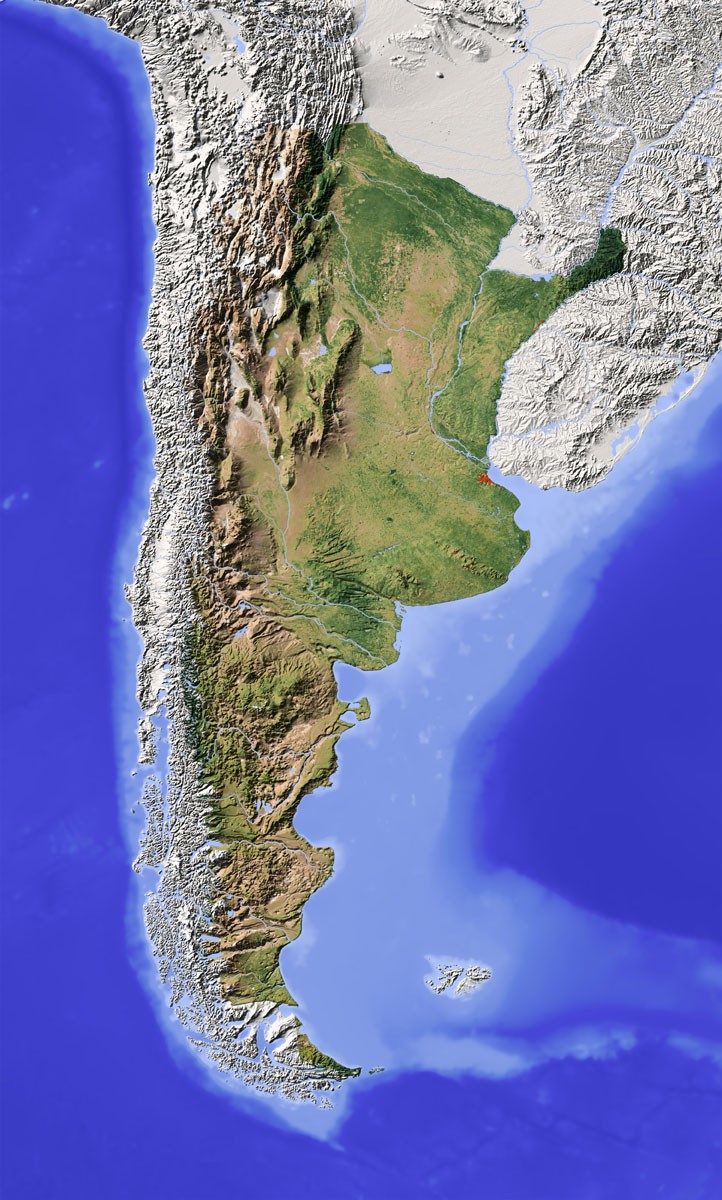
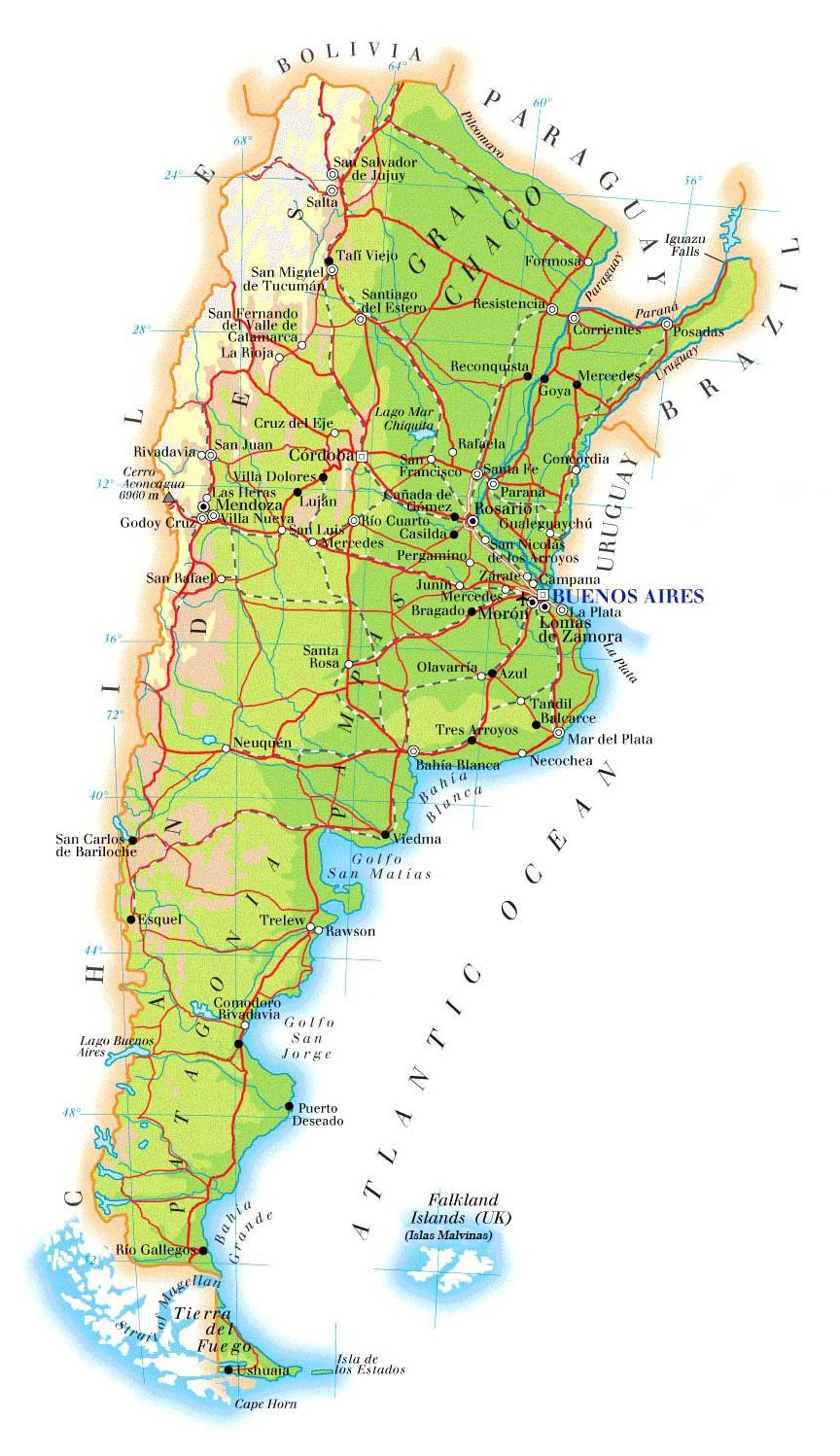
Argentina is South America’s second largest country by land area, after Brazil, and its largest Spanish-speaking nation. The Andes Mountains stretch down its western edge, creating a natural border with Chile. A flat grassland region called the Pampas slopes gently from these mountains to the eastern Atlantic coast. In the north, an area of hot scrubland and forest, known as the Gran Chaco, extends into neighbouring Paraguay and Bolivia. Much of southern Argentina lies on a windy, exposed plateau known as Patagonia. At its southern tip are the rocky islands of Tierra del Fuego (the “Land of Fire", named after the Indian camp fires sighted by the Portuguese explorer Magellan). Most of Argentina has a temperate climate with warm summers and cold winters, but its northern regions are tropical, with hot, humid weather for much of the year.

People
Argentina is home to immigrants from many different countries. The majority of people are descended from Europeans—mainly from Spain, Italy and Germany—who started to arrive from the early 16th century. The late 19th century and early 20th century saw massive immigration from Europe, encouraged by the Argentine government. In recent years, people from Central and Eastern Europe, as well as Asia and the Middle East, have moved to Argentina.
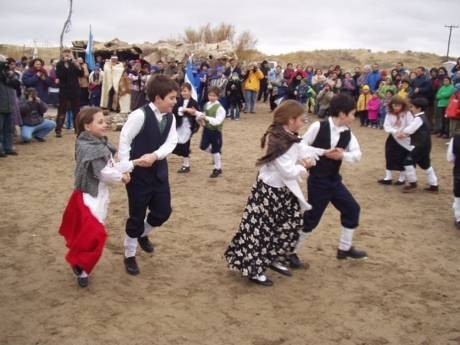
Unlike other South American countries, Argentina does not have a large indigenous population. Many of the country’s indigenous inhabitants, including Mapuche, Kolla and Toba peoples, died from diseases brought by European settlers or in wars following Spanish colonization. However, although only 1.5% of the population is purely indigenous, many Argentinians have some indigenous ancestry.
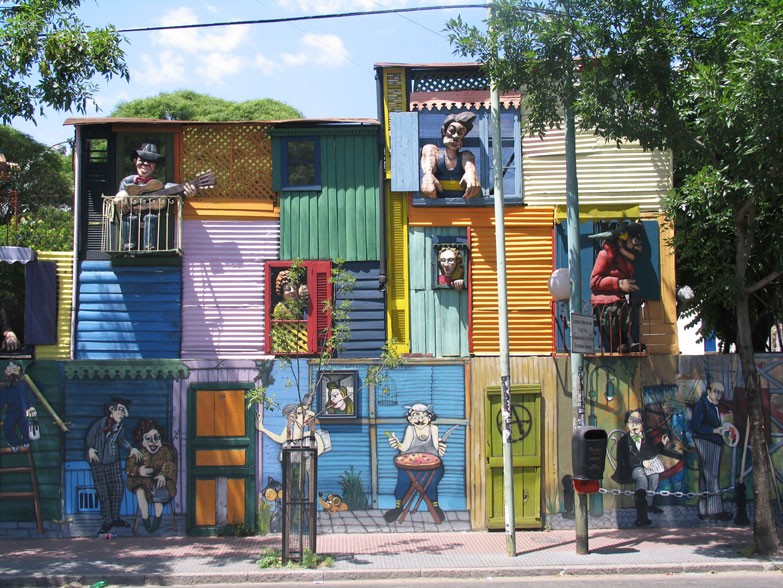
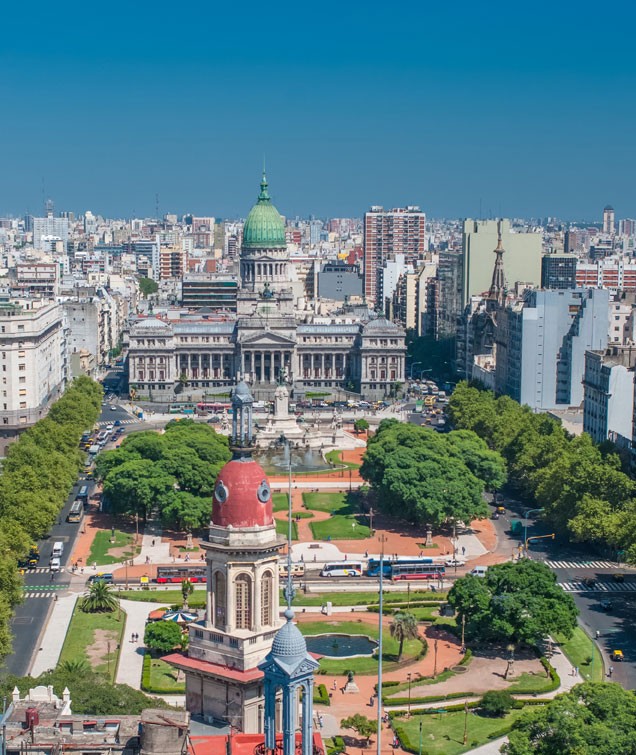
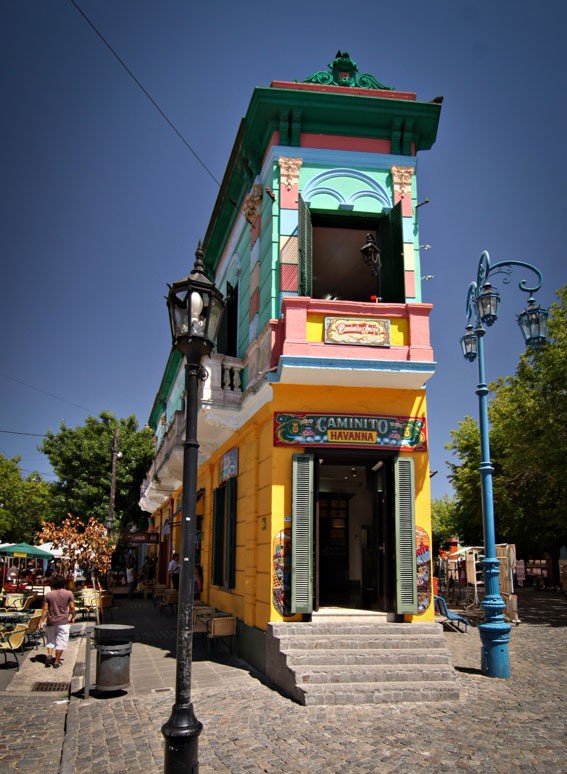
Around a third of Argentina’s population lives in or around its huge capital, Buenos Aires. Historically a thriving port city, today Buenos Aires is a major cultural and commercial centre, and the most visited city in South America.
Economy
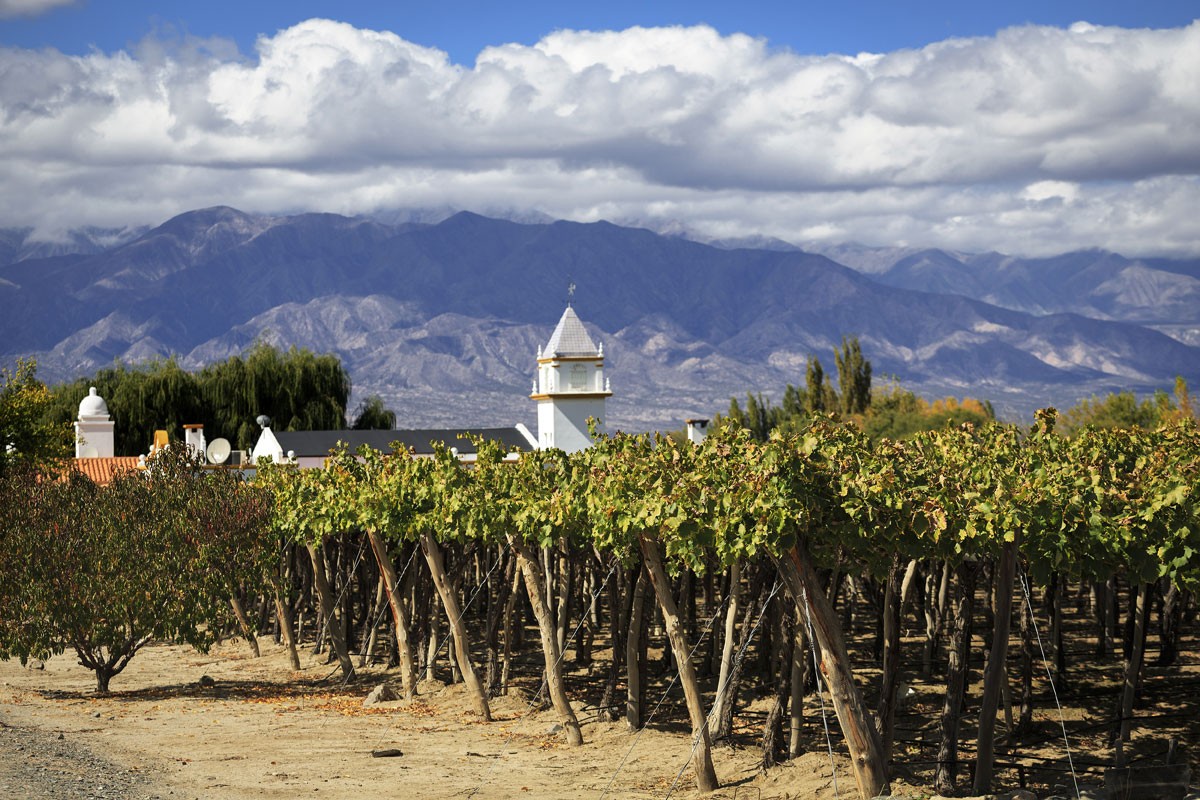
Argentina's economy is based on services such as banking, as well as its manufacturing, food-processing and agricultural industries. The processing of beef and other foods for export began in the early 20th century and is still an important industry. Today Argentinian factories also manufacture cars, chemicals and electrical parts. Grapevines were first brought to the country by the Spanish in the 16th century, and Argentina is the world's ninth-largest wine producer.
Pampas
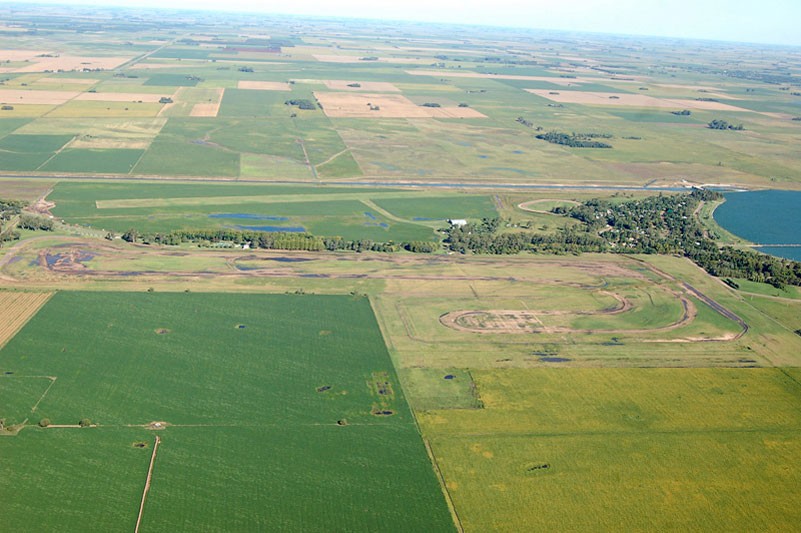
The Pampas are fertile plains that cover much of northeastern Argentina (as well as most of Uruguay and southern parts of Brazil). The climate is mild, with cool winters and warm, humid summers. Natural grasslands, the Pampas have been long been used for both crop farming and raising cattle. In the 19th century, cowboys, known as gauchos, herded cattle on the vast estancias (ranches) of the Pampas. Even today, there are still a few gauchos herding cattle on horseback, although, because the grassland soils are so fertile, much of the old pastureland has now been turned over to arable use. The main crops are soya beans, wheat and maize.
Patagonia
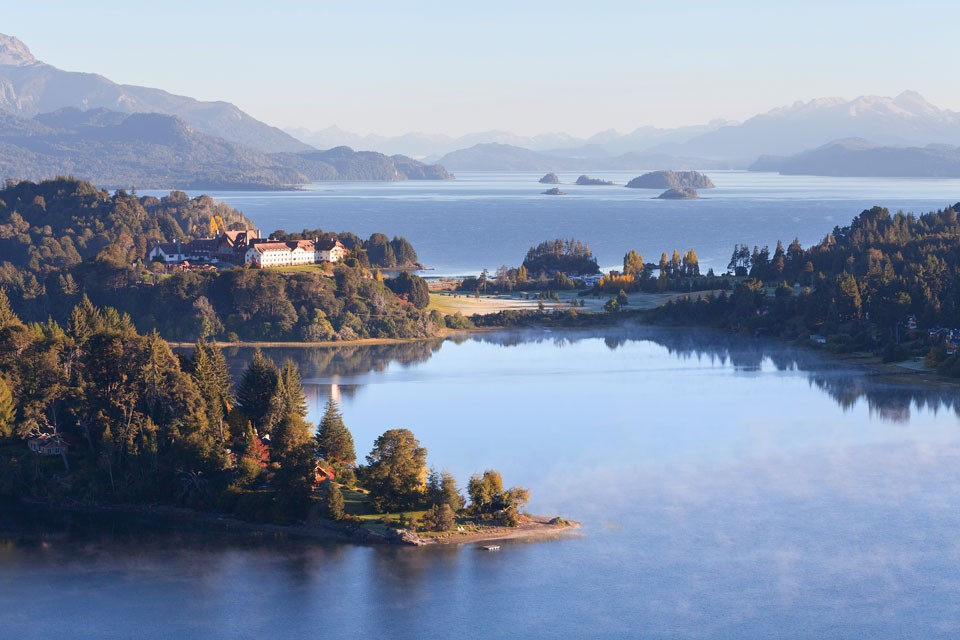
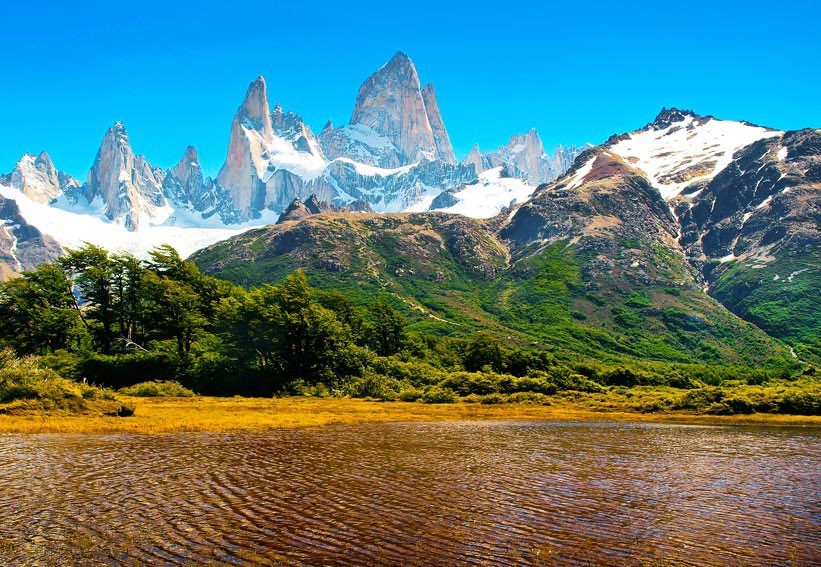
The vast plateau of Patagonia is shared by Argentina and Chile. It features areas of desert and grassland, and is home to many wildlife species, such as guanaco and cougars. The region is extremely sparsely inhabited, averaging just 1.9 people per square kilometre (0.39 square miles). Those who do live there are usually farmers of sheep and other livestock.
In southern Patagonia’s Chubut Province is a region called Y Wladfa Gymreig (meaning “The Welsh Colony”), which was settled by Welsh people who arrived in 1865 as part of an Argentine government scheme to populate the country. Today, 5000 people there speak a form of the Welsh language called Patagonian Welsh as their first language, while 25,000 speak it as a second language.

Consultant: Nicholas Harris
Facts about Argentina
Area 2,766,889 sq km (1,068,300 sq miles)
Population 47,067,441 (2024 estimate)
Highest point Cerro Aconcagua 6960 m (22,837 ft)
Capital Buenos Aires (metro area population 16,366,641)
Other major cities Córdoba (2.4 million), Rosario (1.75 million), Mendoza (1.03 million)
Languages Spanish (official language), Italian, Arabic, German, Yiddish, Guaraní, Wichí, Welsh
Religions Christian (Roman Catholic) 63%, Christian (other) 15%, none 21%, other 1%
Ethnicity White (including Spanish, Italian, French, Arab and German) 97%, indigenous 1.5%, other (including Chinese, Korean and Japanese) 1.5%
Currency Argentine peso (ARS)
Chief exports Soya beans and soya products, oil and petroleum, natural gas, vehicles, corn, wheat, gold, beef and poultry
History of Argentina
13,000 years ago
The first human settlements appear on the southern tip of modern-day Argentina.
AD 1500
Indigenous groups such as the Querandí live in Argentina’s Pampas, while Tehuelche people live in Patagonia, and the Mapuche live in the southwest.
1516
The Spanish navigator Juan Díaz de Solís visits the territory that is now Argentina, marking the start of Spanish colonization.
1536
Pedro de Mendoza founds the small settlement of Buenos Aires, but is later destroyed by Querandí people and abandoned in 1541
1565–80
Two major settlements, Tucumán and Córdoba, are founded by the Spanish. Juan de Garay founds Santa Fe in 1573, and re-founds Buenos Aires in 1580.
Mid-18th century
Gauchos, Argentinian cowboys, begin to hunt cattle and tame wild horses on Argentina’s central Pampas plains.
1776
The port city of Buenos Aires is made capital of the new Spanish Viceroyalty of the Río de la Plata, a large colony that includes Bolivia, Paraguay and Uruguay. The colony had previously been part of the Viceroyalty of Peru and governed from Lima.
1806–07
British unsuccessfully attempt to seize control of the Spanish colony of the Viceroyalty of the Río de la Plata (River Plate in English)
1810–18
The Argentine War of Independence: Argentinian forces fight forces loyal to the Spanish crown, formally declaring independence on 9th July 1816 (celebrated in modern Argentina as Independence Day).
1816–61
The Argentine Civil Wars: different provinces and political parties battle for control
1861
Bartolomé Mitre secures a victory for the province of Buenos Aires and is elected as the first president of a unified Argentine Republic
1878–84
Conquest of the Desert: Argentine troops occupy Patagonia, inhabited primarily by indigenous peoples, whom they kill, enslave or expel. European settlers move in and develop lands for farming
1880–1910
Driven by a massive wave of European immigration, mainly from Italy and Spain, Argentine population grows fivefold. Its economy also expands rapidly: by 1908, it has the 7th highest income per person in the world
1930s
Sharp economic downturn caused by Great Depression
1946
Juan Perón becomes president. His wife, Evita, forms a foundation to help Argentina’s poorest people.
1955
Revolución Libertadora (Liberating Revolution): military uprising against Peron's government leads first to the bombing of Buenos Aires' main square, the Plazo de Mayo, by the Argentine Air Force on 16th June, killing or wounding hundreds of people, then a coup on 16th September. There follows decades of political instability.
1976–83
The military takes control of the country. Up to 30,000 people are killed by government forces in a period known as the “Dirty War”.
1982
Under the leadership of Argentinian president General Leopoldo Galtieri, Argentina invades the Malvinas/Falkland Islands, which Britain considers to be British territory. The ten-week war results in 910 deaths and a British victory.
1983
New president, Raul Alfonsin, democratically elected; government charges former military leaders with human rights abuses during “Dirty War”; inflation runs at more than 900%.
1994
Jewish community centre in Buenos Aires is bombed with the loss of 86 lives
1998–2002
An economic crisis causes widespread unemployment, strikes, protests and riots
2009
Argentine parliament passes a law claiming Falkland Islands and other British overseas territories in the area
2014
Argentina defaults on (fails to pay back) its international debt
2022
Following prolonged drought, wildfires rage in Corrientes province, northern Argentina, destroying nearly 10% of the land and causing devastation to the region's agriculture
pics



Without in any way limiting Q-files Ltd’s exclusive rights under copyright, any use of this publication to “train” generative artificial intelligence (AI) technologies to generate text is expressly prohibited. Q-files Ltd reserves all rights to license use of this work for generative AI training and development of machine learning language models.