
Europe

CITE
We have made every effort to follow citation style rules, but there may be some minor differences. If in doubt, please refer to the appropriate citation style manual.
French Revolution. (2026). In Q-files Encyclopedia, History, Europe. Retrieved from
https://www.q-files.com/history/europe/french-revolution
"French Revolution." History, Europe, Q-files Encyclopedia, 29 May. 2026.
https://www.q-files.com/history/europe/french-revolution.
Accessed 6 Aug. 2026.
French Revolution 2026. History, Europe. Retrieved 6 August 2026, from
https://www.q-files.com/history/europe/french-revolution
History, Europe, s.v. "French Revolution," accessed August 6, 2026.
https://www.q-files.com/history/europe/french-revolution


French Revolution
In 1789, a bad harvest and high taxation had led to widespread discontent in France. On 14th July 1789, a Parisian mob stormed the royal prison in the capital, the Bastille. Although there were few prisoners inside, the storming seriously weakened the authority and power of the French king, Louis XVI. At the same time, riots broke out across the country. The French Revolution had begun. Four years later, the king and his wife were dead and France had become a republic.

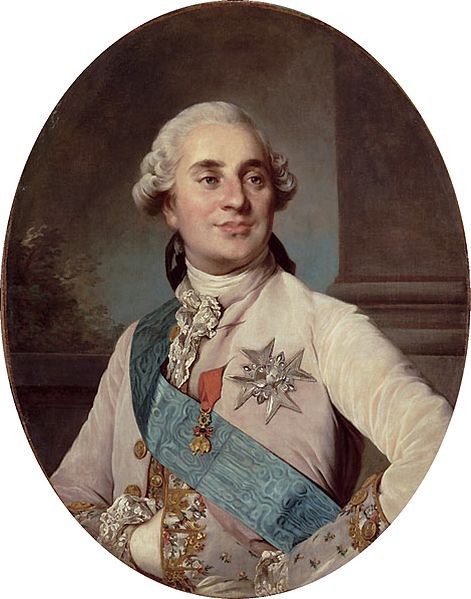
Causes of the Revolution
In the 1780s, discontent about taxation was growing among ordinary French people. Neither the clergy nor noble families in France paid any taxes. The burden of taxation fell on working people and peasants. In 1788, a bad harvest meant that many people were close to starvation. The country was almost bankrupt as a result of costly wars and the extravagant lifestyle of the monarchy. When the king refused to listen to the demands of the people, they formed the National Assembly. On 26th August 1789 the National Assembly made a Declaration of the Rights of Man, giving the same basic rights to all citizens, including liberty and equality.
Revolution and execution
Unrest grew in the streets of Paris, and on 14th July 1789, a mob attacked the royal prison in Paris, the Bastille. This event marked the beginning of the French Revolution. In 1791, the king, Louis XVI, and his wife, Marie-Antoinette, tried to escape from Paris, but they were arrested. The National Assembly abolished the monarchy in 1792. The king was tried and executed on the guillotine in January 1793. Marie-Antoinette followed him to the guillotine in October of the same year.

Tens of thousands of people suspected of being hostile to the government were beheaded during the “Reign of Terror” of 1793–1794. Many of them were members of the clergy or the nobility, while others were caught between rival political factions, the Girondins and
the Jacobins.
Napoleon Bonaparte

Following the French Revolution, a general called Napoleon Bonaparte rose quickly through the ranks of the French army. In 1799, he seized power in France and began his campaign to conquer the rest of Europe. This period (1799–1815) is known as the Napoleonic Wars. By 1812, Napoleon had succeeded in building an empire which extended from Portugal to Moscow in Russia. However, he was finally defeated by a coalition led by the United Kingdom and Prussia at the Battle of Waterloo in June 1815.
Consultant: Philip Parker
pics

Without in any way limiting Q-files Ltd’s exclusive rights under copyright, any use of this publication to “train” generative artificial intelligence (AI) technologies to generate text is expressly prohibited. Q-files Ltd reserves all rights to license use of this work for generative AI training and development of machine learning language models.