
Reptiles

CITE
We have made every effort to follow citation style rules, but there may be some minor differences. If in doubt, please refer to the appropriate citation style manual.
Green turtle. (2026). In Q-files Encyclopedia, Life, Reptiles. Retrieved from
https://www.q-files.com/life/reptiles/green-turtle
"Green turtle." Life, Reptiles, Q-files Encyclopedia, 24 Mar. 2026.
https://www.q-files.com/life/reptiles/green-turtle.
Accessed 22 Sep. 2026.
Green turtle 2026. Life, Reptiles. Retrieved 22 September 2026, from
https://www.q-files.com/life/reptiles/green-turtle
Life, Reptiles, s.v. "Green turtle," accessed September 22, 2026.
https://www.q-files.com/life/reptiles/green-turtle


Green turtle
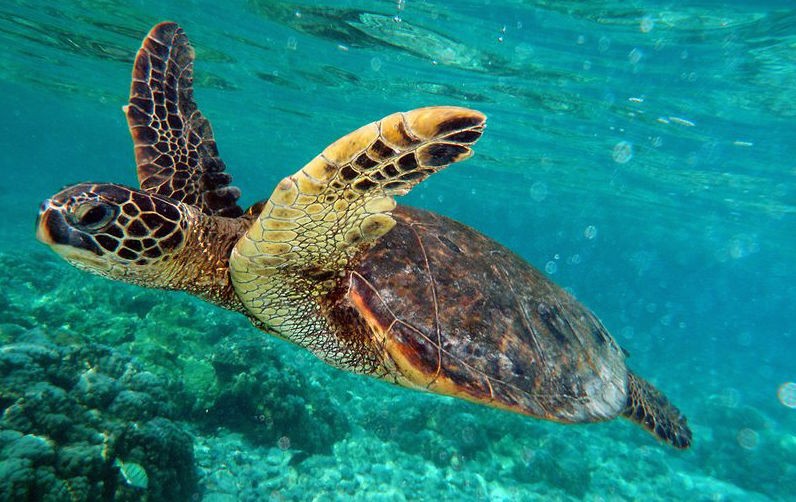
Green turtles are large sea turtles that live in warm ocean waters. They usually stay in their home waters, close to the coast, but every few years they make long journeys back to the breeding grounds where they were born. Unlike most sea turtles, green turtles are herbivorous: they feed only on sea grasses and seaweed. Their young, however, will also eat crabs, shrimps and jellyfish.

Migration

In January, green turtles from Brazil leave the coast and head east, on a journey of over 2300 kilometres (1400 miles) to the tiny island of Ascension in the Atlantic Ocean. It takes the turtles between five and seven weeks to complete their journey. The turtles follow ocean currents to help them find their way. As they swim, they must rise to the surface every few minutes for air.
After a long journey across the Atlantic Ocean, green turtles finally reach the shores of Ascension Island. They mate in the shallow waters around the island before crawling ashore.
Nesting
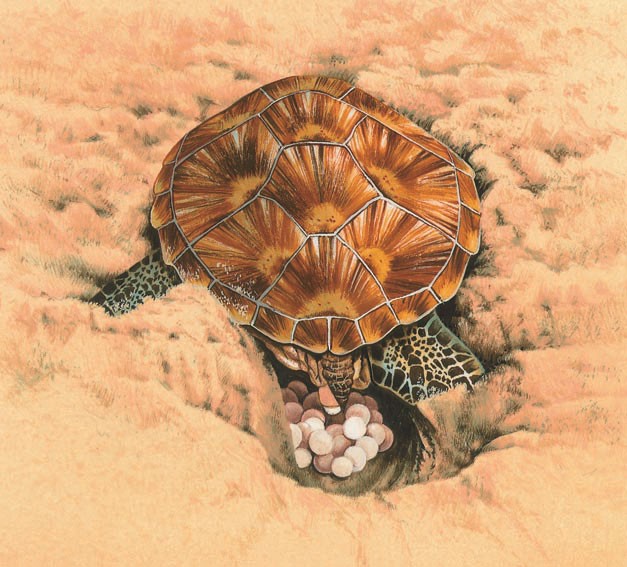
Females drag themselves up the beach—often the very beach where they themselves hatched out. High up the beach, out of the reach of the tides, they use their strong front flippers to dig pits in the sand. Each female lays between 100 and 200 eggs. She covers them with sand and returns to the sea.
Hatchlings
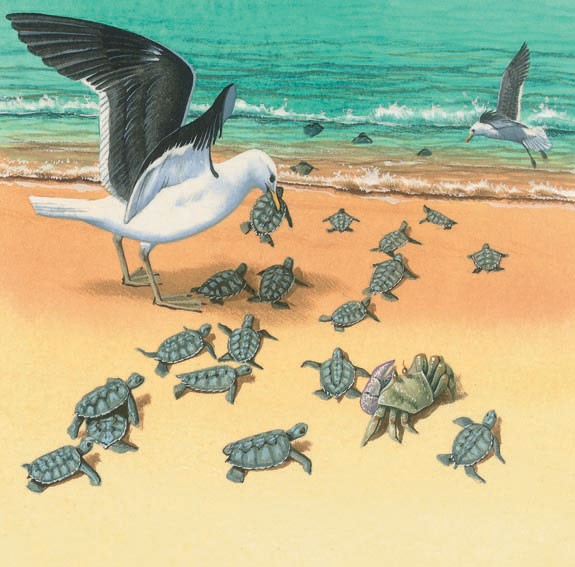
Three months later, the baby green turtles hatch. The hatchlings scrape away the sand covering their nests and then hurry towards the sea, guided by the sound of the surf. As they waddle across the beach, many of them are picked off by gulls and crabs. At the sea's edge, the surviving turtles wait for a wave to carry them away. In the water they are safer. There they can dodge the beaks of diving birds—but they must still avoid sharks. The young turtles search for rafts of floating seaweed. Here they can drift safely until they are big enough to swim in the open ocean.
Consultant: Chris Jarvis
pics
Without in any way limiting Q-files Ltd’s exclusive rights under copyright, any use of this publication to “train” generative artificial intelligence (AI) technologies to generate text is expressly prohibited. Q-files Ltd reserves all rights to license use of this work for generative AI training and development of machine learning language models.