
Oceania

CITE
We have made every effort to follow citation style rules, but there may be some minor differences. If in doubt, please refer to the appropriate citation style manual.
Kiribati. (2026). In Q-files Encyclopedia, Geography, Oceania. Retrieved from
https://www.q-files.com/geography/oceania/kiribati
"Kiribati." Geography, Oceania, Q-files Encyclopedia, 1 Apr. 2026.
https://www.q-files.com/geography/oceania/kiribati.
Accessed 13 Sep. 2026.
Kiribati 2026. Geography, Oceania. Retrieved 13 September 2026, from
https://www.q-files.com/geography/oceania/kiribati
Geography, Oceania, s.v. "Kiribati," accessed September 13, 2026.
https://www.q-files.com/geography/oceania/kiribati


Kiribati
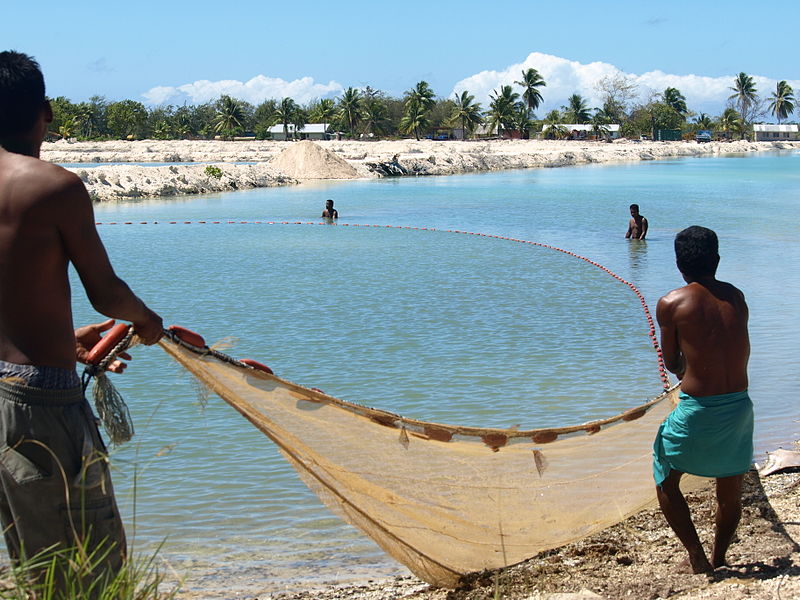
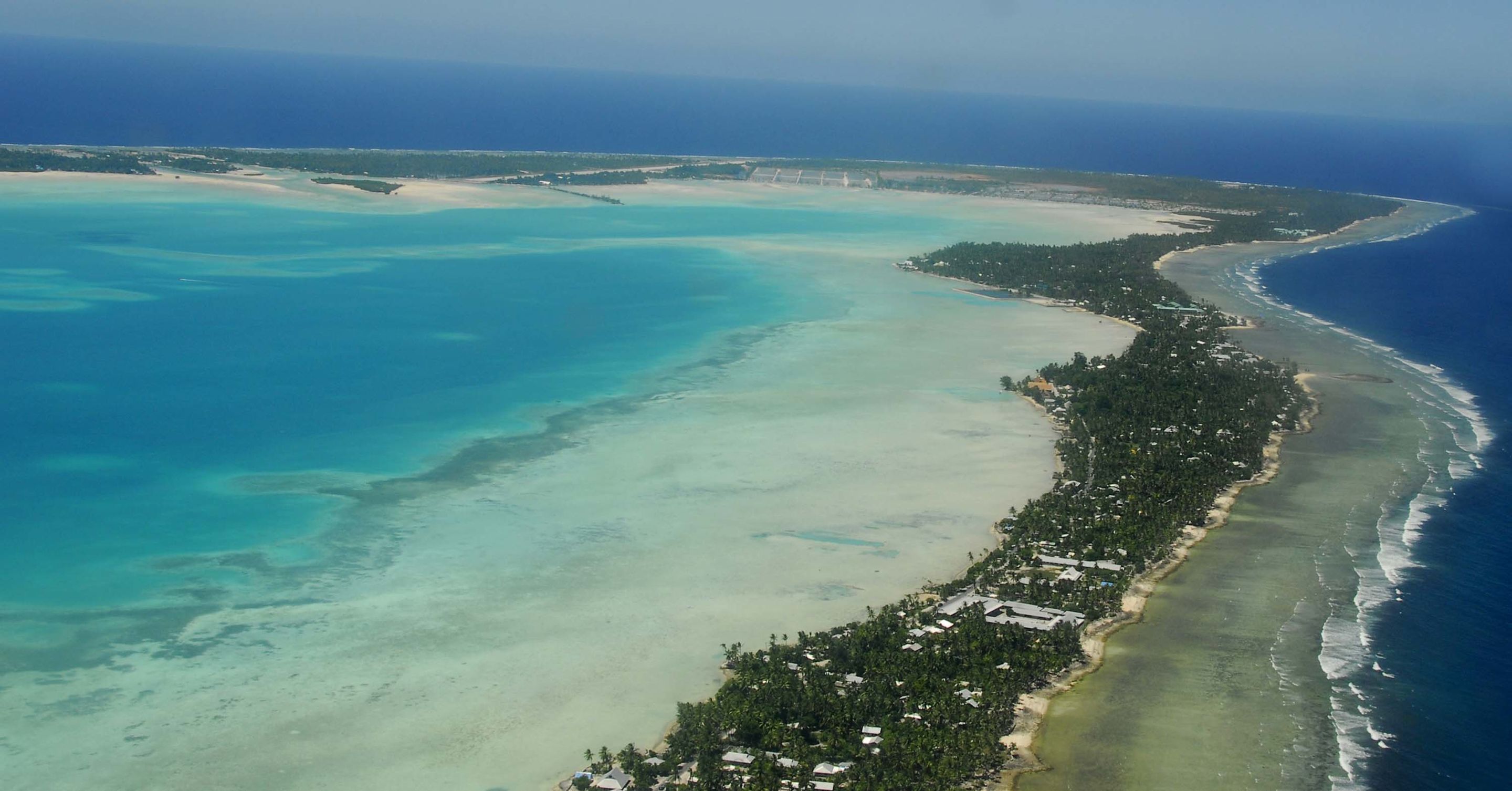
The island nation of Kiribati is made up of 32 coral atolls and one coral island (Banaba), scattered over 3.5 million square kilometres (1,351,000 square miles), encompassing Melanesia (Banaba) and Polynesia (the Line and Phoenix islands) as well as Micronesia (Gilbert Islands). Twenty-one of the islands are inhabited; each has its own governing council. More than half of the population of Kirbati live on Tarawa Atoll, which is made up of a number of islets, connected by a series of causeways. Kiribati’s low-lying islands are nowadays at risk from rising sea levels caused by climate change. As ocean waters rise over the next 100 years, the islands’ soils could become too salty to farm, and some islands might eventually disappear under the waves.


History
The islands of Kiribati, mainly the 16 Gilbert Islands, have been inhabited by Austronesian peoples since 3000 BC. Fierce civil war between local peoples raged in the period after the arrival of Europeans in the 17th and 18th centuries. Thousands of people were forcibly taken away by the British in the 19th century to work as labourers in various colonies, including Australia, where they were known as kanakas.
Forming part of what were known as the Gilbert and Ellice Islands, the islands became a British protectorate from 1892 to 1916, and then a colony. Banaba, named Ocean Island at the time, was strip-mined for phosphates from 1900 until exhausted in 1979. The Gilbert and Ellice Islands were later divided into two island groups: the Ellice Islands became independent Tuvalu in 1978, while the Gilbert Islands—along with the Phoenix Islands, the Line islands and Banaba—became independent Kiribati in 1979. Although the local Gilbertese name for the Gilbert Islands is Tungaru, the new name, Kiribati (which is a local spelling of the Gilberts), was chosen instead.
Consultant: Nicholas Harris
Facts about Kiribati
Population 119,940
Area 811 sq km (313 sq miles)
Highest point Banaba island 87 m (285 ft)
Capital South Tarawa, pop. 56,388
Languages English, Gilbertese
Religions Christian 96%, other 4%
Ethnicity Gilbertese 97%, other 3%
Currency Australian dollar (BMD)
Chief exports fish, copra

pics
Without in any way limiting Q-files Ltd’s exclusive rights under copyright, any use of this publication to “train” generative artificial intelligence (AI) technologies to generate text is expressly prohibited. Q-files Ltd reserves all rights to license use of this work for generative AI training and development of machine learning language models.