
Australian states and territories

CITE
We have made every effort to follow citation style rules, but there may be some minor differences. If in doubt, please refer to the appropriate citation style manual.
New South Wales. (2026). In Q-files Encyclopedia, Geography, Australian states and territories. Retrieved from
https://www.q-files.com/geography/australian-states-and-territories/new-south-wales
"New South Wales." Geography, Australian states and territories, Q-files Encyclopedia, 1 Apr. 2026.
https://www.q-files.com/geography/australian-states-and-territories/new-south-wales.
Accessed 6 Aug. 2026.
New South Wales 2026. Geography, Australian states and territories. Retrieved 6 August 2026, from
https://www.q-files.com/geography/australian-states-and-territories/new-south-wales
Geography, Australian states and territories, s.v. "New South Wales," accessed August 6, 2026.
https://www.q-files.com/geography/australian-states-and-territories/new-south-wales


New South Wales
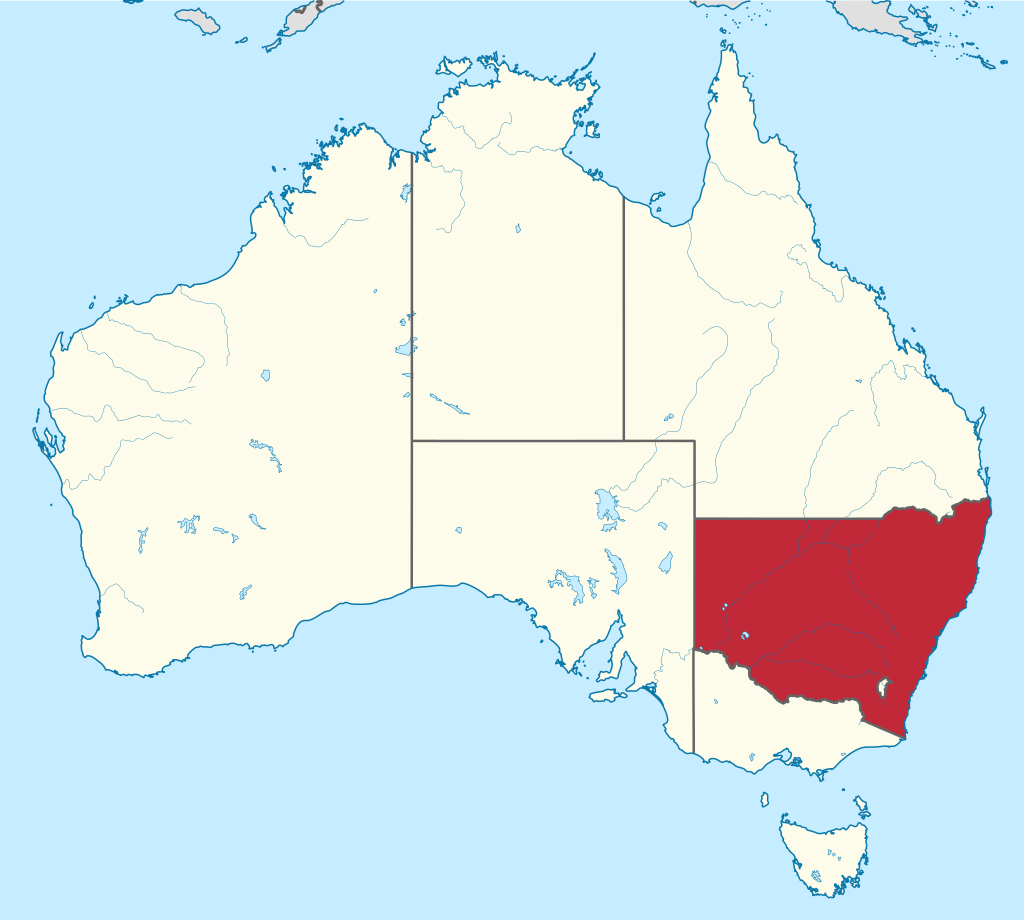
New South Wales (often abbreviated to NSW) is a state on the southeast coast of Australia. It is Australia's most populous state. Just under two-thirds of the state's population, 5.3 million, live in the Greater Sydney area. The Colony of New South Wales was founded as a British penal colony in 1788. The colony originally comprised more than half of the Australian mainland, before it was divided up into other colonies during the 19th century.
Geography


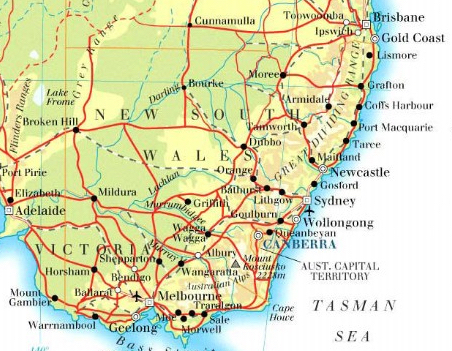
Most of the inhabitants of NSW live on the narrow strip of fertile river valleys and plains along the coast. Rising immediately to the west are the tablelands (plateaus), gorges and mountains of the Great Dividing Range. The western slopes of these highlands are—except in the south—quite gentle, forming an area of undulating farmland intersected by rivers. The higher slopes are covered with eucalyptus forest. Semi-arid plains stretch off to the west beyond the Darling River, merging into sandy desert in the north or mallee scrubland in the south. Irrigation is made possible by dams and weirs on the westward-flowing rivers, including the Murray, Lachlan, Murrumbidgee and Darling. Drought, bushfires and floods are ever-present natural threats across the entire state.
The coastal strip of New South Wales enjoys hot summers and mild winters. The climate in the North Coast, bordering Queensland, is humid subtropical, with bouts of heavy rain in summer and occasionally cyclones. Inland areas of the state, which have a semi-arid to arid climate, are both hotter in summer and colder in winter. Temperatures are cooler in the mountains, becoming coldest in the high Snowy Mountains region of the Australian Alps around Mount Kosciuszko, where heavy snow falls in winter.

Economy

Since the 1970s, old industries such as steel and shipbuilding have largely disappeared, to be replaced by information technology companies (especially in the Macquarie Park area) and financial services centred on Sydney. Coal and related products remains the state's biggest export, however, although the state is committed to wind and solar energy and the construction of large-scale batteries to store this energy.
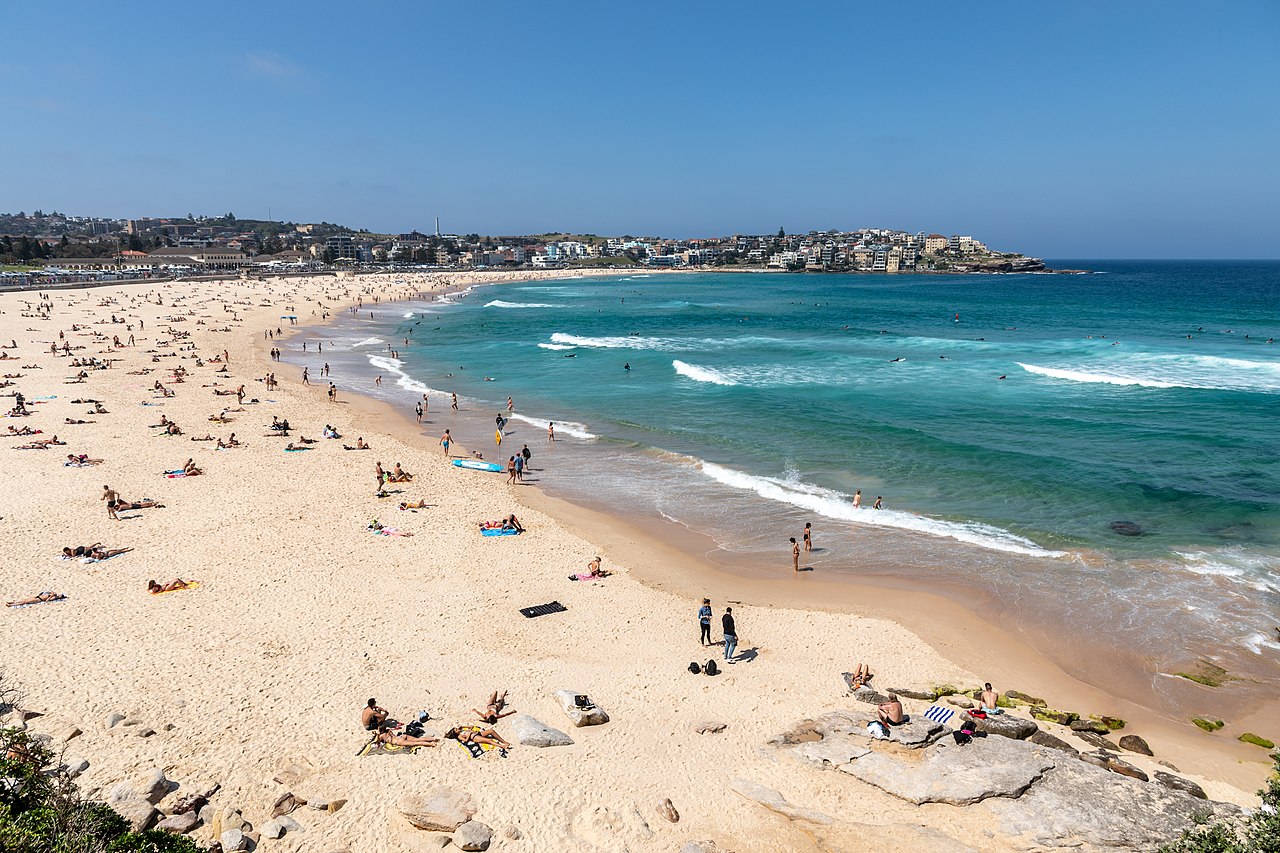
Tourism has also become important to the NSW economy. It is also centred on Sydney but also around the North Coast towns of Coffs Harbour and Byron Bay.
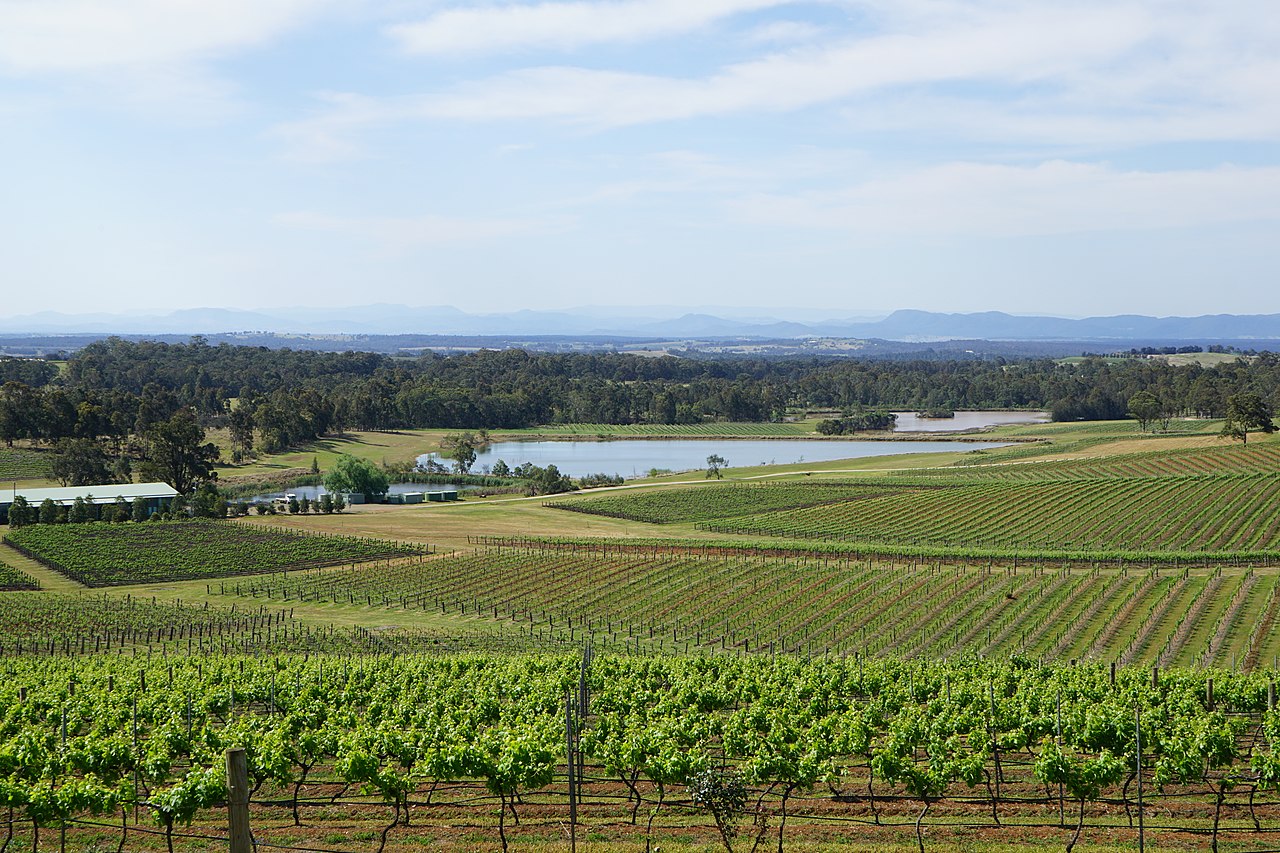
Cattle, sheep and pig farming has been present since domestic animals were imported during the early days of European settlement. The Northern Tablelands are prime sheep and cattle country, while cotton is grown in the Namoi Valley of northwestern New South Wales. On the central slopes there are many fruit orchards, while blueberries and sugar cane are grown in northern subtropical areas. The Hunter Valley and Riverina region near Wagga Wagga are both major wine-producing areas.
Sydney
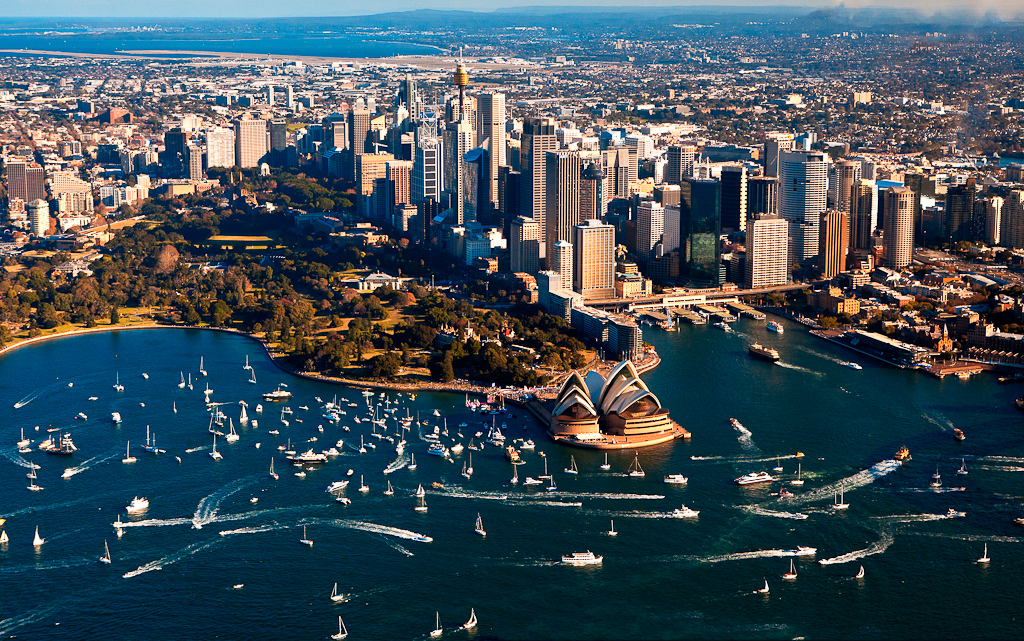
Sydney, the capital city of New South Wales, is Australia's and Oceania's most populous city. The urban area surrounds Port Jackson, while its suburbs extend inland about 70 kilometres (45 miles) towards the Blue Mountains, part of the Great Dividing Range. Residents of the city are known as "Sydneysiders".
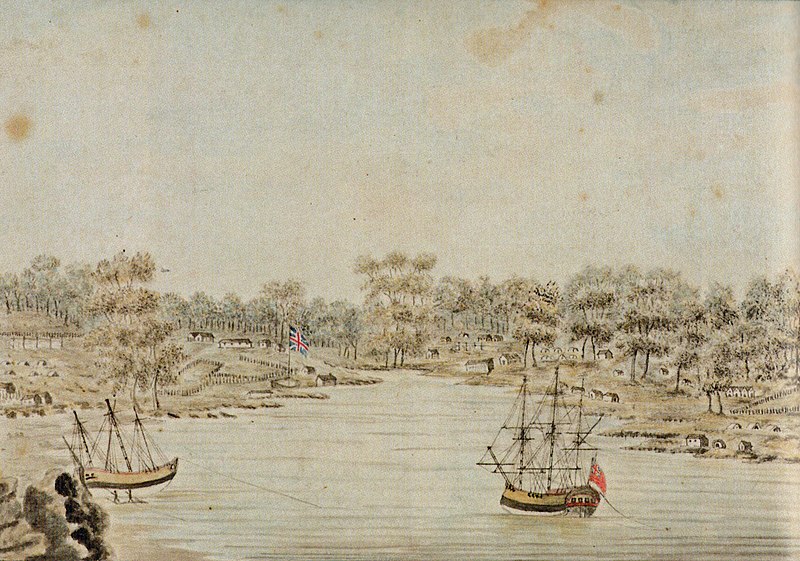
Around 29 clans of Aboriginal Australians (chiefly the Darug, Guringai and Dharawal speaking peoples) inhabited the region now called Sydney at the time Europeans first arrived on the continent. During his first Pacific voyage in 1770, Lieutenant James Cook and his crew became the first Europeans to set foot on Australian soil when they made landfall at Botany Bay. In 1788, the First Fleet of convicts, led by Captain Arthur Phillip, founded Sydney as a British penal colony, the first European settlement in Australia. Phillip named the settlement after Thomas Townshend, Lord Sydney, the British Home Secretary at the time.
Phillip soon founded another settlement upriver at what he originally called Rose Hill (later re-named Parramatta, after the local Aboriginal name), which offered better farmland than the area of poor soils around Sydney Cove. Parramatta is today a major commercial centre in Greater Western Sydney.
Lachlan Macquarie, Governor of New South Wales from 1810 to 1821, began the process of transforming the Sydney from a penal colony to a town for free settlers and a colonial capital, with roads and public buildings.
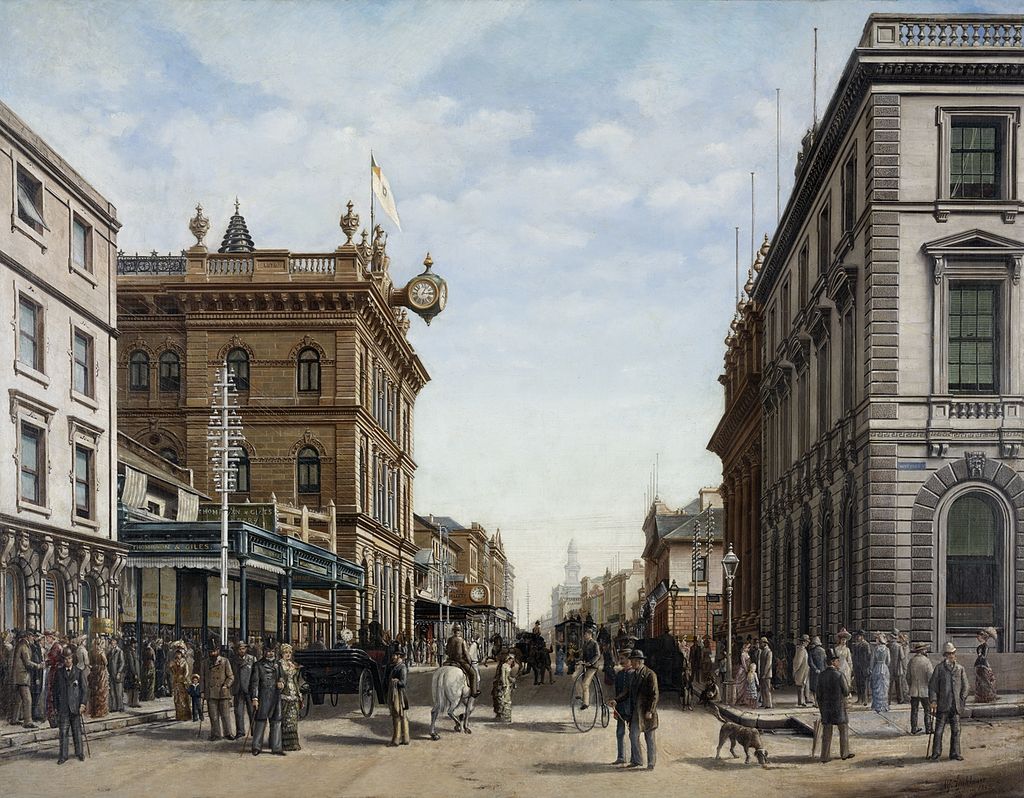

Penal transportation to New South Wales ended soon after Sydney officially became a city in 1842. Sydney's population expanded rapidly after the gold rushes of the 1850s. Over the next century, Sydney transformed from a colonial outpost into a major global centre. In recent decades, it has become one of the most multicultural cities in the world, with more than 250 different languages spoken and more than 45% of the population reported having been born overseas. The city is established as Australia's financial capital, and is a major centre of tourism.
Consultant: Nicholas Harris
Facts about New South Wales
Nickname The First State
Area 800,642 sq km (309,130 sq miles) Rank 5th
Highest point Mount Kosciuszko 2228 m (7310 ft)
Population 8,164,128 Rank 1st
Capital Sydney pop. 4,940,628 (Greater Sydney)
Other major cities Newcastle-Maitland (pop. 486,704), Central Coast (333,627), Wollongong (302,739), Albury-Wodonga (93,603)
State mammal Platypus
State bird Kookaburra
State fish Blue groper
State flower Waratah
State mineral Black opal

History of New South Wales
60,000–40,000 years ago
Aboriginal Australians occupy the area know known as New South Wales. Before European settlement, there are an estimated 250,000 Aboriginal people living in the region, including the Wodi wodi, Bundjalung, Wiradjiri, Gamilaray, Yuin, Ngarigo and Ngiyampaa
1770
Lieutenant James Cook becomes the first European to set foot in New South Wales when he charts the eastern coast of Australia and comes ashore at an inlet he names Botany Bay in what is now southern Sydney. Cook first names the land "New Wales", later revising it to "New South Wales". The colony covers the eastern third of Australia, from Cape York Peninsula to the tip of Van Diemen’s Land (later Tasmania)
1788
Captain Arthur Phillip of the First Fleet of 11 vessels carrying more than a thousand settlers, including 778 convicts, lands at Botany Bay and founds a penal settlement at nearby Port Jackson. Phillip establishes a settlement at the place he names Sydney Cove in honour of the Home Secretary, Lord Sydney, on 26th January. Phillip assumes the role of governor and, in the period before he departs in 1792, thousands more convicts arrive
1789
A smallpox epidemic breaks out in the Sydney region, which kills up to 70% of the Aboriginal people of of the area: they have never encountered the disease before and lack immunity to it.
1794–1816
Hawkesbury and Nepean Wars: a series of conflicts between the British colonists and the Aboriginal people of the Sydney region. As a result of their defeat, the indigenous tribes are dispossessed of their lands.
1804
The settlement of Newcastle, named after the English coal port city, is established as a severe punishment camp for troublesome convicts following the Castle Hill Rebellion, an uprising by convicts—most of them Irish—against British colonial authorities in Sydney
1808
Rum Rebellion: the New South Wales Corps, known as the Rum Corps, an armed force, overthrows the New South Wales Governor, William Bligh
1810
Lachlan Macquarie is sent from Britain to reform the settlement of Sydney. During his time as Governor, he orders the construction of roads and public buildings, and sends explorers out from Sydney to discover new lands suitable for free settlement
1813
Gregory Blaxland, William Lawson and William Wentworth succeed in crossing the Blue Mountains west of Sydney and discover the fertile grasslands inland
1820s
Free settlers begin their occupation of rural New South Wales, raising cattle and sheep. Known as "squatters", the settlers, including ex-convicts and people escaping the harsh conditions of industrial England, but also some from upper and middle-class English and Scottish families, have no legal rights to the Crown lands, but gain ownership simply by being the first European settlers in the area. They fight battles with advanced weapons against the local Aboriginal Australian communities in the areas they occupy
1825
Tasmania, then called Van Diemen's Land, is proclaimed as a separate colony from New South Wales. It is followed by South Australia (1836), New Zealand (1841), Victoria (1851) and Queensland (1859)
1838
Myall Creek massacre: at least 28 unarmed Aboriginal Australians are killed by a gang of colonists, seven of whom, at the insistence of Governor George Gipps, are found guilty of murder and hanged
1840
Transportation of convicts to New South Wales is abolished, by which time 150,000 convicts, most of them sent after the end of the Napoleonic Wars, have been shipped from Britain
1851
Edward Hargraves discovers gold at Ophir near Bathurst, triggering a series of gold rushes over the following decade and a huge influx of settlers
1856
New South Wales colony becomes a self-governing colony with its own parliament
1889
Henry Parkes, a New South Wales politician, delivers his Tenterfield oration, a speech calling for federation (unification of self-governing states) of the Australian colonies
1899
The people of New South Wales vote in favour of the proposed Federation of Australia
1901
New South Wales becomes a state in the self-governing Commonwealth of Australia
1911
A portion of territory 300 km (185 miles) southwest of Sydney is acquired by the federal government as the site for the national capital, named Canberra in 1913. The Jervis Bay enclave on the Pacific coast is ceded in 1915 to provide a port for Canberra.
1932
The Sydney Harbour Bridge is opened
1973
Sydney Opera House is completed and becomes a World Heritage Site
2000
Sydney hosts the Summer Olympics.
2025
(14th December) Two gunmen shoot at a crowd of around 1000 people attending a Jewish Hanukkah celebration at Archer Park beside Bondi Beach in Sydney, killing 15 people. A further 38 people are wounded.
pics
Without in any way limiting Q-files Ltd’s exclusive rights under copyright, any use of this publication to “train” generative artificial intelligence (AI) technologies to generate text is expressly prohibited. Q-files Ltd reserves all rights to license use of this work for generative AI training and development of machine learning language models.