
Plants

CITE
We have made every effort to follow citation style rules, but there may be some minor differences. If in doubt, please refer to the appropriate citation style manual.
Fruits and seeds. (2026). In Q-files Encyclopedia, Life, Plants. Retrieved from
https://www.q-files.com/life/plants/fruits-and-seeds
"Fruits and seeds." Life, Plants, Q-files Encyclopedia, 24 Mar. 2026.
https://www.q-files.com/life/plants/fruits-and-seeds.
Accessed 13 Sep. 2026.
Fruits and seeds 2026. Life, Plants. Retrieved 13 September 2026, from
https://www.q-files.com/life/plants/fruits-and-seeds
Life, Plants, s.v. "Fruits and seeds," accessed September 13, 2026.
https://www.q-files.com/life/plants/fruits-and-seeds


Fruits and seeds
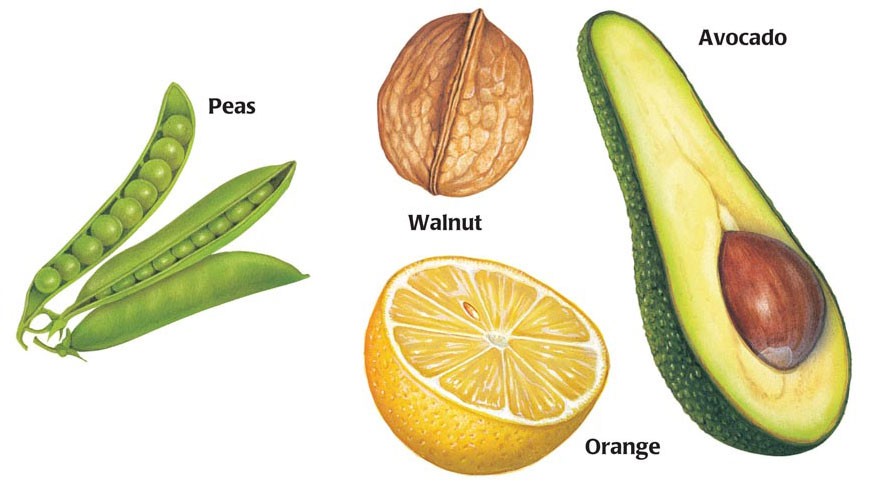
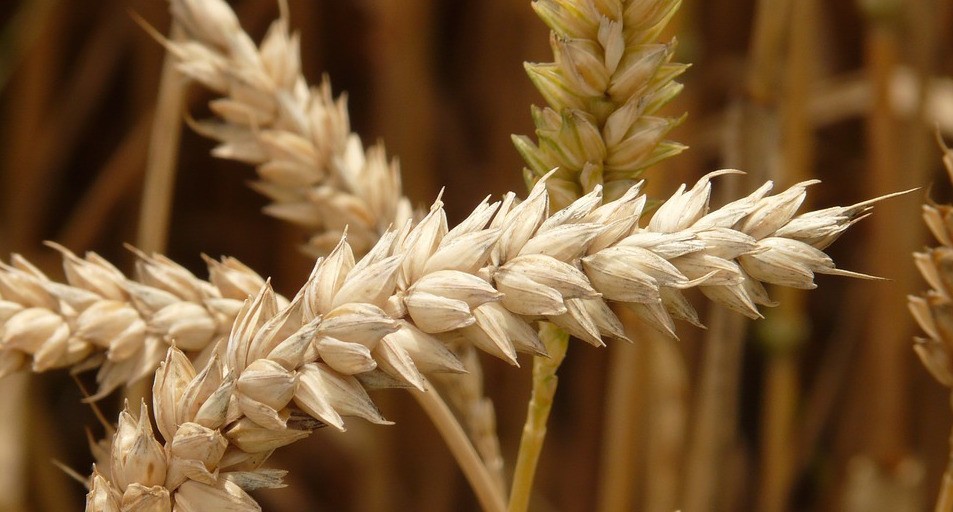
After male pollen grains have been carried to the female parts of a flower, the male and female cells join and begin to develop into the baby plant. The flower parts are no longer needed and they shrivel away, to be replaced by the developing seeds in the seed-head. A seed is usually accompanied by a food store for its early growth, neatly packaged inside a casing. This is called a fruit. Some plants, like orchids, produce many thousands of tiny seeds. An ear of wheat is a seed-head of wheat seeds or grain. When the grain is ground up, it makes flour.

Spreading seeds
Seeds have a better chance of growing if away from the parent plant. If they fall next to the parent, they would be in its shade and would also compete with it for soil nutrients. For these reasons, seeds have many ways of being spread far and wide.
Many seeds form inside fruits. A fruit is the protective case around a seed. Some fruits are very light, like the feathery “parachutes” of the dandelion. They blow away in the wind.
Other seeds hook themselves on to feathers or fur to travel. Some tree seeds, for example the maple and sycamore, have “wings” that carry them spinning through the air. Other plants, such as the hazel, throw the seeds out. Some fall into water and float to a new place, like the coconut.
A nut has an especially tough outer case. Animals may crack some nuts and eat the seeds within, but they also drop many as they feed. A squirrel buries nuts such as acorns, but may forget to dig them up, so in effect it has planted new oak trees.
Some fruits have juicy, tasty flesh. These are known by the everyday name of “fruits”. The fruity part attracts animals to eat it. The seeds are spilled or pass through the animal’s guts to emerge unharmed and far away.
Asexual reproduction
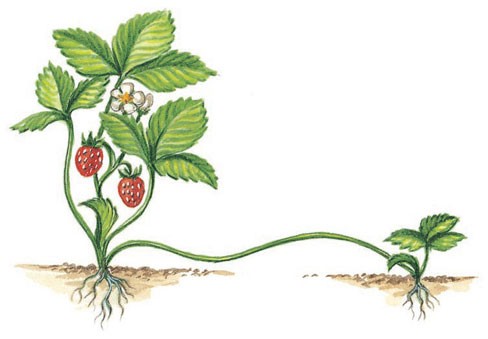
Flowering plants do not always reproduce by seeds. Sometimes part of the plant, like a strawberry runner, grows a new shoot and root which develop into a whole new plant. Since male and female sex cells are not involved, this is known as asexual, or vegetative, reproduction.

Germination
A seed germinates, or begins to grow, only when conditions are suitable. This usually requires moisture of some kind, the right temperature, and perhaps darkness, which means the seed is buried in the soil. Some seeds, for example, those of the ironwood tree, do not germinate unless they have been scorched by fire. This usually means many plants have been burnt away so the ground is bare and ready for new life. Other seeds do not germinate until after they have been cracked by frost and then warmed slightly—that is, when winter is over and spring has arrived.
When conditions are right, the baby plant begins to grow using its store of food in the seed-leaves, or cotyledons. It splits its case, sends roots down into the soil to absorb water and nutrients (1). The shoot arches up towards the light and straightens (2). The seed-leaves open out and begin photosynthesis. Finally, the seed case falls away and the main shoot starts to lengthen (3).

Consultant: Chris Jarvis
pics

Without in any way limiting Q-files Ltd’s exclusive rights under copyright, any use of this publication to “train” generative artificial intelligence (AI) technologies to generate text is expressly prohibited. Q-files Ltd reserves all rights to license use of this work for generative AI training and development of machine learning language models.