
Forces

CITE
We have made every effort to follow citation style rules, but there may be some minor differences. If in doubt, please refer to the appropriate citation style manual.
Machines. (2026). In Q-files Encyclopedia, Science, Forces. Retrieved from
https://www.q-files.com/science/forces/machines
"Machines." Science, Forces, Q-files Encyclopedia, 10 Mar. 2026.
https://www.q-files.com/science/forces/machines.
Accessed 21 Sep. 2026.
Machines 2026. Science, Forces. Retrieved 21 September 2026, from
https://www.q-files.com/science/forces/machines
Science, Forces, s.v. "Machines," accessed September 21, 2026.
https://www.q-files.com/science/forces/machines


Machines
A machine uses physical efforts, forces and work to get a job done. It can be as complicated as a jet engine or a combine harvester to gather crops. Yet it can be as simple as a crowbar used to lift heavy stones or a wheel on an old cart. Even the most complicated machines are combinations of a few kinds of simple machines. The main kinds of simple machines are: an inclined plane, a slope or ramp to drag or roll heavy objects upwards; a wedge, two ramps back to back as used in knife and axe blades; a lever, a rigid bar or beam that pivots on a hinge or fulcrum, like a crowbar; a screw, a wedge twisted into a corkscrew shape that forces its way through a substance; a wheel and axle; a pulley, a wheel with a groove in its rim for a rope, chain or cable.
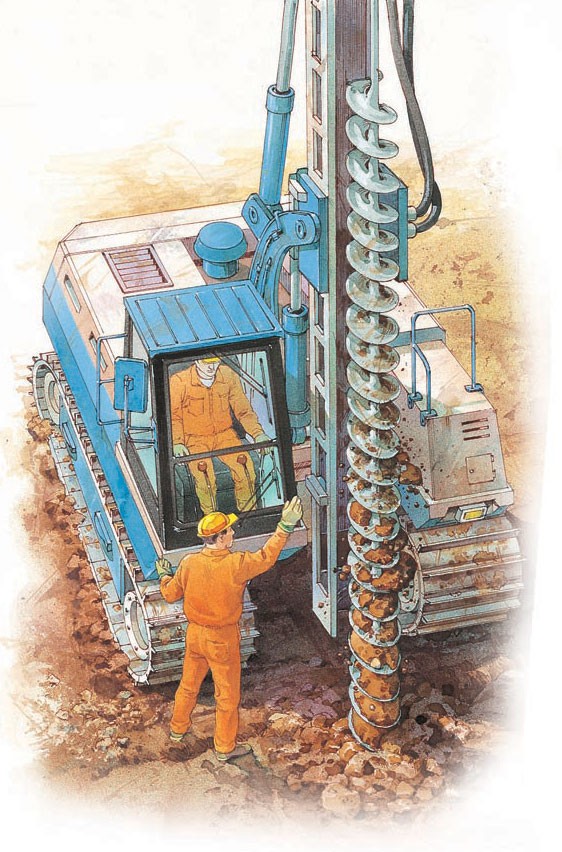

Machines in action
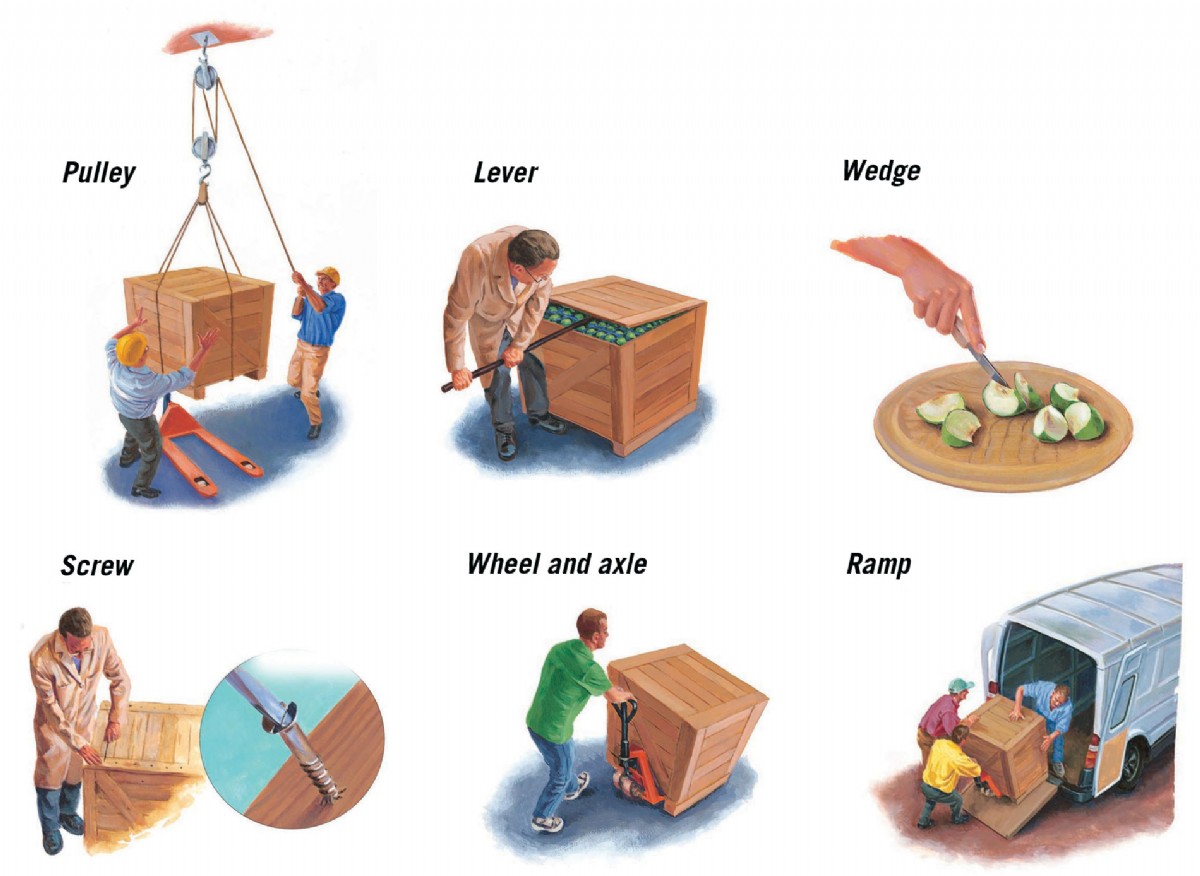
This sequence shows how machines can be used to carry out a simple job. A crate of apples is unloaded. Pulleys reduce the amount of effort needed to raise and lower the crate from the lorry. The lid is prised open using a lever, the edge of the carton itself acting as a fulcrum. The apples are checked. One or two are samples cut open by a knife—a type of wedge with a sharp edge. The lid is fixed back on with screws (wedges twisted into corkscrew shapes). Wheels help move the crate to the van. The crate is then loaded into the van using a short ramp. It is much easier to push a heavy load up a ramp than to lift it.
Pulley
A rope and pulley changes the direction of a pulling force. This is called a simple pulley. It is usually easier to pull down on a rope than to pull up. Loop the rope around two pulleys, making a compound pulley, and it can lift a heavier weight than with one. But the rope must be pulled further. Adding more pulleys to the system makes the lifting even easier, but the rope has to be pulled yet further. The total work done to move the weight is the same in each case.

Lever
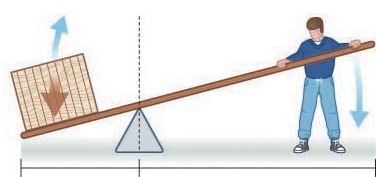
A lever is a stiff bar that pivots at a fulcrum. If the fulcrum is near one end then a small force at the other end moves a heavy weight, but the weight moves up a shorter distance than the other end is pushed down.
Ramp
Ramps were used in the 3rd millennium BC (3000–2000 BC), when the pyramids were being built in ancient Egypt. Workers hauled stone blocks on sledges up long, spiral ramps as the pyramids grew taller and taller. This may have been hard work, but it is much easier to drag something up a slope than to lift it up a series of steps.
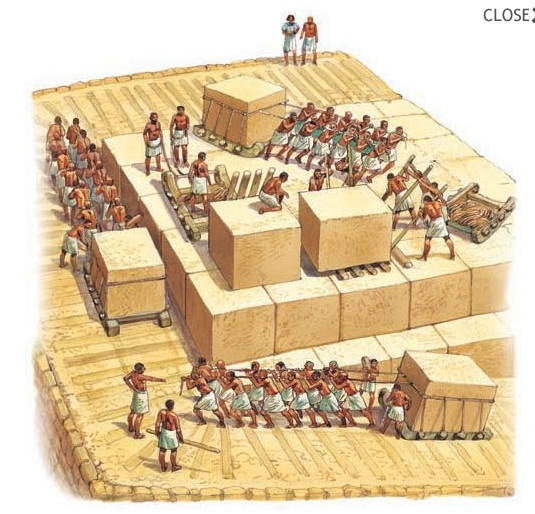
The ramp was built up all four sides of the pyramid. On arrival at the top of the ramp, the workers eased each block off its sledge and on to wooden logs—which acted as wheels. The block was then rolled into position, using heavy wooden posts as levers.
Consultant: Mike Goldsmith
pics
Without in any way limiting Q-files Ltd’s exclusive rights under copyright, any use of this publication to “train” generative artificial intelligence (AI) technologies to generate text is expressly prohibited. Q-files Ltd reserves all rights to license use of this work for generative AI training and development of machine learning language models.