
Sport

CITE
We have made every effort to follow citation style rules, but there may be some minor differences. If in doubt, please refer to the appropriate citation style manual.
Cycling. (2026). In Q-files Encyclopedia, Culture, Sport. Retrieved from
https://www.q-files.com/culture/sport/cycling
"Cycling." Culture, Sport, Q-files Encyclopedia, 11 Jun. 2026.
https://www.q-files.com/culture/sport/cycling.
Accessed 6 Aug. 2026.
Cycling 2026. Culture, Sport. Retrieved 6 August 2026, from
https://www.q-files.com/culture/sport/cycling
Culture, Sport, s.v. "Cycling," accessed August 6, 2026.
https://www.q-files.com/culture/sport/cycling


Cycling
Cycling is an individual and team sport for men and women racing on roads, tracks or across country. It has been popular since the invention of the bicycle and has led to many innovations to create light, aerodynamic bikes. BMX and cyclo-cross bikes are also extremely strong and often have wider tyres for grip. The most famous cycle race is the three-week Tour de France, while track races held inside a velodrome have become a highlight of the Olympic Games.

History
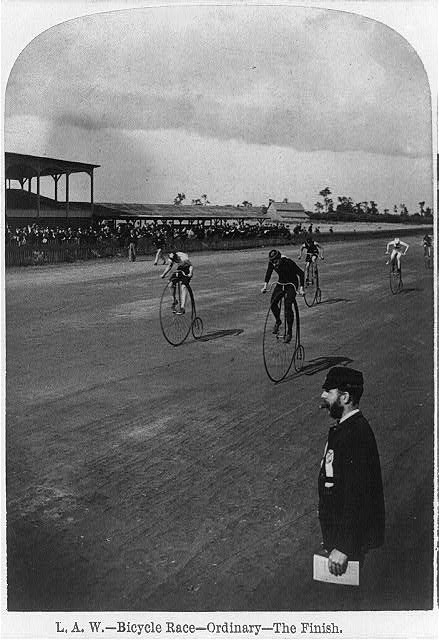
The first cycle race was probably held on 31st May 1868 at the Parc de Saint-Cloud, Paris. It was won by an Englishman, James Moore, who was first to pedal 1.2 kilometres (3940 feet) on a wooden bike with iron tyres. He also won the first race between cities, Paris and Rouen, contested the following year. Track races on wooden indoor tracks were first held in England from 1870, partly because the roads were too rough to cycle on.
The Tour de France began in 1903 as an endurance event in which competitors cycled through the night. Men’s cycling was included at the 1896 Olympics, but women's cycling has featured only since 1984. Professional championships began in the 1920s and today 36 events make up the men's Union Cycliste Internationale (UCI) WorldTour, 29 the women's.
Equipment
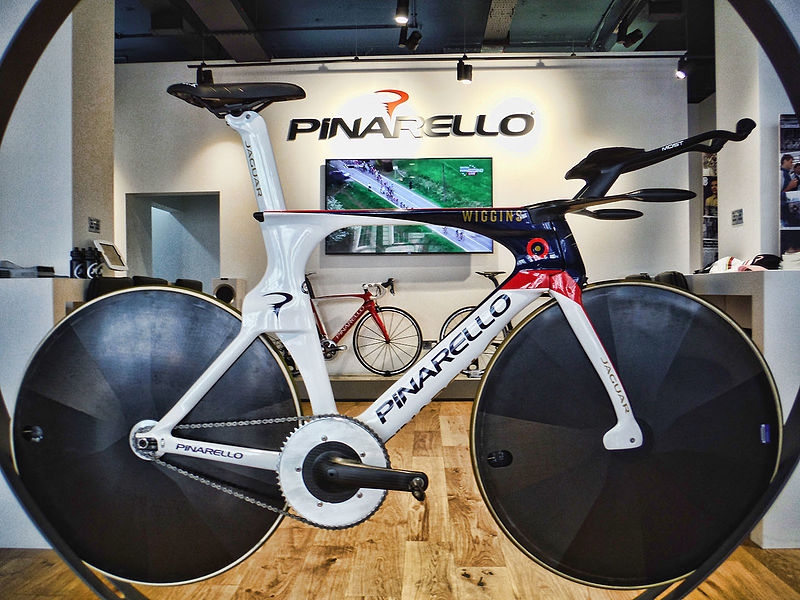
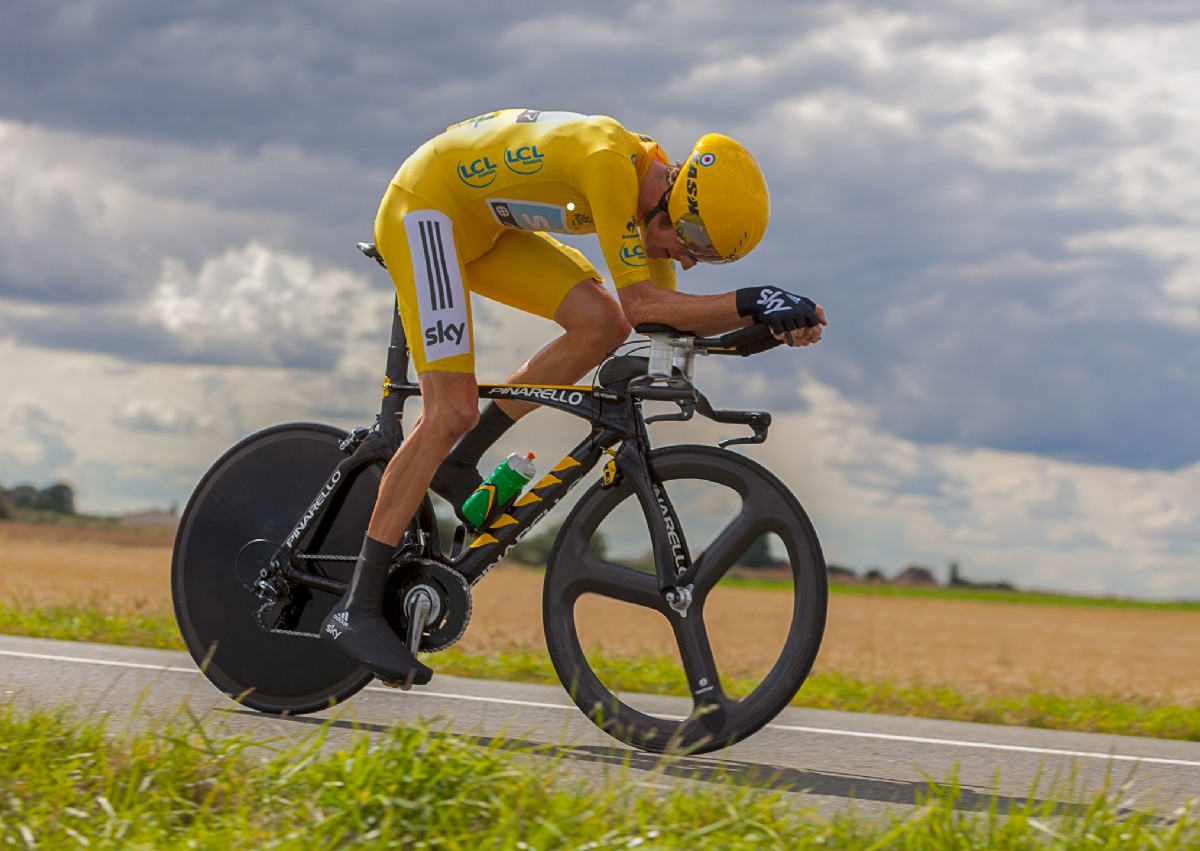
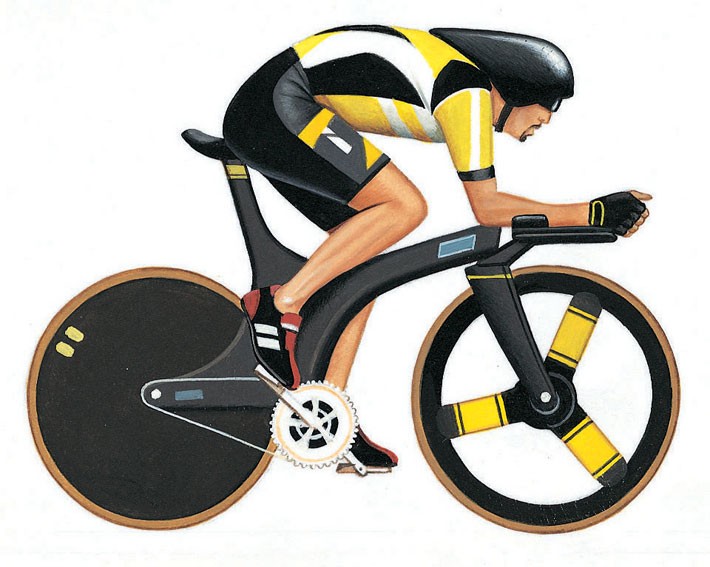
Racing bikes are engineered to be light and aerodynamic. Moulded carbon fibre frames, thin tyres and razor-sharp spokes to slice through the air are all standard features on modern machines. Riders in time trials often wear streamlined helmets and tuck their arms in with the help of aero bars to reduce air resistance. Riders’ feet are clipped on to the pedals to help them pull as well as push for more power. BMX and cyclo-cross bikes are sturdier and use wider tyres for better grip.
Road races
The main cycling events on roads are time trials, one-day races and stage races. In time trials, competitors leave at regular intervals to cycle a course without the help of pace-makers. One-day races are held across Europe and are city-to-city rides, the longest professional race being the Milan-San Remo (also known as La Primavera or La Classicissima) in Italy, which is 298 kilometres (185 miles) long.
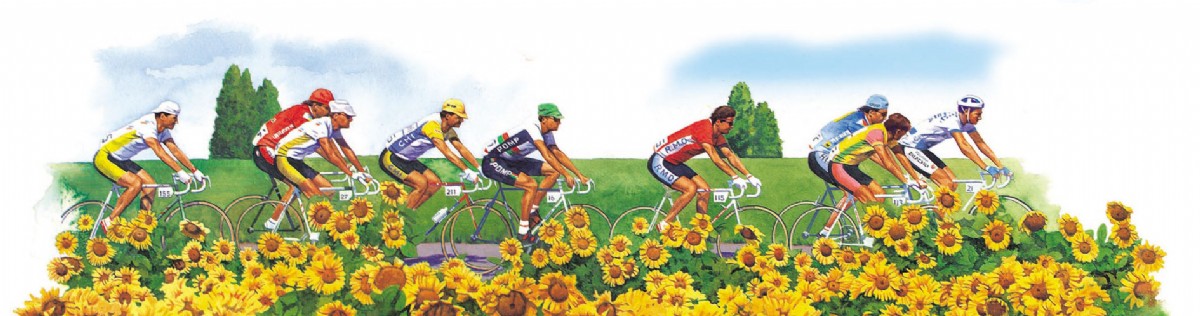
Stage races are a mix of time trials and point-to-point day races held over a longer period—three weeks in the case of the Tour de France, one of three European multi-stage Grand Tours, the others being Italy’s Giro d’Italia and Spain's Vuelta a España.

The Tour de France
The route of the Tour de France race varies each year, visiting different parts of France and often other countries, although the race always finishes in Paris. The Tour lasts 21 days and sees cyclists cover about 3500 kilometres (2200 miles). It is contested by about 20 teams of nine riders each. Daily stages include road races, with sprints set up along the route; climbs up steep mountain roads; and time trials.
Each stage ends with an award for the stage winner. There may also be awards for the king of the mountains (the first climber to reach the summit of a climb, earning the right to wear a red and white jersey the following day); the best sprinter (who will wear a green jersey); and the best-placed cyclist aged under 26 (white jersey).
The greatest prize, however, is for the General Classification (GC), the rider with the shortest overall time, winning the right to wear the famous yellow jersey. It is possible to win the GC contest without winning a single stage, simply by being the most consistent rider over the 21-day contest. There is also an overall team prize calculated from the scores of the best three finishers in each team.
Road race tactics
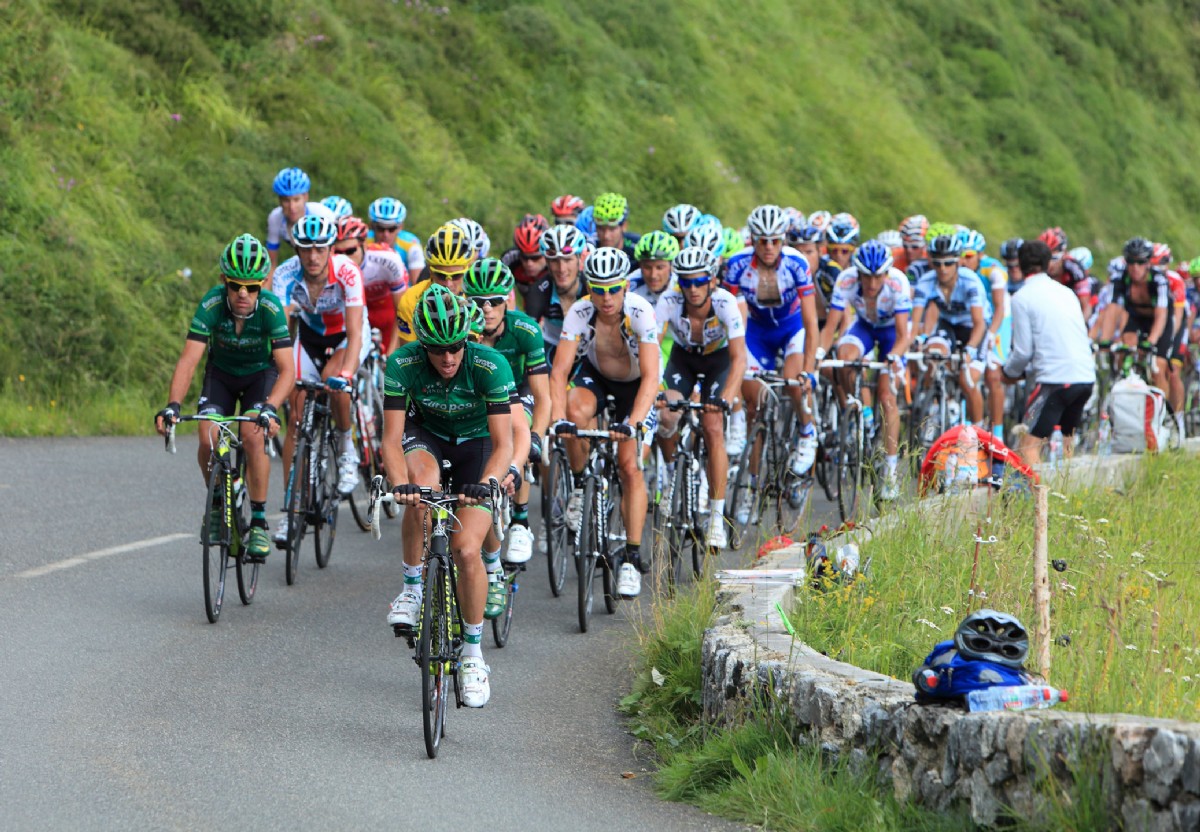
Individual winners depend on other members of their team for their success. This is because there is a huge advantage in riding just behind another bike and benefitting from its slipstream—the stream of air behind any moving object. The rear rider faces much less air resistance, and thus saves energy while travelling at the same speed. The main body of cyclists in a race is called the peloton. Here, riders share pace-setting duties and shield each other from cross winds. They also co-operate on tactics, for example, deciding whether to chase down breakaway riders—those who suddenly sprint ahead. Each team tries to set up its best sprinter for a final-moment dash to win the stage. This tactic sometimes results in spectacular crashes as the riders compete for space.
Track races
Track races take place indoors in velodromes on steeply banked wooden circuits. In the match sprint, two cyclists complete three laps of the track, with the first two usually a game of "cat and mouse" in which each rider tries to get behind the other so that they can choose their moment to surprise their opponent and sprint for the line.
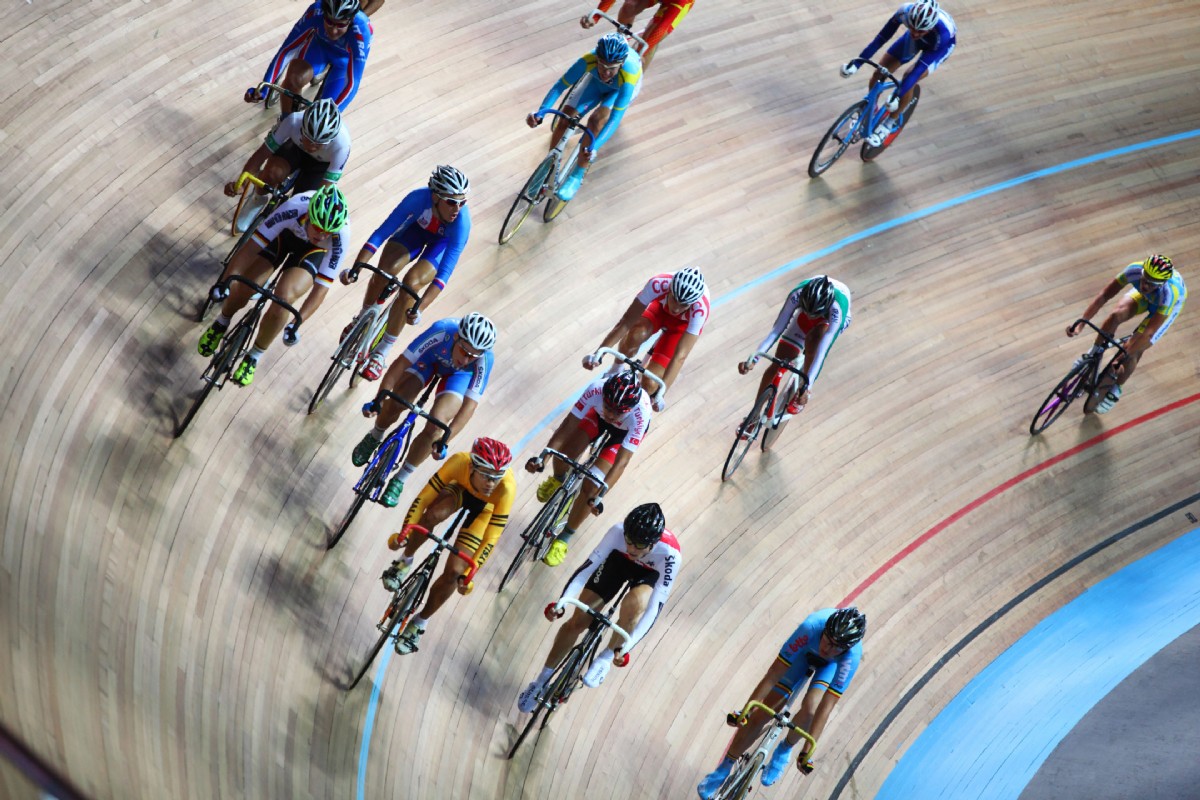
The Keirin race sees six riders led by a small motorbike that sets a gradually increased pace for two and a half laps before the bikes peel off to set up a frantic sprint for the finish. In the team pursuit, the teams set off at the same time on opposite sides of the track. They aim to get the best time, or, ideally, catch up with their opponents to win. The omnium is six events run over two days. It includes time trials of varying distances plus a points race in which a group of riders competes to score points for individual sprints. There is also a scratch race in which the first rider across the line wins, and an elimination race, in which the riders are progressively eliminated until the final two contest a sprint.


Other events
Bicycle motocross (BMX) races are either down hills or over dirt tracks with many jumps and tight turns. They started in the late 1960s in California, USA, and made their Olympic debut in 2008. Cyclo-cross is a cross-country event over rough terrain including steps, climbs and descents in which racers sometimes run with their thick-tyred mountain bikes. It began in the 1970s and joined the Olympics in 1996.
Consultant: Sean Callery
pics

Without in any way limiting Q-files Ltd’s exclusive rights under copyright, any use of this publication to “train” generative artificial intelligence (AI) technologies to generate text is expressly prohibited. Q-files Ltd reserves all rights to license use of this work for generative AI training and development of machine learning language models.