
Electricity and magnetism

CITE
We have made every effort to follow citation style rules, but there may be some minor differences. If in doubt, please refer to the appropriate citation style manual.
Electric charge. (2026). In Q-files Encyclopedia, Science, Electricity and magnetism. Retrieved from
https://www.q-files.com/science/electricity-and-magnetism/electric-charge
"Electric charge." Science, Electricity and magnetism, Q-files Encyclopedia, 10 Mar. 2026.
https://www.q-files.com/science/electricity-and-magnetism/electric-charge.
Accessed 21 Sep. 2026.
Electric charge 2026. Science, Electricity and magnetism. Retrieved 21 September 2026, from
https://www.q-files.com/science/electricity-and-magnetism/electric-charge
Science, Electricity and magnetism, s.v. "Electric charge," accessed September 21, 2026.
https://www.q-files.com/science/electricity-and-magnetism/electric-charge


Electric charge
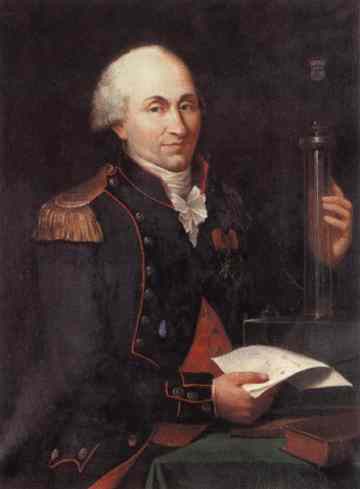
Atoms, the building blocks of matter, are made of elementary particles. Most particles carry what is called an electric charge: they are each surrounded by their own electric field and exert (produce) an electric force. The strength of the electric force between two particles depends on the strength of their electric charges and the distance between them. The French engineer, Charles Augustin de Coulomb (1736–1806) proposed an "inverse-square law" called Coulomb's Law, which says that the strength of this electric force decreases with the square of the distance between the particles. The basic unit of electric charge is named after him: the coulomb (C).


Positive and negative
There are two kinds of electric charge, labelled "positive" and "negative". Two charges of the same kind repel—the force they exert pushes them apart—but two charges of the opposite kind attract—they are pulled together. In an atom, its positively charged nucleus is surrounded by negatively charged electrons, so the atom is electrically neutral: it has no charge. When, however, the atom loses or gains an electron, it becomes electrically charged, either positively (if it loses one) or negatively (if it gains one). The atom is then known as an ion.
Consultant: Sharon Ann Holgate
pics
Without in any way limiting Q-files Ltd’s exclusive rights under copyright, any use of this publication to “train” generative artificial intelligence (AI) technologies to generate text is expressly prohibited. Q-files Ltd reserves all rights to license use of this work for generative AI training and development of machine learning language models.