
Electricity and magnetism

CITE
We have made every effort to follow citation style rules, but there may be some minor differences. If in doubt, please refer to the appropriate citation style manual.
What is electricity and how is it made?. (2026). In Q-files Encyclopedia, Science, Electricity and magnetism. Retrieved from
https://www.q-files.com/science/electricity-and-magnetism/what-is-electricity-and-how-is-it-made
"What is electricity and how is it made?." Science, Electricity and magnetism, Q-files Encyclopedia, 10 Mar. 2026.
https://www.q-files.com/science/electricity-and-magnetism/what-is-electricity-and-how-is-it-made.
Accessed 22 Sep. 2026.
What is electricity and how is it made? 2026. Science, Electricity and magnetism. Retrieved 22 September 2026, from
https://www.q-files.com/science/electricity-and-magnetism/what-is-electricity-and-how-is-it-made
Science, Electricity and magnetism, s.v. "What is electricity and how is it made?," accessed September 22, 2026.
https://www.q-files.com/science/electricity-and-magnetism/what-is-electricity-and-how-is-it-made


What is electricity and how is it made?
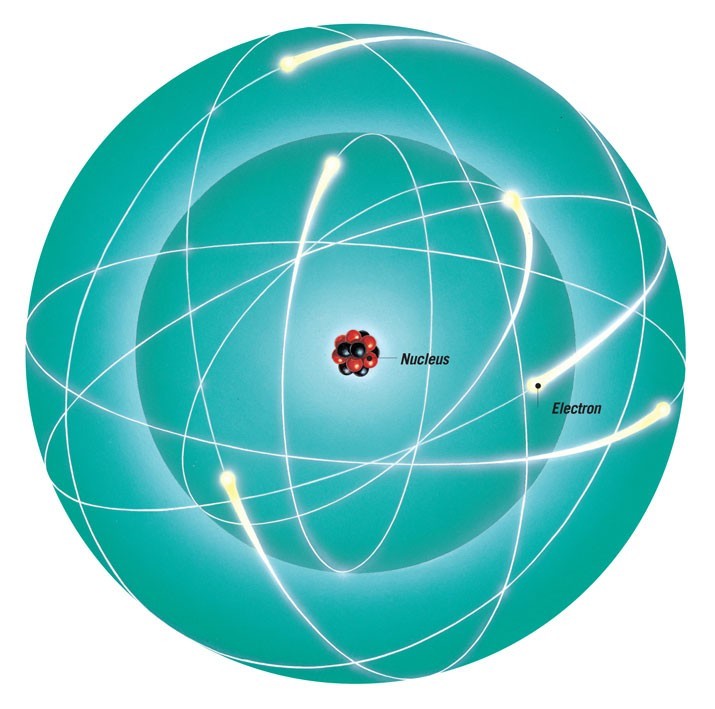
Electricity is a kind of energy stored inside atoms, the minute building blocks of which all things are made. Atoms themselves are made up of particles, including electrons, which have a negative electric charge, and protons, which have a positive electric charge. In normal atoms, there are the same number of electrons and protons, and so the charges cancel each other out. But when an atom loses or gains an electron, it becomes electrically charged, either positively (if it loses one) or negatively (if it gains one). The atom is then known as an ion. To make electricity, we must either make the atoms lose or gain electrons, or enable free electrons to move.

Static electricity
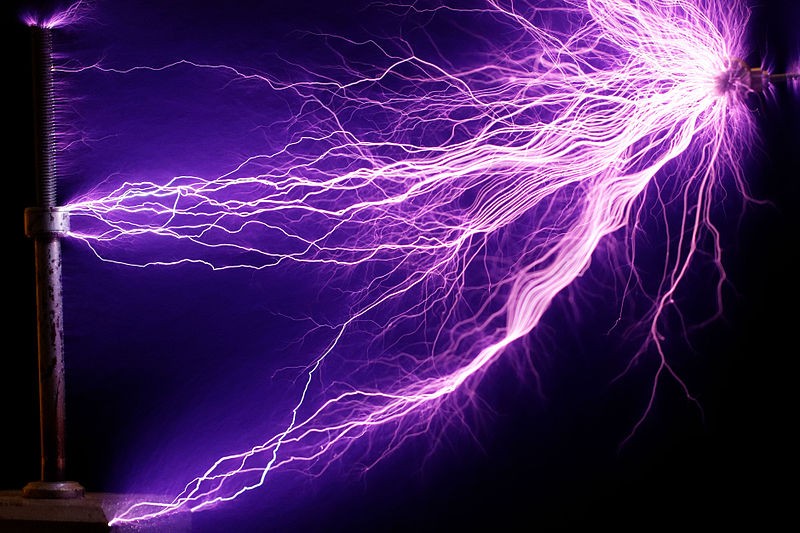
Static electricity is produced when two objects rub against each other: the electrons rub off from the atoms of one material on to the other, producing many ions. You can make static electricity by running a comb through your hair. The comb leaves a few of its electrons behind in the hair, so the comb now has a small positive charge. It can pick up small pieces of paper because it attracts the electrons in the paper’s atoms. If you comb your hair in a dark room then hold the comb close to your thumb, you will see a tiny spark. The release of electricity heats the air molecules (groups of atoms) between comb and thumb, producing a flash of light.
An electric charge heating air molecules is exactly what happens—but on a much grander scale—when lightning strikes during a thunderstorm. Lightning is static electricity that suddenly leaps between clouds and the ground.

Current electricity
In static electricity, the electrons do not flow, but are simply lost or gained. When electrons are free to move through a material, an electric current is the result. Most metals, especially silver and copper, have electrons that can move easily, so they are good carriers or conductors of electricity.


Battery
When the battery is connected to a circuit, a chemical reaction causes the rod to become positively charged and the bottom of the battery case to become negatively charged. So electricity flows along a conducting wire that connects the negative terminal (on the underside of the case) to the positive terminal (at the top of the battery).
Generator
A generator makes electricity by converting motion (kinetic energy) into electrical energy. It does so by using magnetism: a magnetic field moving near a wire causes electricity to flow along the wire. In a generator, an electromagnet (the rotor) rotates inside an electric coil (the stator). The effect induces (creates) an electric current when it is connected to a circuit.
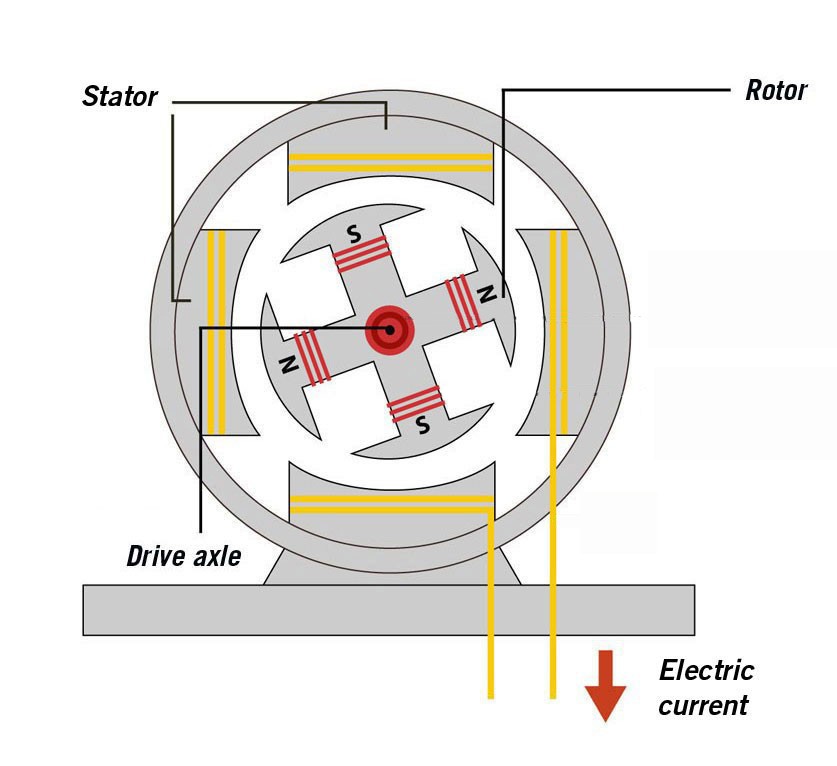
Often the rotor is connected to a turbine. This, in turn, is driven by a power source such as the steam from water heated by burning fossil fuels, or nuclear reactions, or simply the movement of water (or wind) itself.
A bicycle dynamo is a small electrical generator used to power a bicycle's lights. The rotor inside is driven by the movement of the bike, so it is kinetic energy from the muscles of the rider's legs which generates the electricity needed to make the lights shine.
Consultant: Sharon Ann Holgate
Other Q-&-As to explore:
For a full list of all our Q&As, please click here.
If you have a question that you would like to see answered on Q-files, please send us an email to info@Q-files.com or use the contact us page.
pics
Without in any way limiting Q-files Ltd’s exclusive rights under copyright, any use of this publication to “train” generative artificial intelligence (AI) technologies to generate text is expressly prohibited. Q-files Ltd reserves all rights to license use of this work for generative AI training and development of machine learning language models.