
Electricity and magnetism

CITE
We have made every effort to follow citation style rules, but there may be some minor differences. If in doubt, please refer to the appropriate citation style manual.
Superconductors. (2026). In Q-files Encyclopedia, Science, Electricity and magnetism. Retrieved from
https://www.q-files.com/science/electricity-and-magnetism/superconductors
"Superconductors." Science, Electricity and magnetism, Q-files Encyclopedia, 10 Mar. 2026.
https://www.q-files.com/science/electricity-and-magnetism/superconductors.
Accessed 22 Sep. 2026.
Superconductors 2026. Science, Electricity and magnetism. Retrieved 22 September 2026, from
https://www.q-files.com/science/electricity-and-magnetism/superconductors
Science, Electricity and magnetism, s.v. "Superconductors," accessed September 22, 2026.
https://www.q-files.com/science/electricity-and-magnetism/superconductors


Superconductors
All materials normally have some amount of electrical resistance. Because of this, some energy is lost as heat when electrons move through a conductor. But for some materials, known as superconductors, this resistance reduces to zero if they are cooled to very low temperatures. This means that an electric current in a circuit made of a superconductive material could, once started, continue moving forever with no power needed.
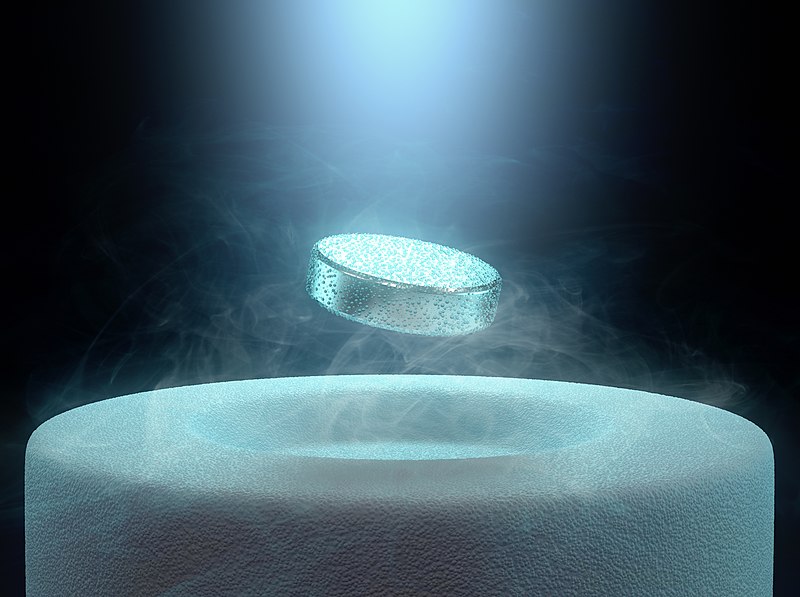
Discovery
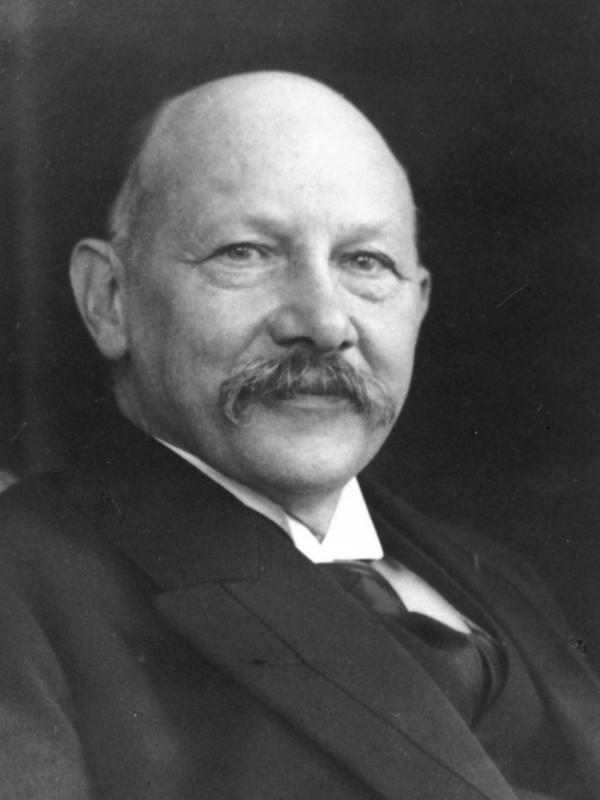
Superconductivity was discovered in 1911 by the Dutch scientist Heike Kamerlingh Onnes. Using liquid helium (which boils at -269°C or -452°F, just four degrees above absolute zero) to cool a wire made of solid mercury, he found that the metal's electrical resistance vanished.
Why it did so remained a mystery until 1957, when three scientists explained that superconductivity arises as a result of mobile electrons bonding to form what are called "Cooper pairs". For ordinary metals, this effect happens only at extremely low temperatures, because the electron pairs are easily broken up by heat.
High-temperature superconductors

In the 1980s, it was discovered that certain ceramic materials called copper-oxides, or cuprates, would superconduct at higher temperatures. A high-temperature superconductor (HTS) could be cooled using liquid nitrogen (which boils at -196°C or -321°F), a much cheaper coolant than liquid helium. Superconductors could now be used in MRI scanners and maglevs—trains that are magnetically levitated above their rails to reduce friction and reach high speeds. Both rely on very powerful electromagnets that generate strong magnetic fields. Only superconductors can carry the high electric currents these magnets need without giving off heat (which would melt ordinary metal wires).
Superconductors that require extreme cooling are not, however, practical for use in electric power cables stretching for hundreds of kilometres; a material that superconducts at room temperature is needed. Were one to be discovered, it is probable that the main applications would be for creating strong magnetic fields. MRI scanners could be much cheaper and smaller so that every doctor's surgery could have one. Having electromagnets that wasted no energy once turned on would boost the use of maglev trains and enable the production of much more efficient motors, generators, wind turbines and even long-distance electric aircraft— all key technologies in the quest to achieve net zero by 2050.

Consultant: Mike Goldsmith
pics
Without in any way limiting Q-files Ltd’s exclusive rights under copyright, any use of this publication to “train” generative artificial intelligence (AI) technologies to generate text is expressly prohibited. Q-files Ltd reserves all rights to license use of this work for generative AI training and development of machine learning language models.