
Planets and moons

CITE
We have made every effort to follow citation style rules, but there may be some minor differences. If in doubt, please refer to the appropriate citation style manual.
Mars. (2026). In Q-files Encyclopedia, Space, Planets and moons. Retrieved from
https://www.q-files.com/space/planets-and-moons/mars
"Mars." Space, Planets and moons, Q-files Encyclopedia, 25 Mar. 2026.
https://www.q-files.com/space/planets-and-moons/mars.
Accessed 22 Sep. 2026.
Mars 2026. Space, Planets and moons. Retrieved 22 September 2026, from
https://www.q-files.com/space/planets-and-moons/mars
Space, Planets and moons, s.v. "Mars," accessed September 22, 2026.
https://www.q-files.com/space/planets-and-moons/mars


Mars
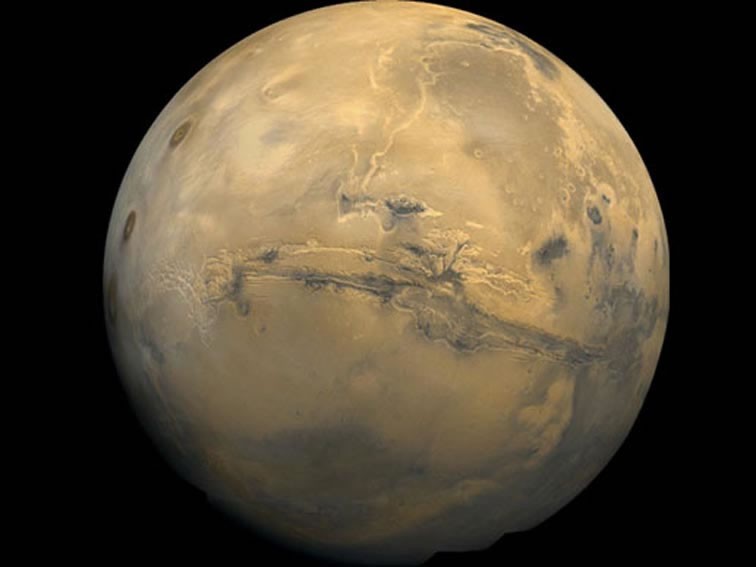
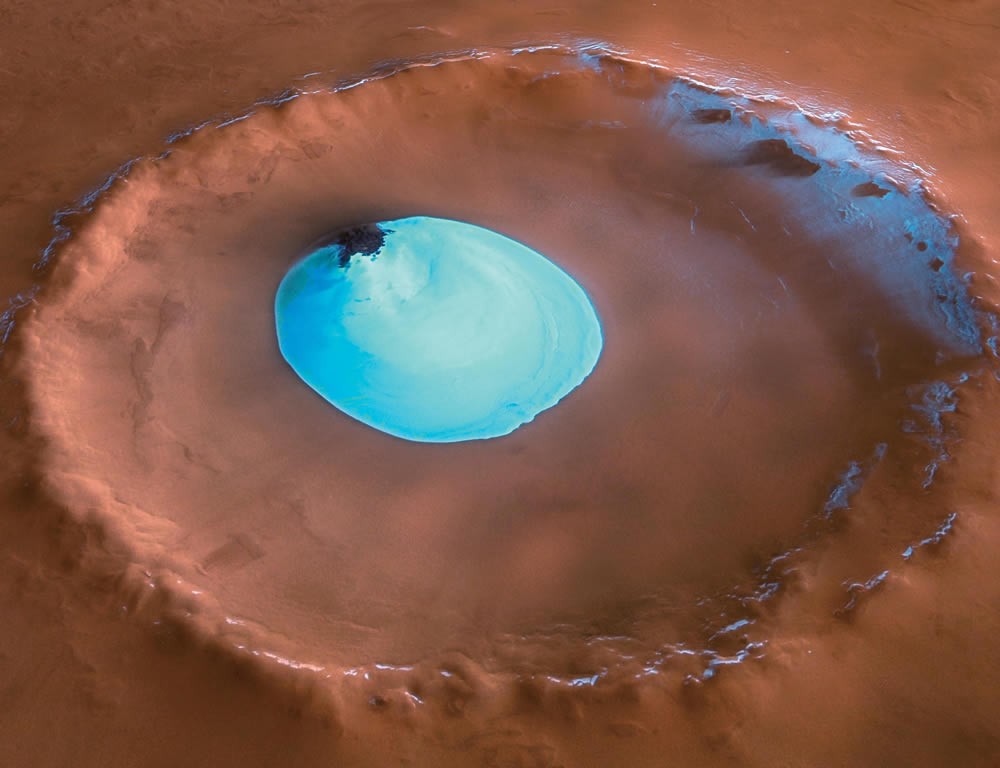
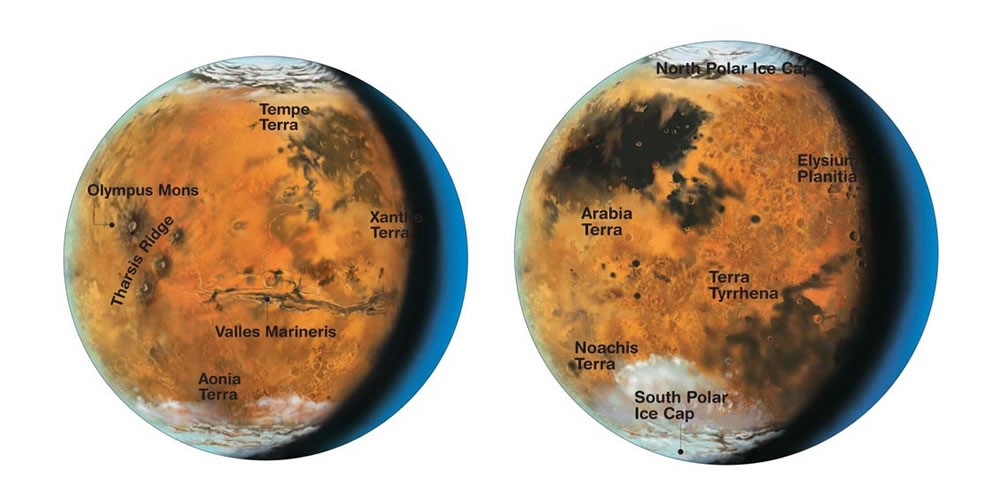
Mars is the fourth planet from the Sun. A barren planet, its reddish colour comes from iron oxide dust (familiar to us as rust). Immense storms occasionally blow up, blanketing the entire planet with dust clouds. Large dark patches that appear from time to time are areas of rock exposed when storms remove the dust. Mars is known as the “Red Planet”, but not all of it is red. Both poles are white: they have caps of water ice and carbon dioxide ice.
Similarities with Earth
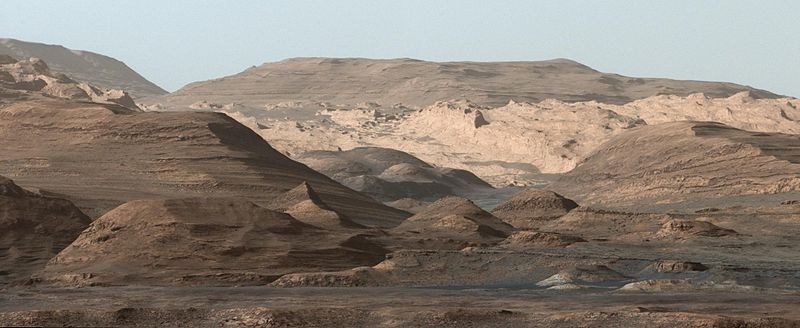
Mars has a number of features in common with Earth. On Mars there are extinct volcanoes, mountains, dried-up river beds, canyons, deserts and polar ice caps. The Martian day is only a little longer than ours, and the angle of tilt of the planet's axis means that Mars has four seasons, just as on Earth. Although average temperatures are a lot colder than on Earth, daytime temperatures at the equator can sometimes reach 35°C (95°F) in midsummer. Thin clouds and early morning surface frosts, made of frozen carbon dioxide, sometimes appear on the summits of Mars's volcanoes.
Volcanoes and canyons
Emerging from the Martian plains are a number of extinct volcanoes, some of them enormous. Some of Mars’ most massive volcanoes are found on the Tharsis Bulge, a vast mound on the Martian equator. The tallest of all, Olympus Mons, lies just to the west.
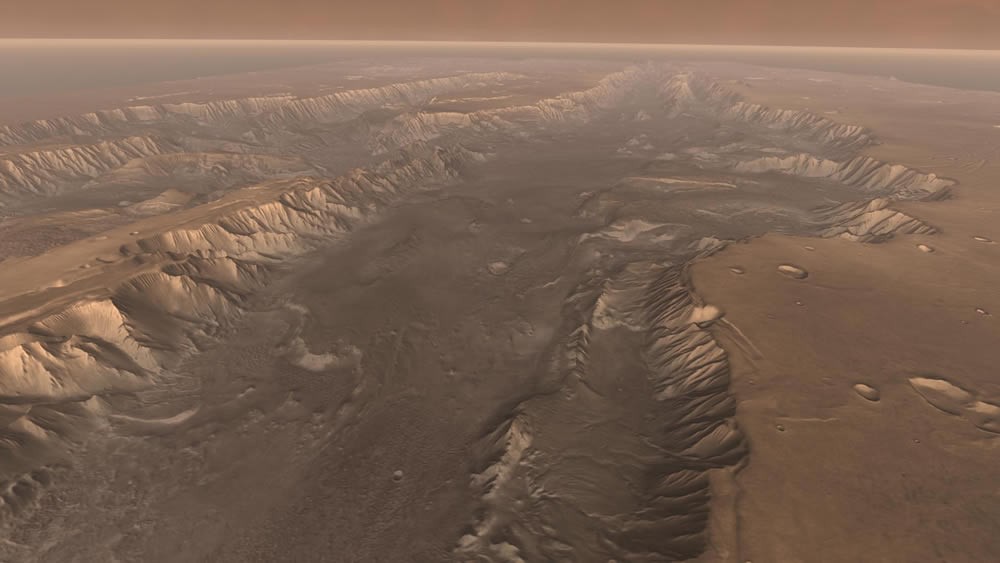
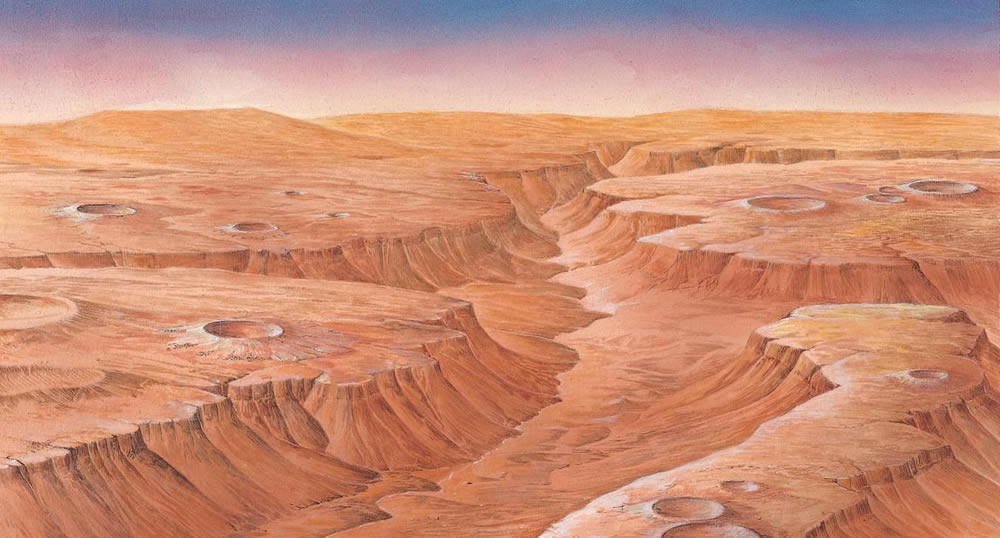
A vast canyon, Valles Marineris, more than four times deeper than the Grand Canyon on Earth and as long as the United States is wide, slices east-west across the planet.
Olympus Mons
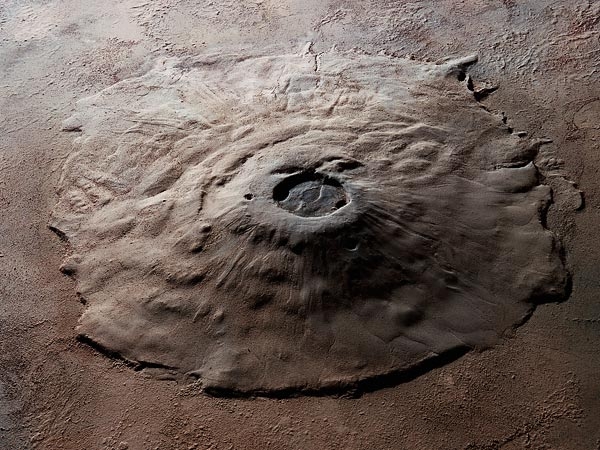
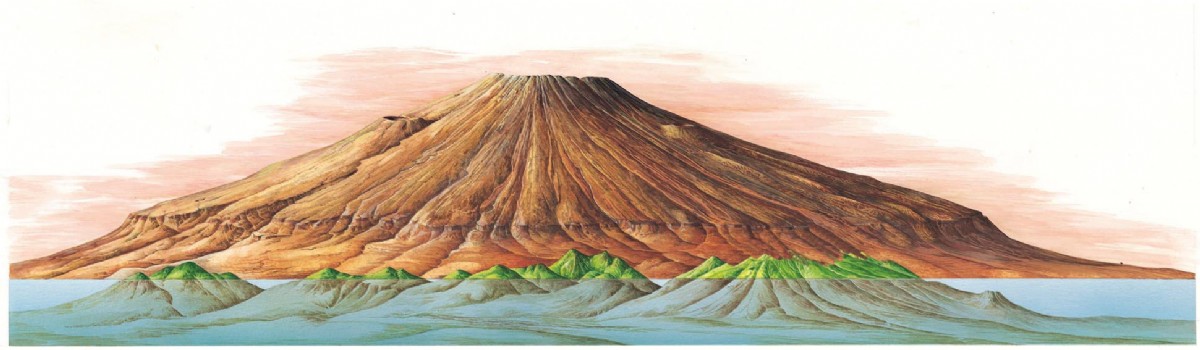
Olympus Mons, the giant volcano on Mars, towers 27 kilometres (17 miles) above the surrounding land. Its base covers an area larger than England. Nearly three times as high as the highest mountain on Earth and about twice as high as the greatest mountains on Venus, Olympus Mons is the highest mountain in the Solar System.
Like many volcanoes on Earth, Olympus Mons burst into life at a hot spot. This is a place where a plume of very hot, liquid rock from deep below the surface melts through a planet’s outer crust. On Earth, the outer crust is constantly on the move, a fractured armour of tectonic plates sliding against, alongside, or beneath each other. Hot-spot volcanoes—like the Hawaiian Islands in the Pacific Ocean—appear at the surface in different places as a plate wanders over the molten spot.
Mars never had any tectonic plates so, unlike the Hawaiian volcanoes, Olympus Mons stayed put above its hot spot. The eruptions and lava flows have gone on for tens—perhaps hundreds—of millions of years. As each layer of rock cooled, the volcano grew larger and larger. It now measures about 600 kilometres (375 miles) across.
Chaos and craters
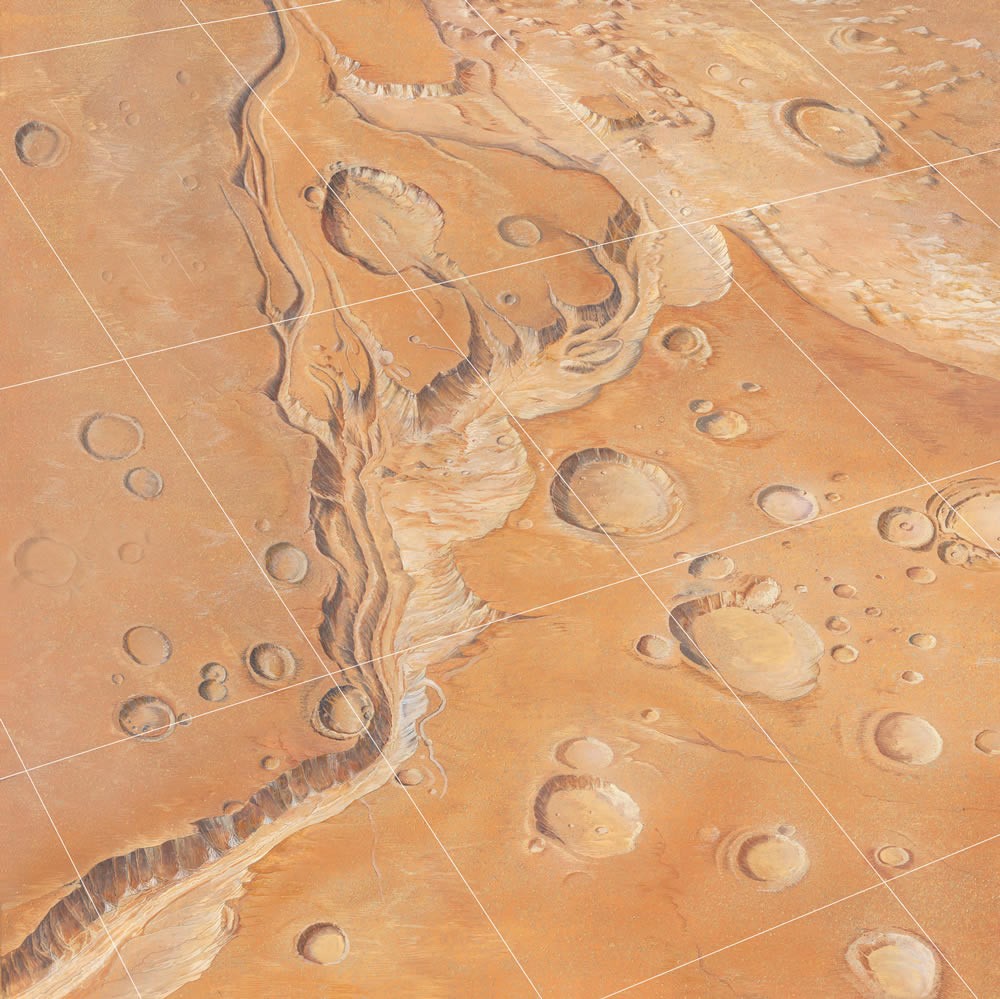
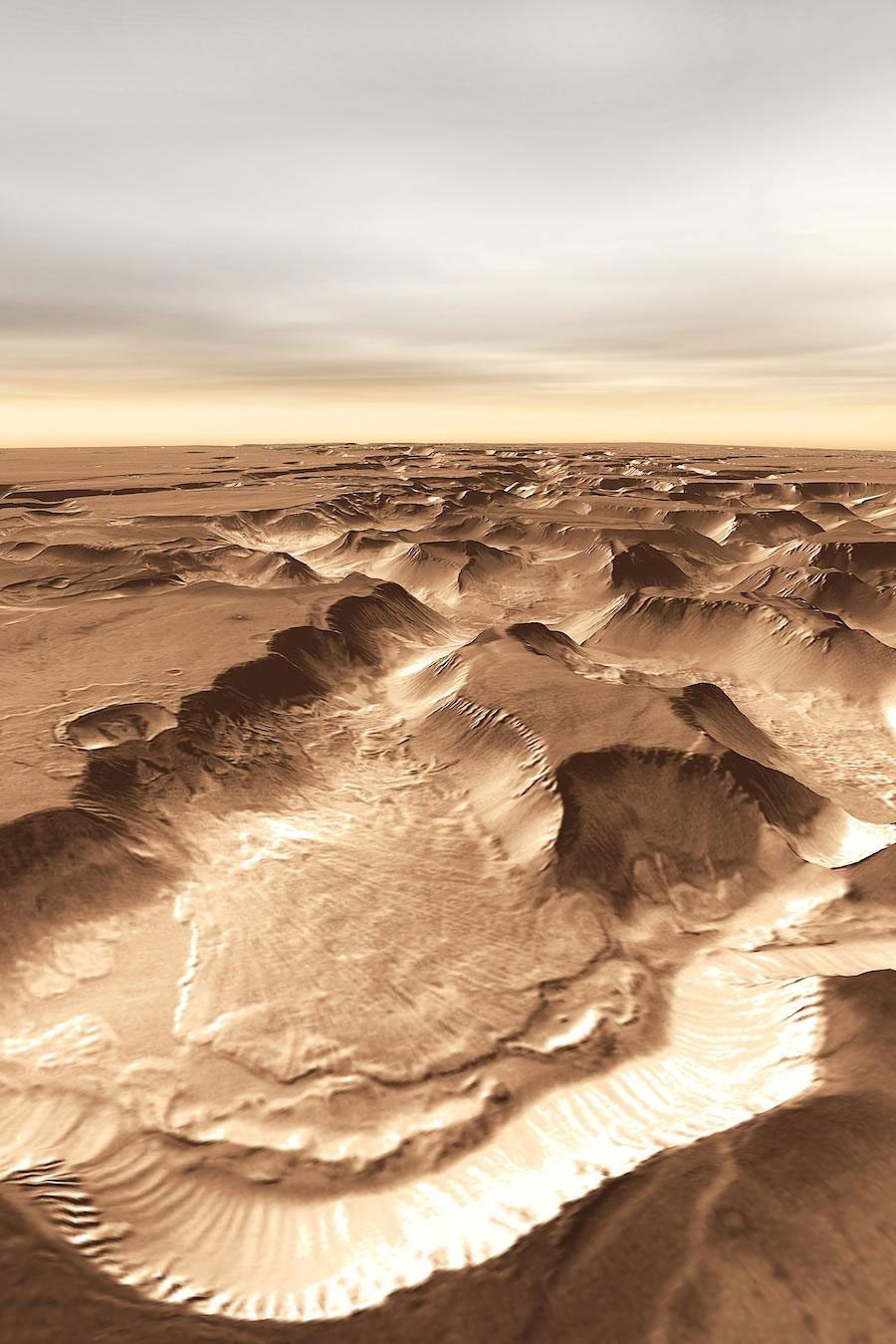
In many areas on Mars, there is a jumble of ridges, cracks, hummocks, plains and valleys. This "chaos terrain", as it is called, was probably caused by the sudden release of large volumes of water across the surface some time in the past (see below).
The surface of Mars is pitted by thousands of impact craters. These were created when asteroids and meteorites, objects from space, crashed to the ground. They have flat or bowl-shaped floors and raised rims. Many look as if they were made when the ground was muddy. Instead of dry rock being thrown out in all directions, the “ejecta” look more like mudflows. The force of the impact may have melted the ice just beneath the surface, creating soggy ground.
Watery planet
of the past
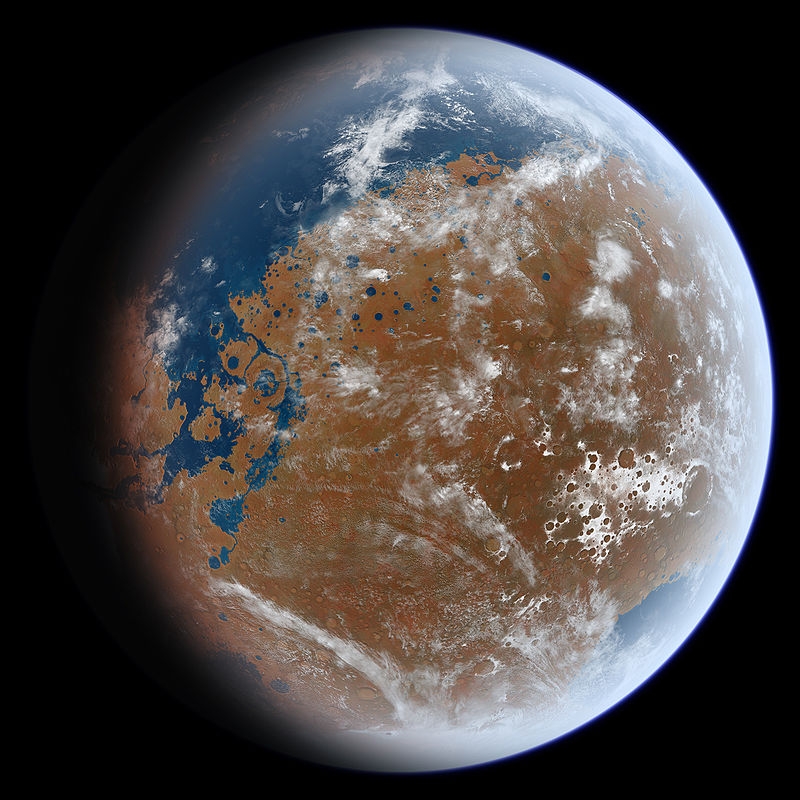
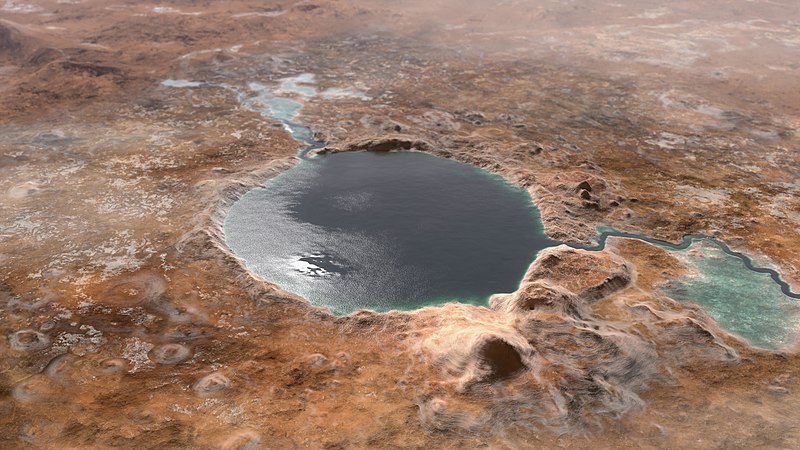
Before about 3.5 billion years ago, Mars had a denser atmosphere and higher surface temperatures than it does today. Mars was then a warm, wet planet, with rivers, lakes and seas. The Chryse Planitia, today a low-lying, circular plain in the equatorial region of Mars, once formed the floor of a large lake—one of many on Mars. It is possible to trace its former shoreline. Some astronomers think that a large ocean may have covered much of Mars’s northern hemisphere, which is low-lying compared to the rest of the planet.
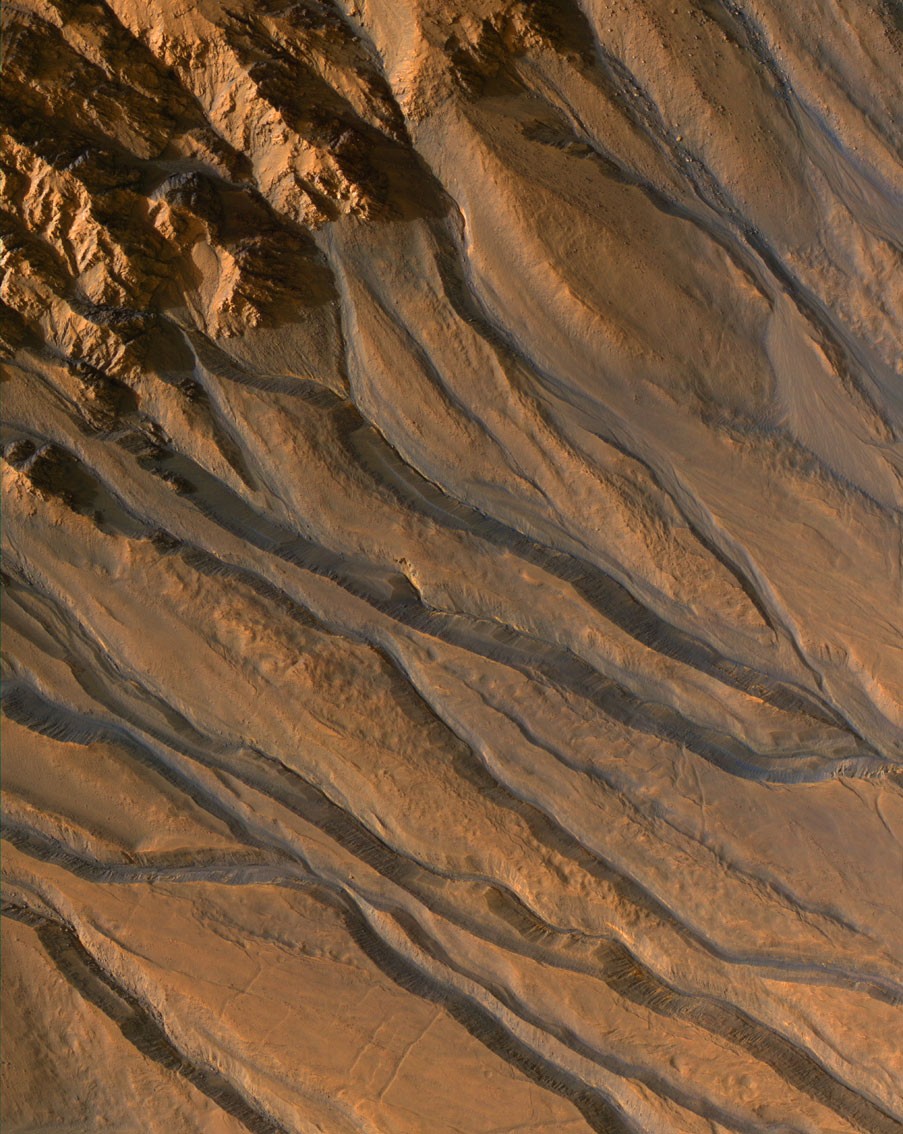
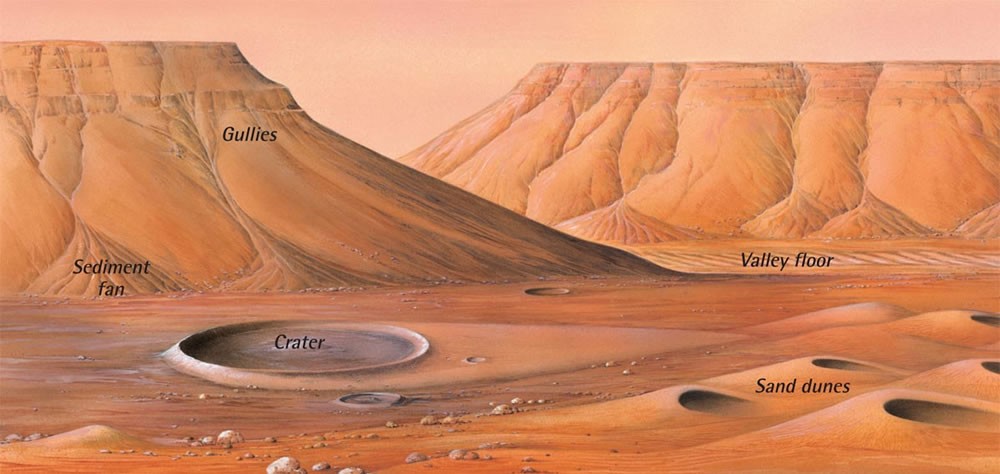
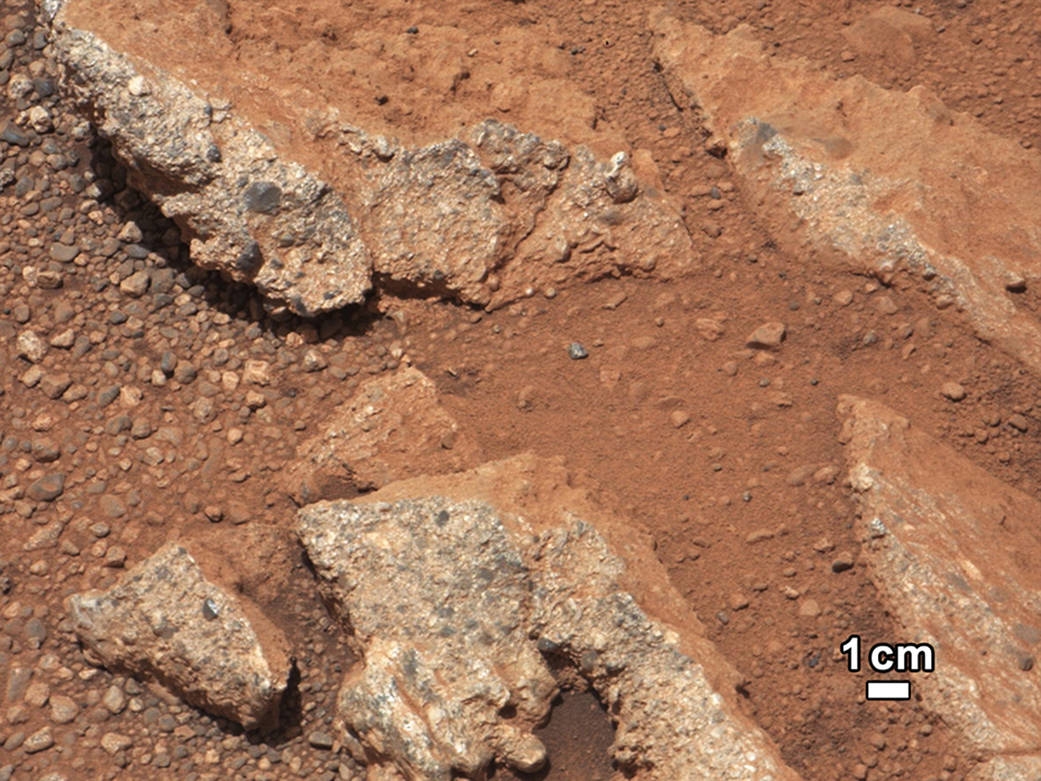
There is plenty of evidence for the existence of water on Mars in the past. Satellite images reveal ancient valleys, estuaries, gullies, alluvial fans and deltas—all looking strikingly similar to landscapes moulded by streams and rivers on Earth. Rounded pebbles and gravel fragments that could have only been weathered by strong liquid currents have been discovered by remote-controlled rovers exploring the planet. Sedimentary rock layers forming the floors of canyons and craters clearly originated as sediments laid down by water. Some of those rocks consist of clay minerals that are formed only in the presence of water.
Liquid water
on Mars today
No large standing bodies of liquid water exist on Mars's surface today. This is because air pressure on the planet, which is less than 1% that of Earth's, is too low. Liquid water on the Martian surface would either freeze in Mars's normally low temperatures, or, on warmer days, turn straight to water vapour, a process known as sublimation.
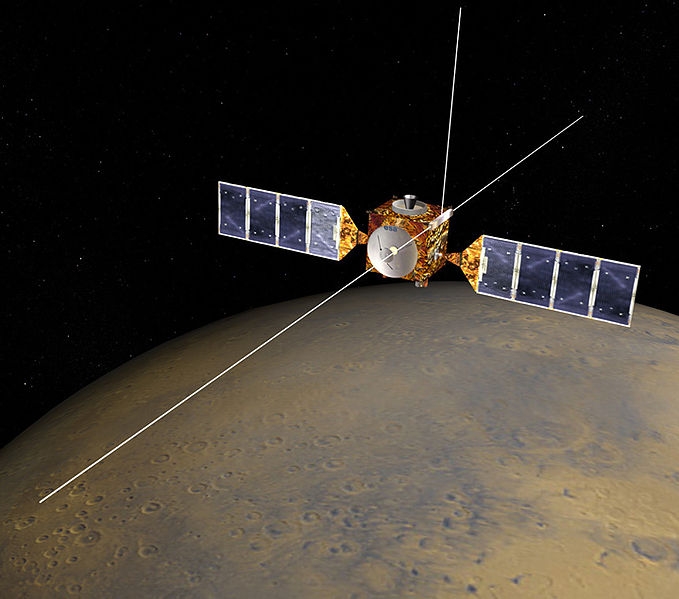
We now know, however, that there are liquid water lakes (or at least soggy ground) lying beneath Mars's ice caps. In July 2018, European Space Agency’s Mars Express Orbiter found evidence of what appears to be a huge reservoir of liquid water lying about 1600 metres (1 mile) under the ice near the south pole on Mars.
Thanks to findings from analysis of seismic data provided by NASA’s InSight probe published in August 2024, we also know there is a reservoir of liquid water deep at depths of between 10 and 20 kilometres (6–12 miles) under the Martian crust. This is the first time that liquid water has been found on the planet. Scientists estimate that there is probably enough to form a layer across the surface of Mars that would be between about one to two kilometres (about a mile) deep. The discovery raises the possibility that life could exist deep below the surface of the Red Planet.
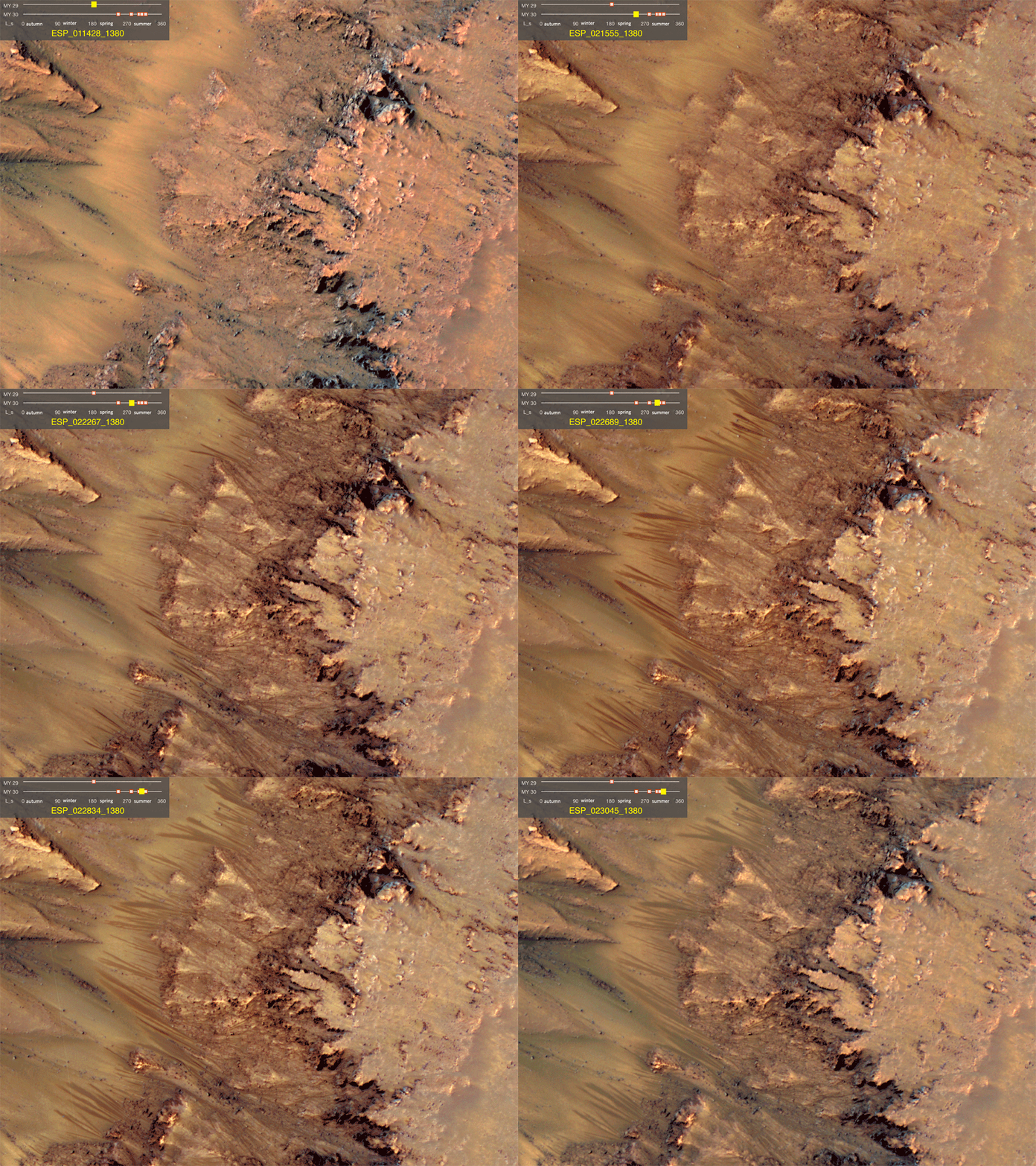
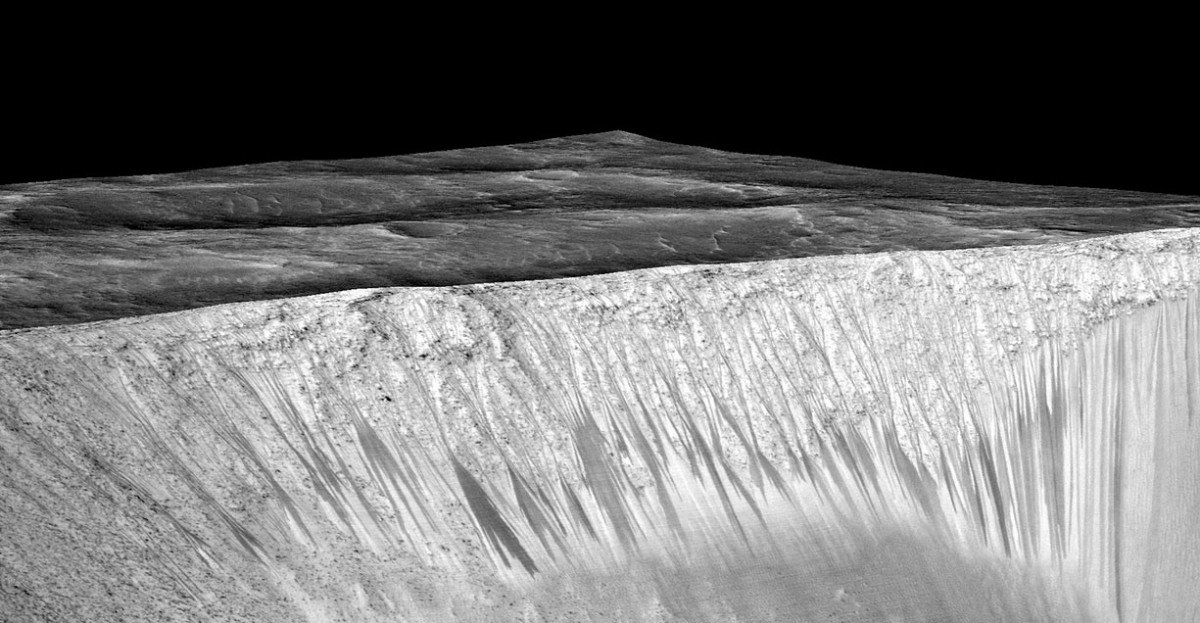
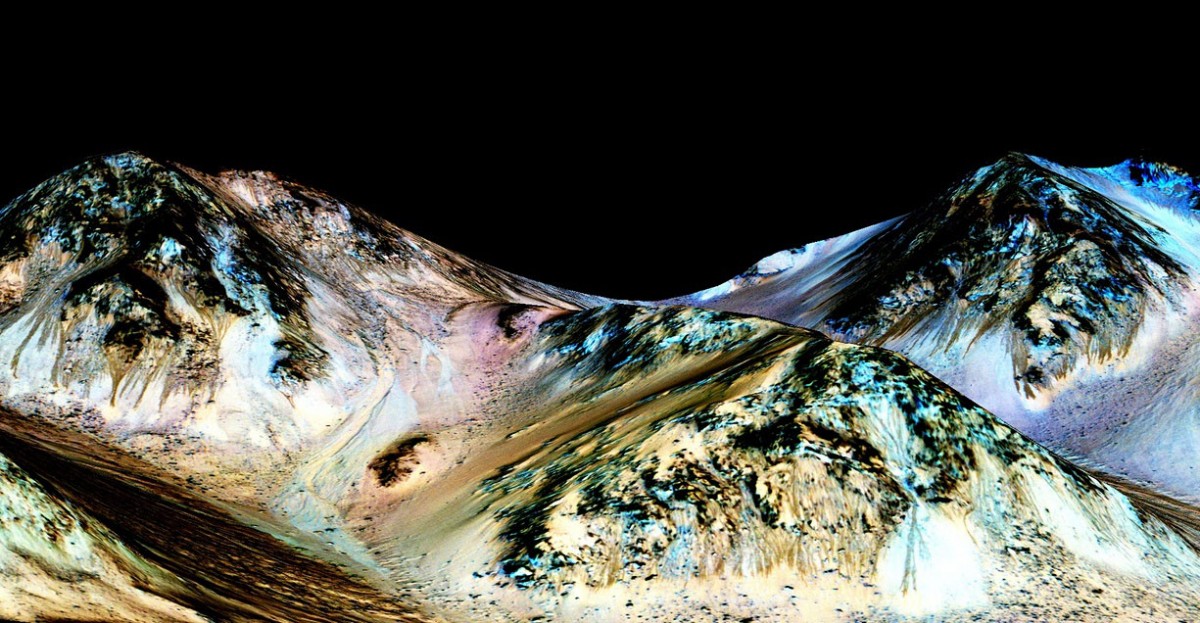
Images taken in 2015 from another space probe, the Mars Reconnaissance Orbiter, show long, dark streaks on the steep walls of Mars's valleys and craters in the summer months. They disappear in the autumn, when temperatures drop. In places, the streaks combine to form fan-like patterns.
Some scientists believe that these dark streaks, called recurrent slope lineae (RSL), were made by salty water flowing downhill and then evaporating. Others have expressed doubts that the streaks contain water, and may be no more than tumbling grains of rock.
What scientists do agree on is that any liquid water appearing on the Martian surface will be extremely limited. It might be traces of moisture that, on warmer days, condense from water vapour in the thin atmosphere, or it could be meltwater from ice that is contained in porous rocks below ground rising to the surface.
The search for life
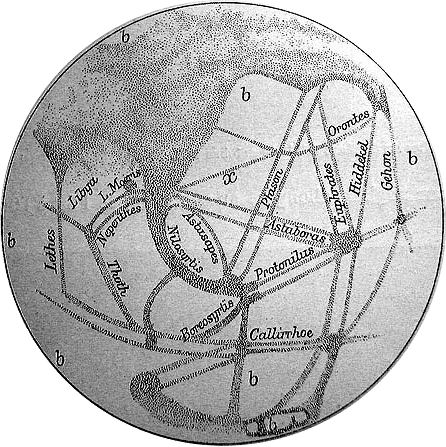
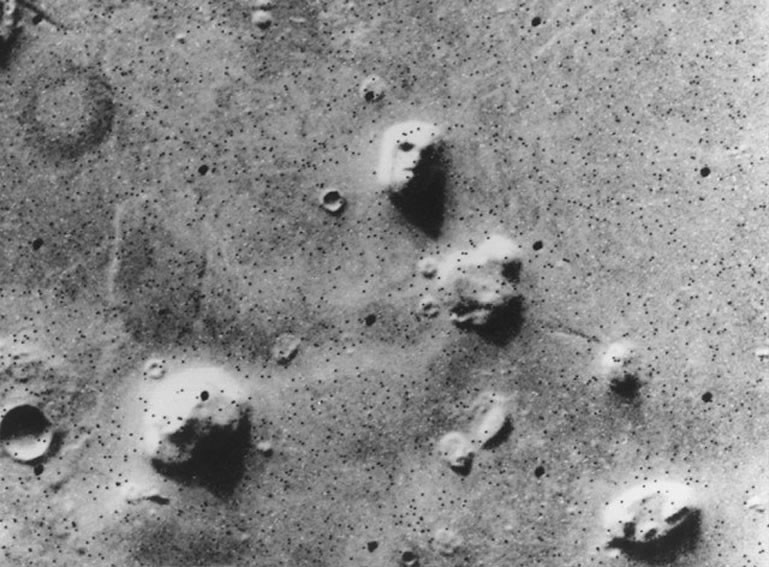
Certain similarities between Mars and Earth led people to think that life may have once existed, or even continues to exist, on Mars. In the 19th century, astronomers reported the existence of “canals” on the Martian surface, as well as apparently green areas that were taken to be vegetation. Until the mid-20th century, Mars was widely thought to be a world inhabited by living things—possibly even intelligent creatures that could threaten Earth. Photographs from NASA's Mariner 4 spacecraft taken in 1965, however, revealed a dead, barren world.

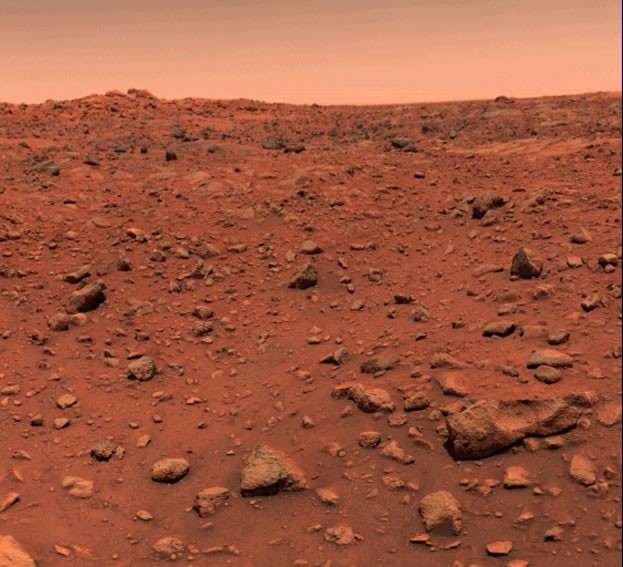
In a scientific quest to find evidence for life on Mars, two unmanned spacecraft, Viking 1 and 2 touched down on the planet in 1976. But analysis of the soil carried out by both Viking Landers found no organic material. The Pathfinder probe which arrived on the surface of Mars in July 1997, and which dispatched the small Sojourner Rover across the local landscape, also failed to find any sign of life, present or past.
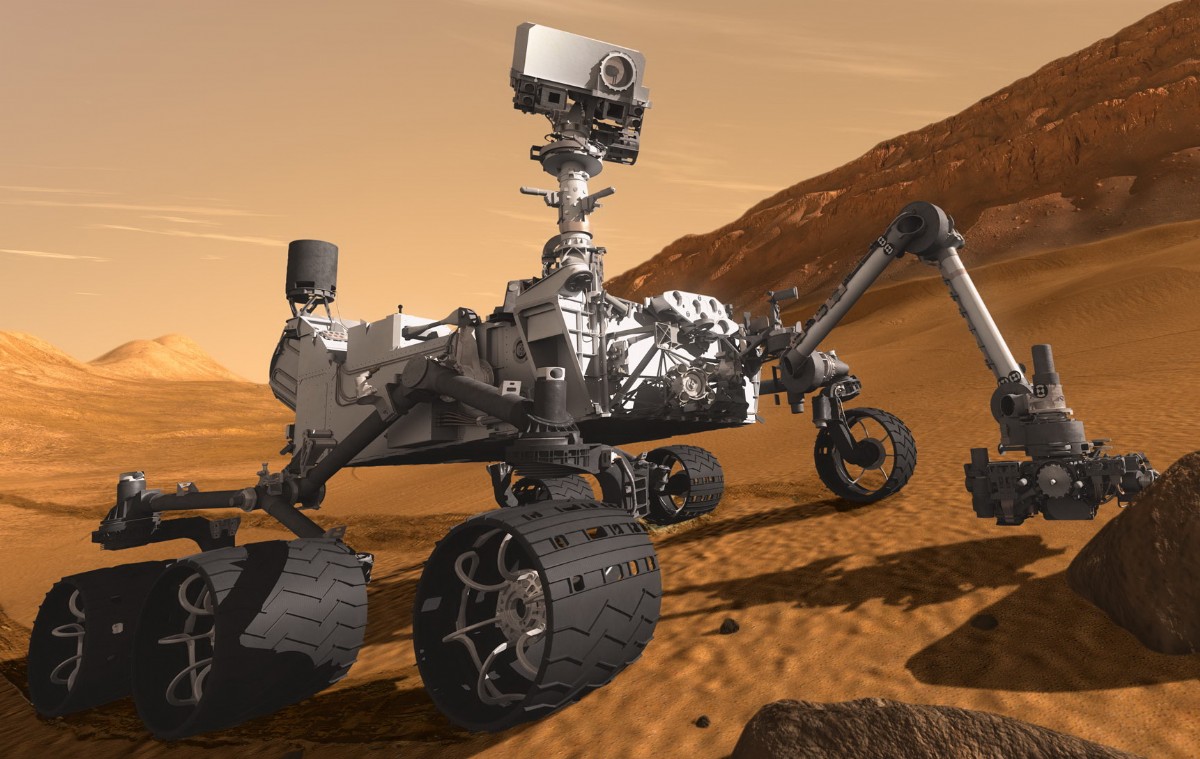
Recent discoveries made by robotic rovers, such as Opportunity (active 2004–18) and Curiosity, which landed on Mars in 2012, along with orbiting spacecraft such Mars Reconnaissance Orbiter, show that Mars was, billions of years ago, a warm, wet planet. The same conditions that existed on Earth 3.8 billion years ago, when life first took hold, were found to be present on Mars too.
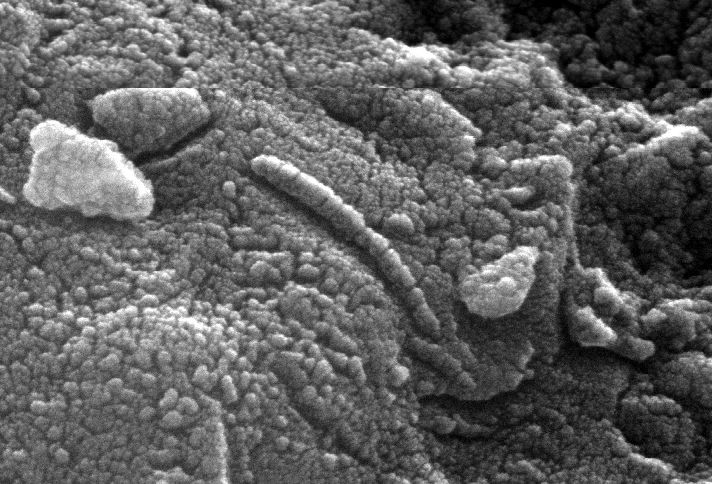
The rovers and orbiters have also found some evidence that micro-organisms might once have lived on Mars. On 9th December 2013, NASA reported that, based on evidence from Curiosity, Gale Crater once contained an ancient freshwater lake that could have been a hospitable environment for microbial life.
Perseverance, a rover of a similar design to Curiosity, landed in Jezero Crater, another ancient lake bed, in February 2021. Accompanied by its on-board mini-helicopter, Ingenuity, it has collected rock samples that will one day be retrieved and returned to Earth on future space probe missions.

In July 2024, it was reported that Perseverance had discovered “leopard spots” on a rock sample collected from an ancient river bed. These were later found to be accumulations of minerals that, on Earth, are usually produced by micro-organisms. This has led scientists to describe the spots as "potential biosignatures"—possible signs of life, but which require further tests to prove they were not produced by geological processes.
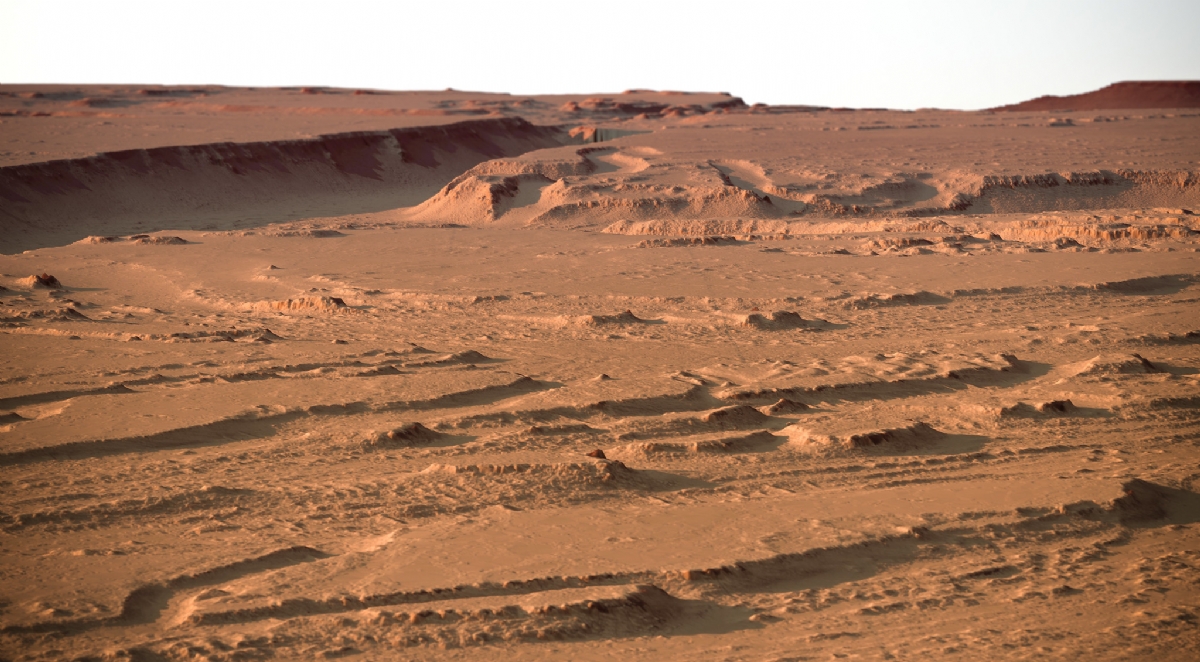
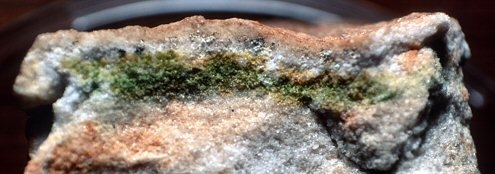
Is there any possibility that microscopic life-forms could still be living on Mars today? The planet's thin atmosphere offers little protection to radiation either from the Sun or to cosmic rays (high-energy radiation from beyond the Solar System), both of which have damaging effects on living cells. For this reason, if there are any organisms still living on Mars, they would probably be able to live only in the rocks below ground—a possibility that became a little more likely in August 2024 when it was reported that reservoirs of liquid water exist several kilometres beneath the Martian surface.
Endoliths are microscopic life-forms found on Earth. Various kinds of archaea, bacteria, fungi, lichens, algae and amoebae live in the pores between the mineral grains of rock. Many are extremophiles, living in places long thought to be inhospitable to life, for example, deep under the ice in Antarctica or in rocks of the Earth's crust. It is not impossible that living things like these could be found in the rocks beneath Mars's surface.
This intriguing possibility emerged in 2014 when Curiosity discovered that levels of methane (a gas known to be emitted by certain micro-organisms as well as by some chemical reactions) in the Martian atmosphere soared in the warmer summer months, before falling back in winter. This is exactly the pattern that would be expected if the methane had a biological origin.

Moons
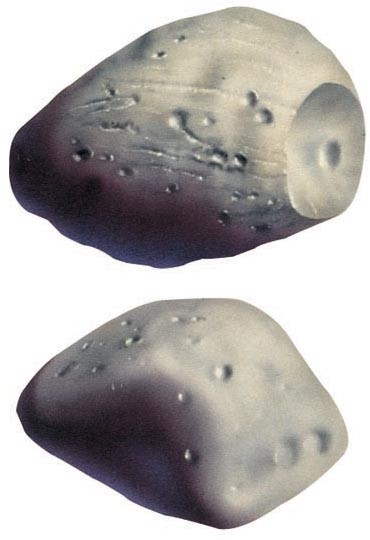
Mars is orbited by two tiny, potato-shaped moons. Phobos is 28 kilometres (17 miles) long and has a heavily-cratered surface. One crater is nearly 10 kilometres (6 miles) across. Deimos, just 16 kilometres (10 miles) long, is a smoother world. Both moons are probably asteroids that Mars has “captured” by its force of gravity.
Composition
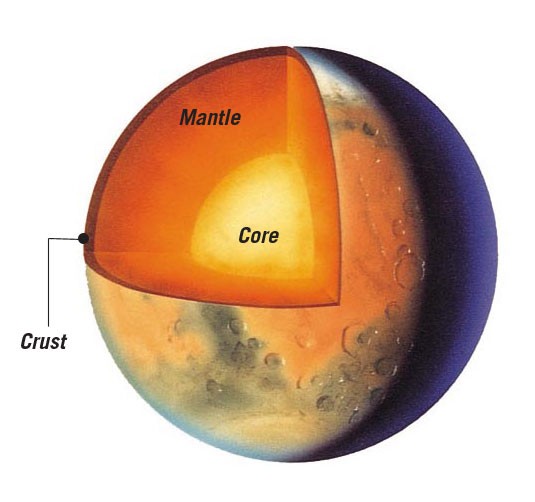
Mars has quite a low density and a very weak magnetic field. This indicates that its core is a relatively small ball of solid iron. Between the core and the crust is a solid rocky mantle. Mars has a very thin atmosphere consisting mostly of carbon dioxide. Occasionally, there are mists of water vapour.
Factfile
Average diameter: 6797 km (4222 miles)
Mass: 0.11 (Earth = 1)
Average density: 3.9 (water = 1)
Surface gravity: 0.4 (Earth = 1)
Day: 24.6 hours
Year: 687 days
Average speed in orbit: 24.1 km/sec (15 miles/sec)
Average distance from the Sun: 228 million km (142 million miles)
Surface temperature: -143 to +35°C (-225 to +95°F)
Atmosphere: carbon dioxide, nitrogen, traces of argon and oxygen
Number of moons: 2
Name: the Roman god of war
Consultant: Mike Goldsmith
pics




Without in any way limiting Q-files Ltd’s exclusive rights under copyright, any use of this publication to “train” generative artificial intelligence (AI) technologies to generate text is expressly prohibited. Q-files Ltd reserves all rights to license use of this work for generative AI training and development of machine learning language models.