
Astronomy

CITE
We have made every effort to follow citation style rules, but there may be some minor differences. If in doubt, please refer to the appropriate citation style manual.
Perseverance mission to Mars. (2026). In Q-files Encyclopedia, Space, Astronomy. Retrieved from
https://www.q-files.com/space/astronomy/perseverance-mission-to-mars
"Perseverance mission to Mars." Space, Astronomy, Q-files Encyclopedia, 29 Jun. 2026.
https://www.q-files.com/space/astronomy/perseverance-mission-to-mars.
Accessed 13 Sep. 2026.
Perseverance mission to Mars 2026. Space, Astronomy. Retrieved 13 September 2026, from
https://www.q-files.com/space/astronomy/perseverance-mission-to-mars
Space, Astronomy, s.v. "Perseverance mission to Mars," accessed September 13, 2026.
https://www.q-files.com/space/astronomy/perseverance-mission-to-mars


Perseverance mission to Mars
Perseverance, nicknamed Percy, is a car-sized rover designed and built to explore Jezero Crater on Mars for NASA's Mars 2020 mission. Of a similar design to Curiosity, an earlier rover, it carries seven measuring instruments, 23 cameras and two microphones—which will allow us for the first time to hear the sounds of the planet. Like Curiosity, Perseverance has a robotic arm (at 2.1 metres, or 6 ft 11 in, a little longer), which carries a drill and a mechanism to store rock samples in tubes. Unlike any previous mission to a moon or planet, the space probe also carried on board a mini-helicopter, named Ingenuity. As of 19th September 2025, Perseverance has been on Mars for 4 years, 7 months and 1 day.
Updated 29th June 2026

Mission goals
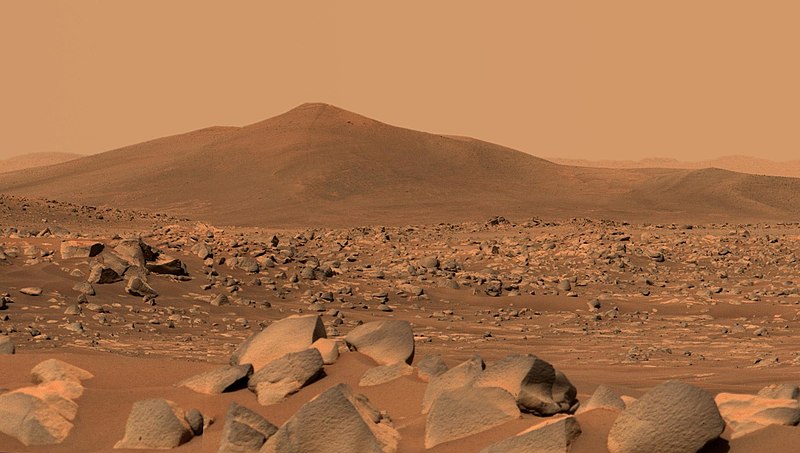
The rover will be active on Mars as long as it can survive there, gathering data and collecting samples to be retrieved and returned to Earth on future missions. The central aim is to determine whether life once existed on Mars.
The mission has four goals. The first is to search for environments that, in the past, were capable of supporting microbial life. Secondly, mission scientists will look for signs of that past microbial life, particularly in certain types of rock known to preserve them. Third, Perseverance will use its drill to gather samples of rock and regolith (broken rock and dust) and cache (store) them on the Martian surface. These will be collected and returned to Earth on a future mission—probably in the early 2030s. Finally, the rover will produce a small amount of oxygen from Martian atmospheric carbon dioxide to prepare for future manned missions, both for humans to breathe and to manufacture rocket fuel for return flights.


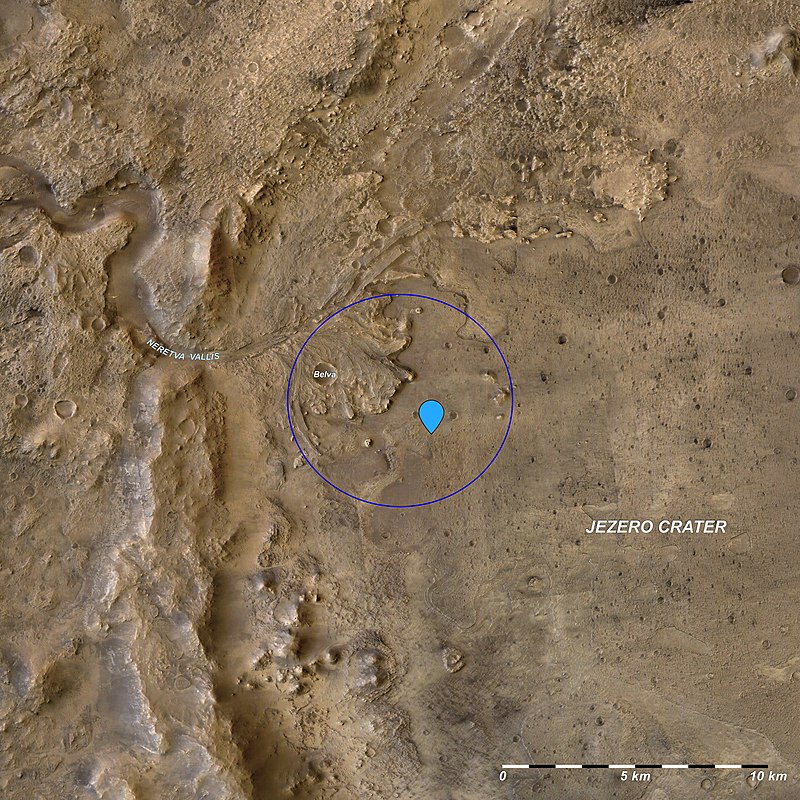
To carry out its objectives, Perseverance is scheduled to explore the following regions of Mars: the Neretva Vallis delta, estimated to be between 3.8 and 3.4 billion years old; the floor of the Jezero Crater (believed to be covered with volcanic ash); the rim of the crater; and the ancient shoreline of the lake that filled the crater billions of years ago.
Instruments
Perserverance is fitted with a range of equipment designed to carry out its research tasks. These are: determining the composition of Martian surface rocks; detecting (using radar) the presence of underground water ice and liquid saltwater; taking readings of Martian weather; carrying out imaging and chemical analysis of rocks from a distance.

On board Perseverance is a radio-isotope thermo-electric power generator (MMRTG) which generates electricity from the heat released by its store of radioactive plutonium. This charges two lithium-ion rechargeable batteries which power the rover's activities. Unlike solar panels, the MMRTG allows the rover's instruments to operate at all times—even at night, during dust storms and through winter.
Landing
Launched on 30th July 2020 from Cape Canaveral Air Force Station (CCAFS) in Florida, the Perseverance space probe took about seven months to travel to Mars and made its landing in Jezero Crater on 18th February 2021. Fitted with several cameras specially for the purpose, the rover captured thrilling footage of its own touchdown, which was made by a combination of booster rockets and a “sky crane”.
The sky crane was a vehicle which carried the probe down until it hovered just above the Martian surface, using eight rocket-jets to hold its position. The probe was then lowered slowly and gently down to the surface using nylon ropes.
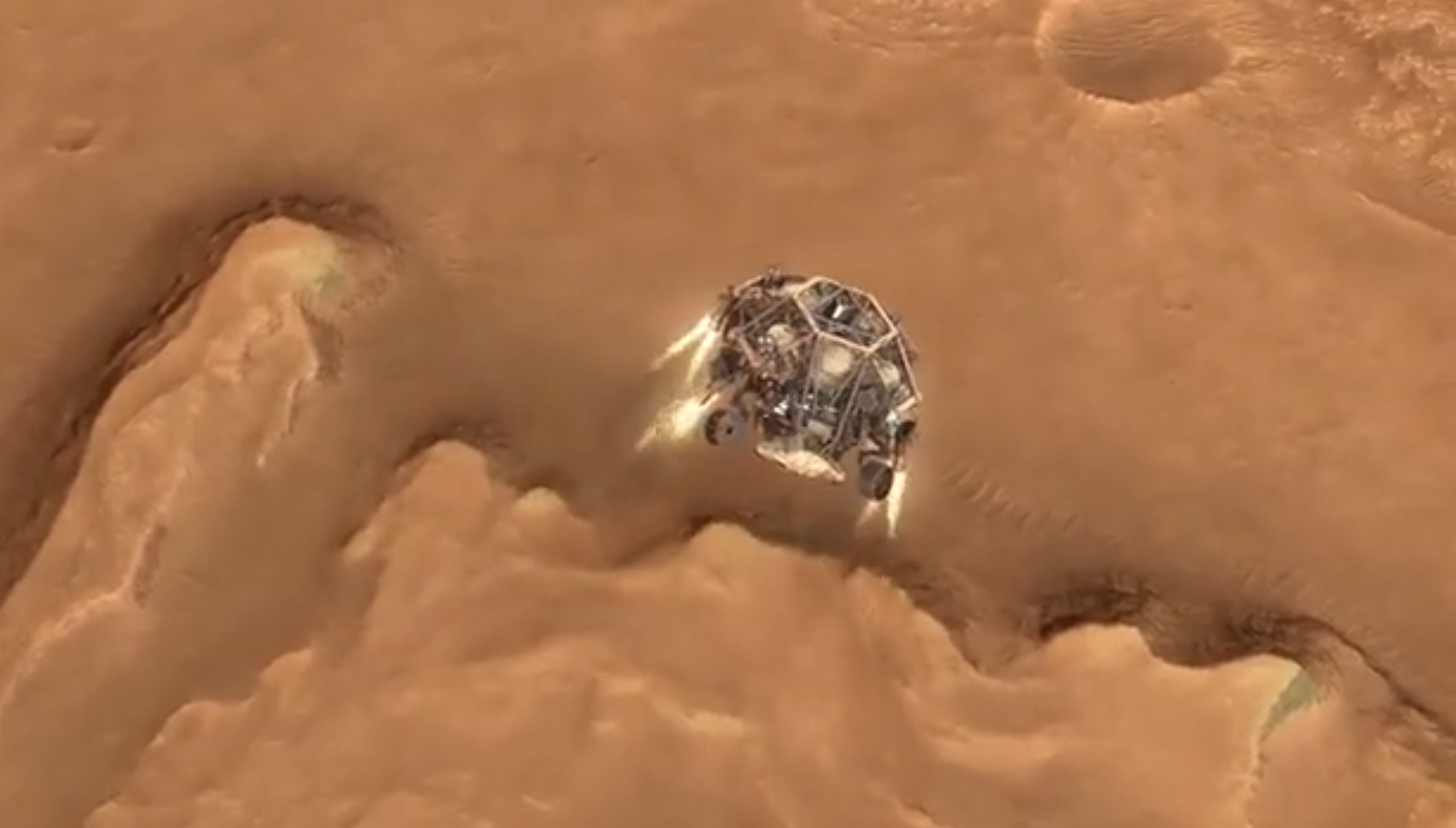
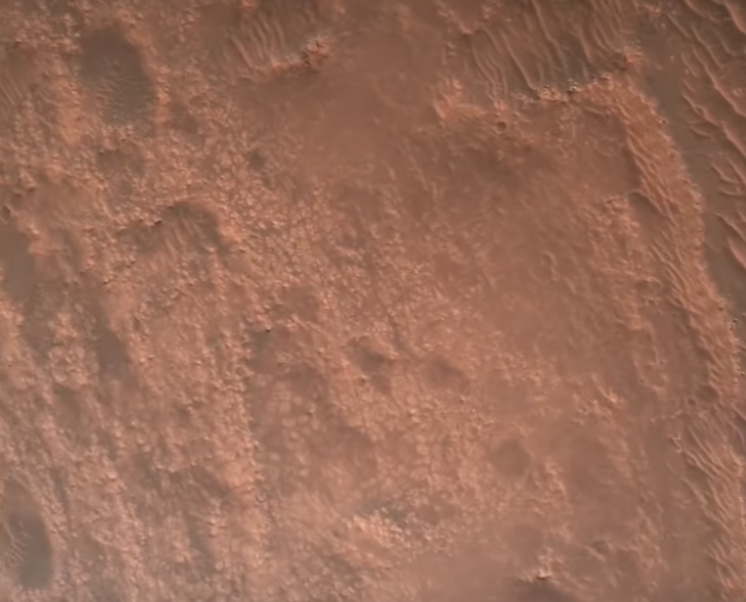
Following what was described by engineers as “seven minutes of terror”, Perseverance landed in a “pool-table flat” crater—a prime location, scientists think, for searching for possible traces of ancient life on Mars. The landing site was later named the Octavia E. Butler Landing, after the US science fiction author, who died in 2006.

First drive
Two weeks after touching down, Perseverance took its first drive. On 5th March it travelled 6.5 metres (21.3 feet) during a half-hour test within Jezero Crater. Taking directions from mission managers at NASA’s Jet Propulsion Laboratory (JPL), the rover rolled forwards, turned to the left, then drove backwards. It sent back an image showing both its tracks and a patch of ground that had been scoured by its descent stage rockets.

Jezero Crater
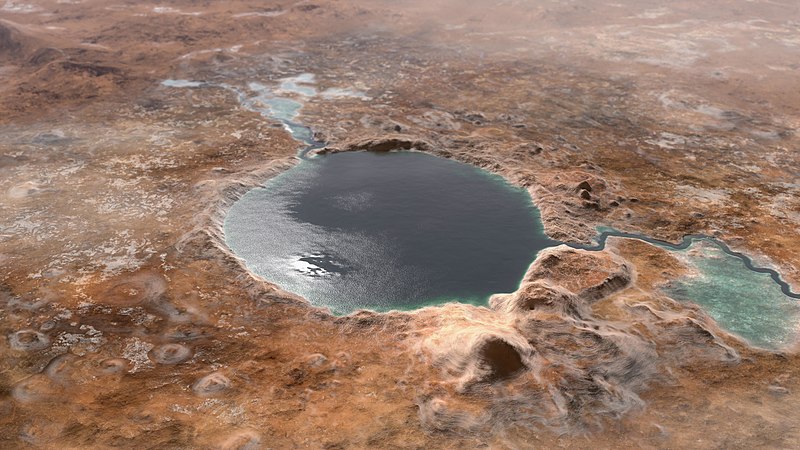
Jezero Crater lies to the north of Mars’ equator. Measuring about 50 kilometres (30 miles) across, it once contained an ancient lake. A river carried clay minerals into the lake, forming a delta. Microbes might possibly have lived in the waters, and clays frequently preserve organic matter, so the rocks forming the delta are an ideal place to look for fossils and other signs of ancient life.
Ingenuity helicopter
Transported to Mars inside Perseverance was a mini-helicopter called Ingenuity (nicknamed Ginny). This solar-powered drone scouted for ideal driving routes for the rover. Other than a pair of cameras, it carried no scientific instruments. The aircraft performed its first flight—the first powered flight ever to take place on another world—on 19th April 2021. It hovered in the air at around 3 metres (10 feet), before descending back to the Martian surface. The flight lasted 39 seconds.
NASA named Ingenuity's first take-off and landing airstrip Wright Brothers Field, after the US inventors Orville and Wilbur Wright, who achieved the first powered, controlled flight of a heavier-than-air aircraft in 1903.
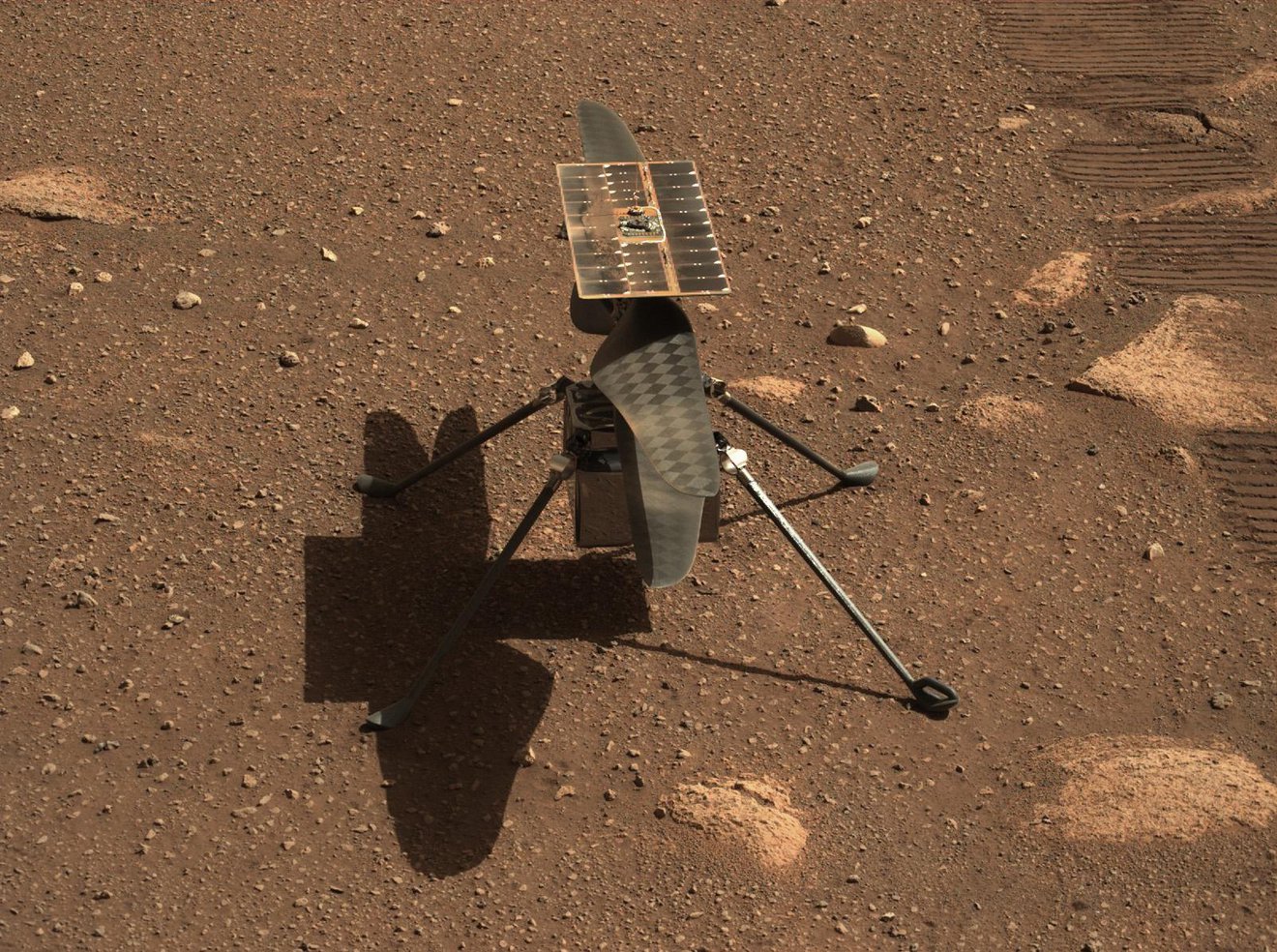


Flying on Mars is far more difficult than flying on Earth. The Red Planet's atmosphere is just 1% the density of Earth’s at the surface. In order to be able to achieve lift, Ingenuity needed to be of extremely light construction, weighing just 1.8 kilograms (4 pounds). It featured four carbon-fibre blades, arranged into two 1m-long rotors that span in opposite directions at around 2500 revolutions per minute (rpm)—many times faster than blades would turn on a passenger helicopter on Earth.
During the Martian night, temperatures can drop as low as -90°C (-130°F), potentially causing Ingenuity's delicate electrical components to freeze and crack. To survive the cold, Ingenuity need to have enough energy from its rechargable batteries to power internal heaters.
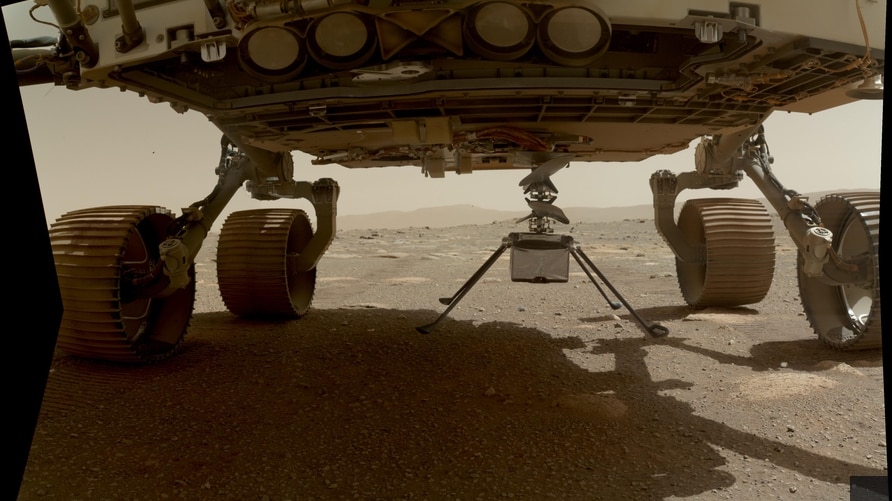
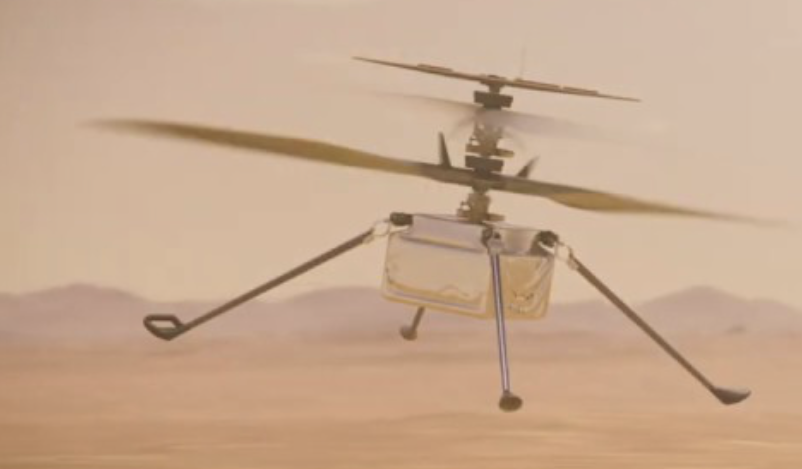
At a current distance of nearly 400 million kilometres (250 million miles) from Earth, Ingenuity could not be guided by direct human control—radio signals take between 5 and 20 minutes to reach it, depending on the positions of Earth and Mars at the time. Instead, the craft operated autonomously, performing manoeuvres planned in advance and transmitted to it from mission controllers via the Perseverance rover.

Over five test flights, Ingenuity reached an altitude of 10 metres (33 feet), and achieved a maximum round-trip distance of 266 metres (873 feet) in a flight lasting 117 seconds. It then moved into its "operational phase". Over the course of several further flights, flying higher and further, Ingenuity demonstrated how aerial scouting could be of use to the future exploration of Mars and other worlds.
On 18th January 2024, Ingenuity's rotor blades were damaged while landing on its 72nd flight. NASA announced the end of its mission one week later. Over 1004 days, Ingenuity had flown for two hours, eight minutes and 48 seconds, covering more than 17 kilometres (11 miles). Its final resting place has been named Valinor Hills Station, after the fictional location in J.R.R. Tolkien’s novels.
First science campaign
Perseverance's first science campaign began on 1st June 2021, with the aim of exploring two specific areas of the Jezero Crater, named Crater Floor Fractured Rough and Séítah. The rover successfully collected rock samples (at the second attempt) drilled from a rock named Rochette in September. Ingenuity will continue to travel alongside the rover while it carries out its tasks.


To the delta
Having completed its science campaign on the floor of the Jezero Crater, the rover began its second campaign on 14th March 2022. It reached the primary goal of its mission, the Neretva Vallis river delta in May 2022, travelling at a top speed of around 0.12 kilometres per hour (0.07 mph). Perseverance uses artificial intelligence (AI) to navigate a safe passage across a perilous terrain of sandpits, craters and fields of sharp rocks. Its AutoNav self-drive technology does so without the assistance from human controllers on Earth, although the rover's basic route (marked in blue on the map above) has been planned in advance, using images taken from orbit.
On arrival, Perseverance manoeuvred itself to the foot of a gentle incline leading up to the delta, known as Hawksbill Gap, it rolled slowly uphill, stopping to drill down to extract samples of rock that are rich in carbonate minerals—those most likely to exhibit evidence of past life on Mars. On its way back down, Perseverance collected ten tubes full of rocks, placing them in a depot at the base of the delta. From there they will be retrieved by later missions. This task was completed in February 2023. Since then, the rover has been exploring the upper surface of the Western Fan in Jezero Crater.


Cheyava Falls
In July 2024, Perseverance discovered “leopard spots” on a reddish rock, nicknamed Cheyava Falls, discovered in the Bright Angel formation outcrop in Neretva Vallis. The spots contain iron and phosphorus, elements often associated with microbial life. The rover's instruments also detected organic compounds within the rock. The rock's composition—it is a mudstone, a kind of sedimentary rock—shows it was once exposed to water. Perseverance took a sample of the rock (which became the 22nd core sample intended to be delivered to Earth by a future mission) for more detailed analysis.

In a study published in September 2025, the leopard spots were found to be accumulations of minerals which, on Earth, are typically produced by micro-organisms (such as bacteria) that live in wetlands as part of their metabolism—the set of chemical reactions that the organism needs to function. It is not impossible that non-biological geological processes may be responsible, however. For this reason, scientists are describing the spots as "potential biosignatures", meaning they require further investigation to determine their origin. This will await a potential future mission that could return the rock sample to Earth so more detailed tests can be carried out.
In June 2026 it was announced that Perseverance had detected complex carbon molecules in the Cheyava Falls mudstone. The form of carbon detected, known as macromolecular carbon or MMC, can originate from living organisms (for example, in organic matter found in microbial mats), but, as with the leopard spots, it can also be formed by geological processes. This means that the discovery does not amount to proof of past Martian life. The Curiosity rover, which is exploring the planet’s Gale Crater more than 3000 kilometres (2000 miles) away, has also detected organic-bearing mudstones.


pics


Without in any way limiting Q-files Ltd’s exclusive rights under copyright, any use of this publication to “train” generative artificial intelligence (AI) technologies to generate text is expressly prohibited. Q-files Ltd reserves all rights to license use of this work for generative AI training and development of machine learning language models.