
Astronomy

CITE
We have made every effort to follow citation style rules, but there may be some minor differences. If in doubt, please refer to the appropriate citation style manual.
Observing a solar eclipse. (2026). In Q-files Encyclopedia, Space, Astronomy. Retrieved from
https://www.q-files.com/space/astronomy/observing-a-solar-eclipse
"Observing a solar eclipse." Space, Astronomy, Q-files Encyclopedia, 25 Mar. 2026.
https://www.q-files.com/space/astronomy/observing-a-solar-eclipse.
Accessed 17 Oct. 2026.
Observing a solar eclipse 2026. Space, Astronomy. Retrieved 17 October 2026, from
https://www.q-files.com/space/astronomy/observing-a-solar-eclipse
Space, Astronomy, s.v. "Observing a solar eclipse," accessed October 17, 2026.
https://www.q-files.com/space/astronomy/observing-a-solar-eclipse


Observing a solar eclipse
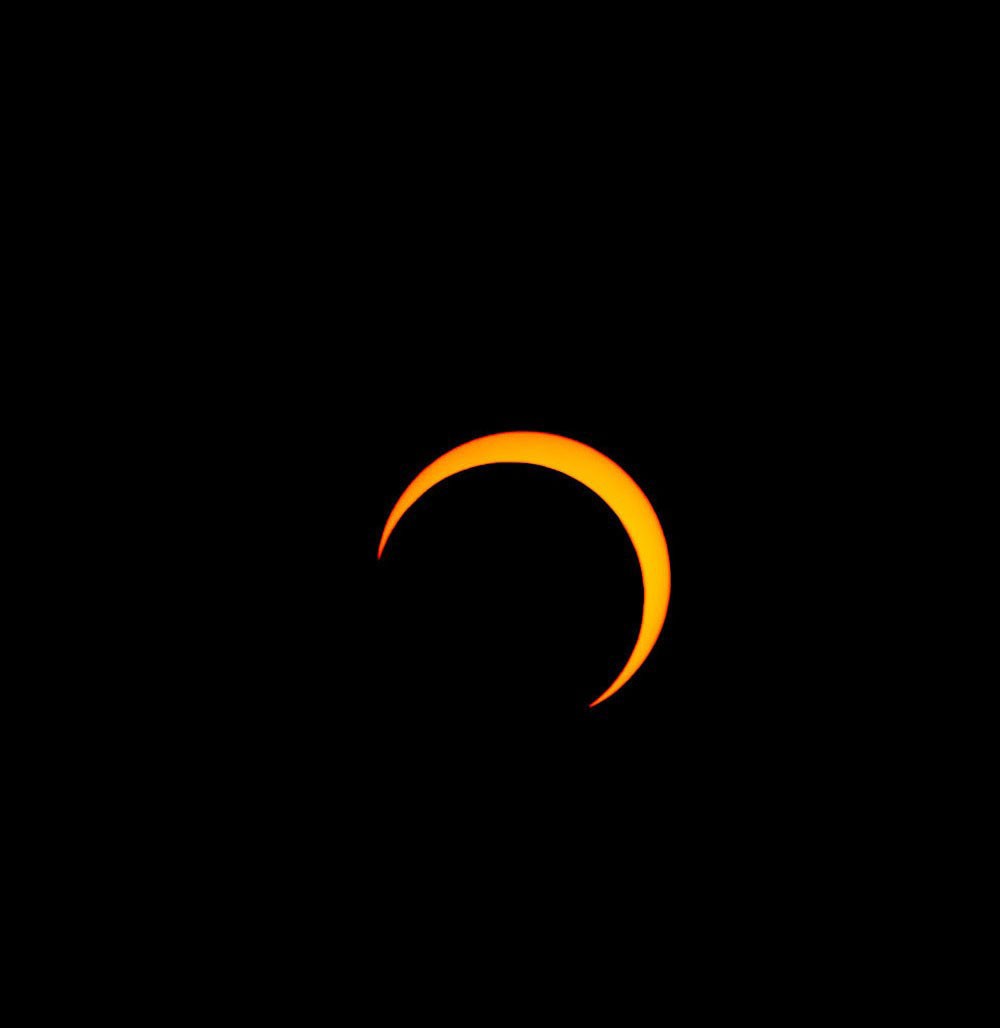
On 20th March 2015, UK residents witnessed a near-total solar eclipse. From around 8.30 a.m. the Moon appeared to move across the Sun, taking about an hour to cover it almost completely. A total eclipse was visible from the Faroe Islands and Svalbard. Shetland had an eclipse of approximately 97%, while in southern England it was nearer to 85%. By a rare coincidence, two other rare events took place at the same time as the eclipse: a Supermoon and the Spring Equinox. A Supermoon, or perigee moon, is when the Full or New Moon comes closest to the Earth, making it look bigger than normal. The Spring Equinox is the time when the day and night are of equal duration.
How eclipses happen
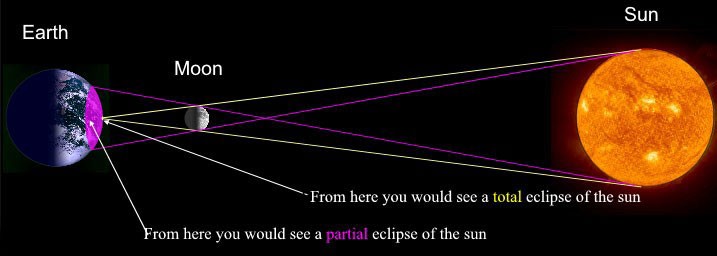

Most of the time, the Moon either swings above or below the Sun, so no solar eclipse takes place. This is because the plane of its orbit around the Earth is inclined at a slight angle (5°) to that of the Earth’s orbit around the Sun. Twice a month, however, the Moon crosses the Earth’s orbital plane at points called nodes. If a New Moon happens while the Moon is close to one of its nodes, a solar eclipse occurs.
Path of totality
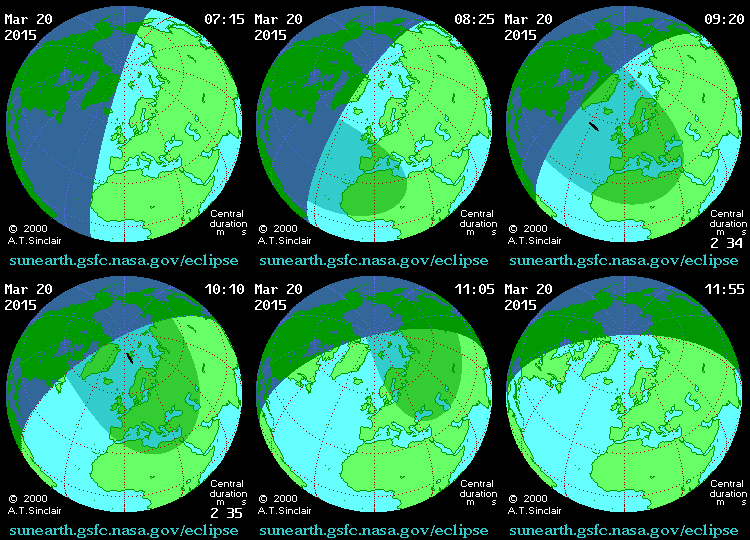
The path of totality—the narrow strip on the Earth's surface where the view of Sun was totally blocked out by the Moon—passed mainly over the North Atlantic Ocean (represented by the black shape on this animation). It started at sunrise to the south of Greenland, swinging round to the east of the island during the day and ending to the north of it at sunset. A much larger portion of the world—including Europe, North Africa, Middle East and parts of Asia—saw varying degrees of a partial solar eclipse.
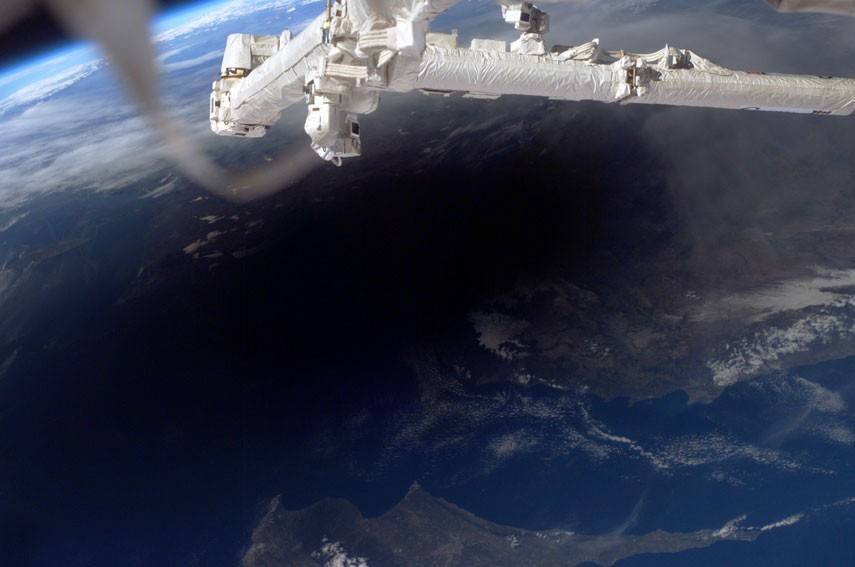
During a total eclipse, dusk suddenly falls and birds, confused by the rapidly fading light, start to roost. The air temperature falls. In past eclipses, some have said they experience a slight breeze during the event, known as an “eclipse wind”. This could be the flow of cooler air away from the region totally obscured by the eclipse.

Annular eclipse
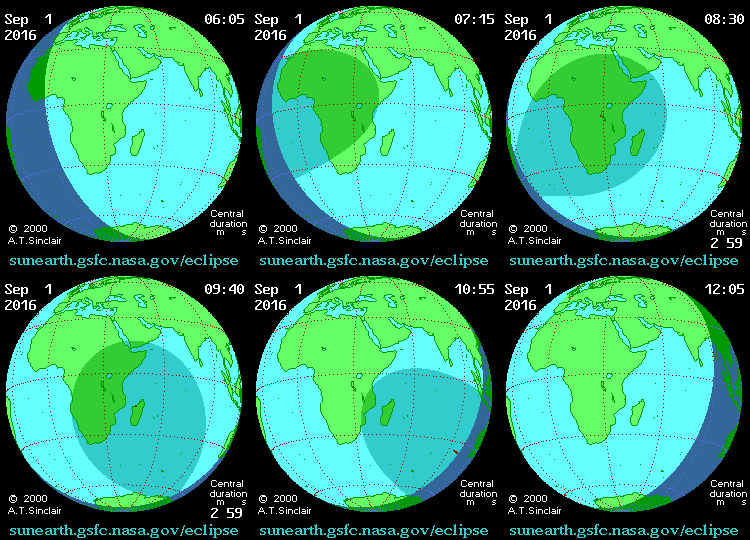
On 1st September 2016, a spectacular "ring of fire" appeared in the sky over Africa, as the Moon passed exactly across the face of the Sun, as in a total eclipse, but did not ever completely cover it. Instead, the dark disc of the Moon was surrounded by the bright edge of the Sun. This was what is known as an annular eclipse of the Sun. It happens when the Moon lies farther away from Earth than during a total eclipse. It could be viewed in Tanzania (where the event lasted about three minutes), Gabon, Congo-Brazzaville, DR Congo, Madagascar and the island of Réunion.
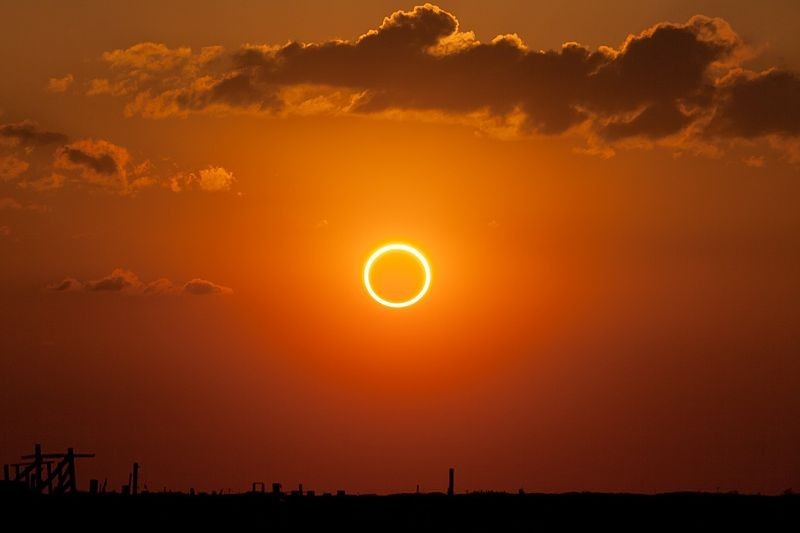
The Moon does not orbit Earth in a perfect circle—its orbit is slightly elliptical (oval-shaped). This means that its distance from Earth varies from between around 360,000 and 400,000 kilometres (225,000–250,000 miles). When the Moon is farther away, the Moon's diameter looks to viewers on Earth a little smaller than the Sun's, causing the Sun behind it to look like an annulus (the word used in maths for a ring).
September's annular eclipse appeared to viewers along a narrow strip of Africa (traced by a red spot in this animation) as it travelled across the sky. At the same time, it appeared as a partial eclipse over a much larger region (the grey area).
Viewing an eclipse
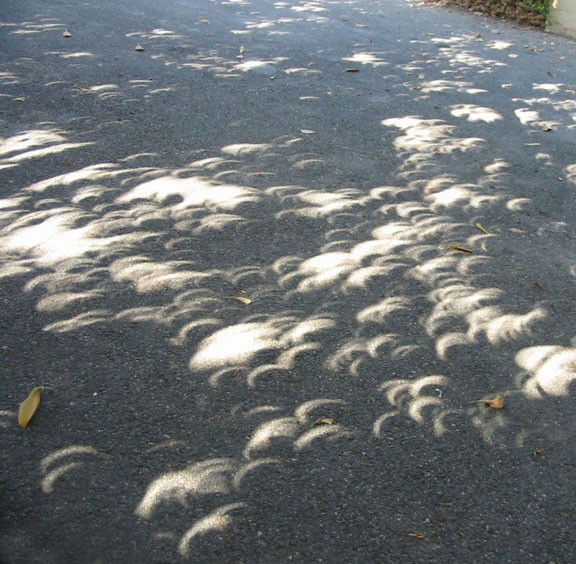
IT IS ALWAYS EXTREMELY DANGEROUS TO LOOK DIRECTLY AT THE SUN! You must not view an eclipse with the naked eye as it can cause permanent damage to your vision or even blindness. NEVER view the Sun through binoculars or telescopes. Sunglasses, film negatives and smoked glass are also unsafe. Even special eclipse spectacles are not safe for children, as young eyes are not as well-developed as those of adults. Either use a pinhole projector to view the reflection on a piece of card with your back to the Sun, or watch the event on television.
Consultant: Mike Goldsmith
pics
Without in any way limiting Q-files Ltd’s exclusive rights under copyright, any use of this publication to “train” generative artificial intelligence (AI) technologies to generate text is expressly prohibited. Q-files Ltd reserves all rights to license use of this work for generative AI training and development of machine learning language models.