
Robotics and AI

CITE
We have made every effort to follow citation style rules, but there may be some minor differences. If in doubt, please refer to the appropriate citation style manual.
How robots work. (2026). In Q-files Encyclopedia, Technology, Robotics and AI. Retrieved from
https://www.q-files.com/technology/robotics-and-ai/how-robots-work
"How robots work." Technology, Robotics and AI, Q-files Encyclopedia, 13 Mar. 2026.
https://www.q-files.com/technology/robotics-and-ai/how-robots-work.
Accessed 22 Sep. 2026.
How robots work 2026. Technology, Robotics and AI. Retrieved 22 September 2026, from
https://www.q-files.com/technology/robotics-and-ai/how-robots-work
Technology, Robotics and AI, s.v. "How robots work," accessed September 22, 2026.
https://www.q-files.com/technology/robotics-and-ai/how-robots-work


How robots work
Many robots are designed to perform actions that would otherwise be carried out by human beings. Such robots—which only rarely look like humans—are made of components that are equivalent to the parts of human body. They have movable parts—like our bones—each connected to the other by joints. They have "muscles" (actuators) to move these parts, together with "senses" (sensors) that receive information about the body and its surroundings, and a "brain" (a computer program) that processes this information and controls the actuators accordingly. Like humans, robots need a source of energy to work (the equivalent of food), which, for robots, is electricity. Electric motors are used for movement, while electrical circuits power the computer and sensors.

Robotic arm
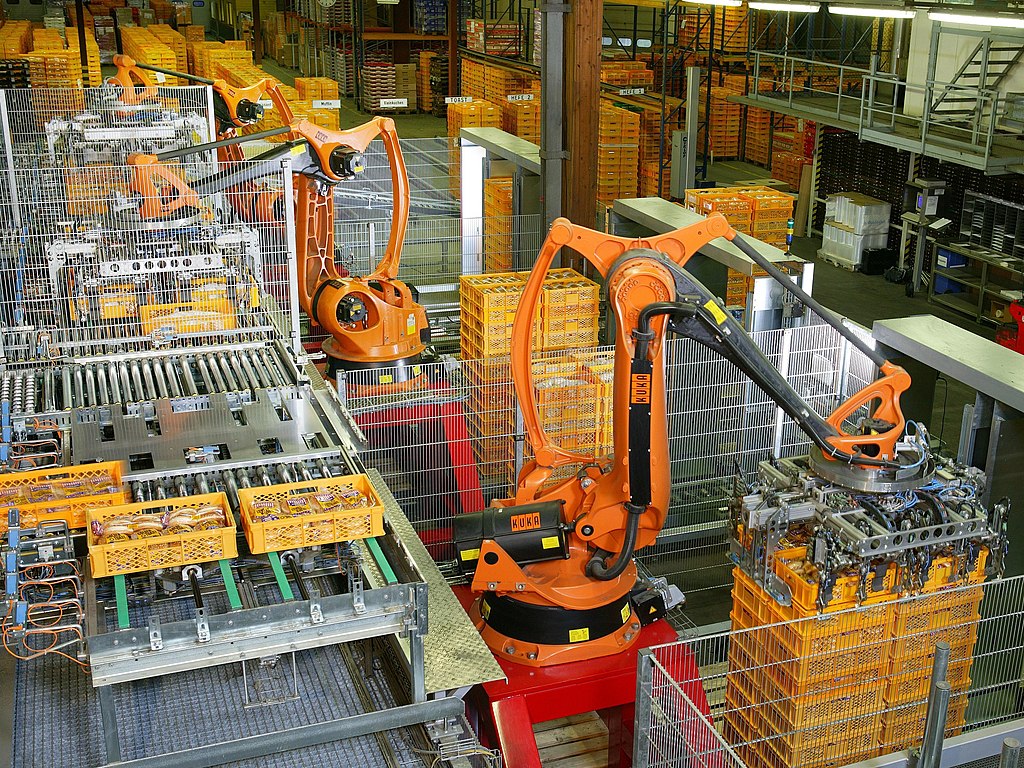
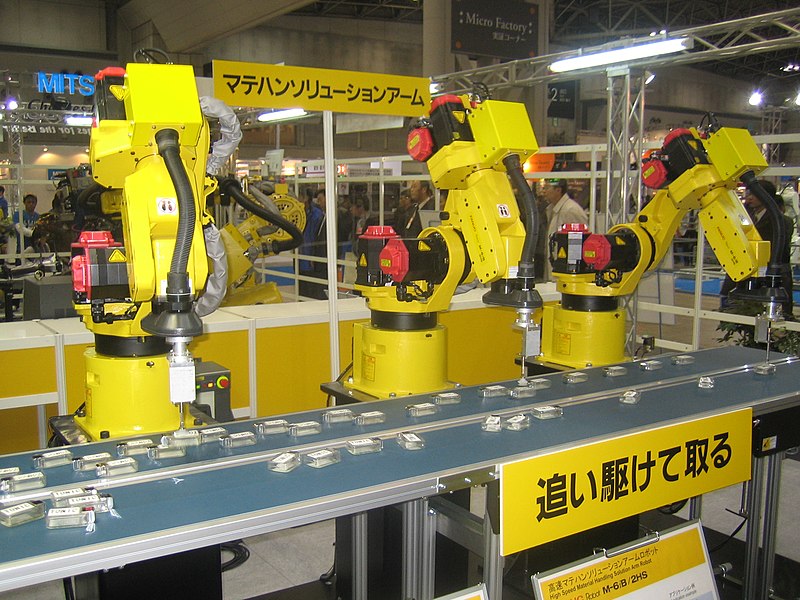
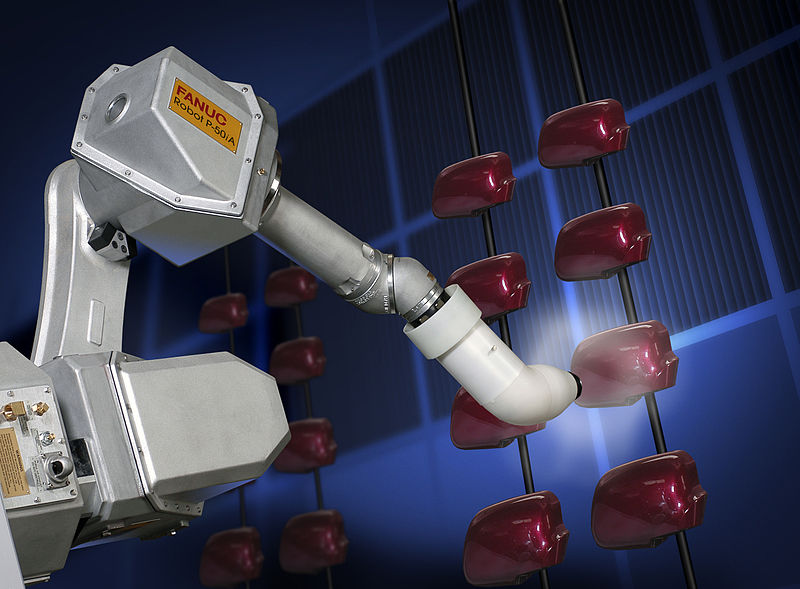
Many robots are designed to manipulate objects—to pick them up, modify them in some way or, in some cases, destroy them. For this purpose they are fitted with an "arm". A robotic arm is commonly used in manufacturing tasks—often carrying them out over and over again—by industrial robots.
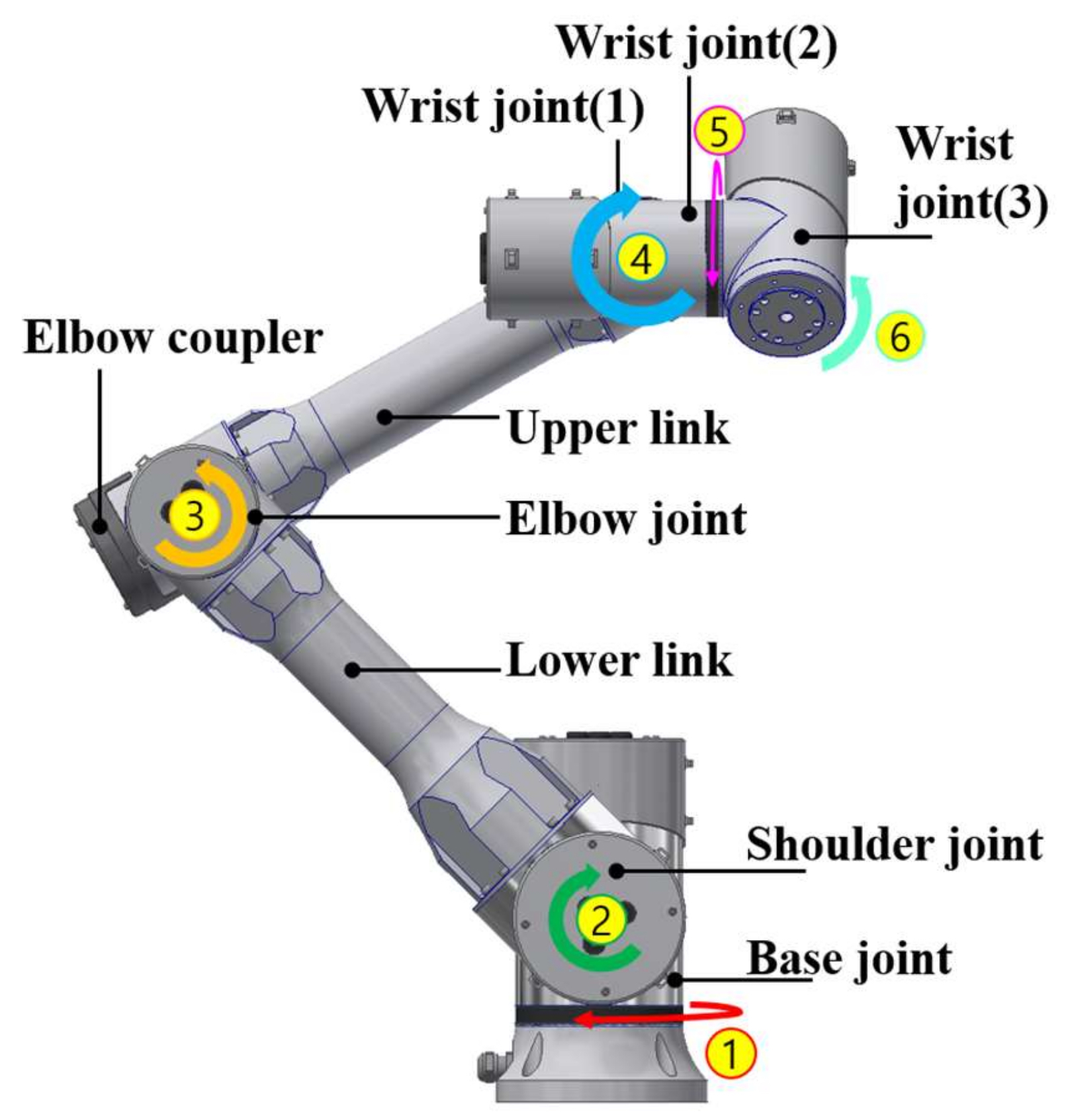
The arm is typically made up of several segments, linked together by joints. In the same way as human arms, the joints of robotic arms have several "degrees of freedom"—they can rotate in several different directions.
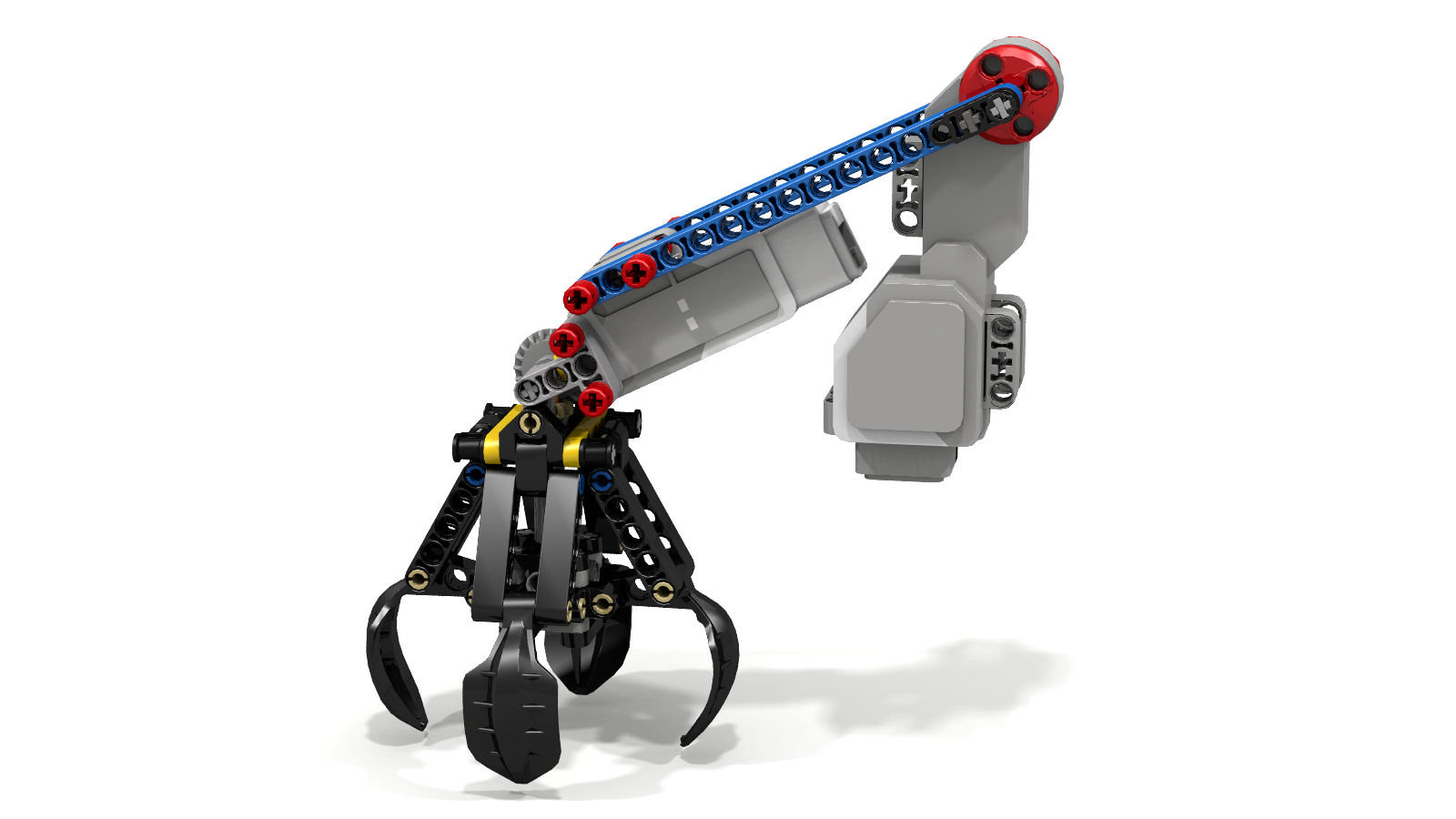
In this robotic arm (above), the shoulder joint can both swivel on its base and raise or lower the lower link. This means it has two degrees of freedom. The elbow joint can rotate in only one direction (one degree of freedom), while the wrist joint—to which the end effector (see below) is coupled—can rotate in any direction: it has three degrees of freedom.
End effector
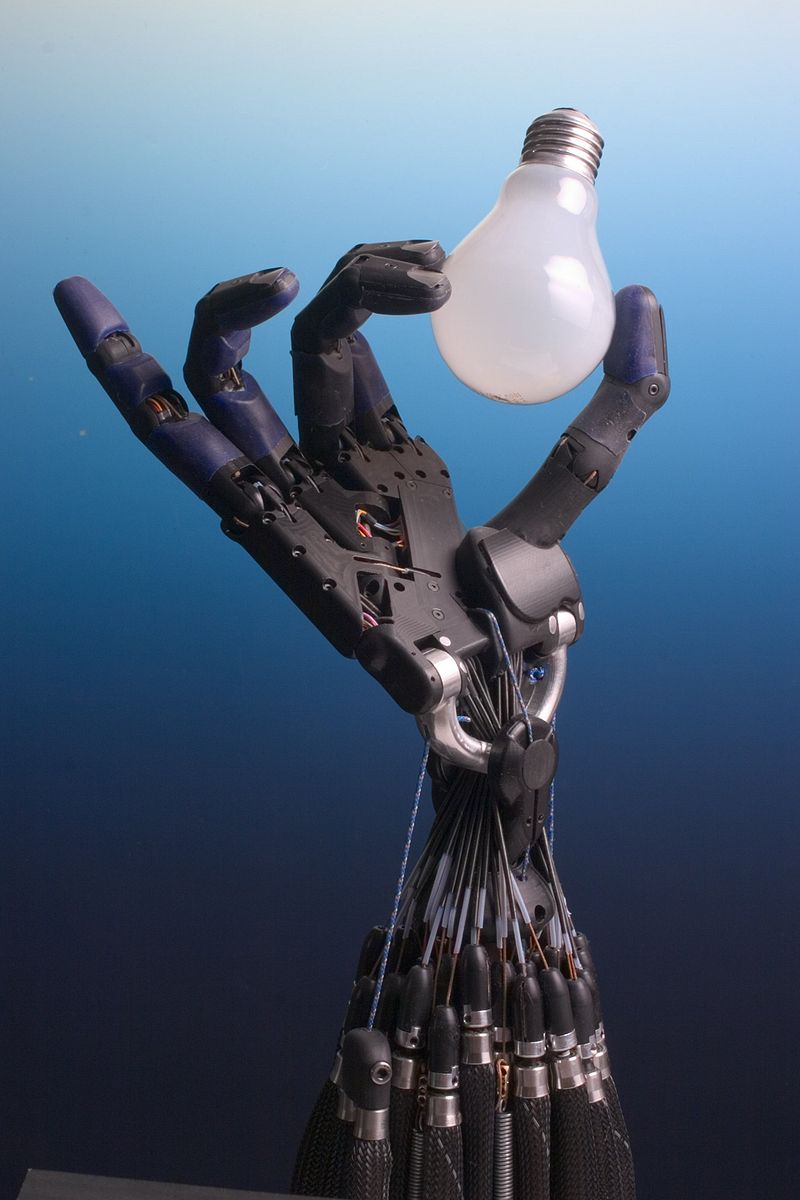
The functional end of a robotic arm is known as an end effector. End effectors may include blow torches, drills and spray painters, but the most common type is a mechanical "gripper". This might consist just two "fingers" capable of picking up and letting go of objects. Some advanced robots have highly dextrous grippers that work more like human hands. These usually have built-in pressure sensors that tell the computer how firmly the robot is gripping a particular object.
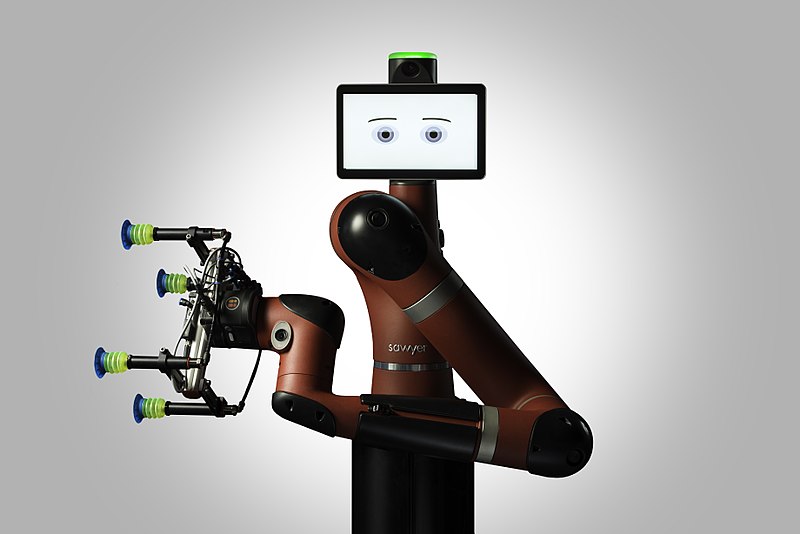
Other kinds of gripper include suction cups, capable of lifting very large loads, electromagnets and adhesive pads for small objects such as cans and boxes.
Actuators
A robot's moving parts—its jointed segments, end effectors and, if it is a mobile robot, wheels—are all driven by actuators. Most actuators are electric motors, which spin a wheel or gear. The jointed segment of a robotic arm is often powered by a kind of actuator called a stepper motor. Unlike ordinary rotary motors, stepper motors divide a full rotation into a number of equal steps. This allows the computer to move the arm very precisely, performing the same movement over and over again—for example, twisting the caps of jars on an assembly line. The sequence of movements is stored in the robot's memory.
Industrial robots often need an in-and-out motion rather than a spinning motion for carrying out their tasks. This action is provided by what are called linear actuators. There are three kinds. The most common is electric, in which a motor moves a rod by means of gears. In a hydraulic cylinder, the second kind, a piston connected to a piston rod moves back and forth powered by pressurized fluid, usually oil. In the third kind, a pneumatic actuator, the piston is driven by a compressed air.
In some robots, a servo motor is used instead of (or as well as) a stepper motor. A servo motor includes a feedback system so that, for example, it will stop closing a gripper as soon as it receives a signal from a pressure sensor in the gripper to indicate that the object has been grasped.


Control
The activities of a robot are controlled by the software which runs on its computer. There are four phases: perception, processing, action and feedback. In the perception phase, sensors (see below) give information about the environment —for example, whether a parcel has arrived on a conveyor belt for the robot to load on to a pallet. This information is then processed by the computer in order to pass the appropriate signals to the actuators. These then move the robot's parts in such a way to carry out the required actions. As the robot moves, its sensors send feedback signals to the computer.

Some robots are operated under the direct control of a person. A cable, radio or infrared signal is used—for example when steering a robot through a dangerous or inaccessible environment, such as an area contaminated by landmines or inside a volcano.
Autonomous robots are programmed to perform certain tasks—including, in the case of mobile robots, navigation—and carry them out without requiring further instructions. A mobile robot maps its surroundings and collects other information it needs by using a range of sensors (see below). Examples of simple autonomous robots include lawn mowers, office cleaners, warehouse pickers and delivery vehicles. Space probes and factory robots are also autonomous robots.
Even directly-controlled robots may carry out some tasks autonomously, such as coming to a halt when they touch an obstacle.


Mobile robots
Most mobile robots have either wheels (like most space rovers) or caterpillar tracks if they are required to move across rough terrain, such as a city street devastated by an earthquake. Other mobile robots may use fixed rails, including some factory robots and those used in farming for sowing crops or providing feed for livestock.
Robots that walk upright on two (or even four) legs offer a challenge for robot designers. No robot which is as stable as a human has yet been made.
Electric motors or hydraulic or pneumatic pistons move the robot's legs. The designer needs to find the right combination of movements involved in walking and programme this information into the robot's computer. The robot legs also need to provide constant feedback on their positions compared to the ground. Many mobile robots have a built-in balance system—usually involving a set of gyroscopes (see below)—that tells the computer when it needs to correct its movements.
Two techniques have been used to try to solve the problem of stability. With the zero moment point (ZMP) algorithm, used by the humanoid robot ASIMO, the robot's feet are controlled so that there is no sideways pressure when they touch the ground, despite the fact that the robot is constantly moving sideways.

A more advanced way for a robot to walk is, however, to use a dynamic balancing algorithm. This is like the way humans balance, stopping ourselves from falling over as we walk by constantly applying small, changing pressures in many directions. Boston Dynamics' walking robot Atlas, which uses this technology, is able to perform jumps and backflips.

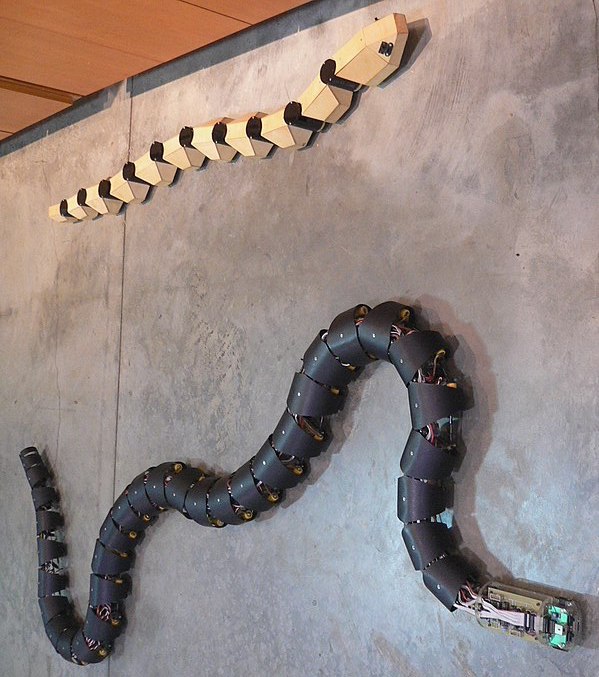
Some robots are designed to move across the ground by other means including snaking (copying the locomotion of a snake, which also includes swimming underwater), climbing and skating.
Some underwater robots are designed to move across the sea floor. An example is Silver 2, a crab-like robot designed to find and clean up plastic waste in the oceans.
Robots that fly are known as unmanned aerial vehicles (UAVs), or drones. They can be fixed-wing aircraft, like aeroplanes, or driven by rotor blades like helicopters or quadcopters (kinds of helicopter with four rotors). Military drones are designed to fly into dangerous territory either for surveillance missions or to bomb targets. Cruise missiles, self-navigating projectiles designed to travel over long distances to strike their targets with high precision, are also types of UAV.


Sensors
Robots use sensors to locate and identify objects they come across. Sensors also provide them with information about their surroundings—for example, air temperature or levels of light or moisture. In combination with other technologies, sensors also enable autonomous robots to navigate their way around without human controllers (see below).
A bumper sensor enables a robot to detect obstacles. On hitting one, the impact triggers the sensor. The robot's programming tells it to back up, turn to the right or left and move forwards again.
For more sophisticated obstacle avoidance, visual sensors are needed. NASA's Perseverance rover, currently (as of September 2023) travelling across the rocky surface of Mars, uses an auto-navigation system called AutoNav. This uses visual sensors to make a 3D map of the land in front of it. If the map shows bumpy terrain ahead, the rover will select a route that takes it round the boulders.


Mobile robots may use infrared or ultrasound sensors to detect the presence of obstacles. In a similar way to echolocation, a technique used by bats and dolphins, the robot sends out an infrared beam or ultrasonic signal and measures the signal's reflection from the object. It can then locate the distance to obstacles based on how long it takes the signal to bounce back.
Capacitive sensors can detect nearby objects without touching or seeing them. They generate an electric field, which is changed by an object's presence. These changes are measured by the sensor.
Tactile sensors mimic the touch receptors of human skin. The robot's computer processes the information received from the sensor when it holds an object and sends signals to the end effector—for example, to adjust the force of the grip.


Navigation
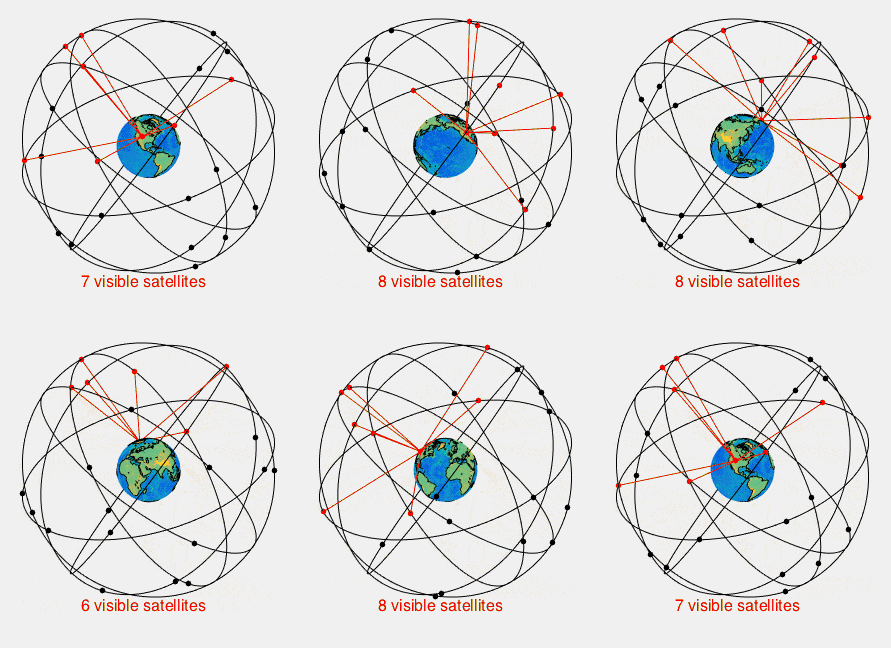
An autonomous mobile robot uses a GPS navigation device to locate its geographic position, just like a satnav in road vehicles, in combination with an inertial navigation (or guidance) system. Radar or lidar (which uses light from a laser in the same way as radar) and video cameras enable the robot to build an accurate 3D map of its immediate surroundings.
An inertial navigation system (INS) is a navigation device that uses a computer in combination with gyroscopes, accelerometers and sometimes tilt sensors to measure its motion and orientation. The INS continuously calculates a robot's exact geographic position, speed and direction of movement relative to a known starting point. It does this without the need for any other navigational aids. This type of calculation is called dead reckoning. The known starting point may be provided from a GPS satellite receiver. Besides mobile robots, INSs are used on ships, aircraft, submarines, guided missiles and spacecraft. They are also fitted to smartphones.

Gyroscopes measure the orientation of an object—the angle at which it lies relative to the points of the compass. You can think of it as the ability of a blindfolded passenger in a car to feel the vehicle turn left and right, or tilt up and down as it ascends or descends hills.
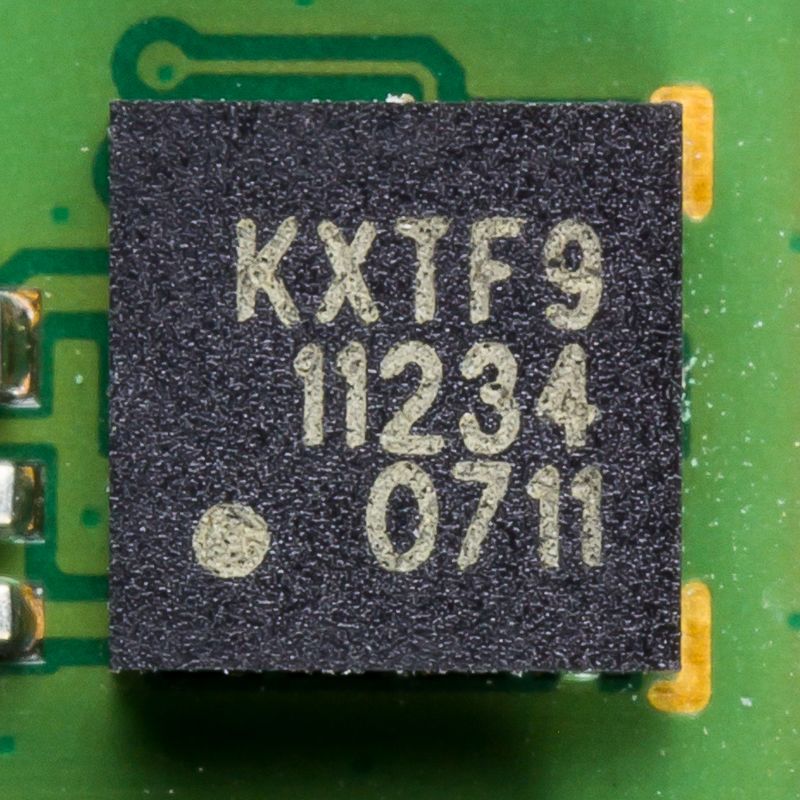
Accelerometers measure the acceleration of an moving object. The blindfolded passenger in a car can feel themselves being pressed back in their seat as the vehicle accelerates forwards, or pulled forward as the vehicle slows down. The accelerometer contains a piezoelectric crystal, which generates electricity when it is squeezed by the force that causes the acceleration.
Consultant: Mike Goldsmith
pics
Without in any way limiting Q-files Ltd’s exclusive rights under copyright, any use of this publication to “train” generative artificial intelligence (AI) technologies to generate text is expressly prohibited. Q-files Ltd reserves all rights to license use of this work for generative AI training and development of machine learning language models.