
Robotics and AI

CITE
We have made every effort to follow citation style rules, but there may be some minor differences. If in doubt, please refer to the appropriate citation style manual.
Self-drive cars. (2026). In Q-files Encyclopedia, Technology, Robotics and AI. Retrieved from
https://www.q-files.com/technology/robotics-and-ai/self-drive-cars
"Self-drive cars." Technology, Robotics and AI, Q-files Encyclopedia, 13 Mar. 2026.
https://www.q-files.com/technology/robotics-and-ai/self-drive-cars.
Accessed 21 Sep. 2026.
Self-drive cars 2026. Technology, Robotics and AI. Retrieved 21 September 2026, from
https://www.q-files.com/technology/robotics-and-ai/self-drive-cars
Technology, Robotics and AI, s.v. "Self-drive cars," accessed September 21, 2026.
https://www.q-files.com/technology/robotics-and-ai/self-drive-cars


Self-drive cars
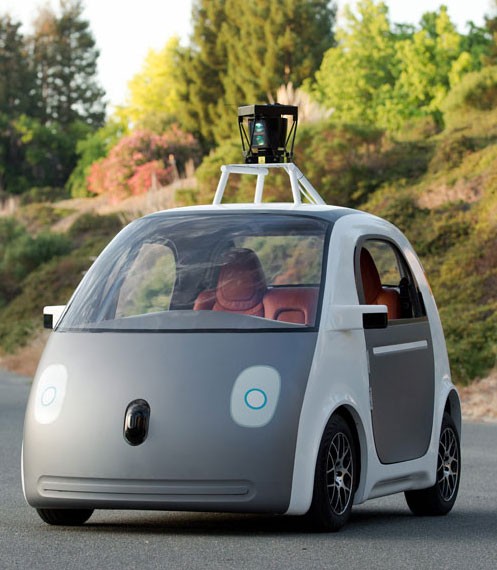
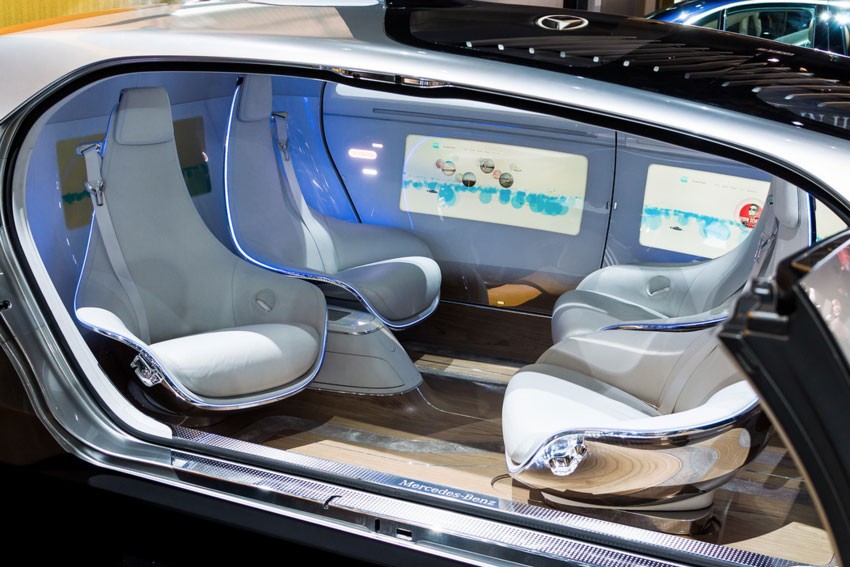
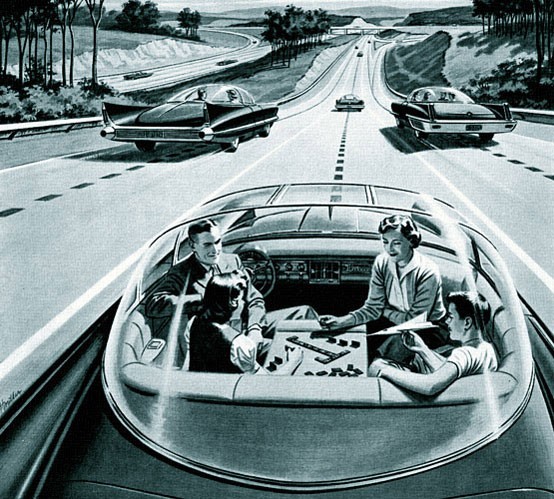
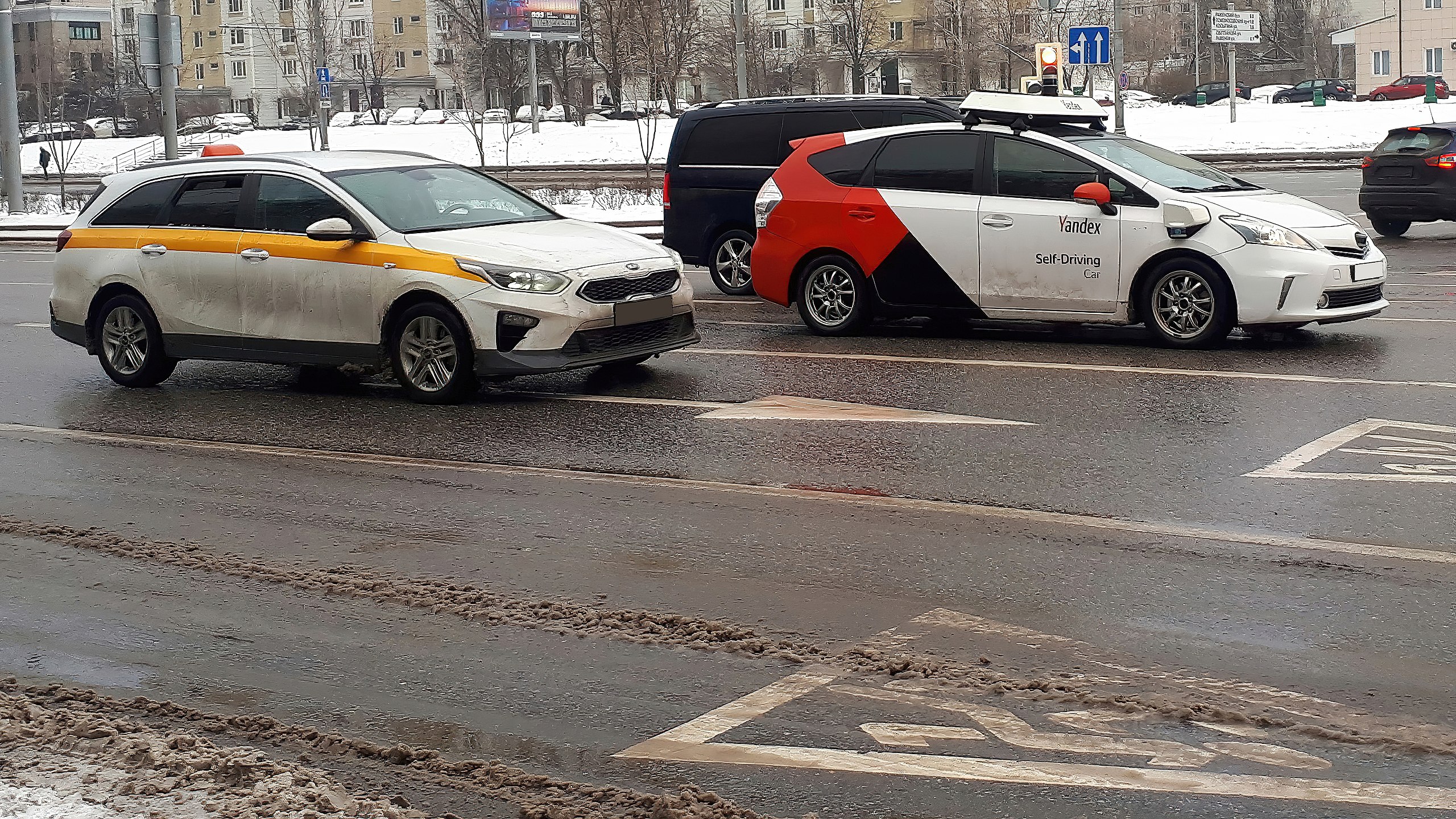
US tech giants, such as Google and Apple, along with traditional carmakers such as BMW and Volvo, are competing to build the first self-drive (autonomous) car. The cars will use existing technologies, such as lidar, radar and GPS, to enable them to sense their surroundings in fine detail and navigate without human control. The number of road accidents—most of which are caused by human error—may one day fall dramatically as a result. Once driverless vehicles became common on our roads, no one would need to own one. They could be left anywhere and serve as taxis for everybody to use.
Updated 15th January 2025
Lidar
Light Detection and Ranging (or lidar) technology is used to build a constantly changing 3D map around the car. It allows the car to “see” any potential hazards ahead by bouncing a laser beam off objects surrounding it in order to calculate exactly their distance and shape. Lidar is already commonly used by geologists, seismologists and other researchers to make high-resolution 3D maps of the landscape.
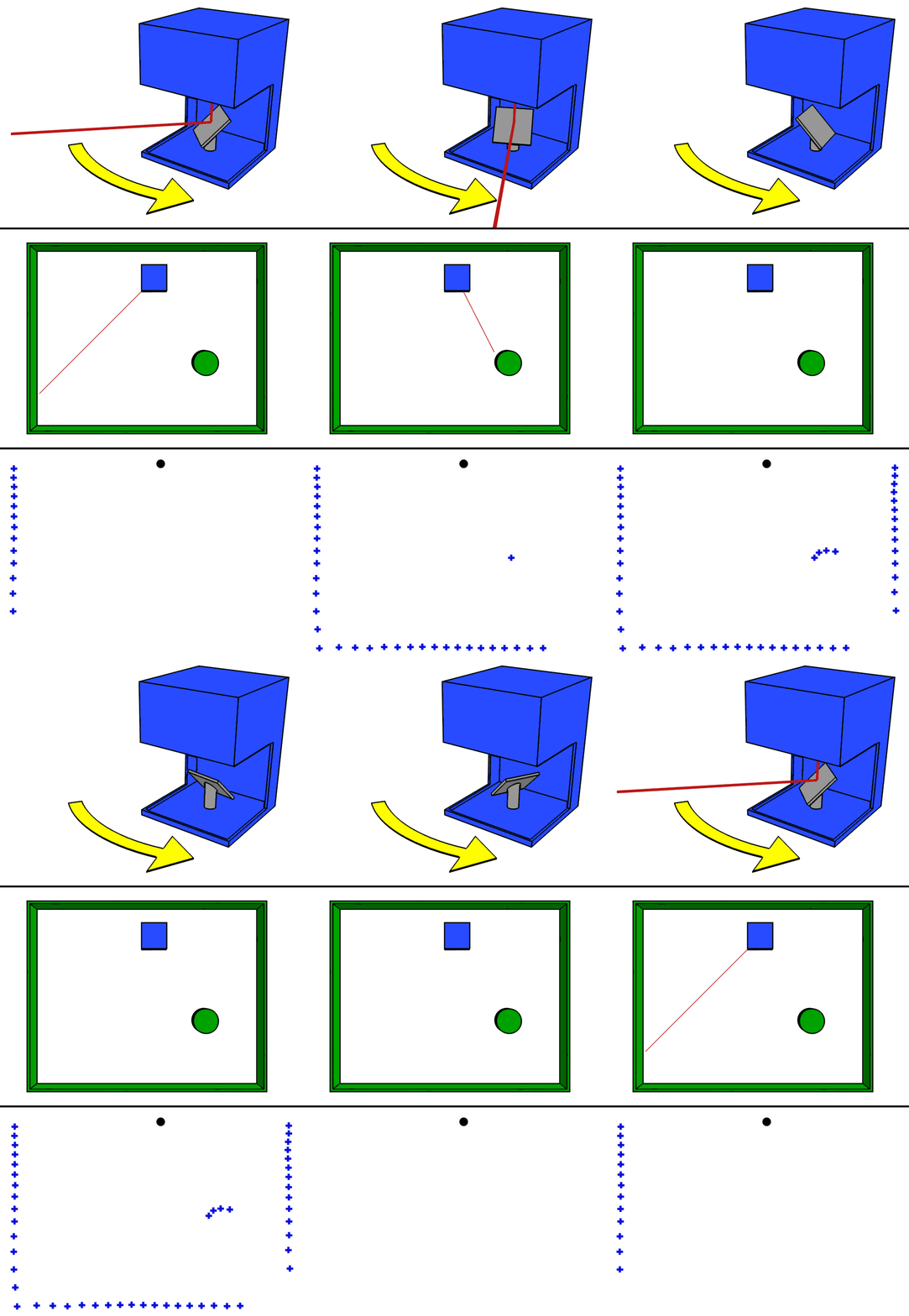
In this animation (left) showing how lidar works, a beam (coloured red) from a laser range finder is reflected by a rotating mirror. The laser scans the object (the green disc), gathering distance measurements, which are represented by blue crosses in the lower diagram.
Because lidar cannot accurately monitor the speeds of surrounding vehicles, radar (which is similar to lidar but uses radio waves instead of light and can measure speed more precisely) also send signals to the car’s computer to apply the brakes, or move out of the way, whenever other vehicles come close.
In addition to lidar and radar, multiple cameras film the surroundings from different angles, to build a constantly changing 3D view. Ultrasonic sensors—like those already installed in many cars to help avoid obstacles while parking—are also used.
From its four systems, the car is equipped with enough intelligence to gather together the information it needs to make split-second decisions about the traffic around it, and steer the car accordingly.
Navigation
An advanced Global Positioning System (GPS), called a GNSS (Global Navigation Satellite System), tracks the course of the car and plots a route to its destination. This is a much more accurate version of today’s satnav systems, capable of measuring, for example, the height of the kerbs, the position of the traffic lights and the exact width of the lane the car is travelling in. To provide this information, however, numerous monitoring devices must also be installed along the car’s route.
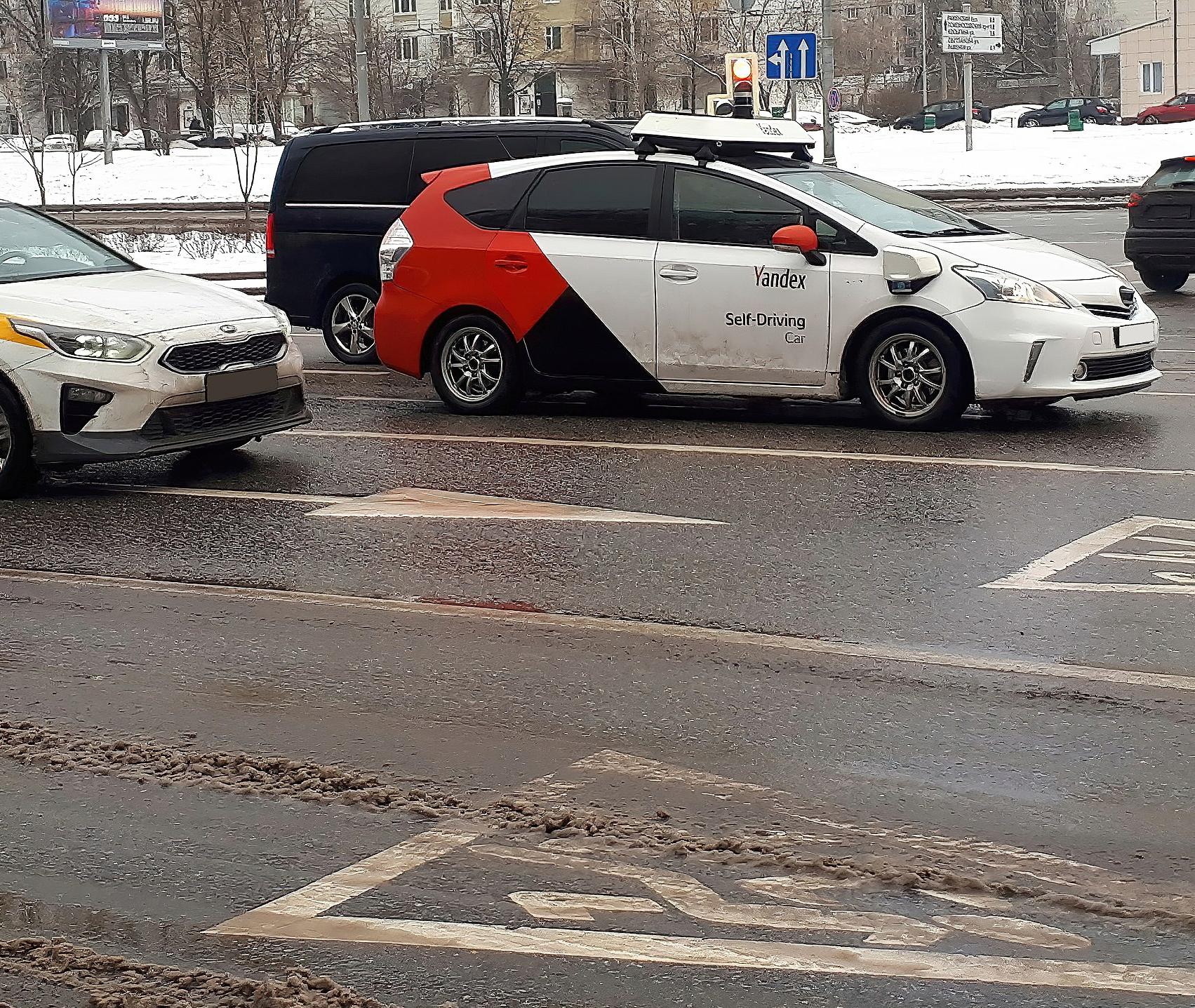
The self-driving car combines GNSS data with GPS data, digital maps, the four sensor systems and the car’s driving speed to work out all it needs to know about the positions and motions of itself and nearby cars in relation to the road. It also takes account of nearby areas of congestion or road works.

Robot vs. Human
One of the many challenges a robotic car must overcome is how to react to the constantly changing surroundings as well as (and ultimately better than) human drivers can. A fully driverless car, for example, would have to be good enough not to respond in exactly the same way—by swerving—to miss a child who had run out into the road as avoiding a newspaper that had floated past. A human driver would, of course, know when it was appropriate to take such emergency—and potentially dangerous—action, and when not to.

Many aspects of driving, such as stopping at red lights, are coded into the car’s computer, but the behaviour of other drivers and pedestrians needs to be “learned” from extensive test driving experiences—just like a human driver. For example, the cars are programmed to learn to predict when a cyclist rides by (even the wrong way in a cycle lane) or a pedestrian crosses the street. The computer then chooses a safe speed and the right trajectory for the car.
But critics say a self-drive car behaves too much like a nervous learner driver: it moves too carefully, obeying signs and speed limits to the letter. Human drivers, accustomed to the way other people drive, tend to anticipate certain patterns of behaviour. This has led to a number of instances when ordinary cars have driven into the back of test cars on public roads.
Partially autonomous
In fully automonous (driverless) cars (Levels 4 and 5 in the panel below), the steering wheel will disappear completely and the vehicle will do all the driving. Partially autonomous cars, on the other hand, are those that take over from the driver only under certain circumstances (Levels 2 and 3). Carmakers see this as the more realistic goal for the foreseeable future.
Tesla Motors introduced self-drive car technology in October 2015 with what is known as an autopilot system. This allows drivers to take their hands off the steering wheel for certain periods of time while the car travels along a motorway. Thanks to software installed in its computer, the car is capable of automatically controlling its speed, steering by itself within its lane, and even changing lanes.

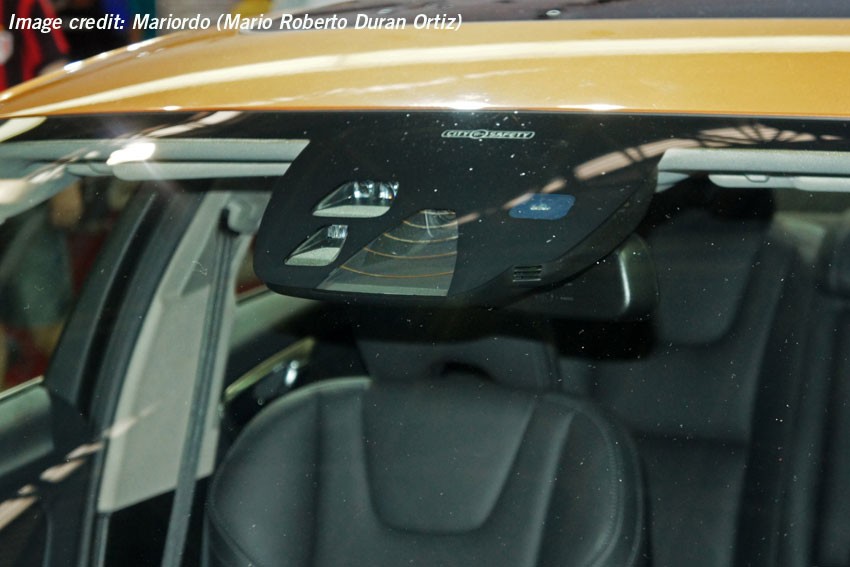
Partially autonomous cars use the same range of technologies (lidar, radar and GPS) as fully autonomous ones, with multiple sensors fitted to the bumpers and bodywork. The objective is to achieve a smooth ride at up to a pre-set maximum speed. Whenever roadworks, lane alterations, emergency vehicles or other unexpected hazards loom ahead, the car signals to the driver to return his or her hands to the wheel and take over control.

Which system is the future?
Car manufacturers released the first conditional autonomous cars (Level 3, see below) in 2023. The driver is able to do things other than drive or monitor the system full-time (for example, look at messages or watch TV). But if driving conditions become too complicated for it to be safe to continue in self-drive mode, then the car signals to the driver to take over.
A system with full automation (Level 5), must take into account everything that might happen on a busy city road. The developers believe that people should be relieved of having to make any decisions when at the steering wheel. This requires highly sophisticated technology to remove the risk of error that could lead to collisions. So, for example, whenever a driver catches the eye or waves at another to give him or her right of way—a common occurrence which a robotic car could never mimic—in a driverless system, the decision would be taken out of the drivers’ hands: the cars would “talk” to one another and agree on a course of action automatically.
As of January 2025, no system has achieved full autonomy with safety concerns—pedestrians have been killed or injured by self-drive vehicles—the major reason why Level 5 cars remain a technology of the distant future.
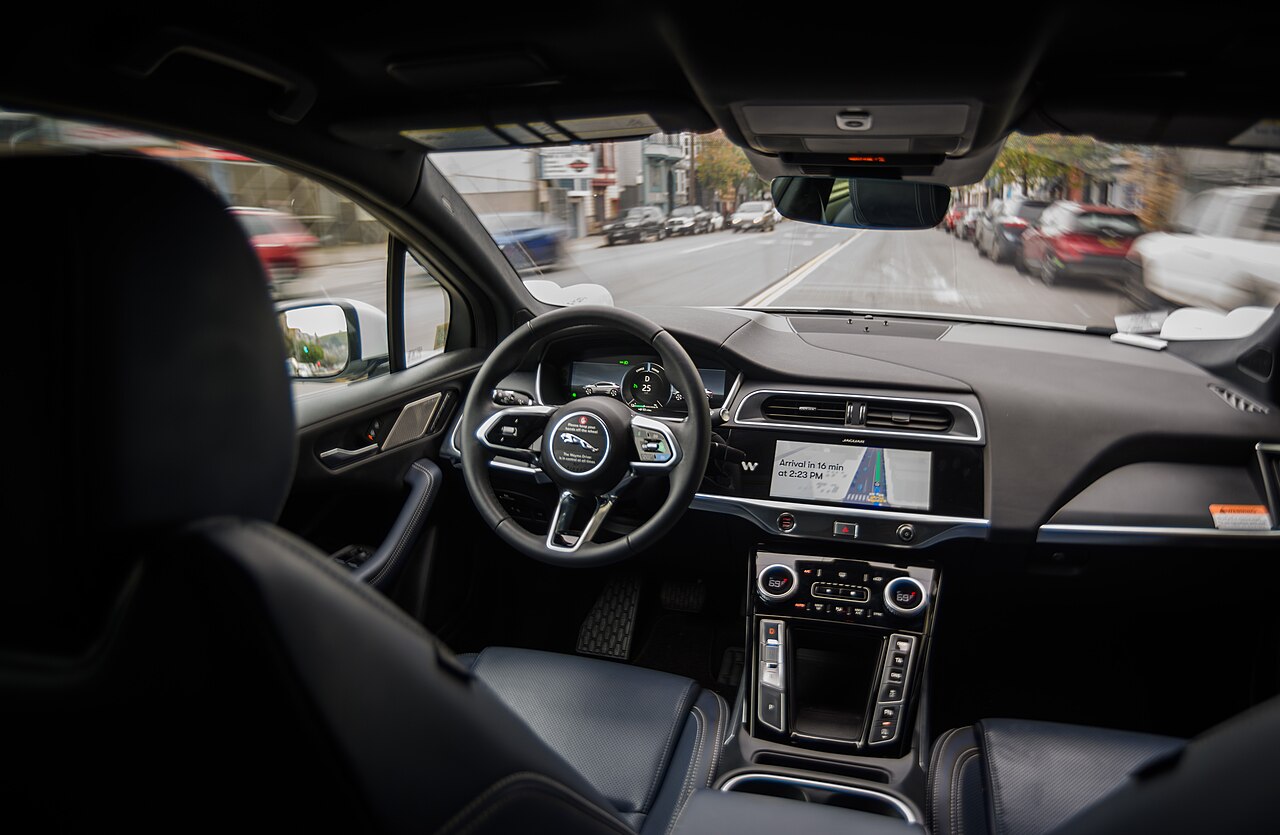
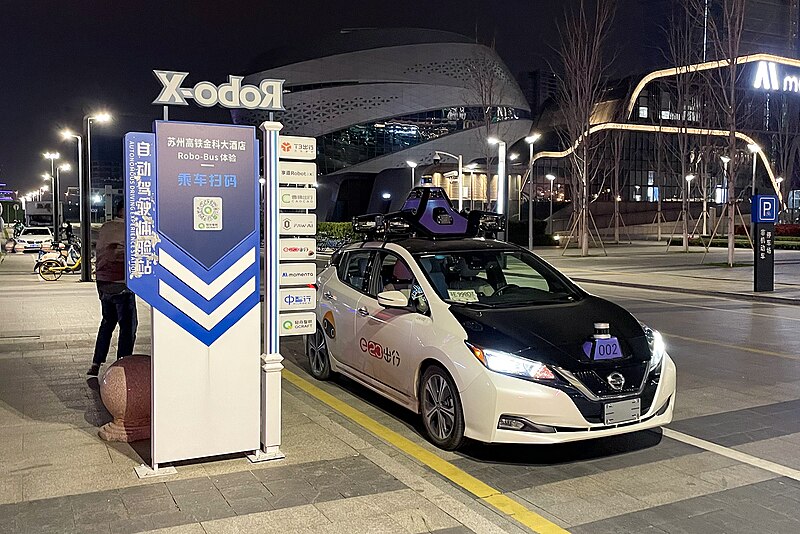
In the meantime, developers are concentrating on Level 4 technology. The areas in which the cars are limited or "geofenced". This means that unknown hazards—which are the cause of many safety concerns—are reduced. Waymo (Google's autonomous driving technology company) offers "robotaxi" services in parts of some US cities as fully autonomous vehicles without safety drivers. Baidu has also begun robotaxi services in parts of some Chinese cities.
Consultant: Mike Goldsmith
Classification system for self-driving cars
Level 0 No automation. Driving is carried out entirely by a human.
Level 1 Light automation e.g. cruise control, lane centring.
Level 2 Partial automation. System will take control over steering, braking and acceleration in low-traffic environments. Human attention is required at all times.
Level 3 Conditional automation. AI combines with driver-assistance technology to handle more complex driving conditions e.g. navigating through traffic and change lanes. Humans must be alert and ready to take control of the car during poor driving conditions.
Level 4 High automation. Vehicle drives itself, but only in limited areas (that is, they are "geofenced") and up to fixed speeds. No human intervention required.
Level 5 Full automation. Vehicle drives itself in all conditions and are not bounded by geofences.
pics
Without in any way limiting Q-files Ltd’s exclusive rights under copyright, any use of this publication to “train” generative artificial intelligence (AI) technologies to generate text is expressly prohibited. Q-files Ltd reserves all rights to license use of this work for generative AI training and development of machine learning language models.