
Planets and moons

CITE
We have made every effort to follow citation style rules, but there may be some minor differences. If in doubt, please refer to the appropriate citation style manual.
The story of Mars. (2026). In Q-files Encyclopedia, Space, Planets and moons. Retrieved from
https://www.q-files.com/space/planets-and-moons/the-story-of-mars
"The story of Mars." Space, Planets and moons, Q-files Encyclopedia, 25 Mar. 2026.
https://www.q-files.com/space/planets-and-moons/the-story-of-mars.
Accessed 21 Sep. 2026.
The story of Mars 2026. Space, Planets and moons. Retrieved 21 September 2026, from
https://www.q-files.com/space/planets-and-moons/the-story-of-mars
Space, Planets and moons, s.v. "The story of Mars," accessed September 21, 2026.
https://www.q-files.com/space/planets-and-moons/the-story-of-mars


The story of Mars
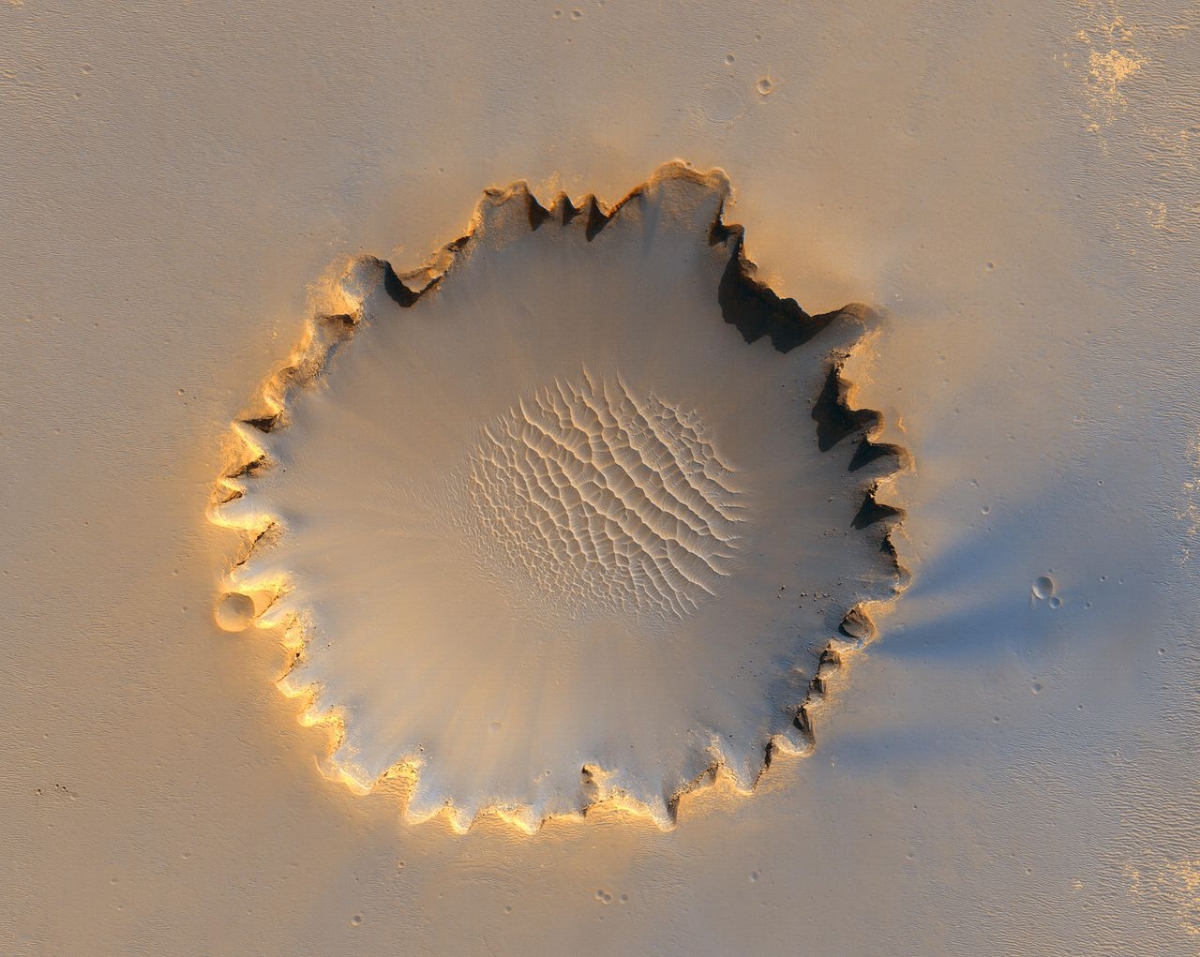
Mars, along with the other terrestrial planets, began to form 4.6–4.5 billion years ago. For millions of years afterwards, Mars was pelted with comets, asteroids and meteorites. Evidence of these impacts remains to this day as thousands of craters scattered across the Martian surface. Volcanic eruptions occurred in many regions of Mars. Vast quantities of gases were released from beneath Mars's crust, altering its atmosphere. This was much denser than it is today, making the climate warm enough to allow rain to fall. Large lakes and rivers formed in Mars's southern hemisphere, and an ocean may have covered the low-lying northern plains.

A watery world
The oldest terrain on Mars is found in what is called the Noachis Terra (the "Land of Noah") region of the planet's southern highlands. The region has given its name to the Noachian Period, a span of time lasting 4.3 to 3.5 billion years ago, when Mars was, at least for some stretches of time, a warm and wet world. (The atmosphere was probably not thick enough to allow a stable climate to last billions of years). What is certain is that, during the "wet phases" of the Noachian Period, rivers flowed and water filled the craters and lowland basins of Mars, forming lakes and seas.
Volcanoes and floods
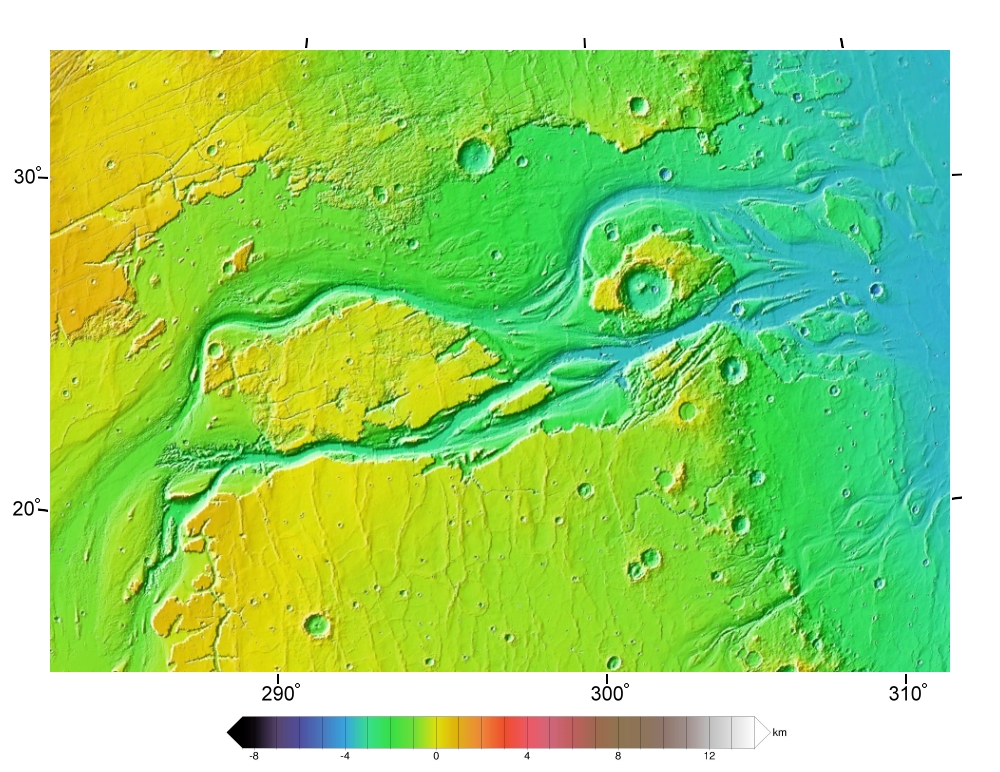
Around 3.5 billion years ago, the Noachian gave way to the Hesperian Period. The water that once flowed freely on Mars now became locked away in vast ice sheets. The Hesperian was also a time of increased volcanic activity. The red-hot lava that erupted from the Martian volcanoes occasionally melted the ice, causing catastrophic floods.
In one event, some scientists think, torrents of water were funnelled along a narrow canyon called the Echus Chasma. From here, the water cascaded over a cliff 4 kilometres (2.5 miles) high, possibly the highest and most spectacular waterfall the Solar System has ever seen.


Frozen desert
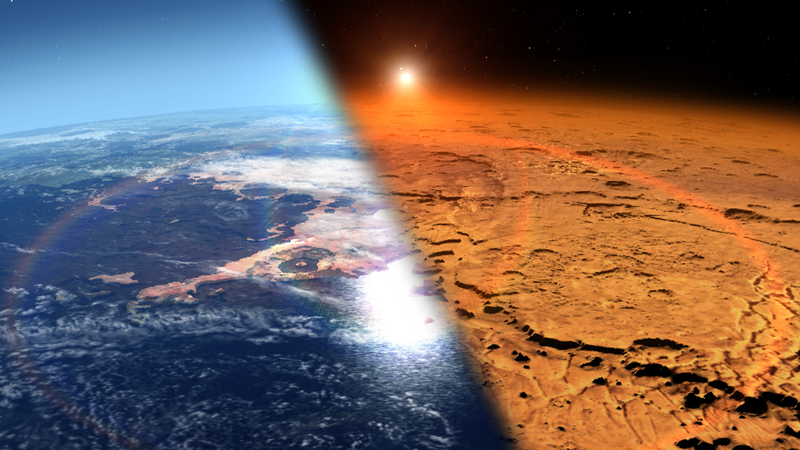
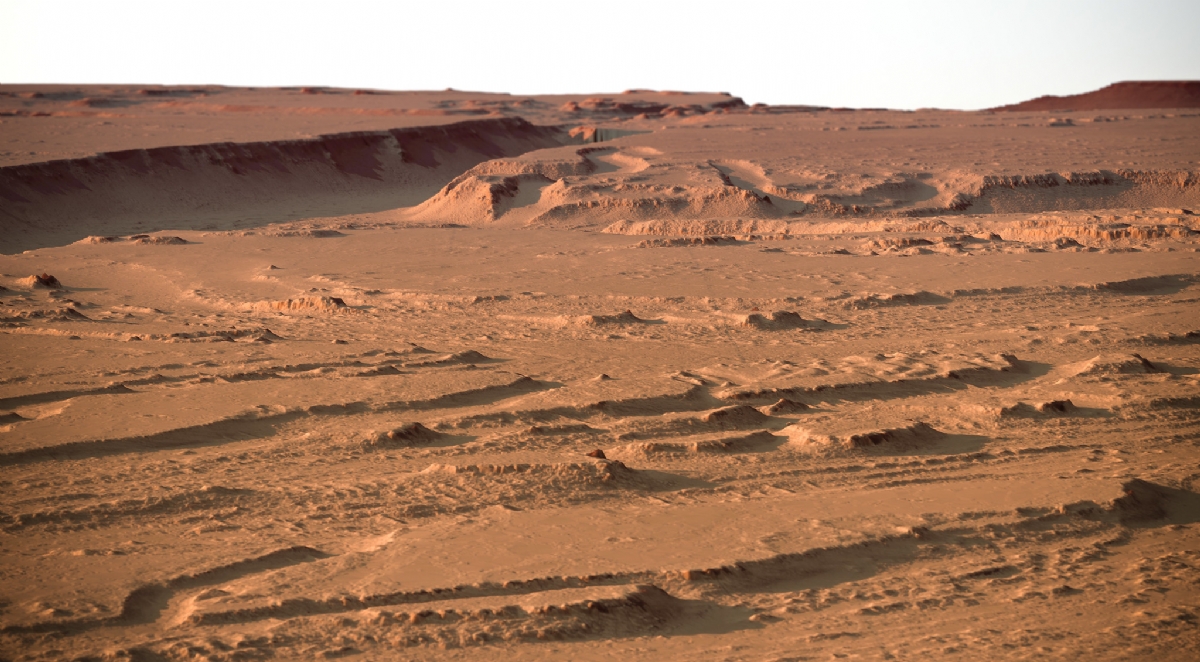
At some point between 3 and 2 billion years ago, the third and last of the great Martian eras began: the Amazonian Period. By this time, Mars had become an arid, frozen planet with the thinnest of atmospheres. What had happened? And why had Earth—where life was beginning to take hold—not suffered the same fate?
During its early years, the Noachian Period, Mars had, like Earth does today, a magnetic field. (Scientists know this because Martian rocks formed 4 billion years ago, or even earlier, show signs of being magnetized.) At some point during the Noachian, this magnetic field faded away. No one knows why. It is possible it may have been related to the constant battering of the planet by asteroids during what astronomers call the Late Heavy Bombardment (4.1 to 3.8 billion years ago), but it is unclear how this caused Mars's magnetic field to fail.

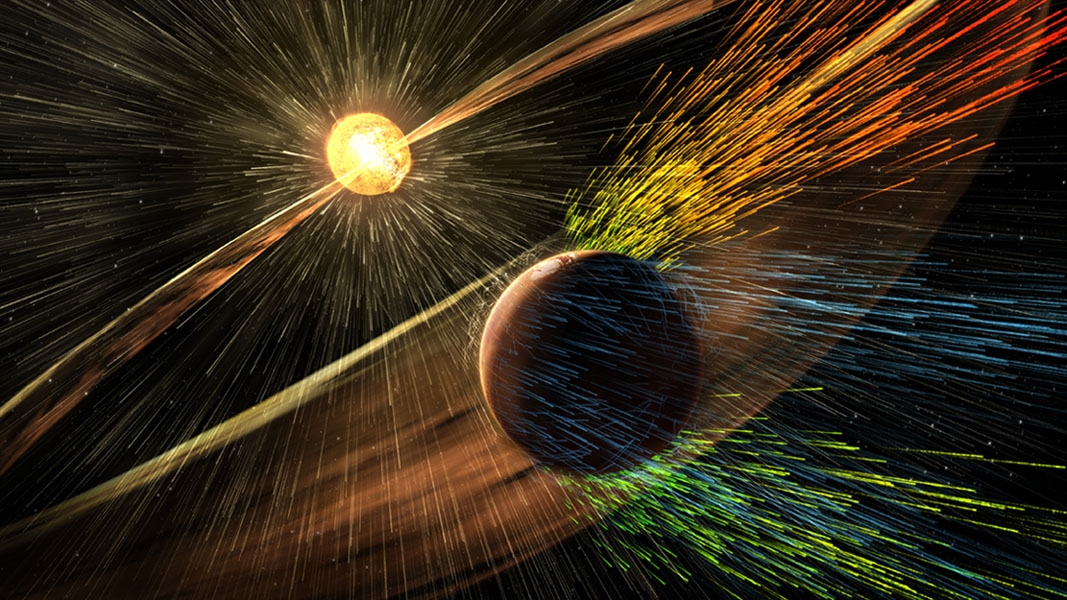
The consequences were severe. Without a magnetic field, Mars became exposed to the full force of the solar wind, the constant barrage of high-energy particles streaming out from the Sun. The Martian atmosphere was almost completely stripped away. Lacking the envelope of carbon dioxide that kept in the Sun's warmth, Mars also lost its lakes and oceans—some of it to the solar wind, some of it absorbed into the rocks. The Red Planet became a freezing, desert world.
Did life evolve on Mars?
The presence of liquid water is essential for life to exist. Did life ever arise during the Noachian Period on Mars—then a warm and wet world—at the same time as it did on Earth? If Mars's sedimentary rocks—those formed from sediments laid down by rivers and lakes—were found to have a similar chemical composition as those on Earth, that would suggest it was possible. Discovering evidence on Mars of the same seafloor volcanic activity that many scientists believe was how life on Earth got started would reinforce the possibility.
To search for such evidence, a number of space probes, including both landers and orbiters, are being sent to Mars. They include the Perseverance rover, which landed successfully in February 2021.

Exploring the Gale Crater
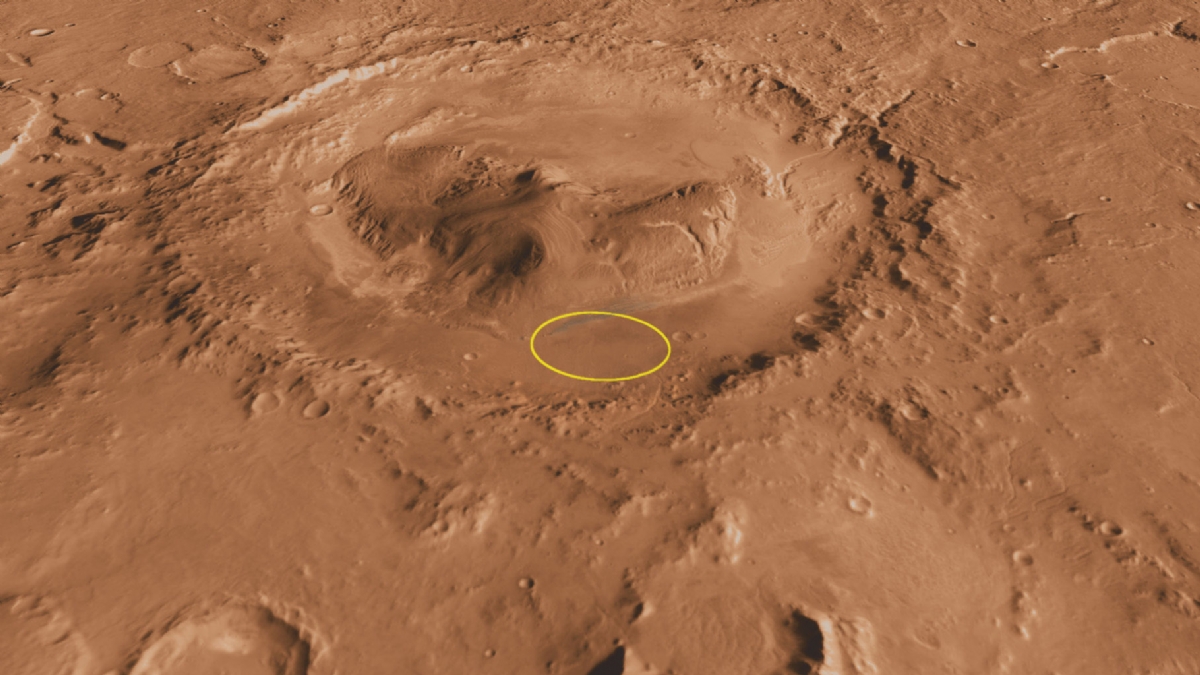
The Mars Science Laboratory, named Curiosity, launched on 26th November 2011 and touched down on the Martian surface on 6th August 2012. Its purpose was to explore Gale, an impact crater, 154 kilometres (96 miles) wide, formed during late Noachian/early Hesperian about 3.6 billion years ago, when liquid water was still present on the surface of Mars. Gale Crater then contained a circular lake.

Gale gradually filled in with sediments, mud and silt carried in the water and deposited on the lake bed. Wind erosion then scoured out the sediments before they turned to rock, leaving behind an isolated 5.5-kilometre-high (3.4 miles) mountain, Aeolis Mons (Mount Sharp), rising at the centre of the crater.
Just as the various rock strata on the walls of the Grand Canyon reveal the geological history of Earth over millions of years, scientists hope that investigation of the exposed rock strata on the slopes of Aeolis Mons will do the same for Mars.

Curiosity's discoveries
Curiosity is a mobile geological laboratory, capable of analysing rocks of the Martian surface. Fixed to the end of its robotic arm is a drill and CHIMRA, a scoop and sample processing system. Since its landing, the rover has travelled across the flat plains of the Gale Crater to the slopes of Aeolis Mons, analysing rock samples at various locations on the way.
Curiosity discovered small droplets of salty liquid water contained within the rock samples it collected. This forms around 3% of their volume. Besides water, it also found the elements sulphur, nitrogen, hydrogen, oxygen, phosphorus and carbon—all the necessary building blocks of life.
In June 2018, Curiosity made two further discoveries to support the idea that Mars once hosted living things (and maybe still does). Firstly, it detected complex organic molecules, including benzene, propane and butane, in layers of mudstone a few centimetres below the ground.
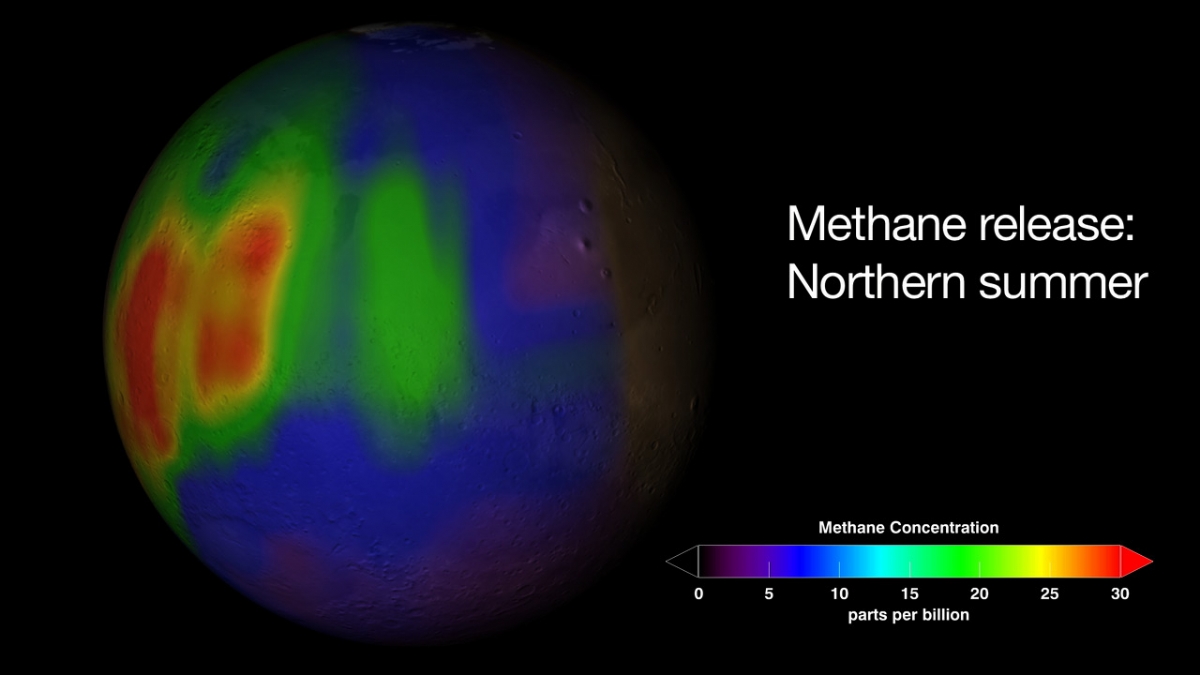
Secondly, sampling the Martian atmosphere, Curiosity found that levels of the gas methane peaked in the warmer summer months, before falling back in winter. This is exactly what would be expected if the methane had a biological origin. It is clearly not impossible, therefore, that micro-organisms may still exist on Mars, inside the rocks deep below the surface.

In 2025 it was reported that Curiosity had discovered the largest organic compounds yet found. Long-chain alkanes—organic molecules thought to be remnants of fatty acids—were detected in a 3.7 billion-year-old rock sample of mudstone. The compounds can be made by abiotic (non-biological) chemical reactions, but they are vital constituents of cell membranes in all living organisms on Earth. As such, they could have come from cells of living things alive during Mars' warm and wet Noachian Period.


Eridania Basin
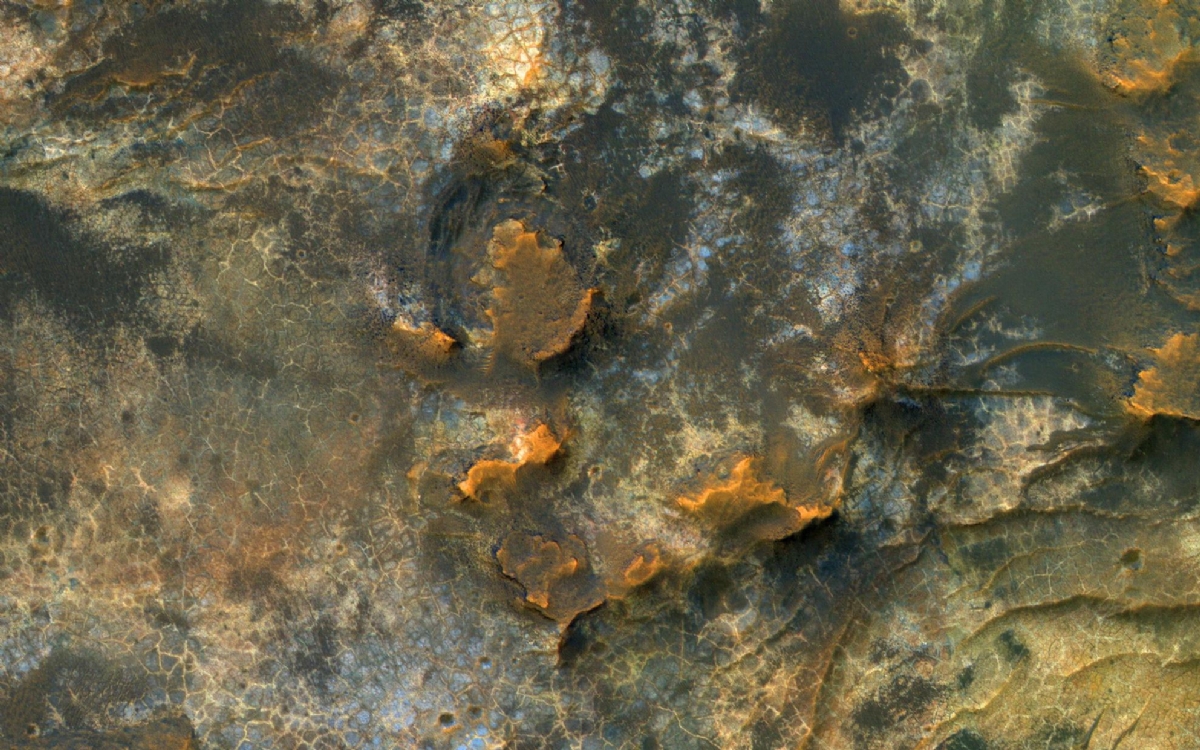
About 3.7 billion years ago, during the Late Noachian Period, the Eridania Basin was once a giant lake, 1.5 kilometres (nearly a mile) deep in places. Instruments aboard the Mars Reconnaissance Orbiter (MRO) have determined the chemical composition of the rocks that once formed the ancient lake bed. They show that magnesium- and iron-rich clay minerals are common, along with deposits of carbonates and sulphites.
Similar mineral deposits are found on seafloor environments on Earth, especially those close to hydrothermal vents. These are cracks in the sea floor where heated water, rich in chemicals, gushes out through the crust. Vents are commonly found near volcanically active regions. Life very possibly began in similar deep-sea environments on Earth at around the same time. Could this mean that the ancient Eridania Sea might once, billions of years ago, have also been teeming with microbial life?

Consultant: Mike Goldsmith
pics


Without in any way limiting Q-files Ltd’s exclusive rights under copyright, any use of this publication to “train” generative artificial intelligence (AI) technologies to generate text is expressly prohibited. Q-files Ltd reserves all rights to license use of this work for generative AI training and development of machine learning language models.