
Planets and moons

CITE
We have made every effort to follow citation style rules, but there may be some minor differences. If in doubt, please refer to the appropriate citation style manual.
The Moon. (2026). In Q-files Encyclopedia, Space, Planets and moons. Retrieved from
https://www.q-files.com/space/planets-and-moons/the-moon
"The Moon." Space, Planets and moons, Q-files Encyclopedia, 17 Apr. 2026.
https://www.q-files.com/space/planets-and-moons/the-moon.
Accessed 6 Aug. 2026.
The Moon 2026. Space, Planets and moons. Retrieved 6 August 2026, from
https://www.q-files.com/space/planets-and-moons/the-moon
Space, Planets and moons, s.v. "The Moon," accessed August 6, 2026.
https://www.q-files.com/space/planets-and-moons/the-moon


The Moon
The Moon, our nearest neighbour in space, is neither a star nor a planet. It is a ball of rock that travels around Earth, taking about 27 days to complete the circle. The same side of the Moon always faces Earth, because the Moon is "tidally locked" to Earth—Earth's gravitational pull holds it in place. This means that the Moon takes the same time to spin on its own axis as it does to orbit Earth. In turn, its own gravitational pull, along with that of the Sun, causes tides on Earth. The Moon is the brightest object in the night sky as seen from Earth, although the light it “shines” is actually reflected from the Sun. The Moon is the only other world in the Solar System that human beings have set foot on.
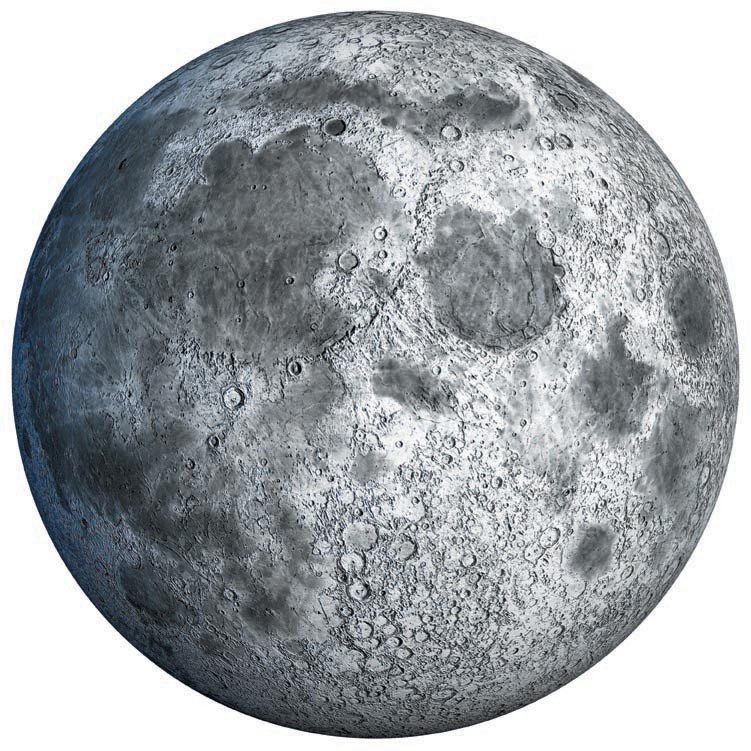
Lunar landscape
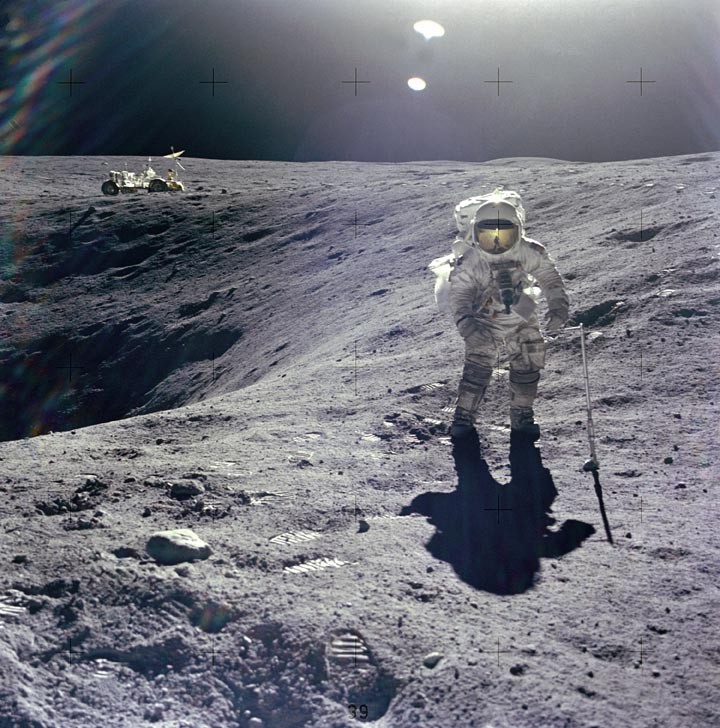
With neither air nor liquid water, it is impossible for any living thing to exist on the Moon. The landscape is consists entirely of barren rock.
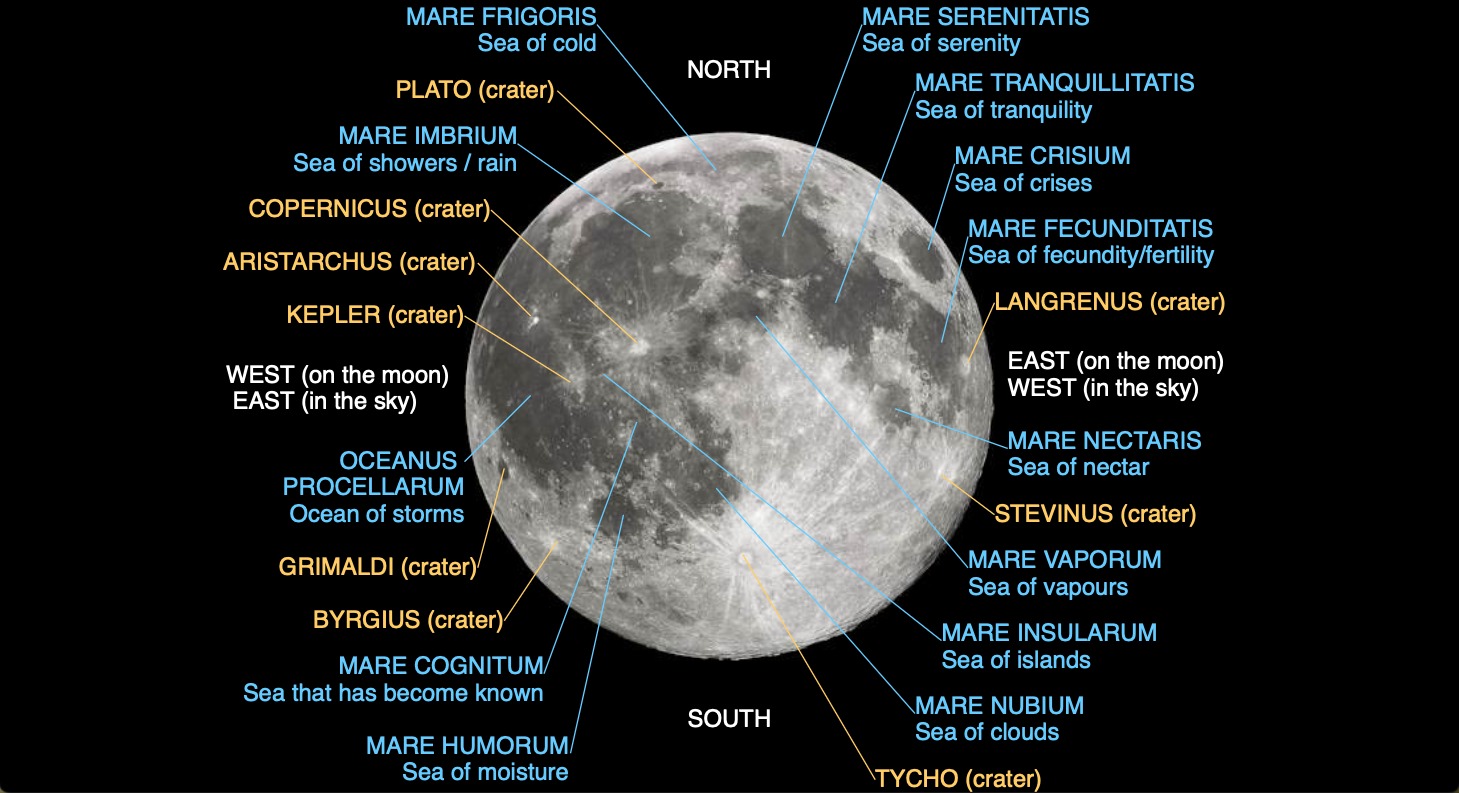
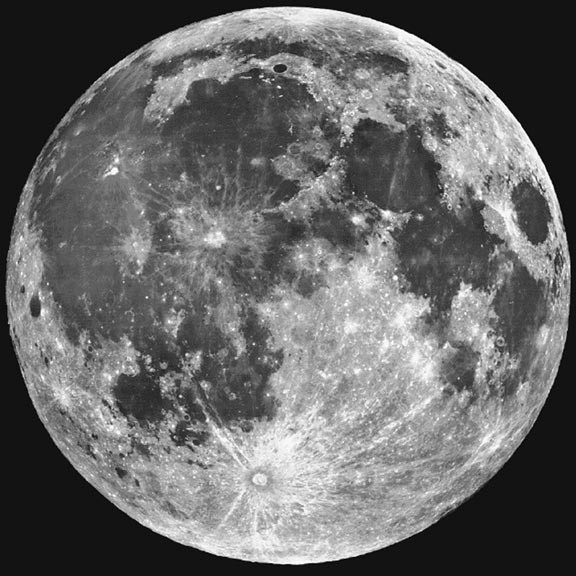
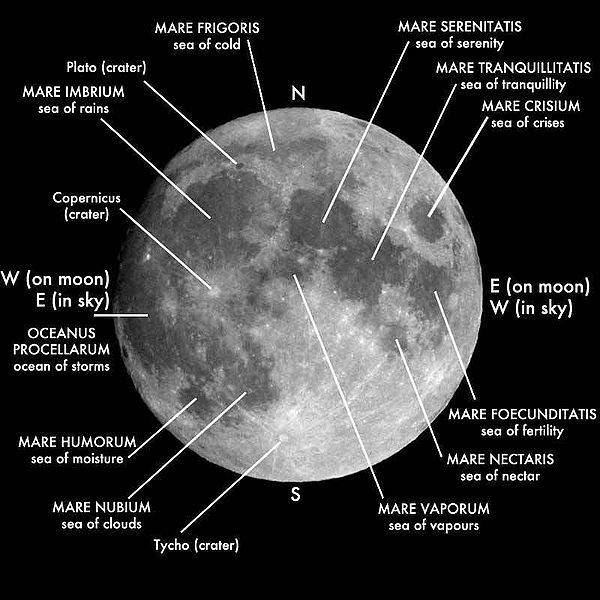
Viewing the Moon from Earth, it is easy to spot the bright and dark zones on its surface. The lighter areas are the highlands, called terrae (the plural of terra, the Latin word for earth or land), while the darker plains are called maria (the plural of mare, the Latin word for sea). The maria are so called because early astronomers, without being able to study them through telescopes, mistook them for seas. They are, in fact, smooth plains formed by the flow of lava from ancient volcanoes. The rocks are mostly basalt, an extrusive igneous rock (lava that cools rapidly at the surface).

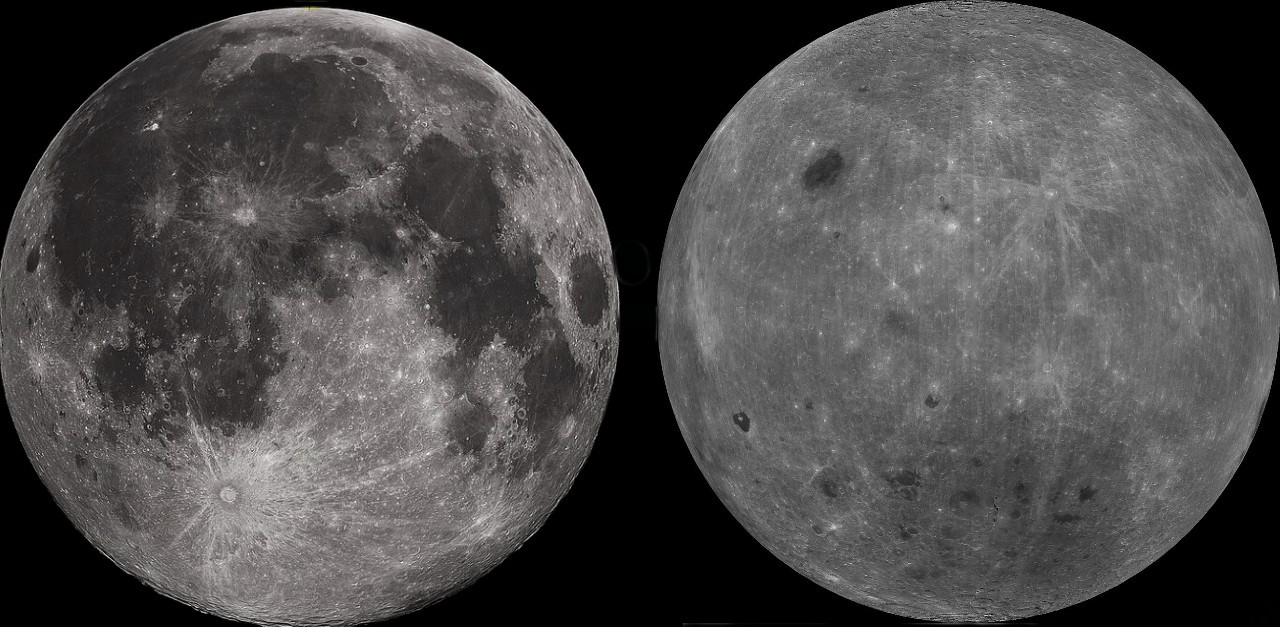
Nearly all maria are found on the near side of the Moon, with only a few scattered patches on the far side. This may be because, long ago, many more volcanoes erupted on the near side (where the crust is thinner) than on the far side.
From the lack of craters found in the maria, astronomers can tell that they are younger than the surrounding highlands, which are more heavily cratered. Rocks in highland areas are mainly anorthosite, an intrusive igneous rock (formed from molten rock that cools underground).

Impact craters
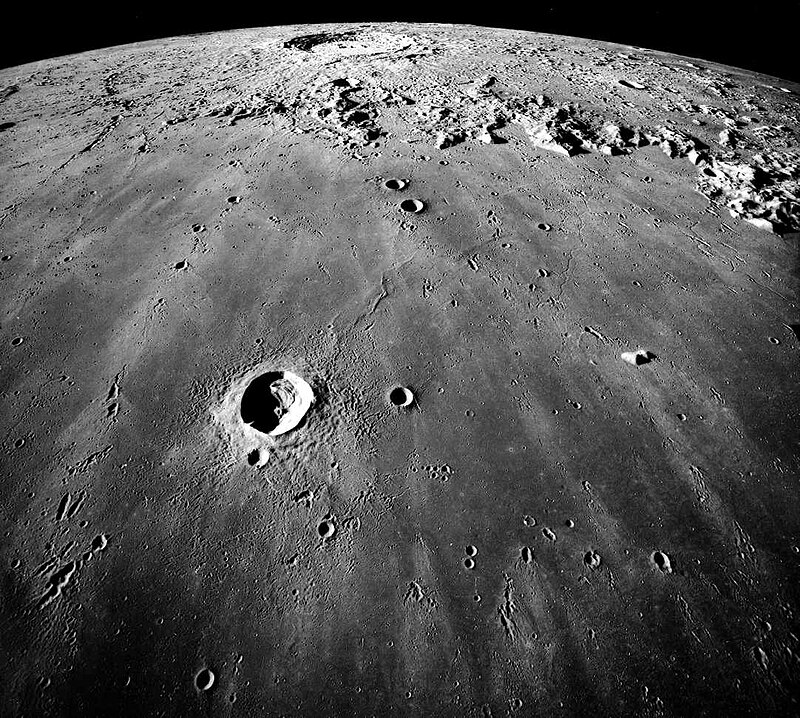
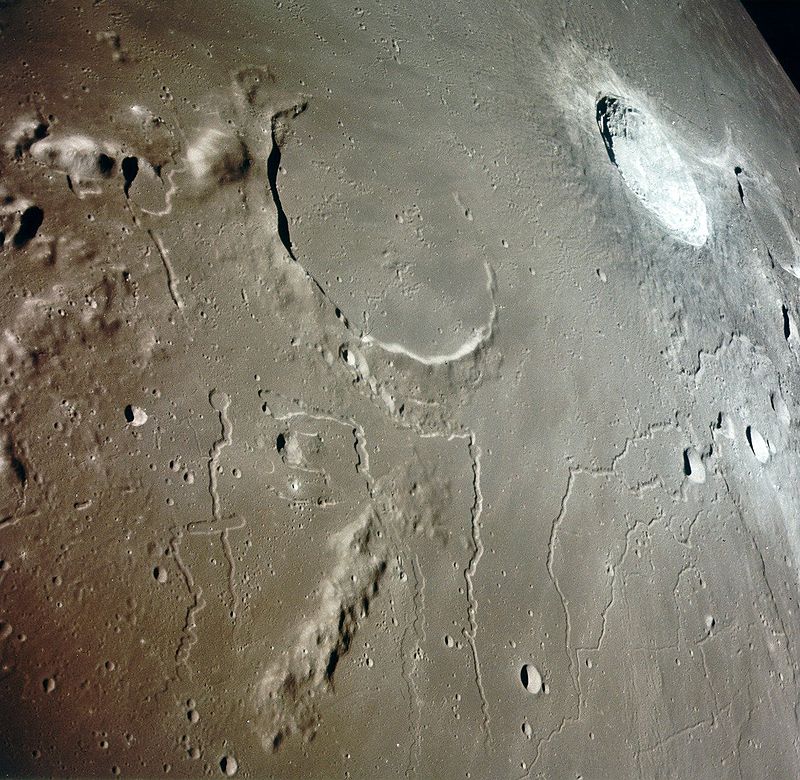
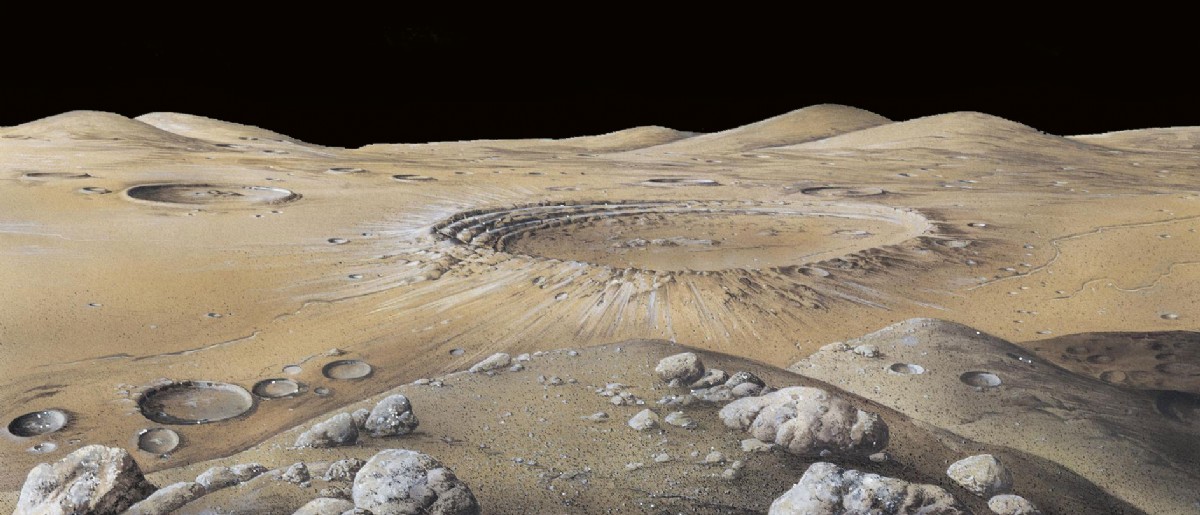
The Moon's surface is pitted with craters. They were blasted out by asteroids and comets crashing to the lunar surface billions of years ago. Scattered debris has left streaks radiating from many of them. Because there are no winds on the Moon, these streaks have remained ever since.
There are roughly 300,000 craters wider than 1 kilometre (0.6 mile) on the Moon's near side. The vast South Pole-Aitken basin, which measures nearly 2500 kilometres (about 1500 miles) across and is 13 kilometres (8 miles) deep, was formed during the early period of what is known as the Late Heavy Bombardment. It has since been peppered with many smaller craters.
Regolith
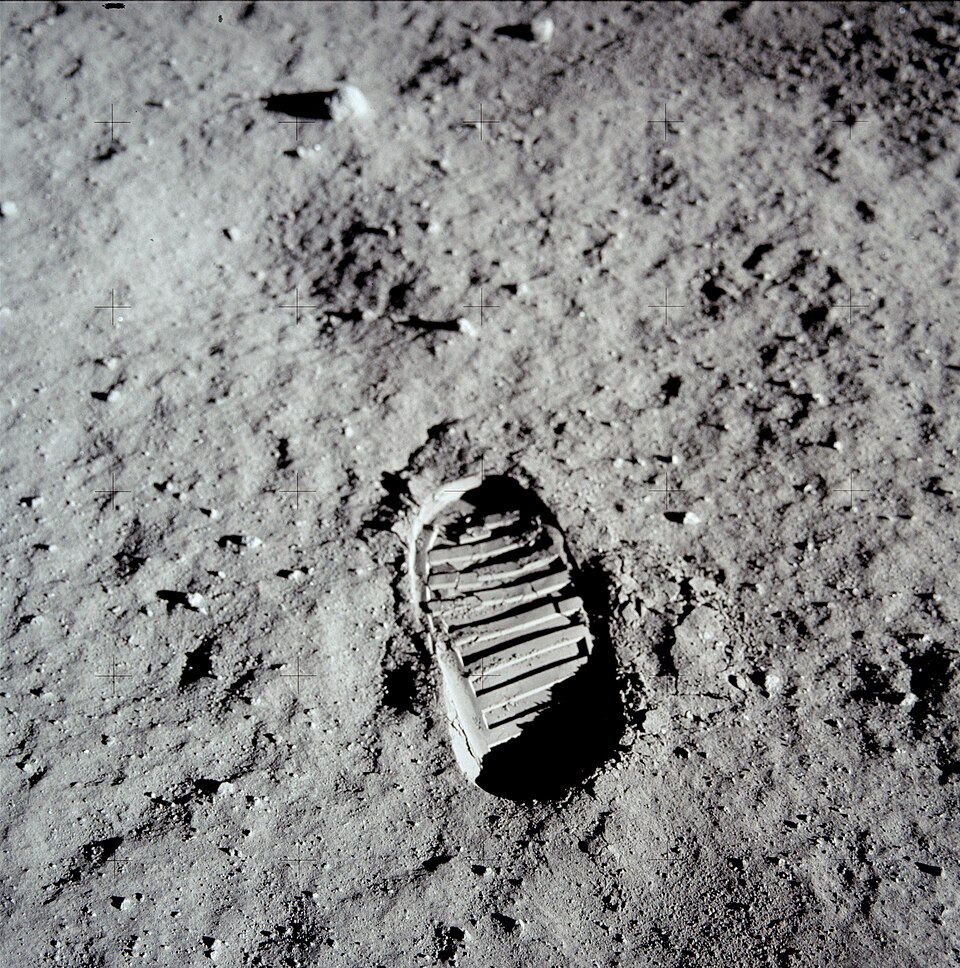
The lunar surface is covered by lunar soil, also called regolith. This is a blanket of fine rock particles, varying between three and 20 metres (10–65 feet) deep. It was created partly by the constant heating and cooling of surface rocks, causing them to break up, and partly by meteorites, most of them tiny (less than a gram), pulverizing the surface over millions of years. The regolith is made up of a mixture of fragments of minerals from the original bedrock and glassy particles formed during the impacts.

Water
With no atmosphere to protect it from the Sun’s rays, water in its liquid form cannot exist on the Moon’s surface. Water does, however, exist as solid ice in cold, permanently shadowed craters known as "cold traps" near the lunar poles. Water has now also been discovered in flat, sunlit regions near the Moon's south pole by scientists using an infrared telescope. Tiny amounts of water also exist inside the glass particles formed by meteorite collisions with the regolith.
Formation of the Moon
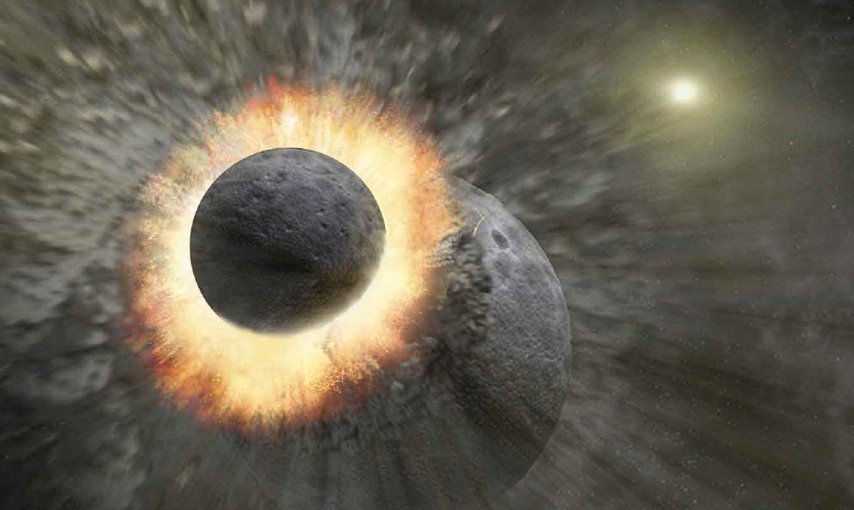
The diagram below shows the sequence of events in the formation of the Moon. Soon after Earth had formed, 4.6 billion years ago, a planet (1) the size of Mars, named Theia, collided with it and exploded (2). The impact splashed vast amounts of debris into space. Some of the fragments collected in orbit round Earth, the surface of which was molten due to other, smaller impacts (3). Earth later cooled (4) and the orbiting fragments compacted together to form the Moon (5, 6).
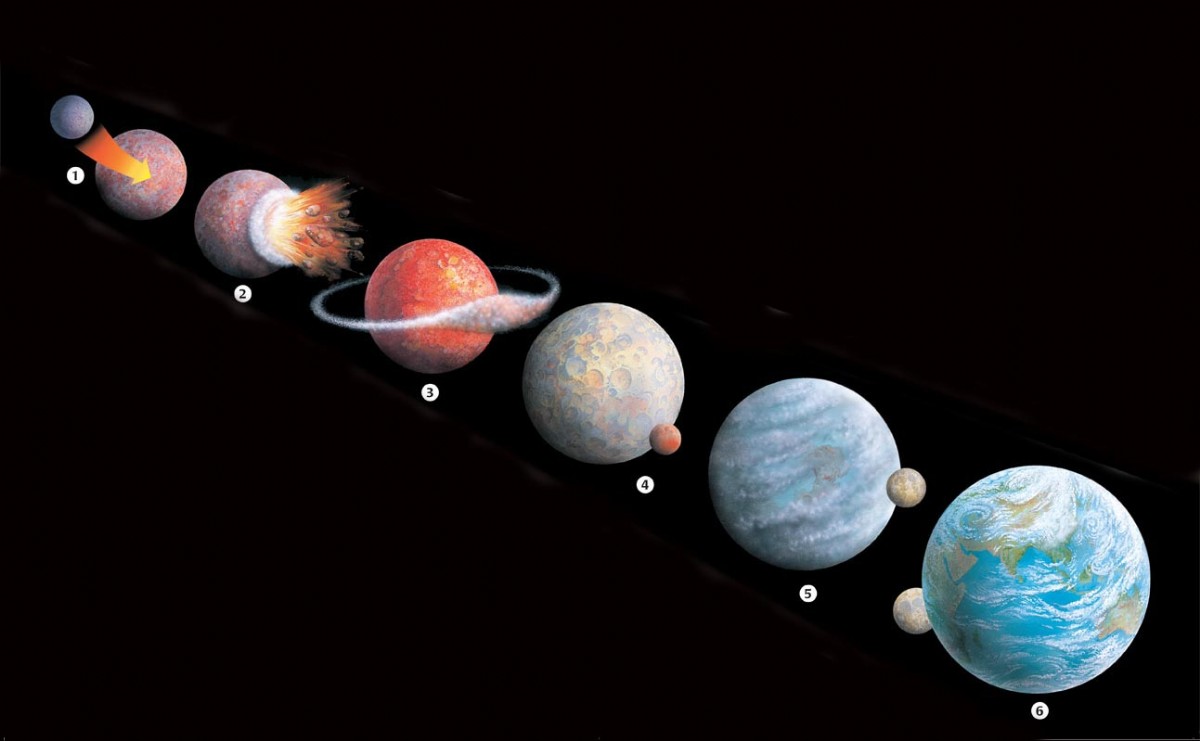
The newly formed Moon circled Earth in much closer orbit than it does today. Since then, the Moon's orbit around Earth has grown significantly larger. It continues to drift away from Earth at a rate of 4 centimetres (1.6 inches) a year.
Following formation, the Moon cooled. Nearly all of its atmosphere disappeared. The lunar surface has since been bombarded by asteroids, comets and meteorites of different sizes, forming the highly cratered landscape we see today. The Moon was volcanically active until around 1.2 billion years ago. During that time, lava flowed out across the landscape, flooding many of the craters and so creating the smooth plains known today as maria.
Phases of the Moon
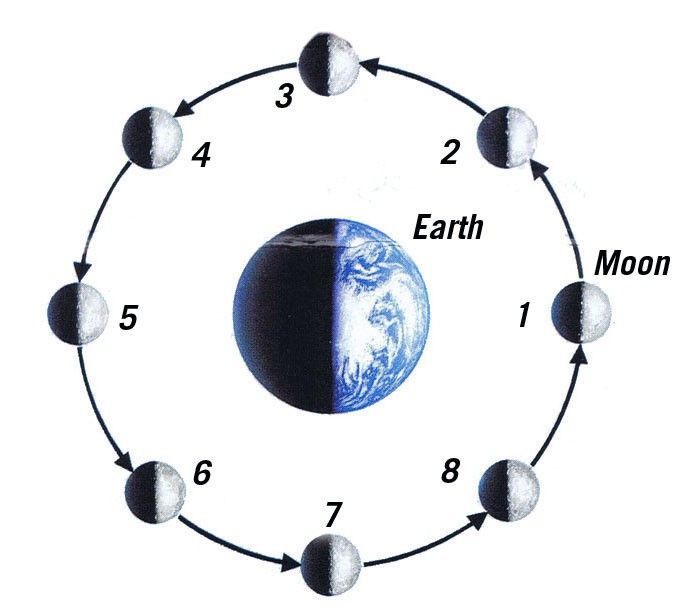
The shape of the Moon appears to change from one night to the next. This happens because our view of the sunlit part changes as the Moon orbits the Earth. When it lies roughly between the Sun and the Earth, the face pointed towards us is turned away from the Sun so we cannot see the Moon at all: this is called a New Moon (1). When the Moon lies on the far side of the Sun from us, the whole of the face we see is lit by the Sun: a Full Moon (5). In between, the Moon passes through crescent (2), quarter (3) and gibbous (4) phases, and back again (6–8).


Lunar eclipse
Sometimes, the Moon lies in exactly the same direction as the Sun, and so blots out our view of the Sun completely. This event is called a total solar eclipse. On other occasions, when Earth lies directly between the Sun and the Moon, Earth casts its shadow on the Moon. This is called a lunar eclipse. The Moon turns a rosy colour, giving it the nickname: blood moon. Unlike a solar eclipse, which can only be viewed from a small area, a lunar eclipse may be viewed from anywhere on Earth at night. A solar eclipse lasts for only a few minutes, while a lunar eclipse lasts for a few hours.

Composition
The Moon's internal structure is similar to Earth's, although its crust is thicker and not divided into tectonic plates. The Moon's crust is on average about 50 kilometres (30 miles) thick, with that of the far side thicker than the near side by about 15 kilometres (9 miles). Crustal rocks are mostly composed of the elements oxygen and silicon. The crust also contains the metals magnesium, iron, calcium, titanium and aluminium—of interest to nations involved in future lunar exploration.
Beneath the Moon's crust there is a rocky mantle. At its centre is an iron-rich core, liquid on the outside, solid on the inside. The core is only about 20% the size of the Moon, compared to about 50% in the case of Earth's core.

Factfile
Average diameter: 3476 km (2159 miles)
Average distance from Earth: 384,600 km (239,000 miles)
Day: 29.5 days
Surface temperature: -155 to +105°C (-247 to 220°F)
Atmosphere: none

Consultant: Mike Goldsmith
pics


Without in any way limiting Q-files Ltd’s exclusive rights under copyright, any use of this publication to “train” generative artificial intelligence (AI) technologies to generate text is expressly prohibited. Q-files Ltd reserves all rights to license use of this work for generative AI training and development of machine learning language models.