
Planets and moons

CITE
We have made every effort to follow citation style rules, but there may be some minor differences. If in doubt, please refer to the appropriate citation style manual.
Saturn. (2026). In Q-files Encyclopedia, Space, Planets and moons. Retrieved from
https://www.q-files.com/space/planets-and-moons/saturn
"Saturn." Space, Planets and moons, Q-files Encyclopedia, 17 Aug. 2026.
https://www.q-files.com/space/planets-and-moons/saturn.
Accessed 8 Nov. 2026.
Saturn 2026. Space, Planets and moons. Retrieved 8 November 2026, from
https://www.q-files.com/space/planets-and-moons/saturn
Space, Planets and moons, s.v. "Saturn," accessed November 8, 2026.
https://www.q-files.com/space/planets-and-moons/saturn


Saturn
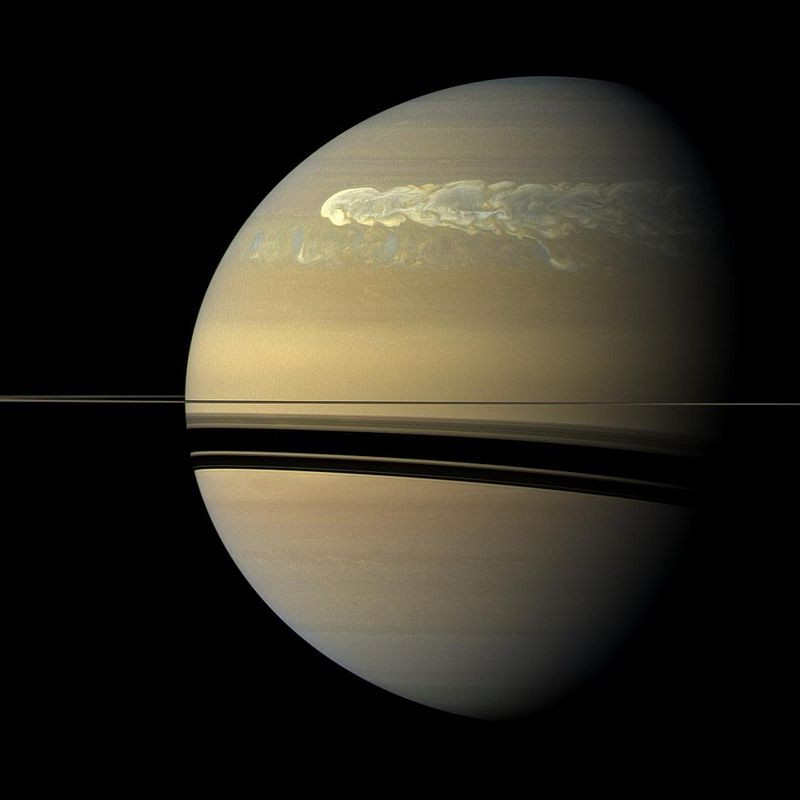
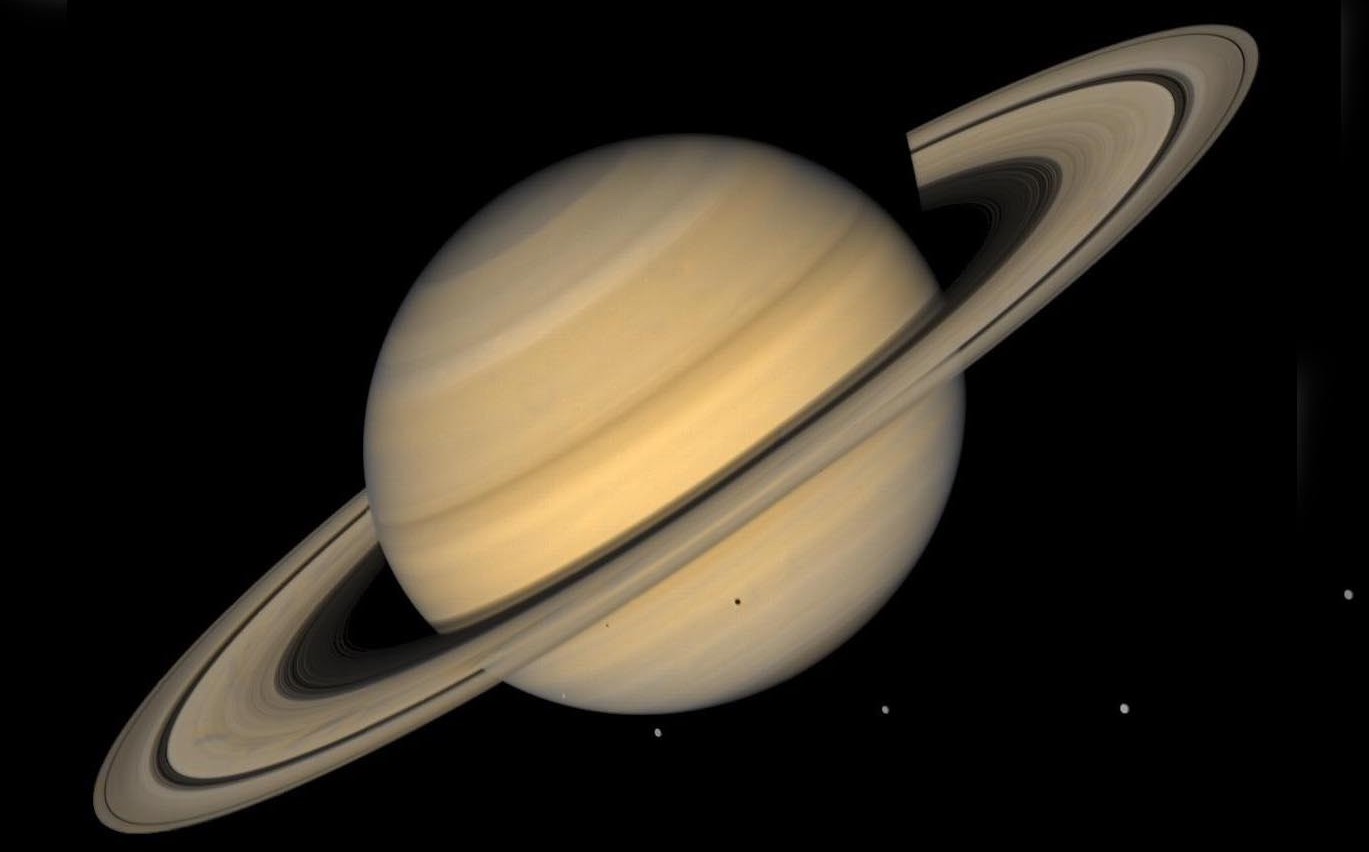
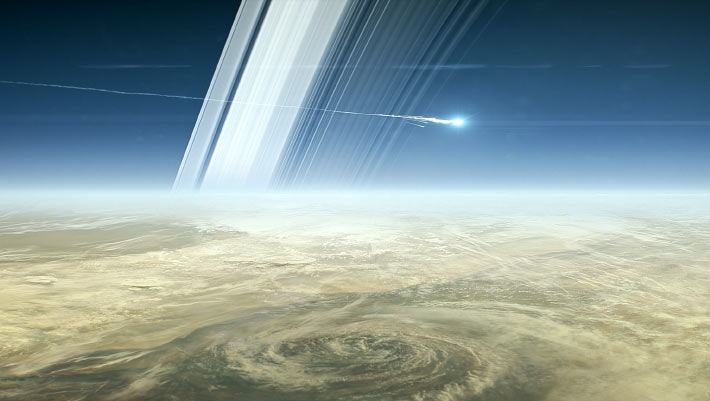
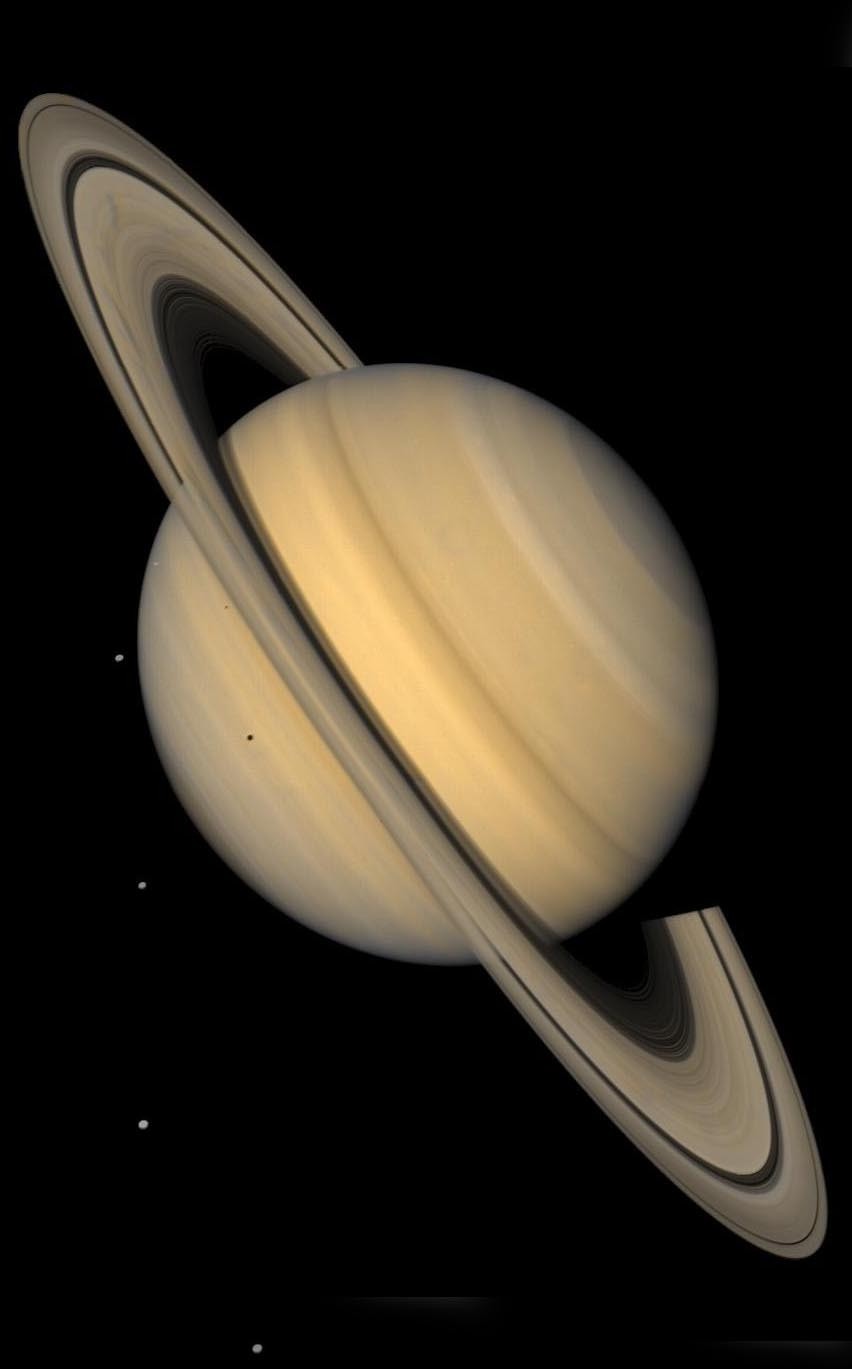
Saturn is the sixth planet from the Sun, and the second largest planet in the Solar System. All four gas giants have ring systems, but Saturn’s, visible through even a small telescope from Earth, are broad, bright and magnificent. On the globe of Saturn itself, swirling clouds and storms can sometimes be seen as ripples on its surface, but these are rarer and less dramatic than on Jupiter. Winds can reach 1800 km/h (1100 mph). Saturn rotates very quickly, producing a distinct bulge at its equator. Saturn was later visited by the Cassini space probe, which gathered detailed images and information about the planet and some of its moons between 2004 and 2017.
The rings
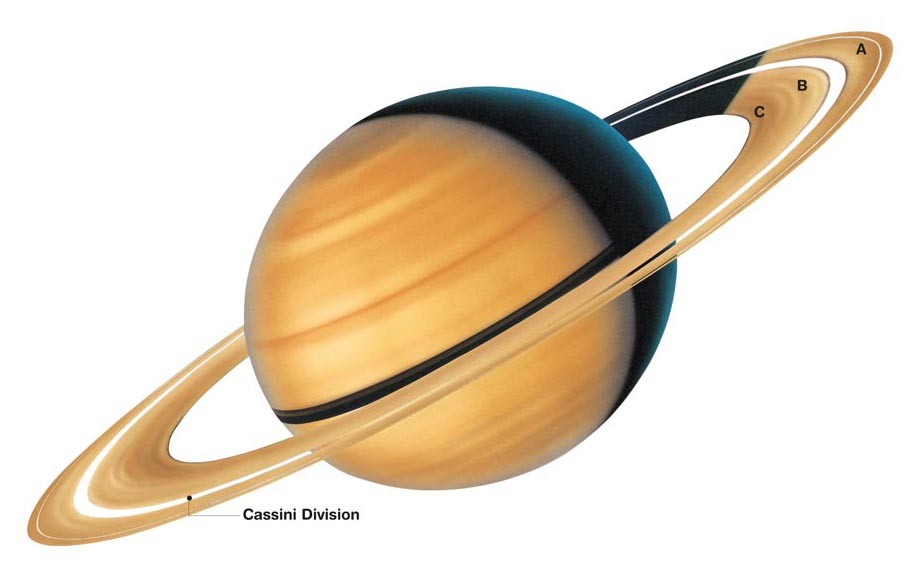
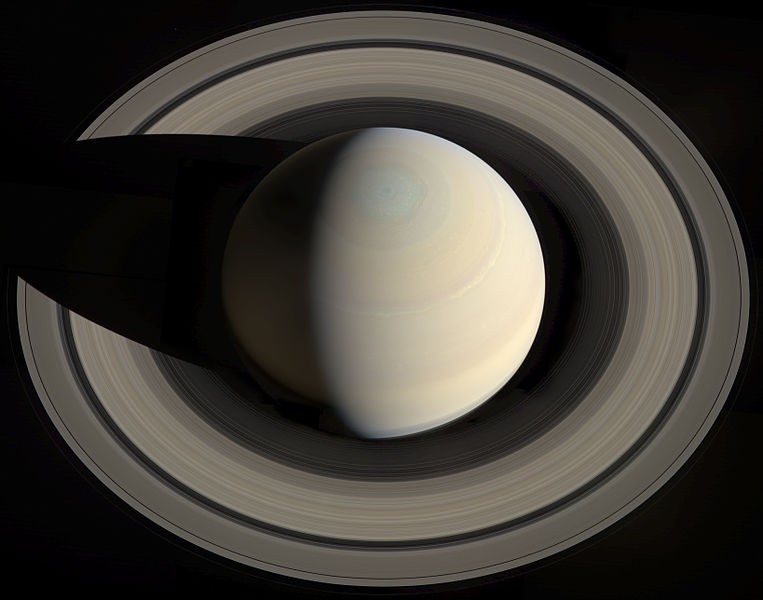
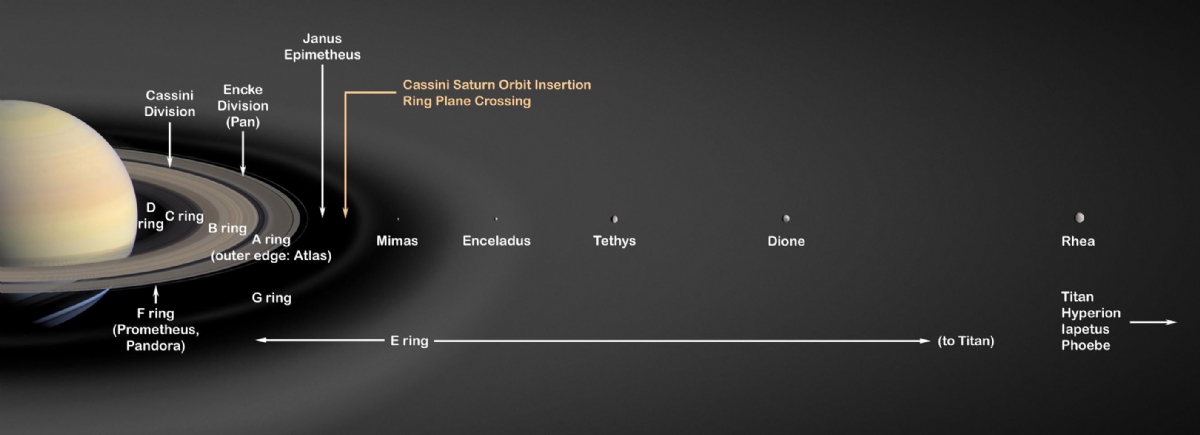
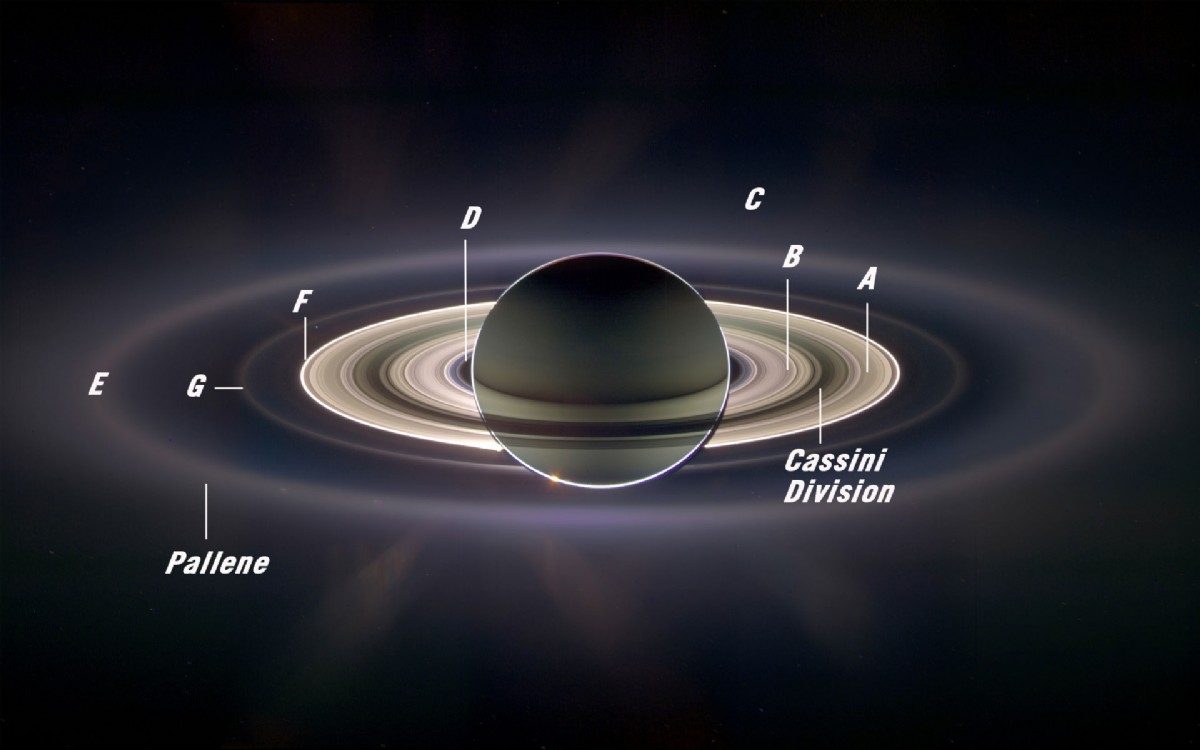
Three rings can be seen from Earth: the A ring, separated from the other two—the B ring, the broadest and brightest, and the C ring, a fainter band lying inside it—by a gap called the Cassini Division. A faint ring, D, lies inside C, close to Saturn's globe. The narrow, braided F ring lies just outside A. There is another misty band (G) and a broad, extremely faint ring (E) extending some 300,000 kilometres—five times Saturn's radius—from inner to outer edge.
Close-up view
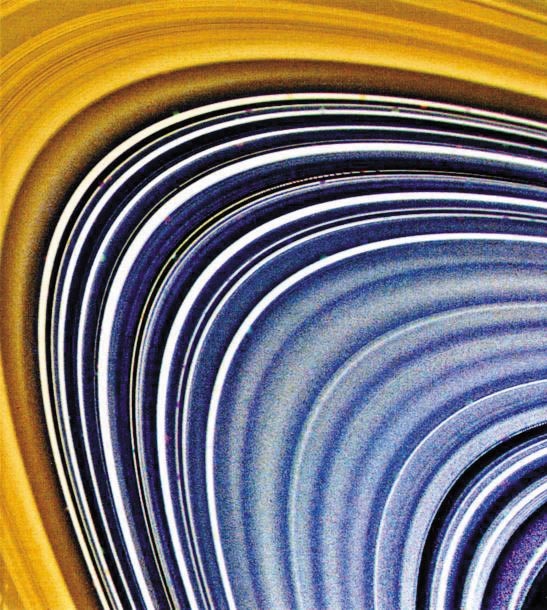
The space probe Voyager 2 took detailed photos of Saturn’s rings. These revealed that each ring was actually made up of thousands of fine ringlets. Parts of one of the outermost rings consist of two ringlets twisted around one another.
It is possible to make out faint, radial “spokes” crossing the broadest, brightest and densest ring, the B ring. These are probably clouds of dust hovering above it, channelled into lines by electric fields.
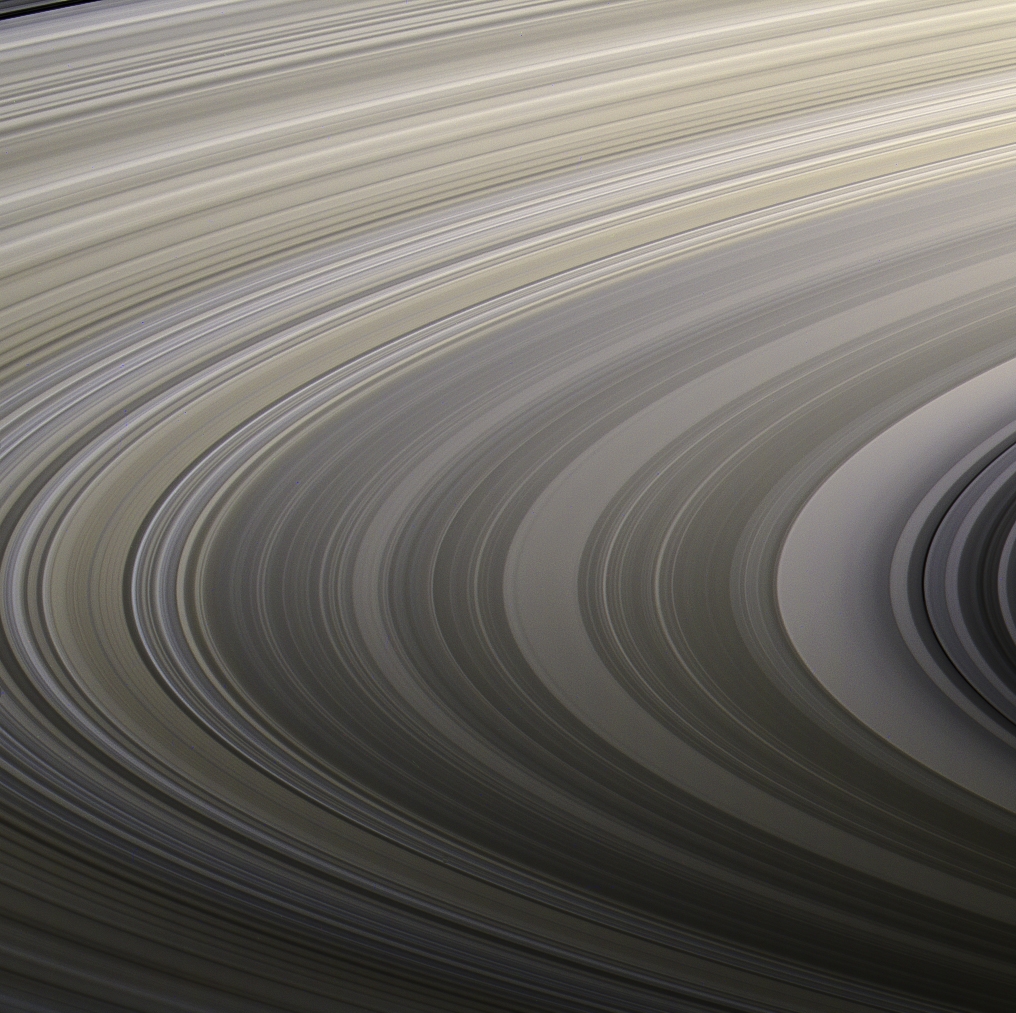
What the rings consist of
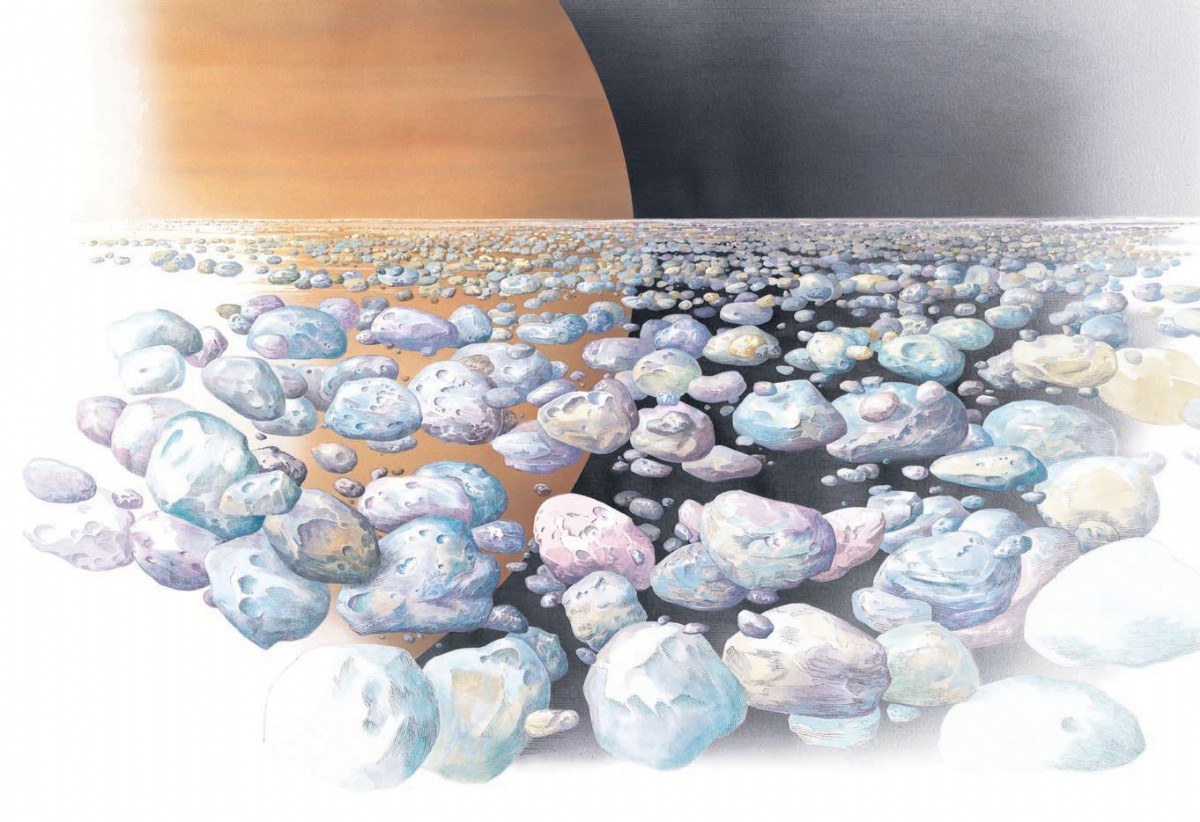
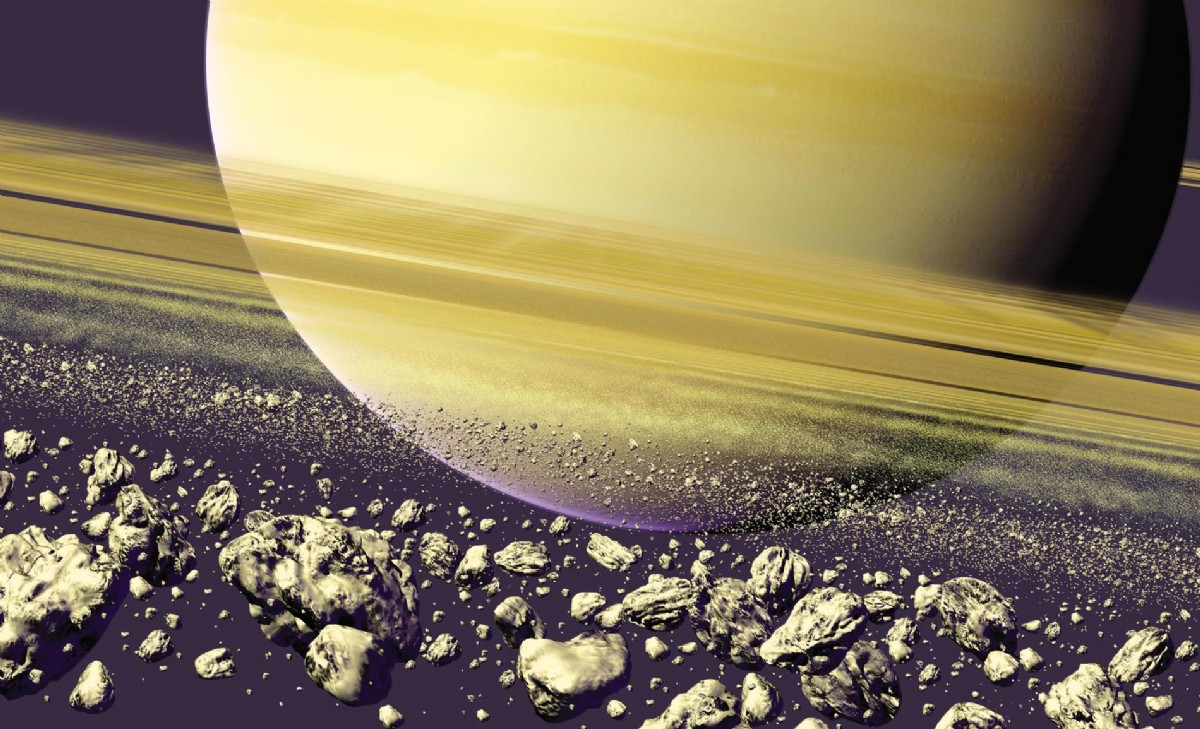
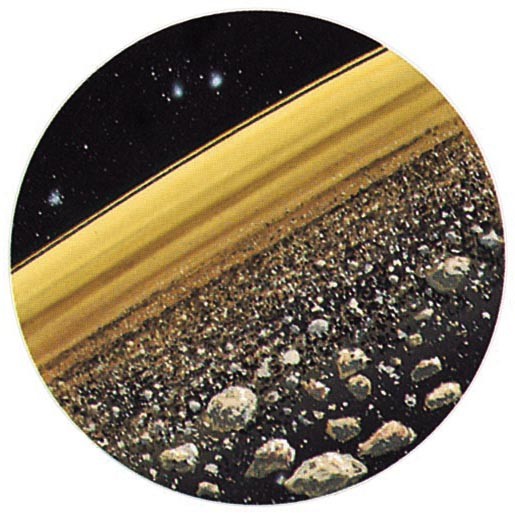
Saturn’s rings consist of billions of pieces of water ice with traces of rock dust, orbiting the planet's equator like a swarm of moonlets. They range in size from tiny fragments smaller than snowflakes to large chunks the size of houses.
The fact that the rings are so bright suggests to some astronomers a relatively recent origin: between 10 and 100 million years. If the rings were created at the time of Saturn's origin, 4.6 billion years ago, they would have been darkened by dust. Others think that the rings are kept bright by the frequent “recycling” of material.
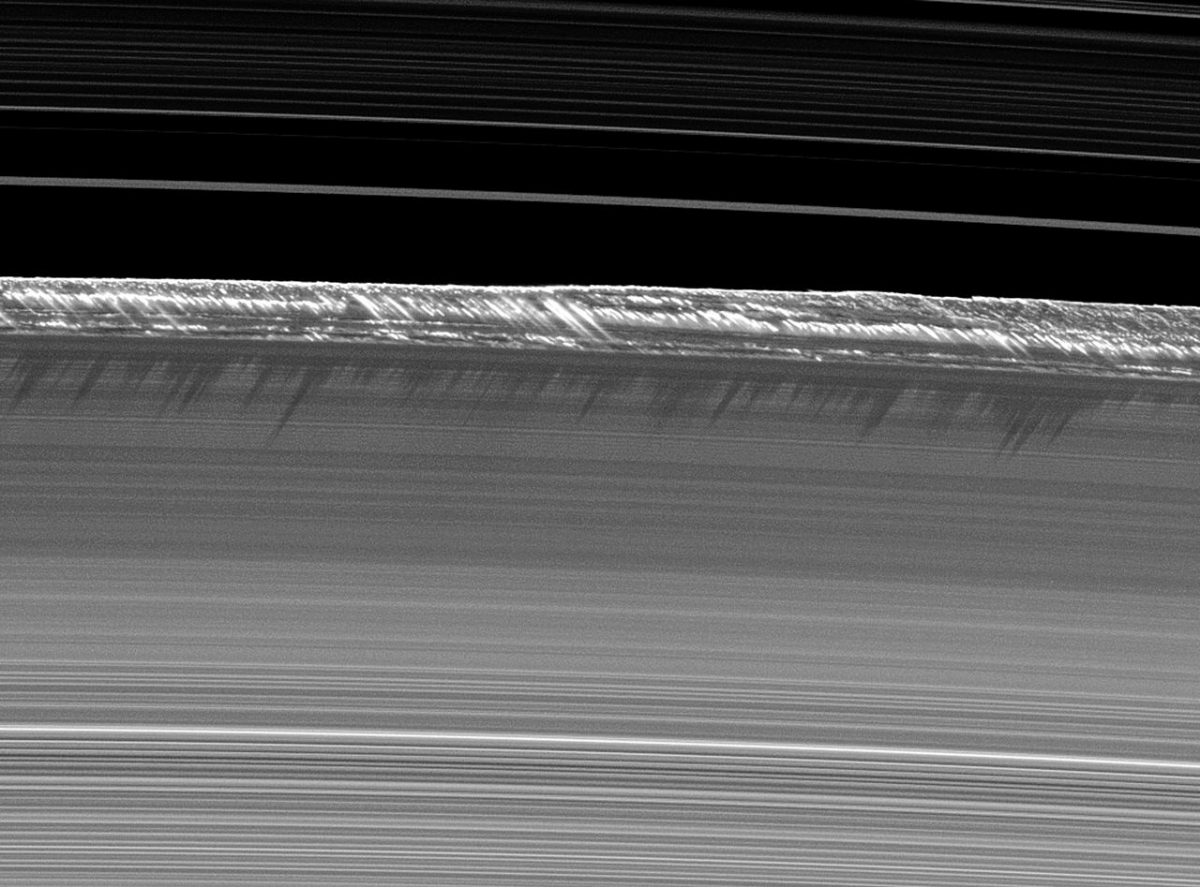
The rings be the remains of an icy moon, about 400 kilometres (250 miles) across, that was ripped apart by Saturn's gravity after its orbit brought it too close to the planet. Some 30 million trillion tonnes of ice was spread into orbit. Countless collisions between the icy blocks since then have caused the rings to spread out. Hundreds of thousands of kilometres wide, the rings average only around 20 metres (65 feet) thick.
Moons
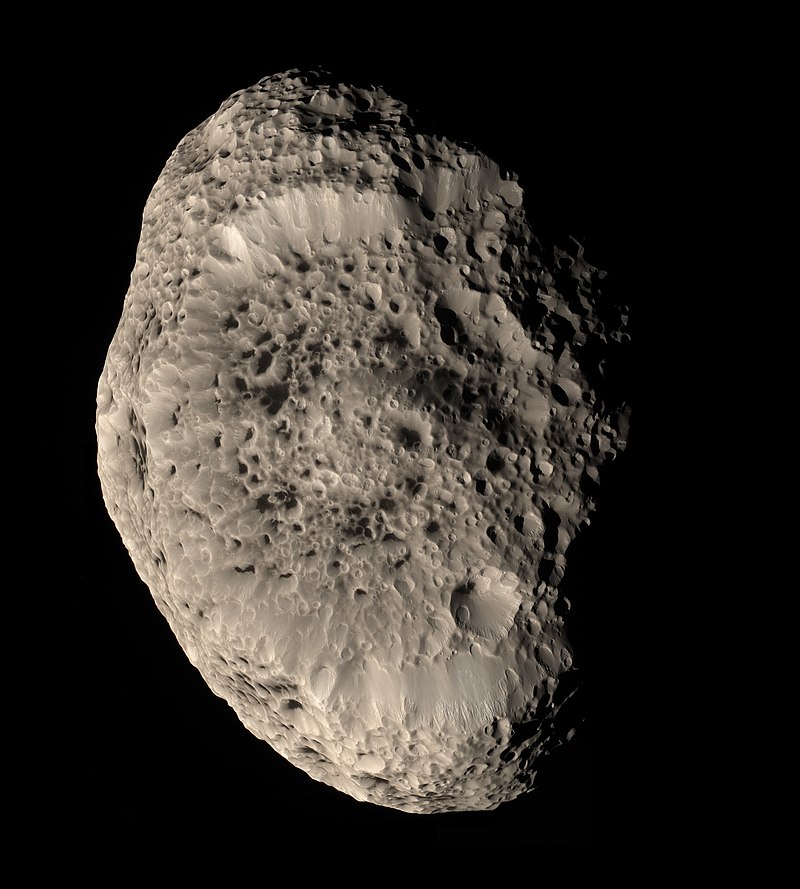
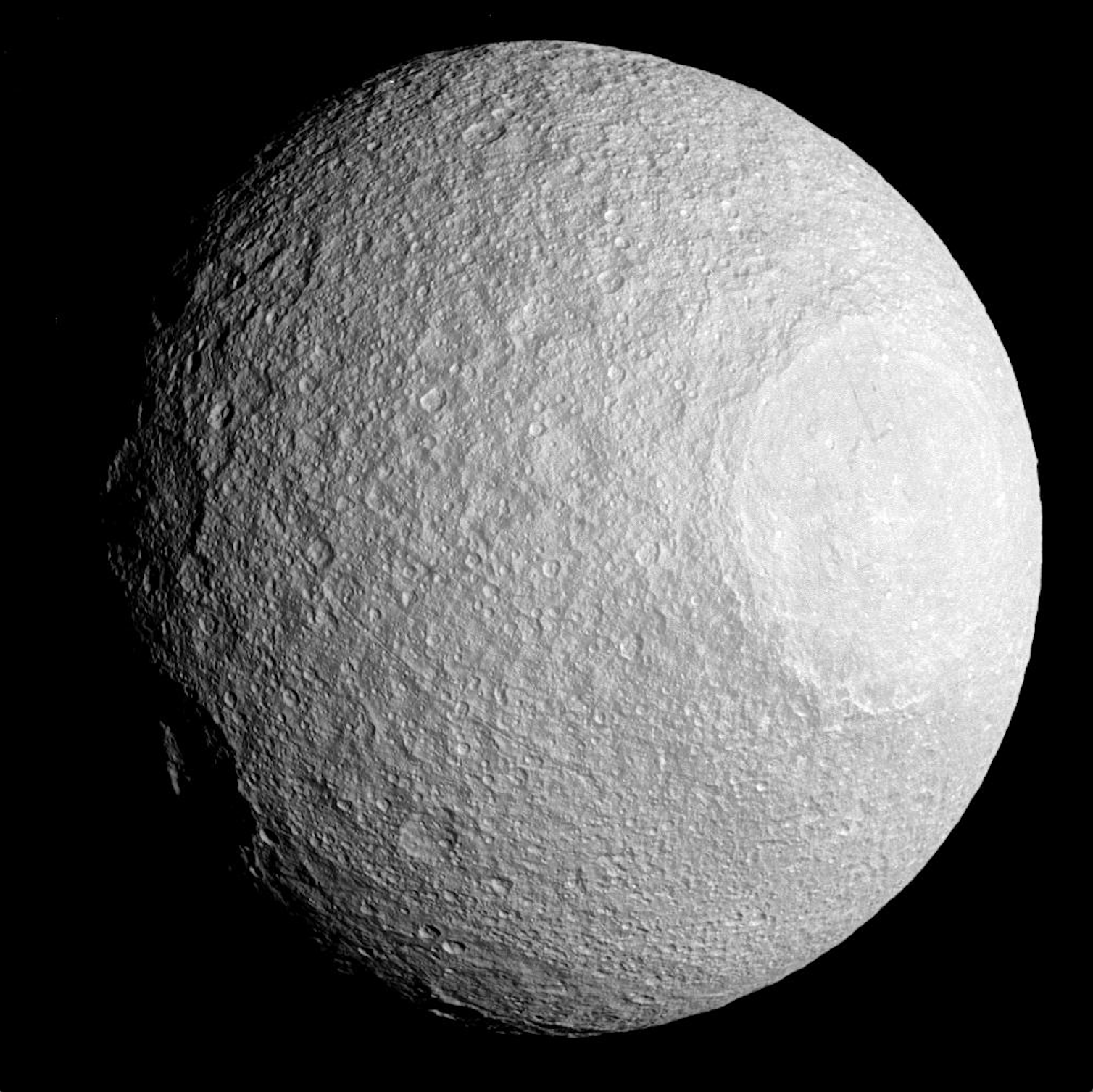
A total of 274 moons have been discovered so far around Saturn (63 were added to the total in 2023, another 128 in 2025). Most are small, irregularly shaped bodies, for example, Hyperion. Some share the same orbits around Saturn. Mimas has a very large crater with a diameter one third that of the moon itself. There may be an ocean of liquid water lying just beneath its crust.
Saturn’s largest moon, Titan, is the only moon in the Solar System to have a thick atmosphere, made up mainly of nitrogen. Some astronomers suggest that Titan may be like a mini-Earth in a state of deep freeze. Titan’s surface has lakes of methane, along with rivers, mountains and dunes.
The surface of Enceladus is relatively smooth. Astronomers think that may have been re-coated by eruptions of water ice bursting through cracks in the moon’s thin crust. The ice particles may contribute to Saturn’s ring system.
Iapetus is the outermost of Saturn's seven large moons (in order of distance from Saturn they are: Mimas, Enceladus, Tethys, Dinoe, Rhea, Titan and Iapetus). Made mostly of ice, Iapetus has some unusual features. There is a marked difference in colour between one hemisphere and the other: one is dark, the other bright. There is also a massive equatorial ridge running three-quarters of the way around the moon.
Shepherd moons
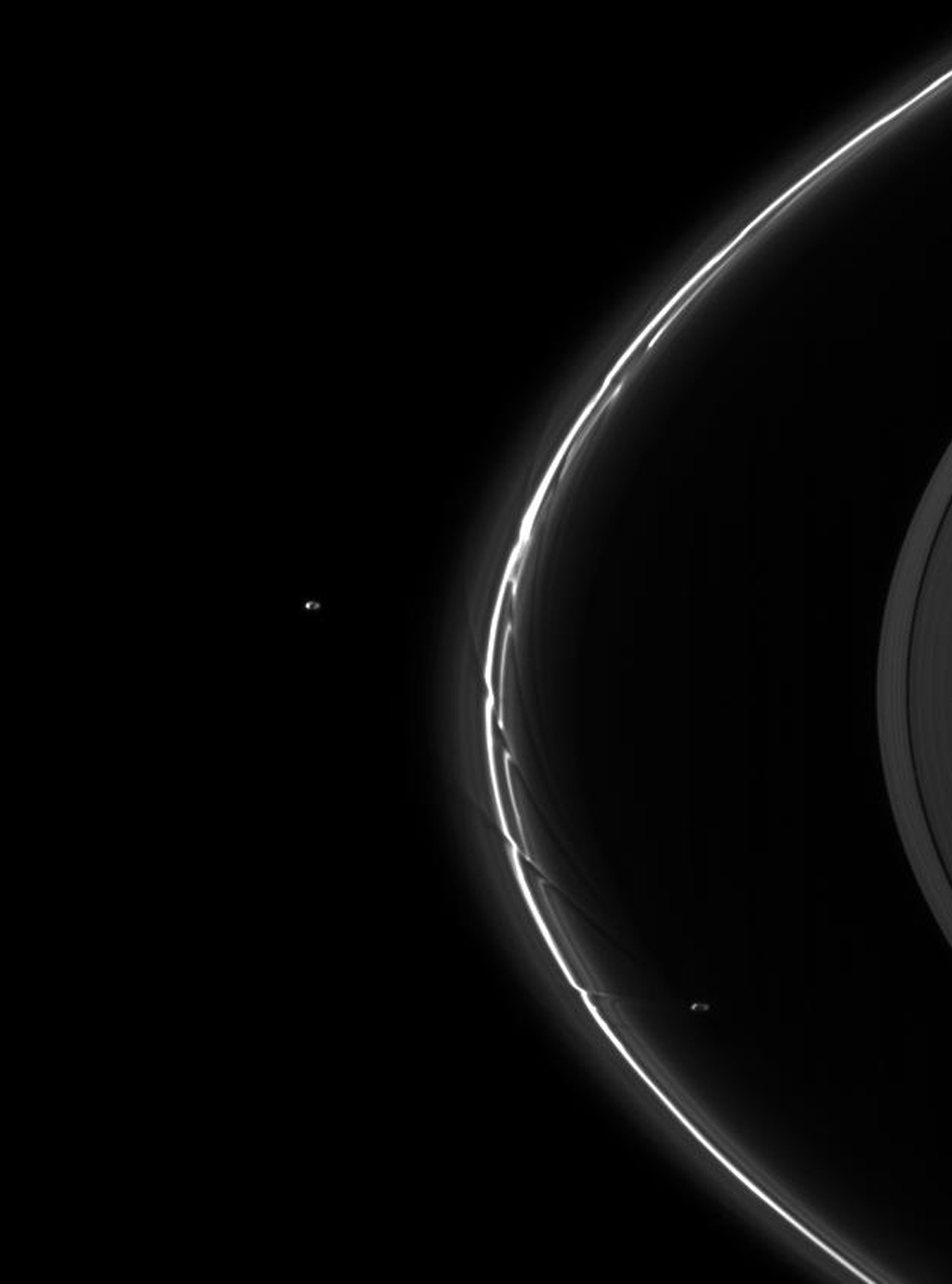
Several moons, including Prometherus, Pandora and Atlas, orbit within Saturn's ring system itself, and are known as "shepherds". This is because their gravitational pull keeps the ice particles contained within some of the rings—in the way shepherds herd their sheep. Atlas is shepherd to the A ring. Prometheus and Pandora orbit inside and outside the thin F ring. The pull of both their gravities brings about constant changes to the ring's shape.
Atmosphere
The upper atmosphere of Saturn contains about 96% hydrogen and 3% helium, with trace amounts of various other gases including ammonia and methane. The temperature of upper levels is about -203°C (-333°F), while at deeper levels it increases to about -130°C (-202°F). From this we know that Saturn is generating more heat in its interior than it is receiving from the Sun.
Saturn's upper atmosphere contains clouds of frozen ammonia. Below this layer there are huge clouds of water ice. The water comes from updrafts bringing water vapour from hundreds of kilometres further down.
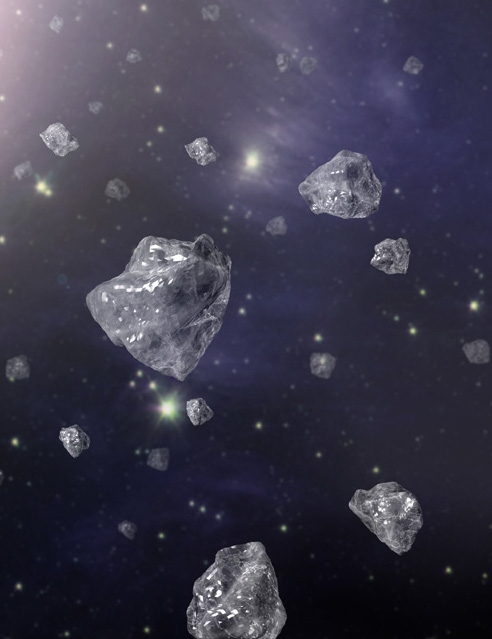
Some astronomers believe that lightning transforms the methane in Saturn's atmosphere into clouds of carbon soot. As this soot rains down through lower levels, increasing pressure eventually compresses it into graphite. At around 6000 kilometres down, the graphite turns into diamonds, cascading towards the planet's core. At depths about 30,000 kilometres, where temperatures reach 8000°C, the diamonds melt.
Around 40,000 kilometres down, the pressure becomes so intense that hydrogen turns to liquid and collects in a vast ocean. Helium falls like rain down through the ocean, creating heat through friction as it goes. Scientists think that this could be the energy source that drives the stormy weather in the upper atmosphere.
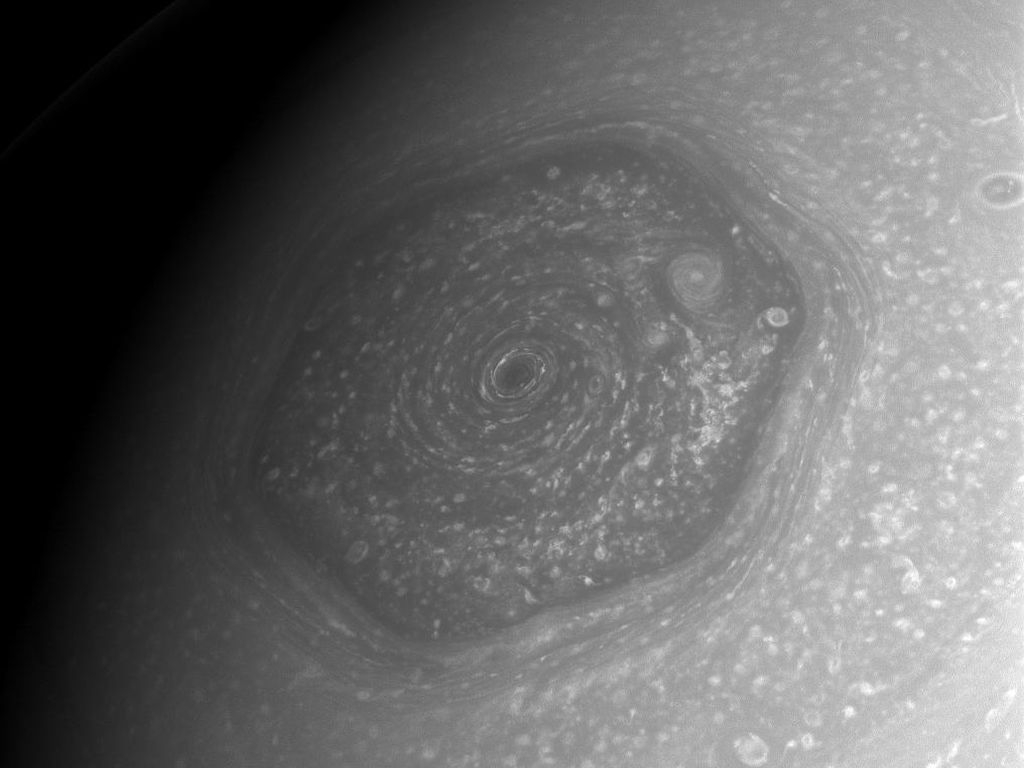
Hexagon
Voyager 2 took a series of images showing a hexagon-shaped area on Saturn's north pole. It is so vast, four Earths could fit inside it. It is in fact hurricane-like storm, in which winds whip round at more than 320 km/h (200 mph)—faster than any hurricane on Earth. The storm completes a rotation every 10 years 33 minutes. Not known why it forms this shape.
Composition
Saturn’s internal structure is very similar to that of Jupiter. Its core of iron and rock is surrounded by a layer of metallic hydrogen, an ocean of liquid hydrogen and liquid helium, and finally a thick atmosphere containing mostly hydrogen with a little helium. Saturn has a pale yellow colour due to ammonia crystals in its upper atmosphere. Electrical currents in the metallic hydrogen layer may be responsible for Saturn's weak magnetic field.

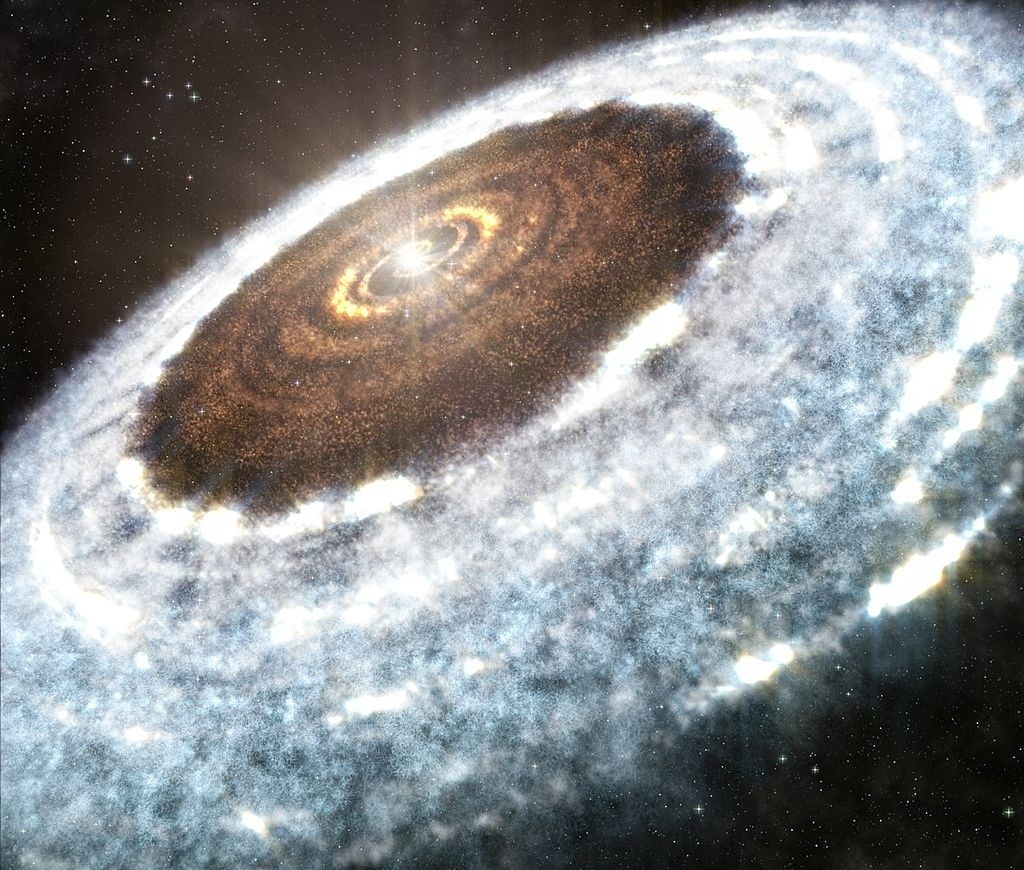
How Saturn formed
Saturn began its existence 4.6 billion years ago in much the same way as the terrestrial planets: the clumping together of tiny specks of gas and dust, becoming first a small rock, then a much larger boulder, evolving into a small, rocky, spherical object known as a planetesimal. This then collided with thousands of other planetesimals. Unlike the terrestrials, however, Saturn formed outside the frost line (also called the snow or ice line). This is the distance from the Sun beyond which it is cold enough for water, methane, ammonia and carbon dioxide (known as volatile compounds) to freeze. The abundance of icy fragments allowed Saturn to grow into a colossal object of ice and rock.
In fact Saturn was able to grow massive enough—about 30 times the mass of Earth—for its gravity to capture the gases hydrogen and helium and build itself into a huge, gassy ball. This process was probably extremely rapid, taking just 10,000 years or so. Saturn's dense atmosphere, now thousands of kilometres deep, weighed down on the icy, rocky core beneath it, exerting so much pressure—10 million times the level we experience on Earth—crushing and melting it. Saturn was now an entirely different kind of planet: a gas giant.

Viewing the rings
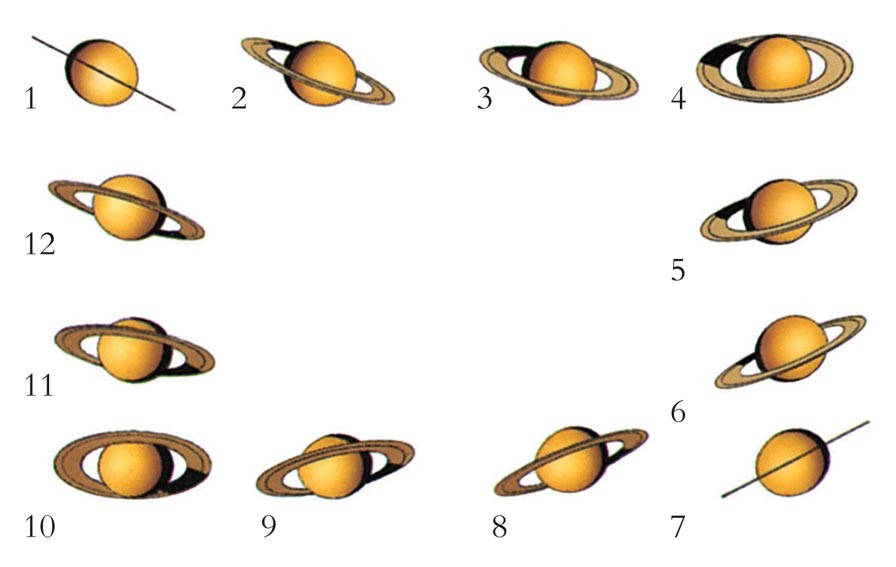
Saturn’s spinning axis tilts from the vertical by 26.7°. This means that our view of its rings from Earth changes as it orbits the Sun, a journey that takes 29.5 years to complete. At stages 1 and 7 on the diagram below, they are pictured edge-on and invisible to an observer on Earth. At stages 4 and 10, they are visible to us at their widest angles. Saturn’s rings are easily visible from Earth through good binoculars or a small telescope.
Factfile
Average diameter: 120,514 km (74,853 miles)
Mass: 95.2 (Earth = 1)
Average density: 0.7 (water = 1)
Surface gravity: 1.16 (Earth = 1)
Day: 10 hours 33 minutes
Year: 29.5 years
Average speed in orbit: 9.6 km/sec (6 miles/sec)
Average distance from the Sun: 1427 million km (886 million miles)
Temperature: -170°C to -110°C (-275°F to -165°F) at cloud tops
Atmosphere: hydrogen, helium
Number of moons: 292 (as of April 2026)
Name: the Roman god of farming

Consultant: Mike Goldsmith
pics
Without in any way limiting Q-files Ltd’s exclusive rights under copyright, any use of this publication to “train” generative artificial intelligence (AI) technologies to generate text is expressly prohibited. Q-files Ltd reserves all rights to license use of this work for generative AI training and development of machine learning language models.