
Planets and moons

CITE
We have made every effort to follow citation style rules, but there may be some minor differences. If in doubt, please refer to the appropriate citation style manual.
Triton. (2026). In Q-files Encyclopedia, Space, Planets and moons. Retrieved from
https://www.q-files.com/space/planets-and-moons/triton
"Triton." Space, Planets and moons, Q-files Encyclopedia, 25 Mar. 2026.
https://www.q-files.com/space/planets-and-moons/triton.
Accessed 6 Aug. 2026.
Triton 2026. Space, Planets and moons. Retrieved 6 August 2026, from
https://www.q-files.com/space/planets-and-moons/triton
Space, Planets and moons, s.v. "Triton," accessed August 6, 2026.
https://www.q-files.com/space/planets-and-moons/triton


Triton
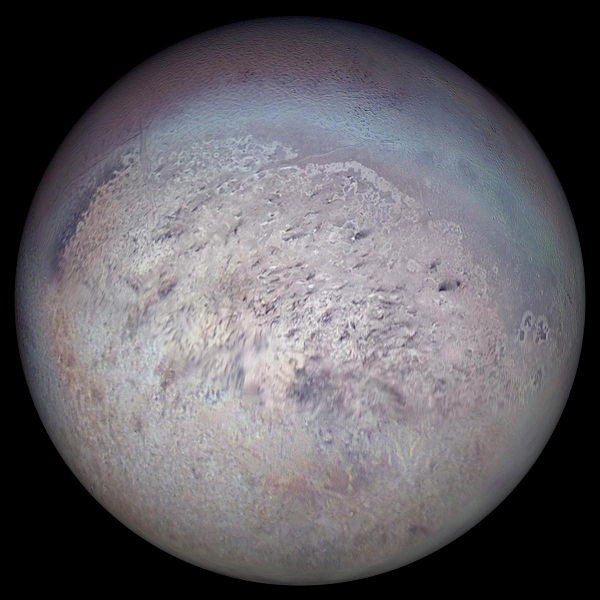
With an average diameter of 2700 kilometres (about 1700 miles), Triton is Neptune’s largest moon, and the seventh largest of all the moons in the Solar System. It orbits its parent planet in a reverse direction, the only large moon to do so (the others that do are tiny, irregular objects). Beneath its icy crust lies a mantle of water, which may be liquid if underground temperatures are high enough. On the surface, however, it is extremely cold. With an average surface temperature of -238°C (-396°F), Triton is one of the coldest worlds in the Solar System.

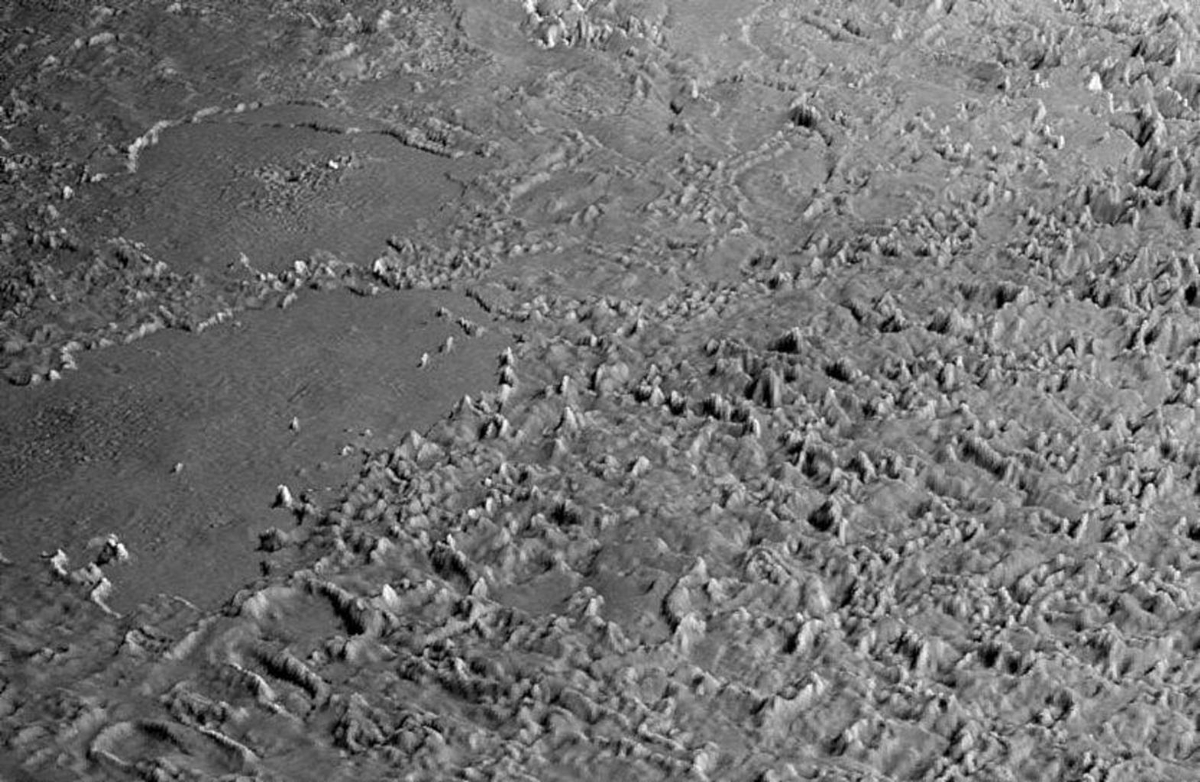
Cantaloupe terrain
Scientists discovered more about the surface of Triton when the Voyager 2 space probe flew past in 1989 at a distance of about 40,000 kilometres (25,000 miles), sending back detailed images.
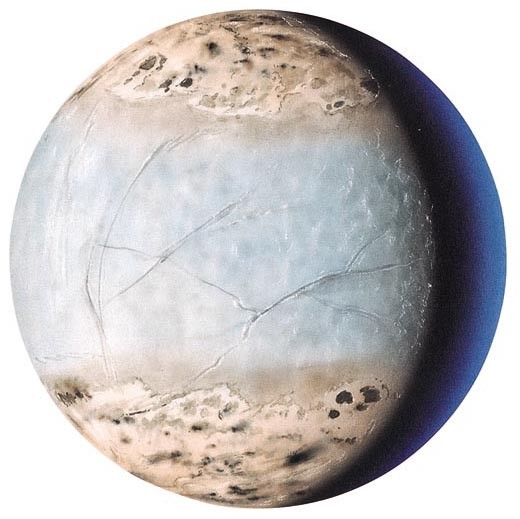
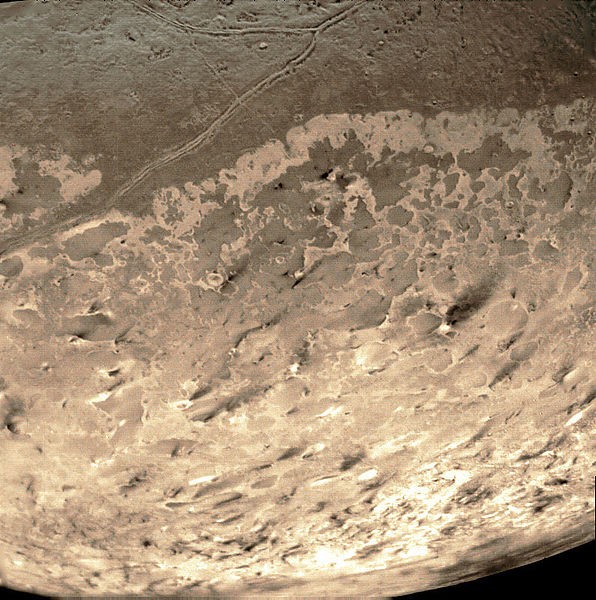
They revealed an icy surface featuring few craters, but covered by a dense network of ridges and valleys. This is described as "cantaloupe" terrain, because of its similarity—when viewed from space—to the skin of a cantaloupe melon. It is probably the result of the ice melting to a slush, then refreezing. Triton’s granite-hard surface is made up of 55% nitrogen ice, with water ice and frozen carbon dioxide mixed in. A thin coating of pure nitrogen ice covers some, perhaps all, of the moon's surface.
Cryovolcanism
Triton's surface is likely to be, geologically speaking, quite young—perhaps "only" between 6 and 50 million years old. The crust is constantly being resurfaced by erupting volcanoes—not eruptions of lava, but of liquid water, ammonia and methane oozing to the surface, then freezing over immediately in the extreme cold. These are known as cryovolcanoes. The liquid may come from a warm ocean beneath Triton's crust, similar to those that are believed to exist on the moons Europa and Enceladus.
Tidal heating
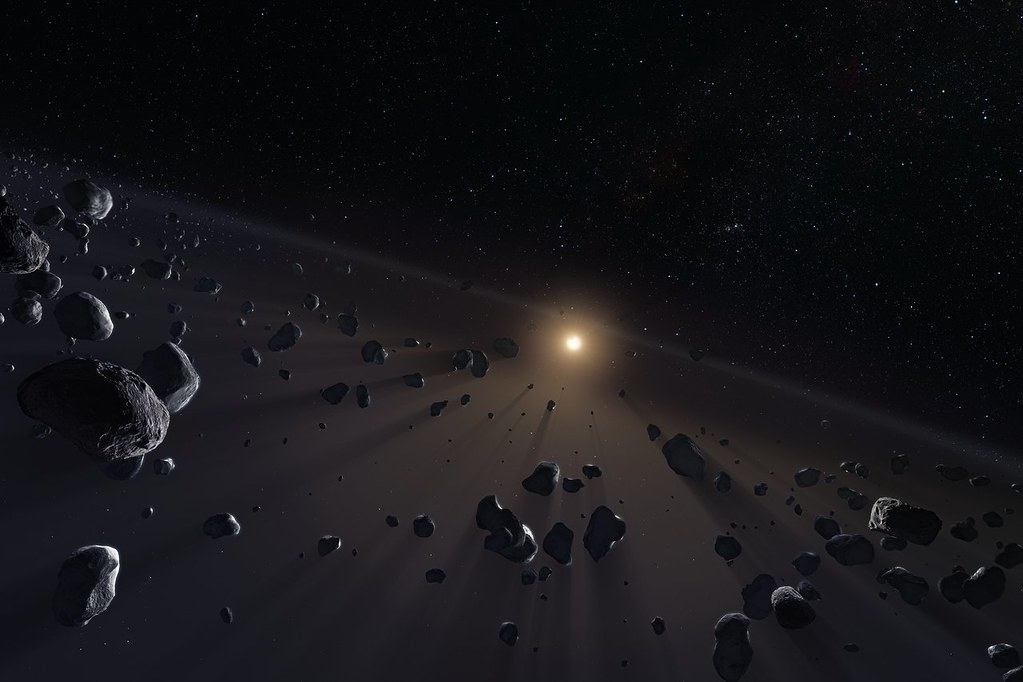
Triton’s warm underground ocean is a leftover from a time when the entire moon was so hot it was in a liquid state (astronomers know this from studies of its internal structure). Where did this heat come from? A clue to its possible origin is Triton's unusual orbit: it orbits Neptune in the opposite direction to the spin of the planet. This suggests that Triton was not formed at the same time as Neptune, but "captured" at a later date from elsewhere—most likely the Kuiper Belt, a vast zone of icy objects surrounding the Solar System. Triton may once have been a dwarf planet resident in this zone, as Pluto, Haumea and Makemake are today.
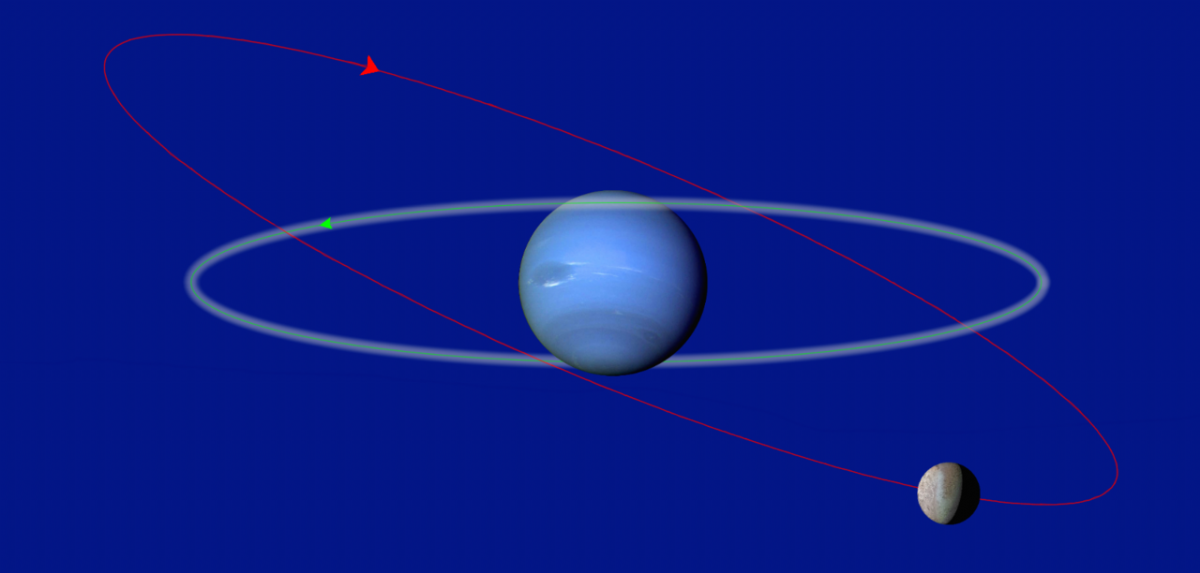
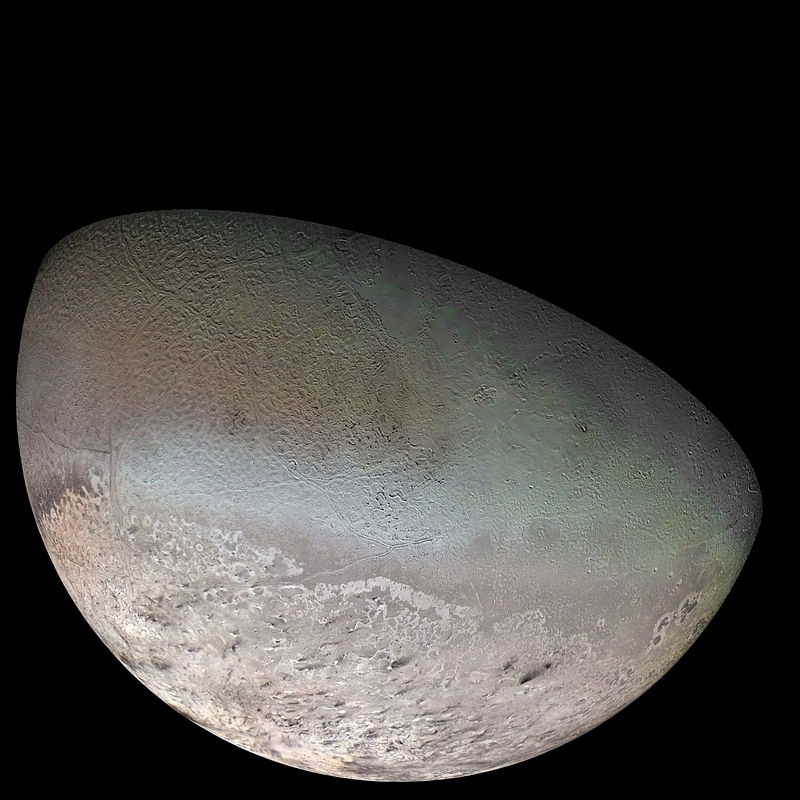
Like our own Moon, Triton orbits with the same side facing inwards to its parent planet at all times: it is "tidally locked". Soon after its capture, Triton would have taken a wide elliptical path around Neptune, meaning that Neptune's gravitational pull would be constantly stretching and squashing the moon, as it approached then moved further away. The friction of these tidal forces would heat up Triton's interior. This underground heating causescryovolcanic activity on the moon, in which liquid water, ammonia and methane erupt through cracks in its crust. The freezing of ices at the surface creates Triton's jagged "icescape".
Perhaps due to a collision with another large object, Triton's orbit adjusted to the regular, circular path it now has. As the friction lessened, the heat source disappeared. Scientists think that a combination of heat from the distant Sun and radioactive elements deep inside Triton may be enough to keep temperatures warm enough for the ocean beneath its surface to remain liquid. Triton is, however, very slowly cooling and will eventually freeze solid.
Geysers
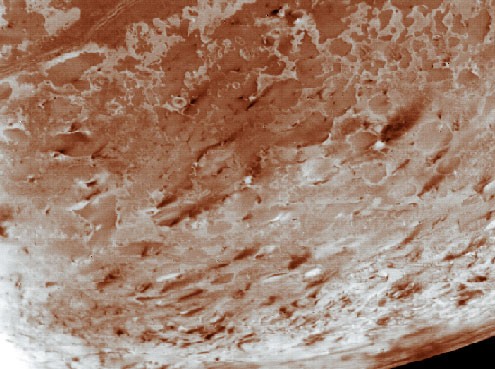
Some of the volcanic activity on Triton today is triggered by weak sunlight being trapped by the nitrogen ice that coats its surface. This is enough to vaporize pockets of gas a metre or so down. Pressure builds up until the gas bursts out through weak points in giant geysers. The eruptions contain not only nitrogen gas but black dust—possibly containing organic compounds. The geysers may last up to a year. The erupted material shoots some 8 kilometres (5 miles) upwards before before reaching an area of high winds, which blast it sideways. As the plumes drift downwind, dust falls to the ground, creating dark smears on the ice.

Consultant: Mike Goldsmith
pics
Without in any way limiting Q-files Ltd’s exclusive rights under copyright, any use of this publication to “train” generative artificial intelligence (AI) technologies to generate text is expressly prohibited. Q-files Ltd reserves all rights to license use of this work for generative AI training and development of machine learning language models.