
Solar System

CITE
We have made every effort to follow citation style rules, but there may be some minor differences. If in doubt, please refer to the appropriate citation style manual.
Meteorites. (2026). In Q-files Encyclopedia, Space, Solar System. Retrieved from
https://www.q-files.com/space/solar-system/meteorites
"Meteorites." Space, Solar System, Q-files Encyclopedia, 25 Mar. 2026.
https://www.q-files.com/space/solar-system/meteorites.
Accessed 23 Sep. 2026.
Meteorites 2026. Space, Solar System. Retrieved 23 September 2026, from
https://www.q-files.com/space/solar-system/meteorites
Space, Solar System, s.v. "Meteorites," accessed September 23, 2026.
https://www.q-files.com/space/solar-system/meteorites


Meteorites
A meteorite is a rock that originated in outer space and has fallen to the surface of a planet or moon. Thousands of meteorites, the vast majority tiny pieces of rock, crash to Earth every year, but most go unnoticed as they land in uninhabited areas or in the oceans. Meteorites are not like Earth rocks. Most are much older, dating from the time when the Solar System formed around 4.6 billion years ago. The study of meteorites, which provide a snapshot of the conditions in the early Solar System, has helped scientists understand how planets and asteroids formed. Meteorites range in size from dust-sized particles to boulders weighing many tons. There are three main types of meteorite: stony, iron and stony-iron. More than 95% of meteorites found on Earth are stony, made up of minerals that contain silicates (compounds of silicon and oxygen) plus small amounts of nickel and iron. They can be divided into chondrites and achondrites.


Meteoroids and meteors
A meteorite starts out as a fragment or a whole meteoroid, a small rocky or metallic body in outer space. When meteoroids burst into the Earth's atmosphere, they become known as meteors. Some 25 million of them, together weighing some 15,000 tonnes, enter each day. Travelling at around 72,000 kilometres per hour (45,000 mph), the intense heat (from friction with air molecules) produces a streak of light, both from the object and the trail of glowing particles that it leaves in its wake. We call these "shooting stars". Most meteors burn up and disintegrate in the atmosphere. Those that get through and fall to the Earth's surface are known as meteorites.
Origins
Most meteoroids probably originated in the Asteroid Belt lying between Mars and Jupiter. Fragments of shattered asteroids, they were formed early in the early years of the Solar System, 4.568 billion years ago. The fragments remained in orbit until they were knocked out of it as a result of collisions with other objects, or were pulled out of it by the force of Jupiter's powerful gravity. Some meteoroids have since travelled towards the inner Solar System on collision course with Earth.

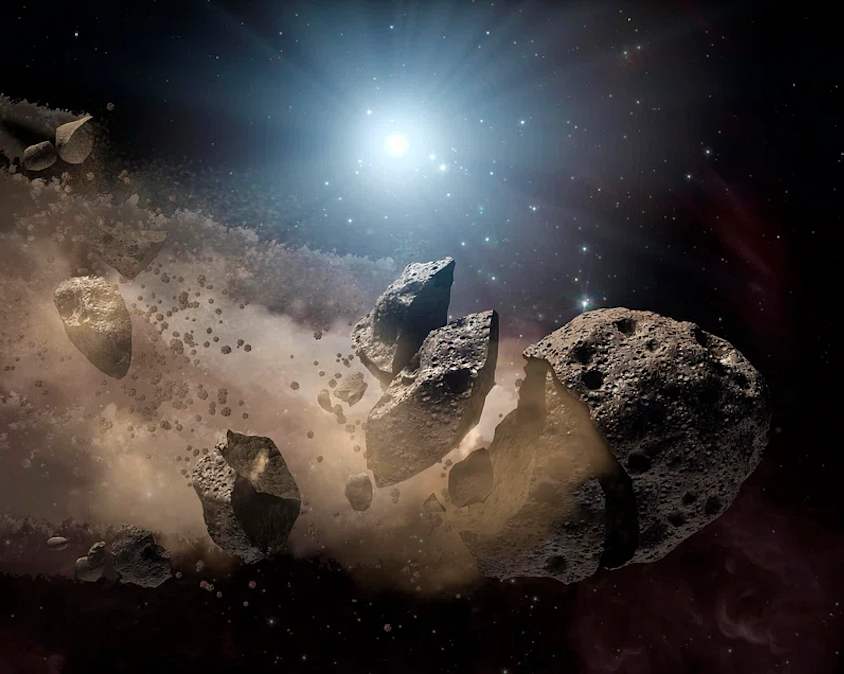
Many meteorites have a different origin: they are fragments of the rocky cores of comets, bodies made of dust, rock and ices compacted together, orbiting in the outer reaches of the Solar System beyond Neptune.
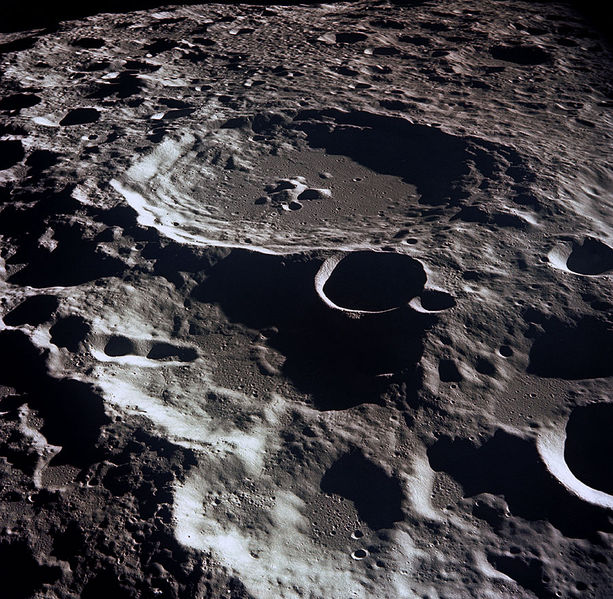
Craters
Meteorites crash to the surface of other planets and moons in the Solar System. Those with atmospheres insufficiently dense to break apart the incoming objects are bombarded by many large meteorites. Over time, millions of deep, round impact craters have been punched into the surfaces of the Moon, Mercury and Mars. Thankfully, Earth's atmosphere is dense enough to cause most meteors to burn up before hitting the surface. Of those meteorites that do get through, few are large enough to create an impact crater. Typically, they create a small pit at most.

The most frequent cratering events on Earth are caused by iron meteorites (see below), the kind most easily able to pass through the atmosphere intact. The Barringer Crater, Odessa Meteor Crater, Wabar craters and Wolfe Creek crater were all created by iron meteorites. A number of craters that were made millions of years ago have disappeared as a result of plate tectonics or filled with sediments. The Chicxulub Crater in Yucatan, Mexico, famously created by the 10-kilometre (6-mile) asteroid that triggered the extinction of the dinosaurs 66 million years ago, is covered over partly by the waters of the Gulf of Mexico, partly by thick layers of sedimentary rock laid down since.
Chondrites
About 86% of stony meteorites are chondrites. They are named after the hardened, spherical droplets of lava (melted rock), called chondrules, embedded in them. Chondrules are not found in Earth rocks. Chondrites formed from the dust and small particles that came together to form asteroids during the birth of the Solar System around 4.6 billion years ago.


Chondrites themselves are divided into two major groups: ordinary and carbonaceous. Ordinary chondrites are by far the most common type, accounting for 87% of all finds. Scientists think they originate from the remains of just three asteroids.
Carbonaceous chondrites, which are much rarer, contain graphite, a form of carbon, and organic compounds, including amino acids. In addition, they often contain water, or material that was shaped by the presence of water.
Achondrites
Less common, comprising only about 8% of all meteorites, are achondrites. These are also stony meteorites composed primarily of silicates, but they do not contain the chondrules present in chondrites. Most achondrites formed from the brittle outer layers of asteroids, which are similar to Earth’s crust, but a tiny proportion—about 0.2%—came from the Moon or Mars. Large meteorites crashed into the surface of the Moon or Mars, blasting off bits of rock into space. They eventually found their way through Earth's atmosphere to fall to its surface. NWA 7034, an achondrite meteorite from Mars and estimated to be 2 billion years old, contains a number of a different rock types as well as liquid water.


Iron meteorites
About 5% of all meteorites are iron meteorites, composed of iron and nickel. They are thought to come from the cores of asteroids. Their heavy composition allows them to survive the plummet through Earth’s atmosphere without breaking up into smaller pieces. The largest meteorite ever found, Namibia’s Hoba meteorite, is an iron meteorite. In contrast to stony meteorites, iron meteorites are more resistant to weathering.

It is from studying this kind of meteorite that scientists know that the rocky planets, including Earth, have cores made of iron and nickel. During planetary formation, metal sinks to the centre of the body, while lighter material forms a rocky crust and mantle around the outside.
Stony-iron meteorites
The rare stony-iron meteorites, containing about equal proportions of metals and silicates, constitute the remaining 1% of meteorite finds. One type of stony-iron meteorites are called pallasites. These contain a silicate called olivine encased in metal. They probably formed when the olivine-rich mantle of an asteroid mixed with the metallic core. Mesosiderites are mixtures of iron-nickel metal and basalt and probably formed by the collision of two asteroids.

Meteorite finds

A meteorite fall is one collected after its arrival was spotted by someone (or by a remote camera). Between five and ten meteorites a year come into this category, with 1180 confirmed falls in total. Any other meteorite—by far the most common—is called a find.
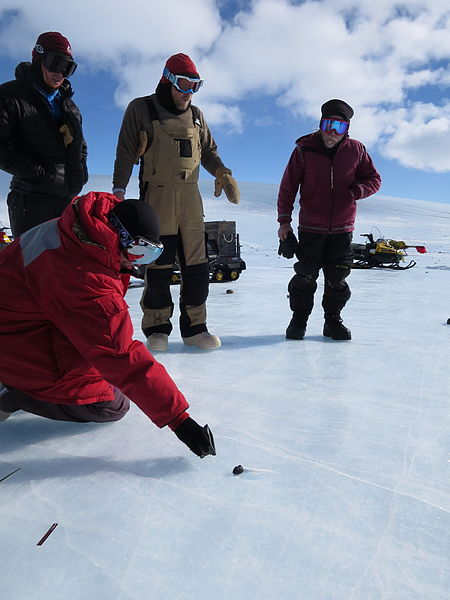
Meteorites usually have a blackened exterior. This is due to thermal ablation, the process that burns off the surface layer of a meteorite due to friction from the atmosphere through which it has hurtled at high speed.
Until the 20th century, only a few hundred meteorite finds had ever been made. More than 80% of these were iron and stony-iron meteorites, which looked quite different to local rocks. Today, more than 60,000 meteorites have been found. Their dark colour distinguishes them from lighter-coloured pebbles and rocks, especially in sandy deserts or farmland where the soil contains few rocks. The best place to hunt for meteorites is in Antarctica, where meteorites stand out well against a surface of gleaming white snow and ice.
Micrometeorites
Dust-sized particles or fragments less than a millimetre in diameter are called micrometeorites. They make up 99% of the space debris that falls on Earth’s surface every day—typically about 5200 tonnes a year. Micrometeorites, also called cosmic dust, differ from meteorites in that they usually melt completely in the atmosphere and fall to Earth as droplets called cosmic spherules (microscopic spheres). Whereas most meteorites originate from asteroids, the composition of micrometeorites suggests that most came from comets.

Micrometeorites have been collected from deep-sea sediments (since the 1872–76 expedition of HMS Challenger), sedimentary rocks, polar ice and snow—and now even on in cities, especially on surfaces that have gone undisturbed for centuries such as cathedral roofs.
pics
Without in any way limiting Q-files Ltd’s exclusive rights under copyright, any use of this publication to “train” generative artificial intelligence (AI) technologies to generate text is expressly prohibited. Q-files Ltd reserves all rights to license use of this work for generative AI training and development of machine learning language models.