
Astronomy

CITE
We have made every effort to follow citation style rules, but there may be some minor differences. If in doubt, please refer to the appropriate citation style manual.
Extraterrestrial life. (2026). In Q-files Encyclopedia, Space, Astronomy. Retrieved from
https://www.q-files.com/space/astronomy/extraterrestrial-life
"Extraterrestrial life." Space, Astronomy, Q-files Encyclopedia, 2 Jun. 2026.
https://www.q-files.com/space/astronomy/extraterrestrial-life.
Accessed 13 Sep. 2026.
Extraterrestrial life 2026. Space, Astronomy. Retrieved 13 September 2026, from
https://www.q-files.com/space/astronomy/extraterrestrial-life
Space, Astronomy, s.v. "Extraterrestrial life," accessed September 13, 2026.
https://www.q-files.com/space/astronomy/extraterrestrial-life


Extraterrestrial life
Extraterrestrial life is any life that does not originate from Earth. None has so far been discovered. Often described as alien life, or aliens, extraterrestrial life might range from simple, bacteria-like organisms (living things) to intelligent, complex life-forms—perhaps even more advanced than humans. The search for other worlds that could host life ranges from our neighbouring planet Mars, to more distant moons such as Enceladus, Europa or Titan, the dwarf planet Pluto, or exoplanets discovered in other solar systems many light years away.


Conditions for life
There are three key ingredients that make life possible in any world: chemistry, liquid water and energy. Most scientists assume that extraterrestrial life will probably have the same chemical composition as living things on Earth. Carbon is the one element that can form the wide range of complex molecules necessary to create living cells. The presence of liquid water provides the essential solution in which such molecules form.
There also needs to be a source of energy, providing food for the organism. It was once thought that this energy must come, either directly or indirectly, from the Sun. Plants use sunlight to produce sugars from carbon dioxide and water—and plants, both on land and in water, are the vital link in any food chain. Now it is known that certain deep-sea organisms rely for their food on an energy source other than the Sun.

These are bacteria that feed on nutrients from chemicals in the Earth’s crust in the form of dissolved minerals spurted out through rock chimneys (called black or white smokers depending on the minerals present), made by hydrothermal vents, cracks in the ocean floor. The process by which nutrients are produced using the energy from a chemical reaction rather than sunlight is known as chemosynthesis. The bacteria are food for larger creatures, and the result is that the smokers are each surrounded by a range of living things. The discovery of these communities, relying on a heat source from inside the Earth rather than the Sun, shows there may be more possible extraterrestrial habitats for life than previously thought. These include the hydrothermal vents on the floors of underground oceans that astronomers suspect exist below the icy crusts of Enceladus and Europa.
Extremophiles
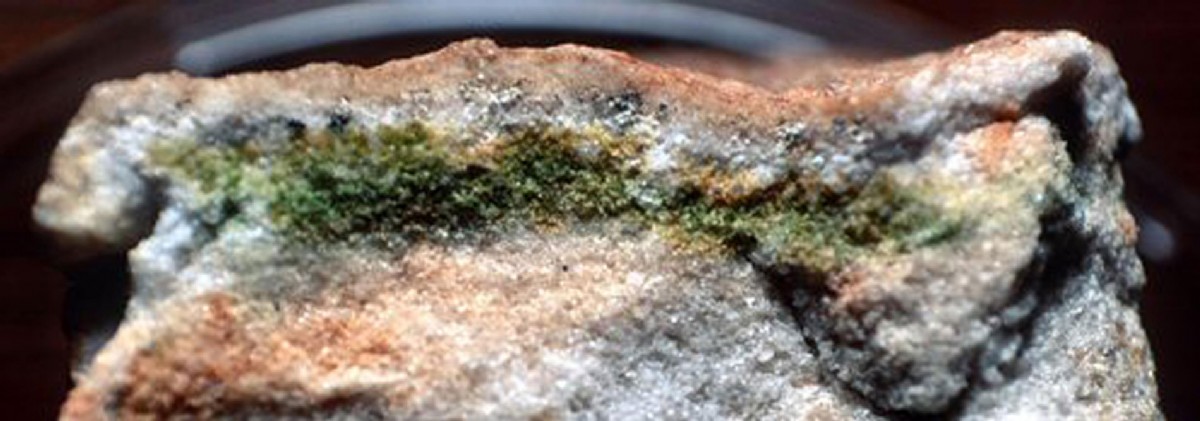
Some micro-organisms, including some kinds of archaea and bacteria, can survive in extreme environments. Known as extremophiles, they thrive in very dry, hot, cold, salty, acidic or high-pressure conditions. Endoliths, for example, live in the microscopic spaces within rocks. Extremophiles are capable of living in environments similar to those known to exist on other planets. Many scientists now believe that extremophiles, even if not present in our Solar System, may be common amid the vastness of the Universe.


The search for extraterrestrial life
Worlds where life might have developed, or which might continue to host life today, must have had (or still have) water in its liquid form. In the Solar System, Jupiter's moon Europa and Saturn's moons Titan and Enceladus are all worlds where liquid water exists in underground oceans today. On Mars, liquid water has been discovered in small reservoirs deep beneath the crust.
If living things, or fossils of once-living things, were ever discovered elsewhere in the Solar System, they would certainly be far less complex than human beings. The search for extraterrestrial intelligence (SETI) means looking further afield in other solar systems elsewhere in the Milky Way Galaxy—or even other galaxies.
Drake equation
With around 200 billion stars (perhaps as many as 400 billion) in the Milky Way Galaxy, it seems inevitable there are other Earth-like planets where advanced civilizations exist. In order to calculate their possible approximate number, US astronomer Frank Drake (1930-2022) proposed an equation. It takes into account several factors such as the rate of formation of suitable stars, the number that have Earth-like planets, the percentage of those where intelligent life might develop and the fraction of those that could actually communicate. Drake’s own figure was between 1000 and 100,000,000 such planets, but calculations made since have produced widely varying results, with some scientists suggesting the number was zero or less.


The Wow! signal
On 15th August 1977, a radio signal lasting 72 seconds was detected by a radio telescope used in the SETI project. Struck by the possibility it might be of extraterrestrial origin, a scientist wrote “Wow!” next to the signal on the computer printout, so that became its name. Despite repeated efforts to locate it, it has not been detected since.
Exoplanets

If life was able to arise on Earth, then it could have arisen on other planets with similar characteristics. Astronomers have now discovered thousands of planets, called extrasolar planets or exoplanets, that orbit other stars. If they were to meet certain conditions, it is possible that these planets might host complex life—or even intelligent beings like ourselves.
Conditions for intelligent life
1) The parent star must be of average size: very big stars have short lifetimes, so life would not have a chance to evolve, while small stars may not radiate sufficient energy.
2) The planet should orbit the star within what is called the habitable, or "Goldilocks", zone, neither too close nor too far, where water can exist in a liquid state on the surface.
3) The planet should have an atmosphere, to trap enough of the star’s energy to avoid temperature extremes, to screen it from harmful radiation and to act as a shield to bombardment by meteoroids.
4) There should be a gas giant like Jupiter which will attract comets and asteroids to itself, and thus spare the planet from devastating impacts.
5) The planet should have a magnetic field, to protect it from streams of charged particles, and spin on a tilted axis.
Consultant: Mike Goldsmith
pics


Without in any way limiting Q-files Ltd’s exclusive rights under copyright, any use of this publication to “train” generative artificial intelligence (AI) technologies to generate text is expressly prohibited. Q-files Ltd reserves all rights to license use of this work for generative AI training and development of machine learning language models.