
Universe

CITE
We have made every effort to follow citation style rules, but there may be some minor differences. If in doubt, please refer to the appropriate citation style manual.
Galaxies. (2026). In Q-files Encyclopedia, Space, Universe. Retrieved from
https://www.q-files.com/space/universe/galaxies
"Galaxies." Space, Universe, Q-files Encyclopedia, 25 Mar. 2026.
https://www.q-files.com/space/universe/galaxies.
Accessed 13 Sep. 2026.
Galaxies 2026. Space, Universe. Retrieved 13 September 2026, from
https://www.q-files.com/space/universe/galaxies
Space, Universe, s.v. "Galaxies," accessed September 13, 2026.
https://www.q-files.com/space/universe/galaxies


Galaxies
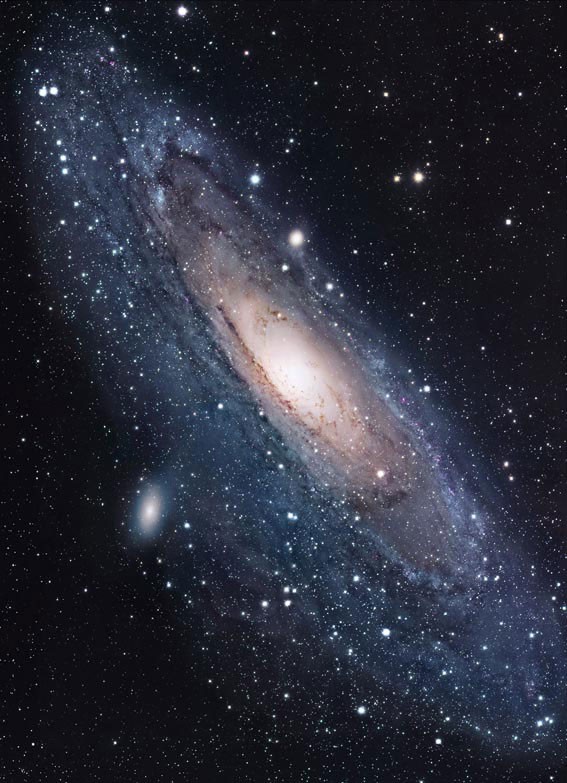
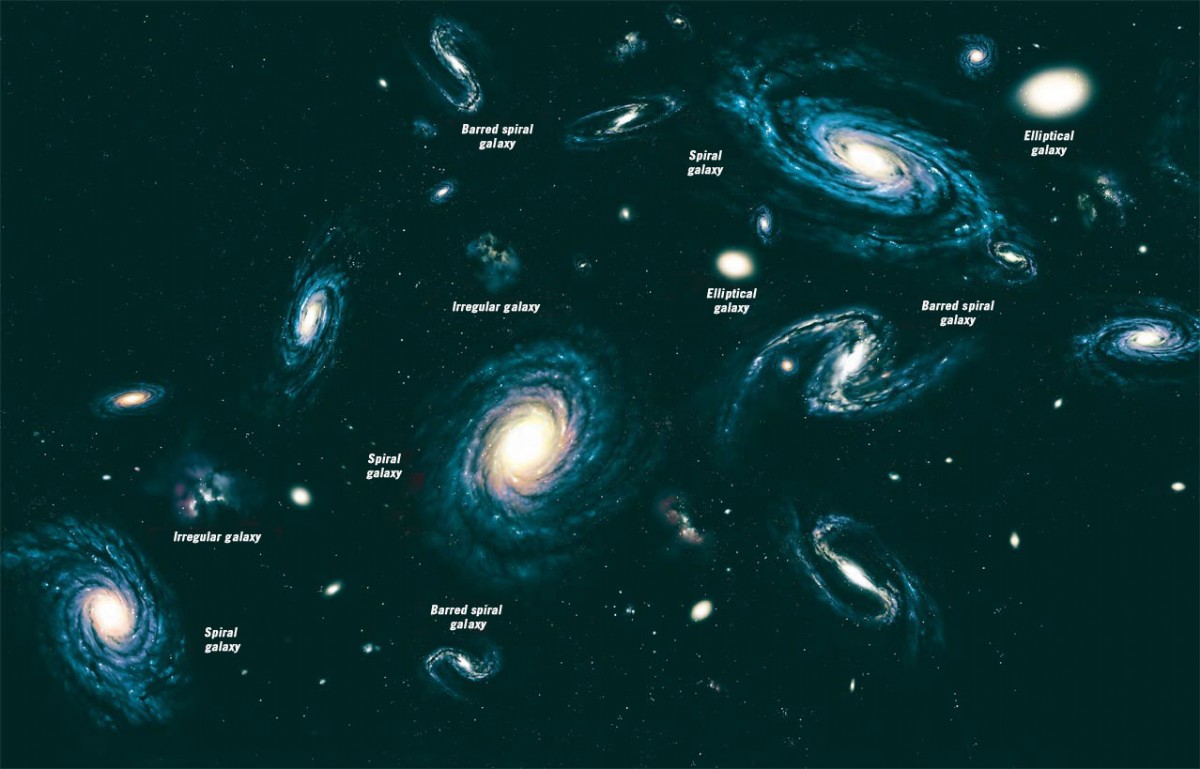
Stars do not exist in isolation but are clustered together in vast "cities" in space known as galaxies. Galaxies consist of stars, planets and vast clouds of gas and dust, all held together by gravity and orbiting around the galaxy's centre. The galaxy in which the Sun is situated, the Milky Way Galaxy, is a huge barred spiral of around 200 billion stars that measures about 100,000 light years across. There are thought to be between 200 billion and 2 trillion galaxies in the Universe, each of them containing billions of stars. Most galaxies are elliptical (oval) in shape. Many are spirals or barred spirals (having a bar-shaped core) like the Milky Way. Other galaxies have irregular shapes.


Composition
A galaxy is composed of stars and the remnants of old, dying stars. Lying between the stars is what is known as the interstellar medium: a region of gas, dust and cosmic rays (showers of high-energy subatomic particles). Dark matter, matter that gives out neither light nor any other form of electromagnetic radiation, makes up about 90% of the mass of most galaxies. Supermassive black holes exist at the centre of most large galaxies. Some of them are billions of times the Sun’s mass.
The Local Group


Galaxies are not normally found on their own. Most are clumped together in clusters. Our own galaxy, the Milky Way, belongs to a cluster called the Local Group. It consists of more than 50 galaxies. The Local Group contains different types of galaxies: spirals (like Triangulum), barred spirals (like Andromeda and the Milky Way), ellipticals and irregulars—those with no obvious shape (such as the Large and Small Magellanic Clouds).
The nearest galaxy to the Milky Way is thought to be the Canis Major Dwarf, an irregular galaxy lying about 25,000 light years away. The Andromeda Galaxy, the largest in the Local Group, is the nearest spiral, lying 2.25 million light years distant from us.
Edwin Hubble
Edwin Hubble (1889–1953) was an American astronomer. He is best known for his discovery of galaxies other than our own Milky Way Galaxy, and for his part in discovering that the Universe is expanding. Between 1925 and 1929, Hubble discovered the existence of isolated masses of stars called galaxies that were too distant to be part of our own galaxy. Up until then, most astronomers had believed that the Universe consisted of the Milky Way alone.


Hubble also devised a method for classifying galaxies, using the terms “ellipticals”, “spirals” and “barred spirals” to describe their basic shapes. In 1929 he announced what has become known as Hubble’s Law (now called the Hubble-Lemaître Law): all distant galaxies are moving away from us and from each other, and the farther away they are, the faster they move. In other words, the Universe is expanding.
We now know that it is only galaxy clusters that move apart as the Universe expands. Held together by gravity, the galaxies within the Local Group (along with other clusters) do not move away from each other.
Consultant: Mike Goldsmith
pics
Without in any way limiting Q-files Ltd’s exclusive rights under copyright, any use of this publication to “train” generative artificial intelligence (AI) technologies to generate text is expressly prohibited. Q-files Ltd reserves all rights to license use of this work for generative AI training and development of machine learning language models.