
Music and dance

CITE
We have made every effort to follow citation style rules, but there may be some minor differences. If in doubt, please refer to the appropriate citation style manual.
Ballet. (2026). In Q-files Encyclopedia, Culture, Music and dance. Retrieved from
https://www.q-files.com/culture/music-and-dance/ballet
"Ballet." Culture, Music and dance, Q-files Encyclopedia, 13 May. 2026.
https://www.q-files.com/culture/music-and-dance/ballet.
Accessed 6 Aug. 2026.
Ballet 2026. Culture, Music and dance. Retrieved 6 August 2026, from
https://www.q-files.com/culture/music-and-dance/ballet
Culture, Music and dance, s.v. "Ballet," accessed August 6, 2026.
https://www.q-files.com/culture/music-and-dance/ballet


Ballet
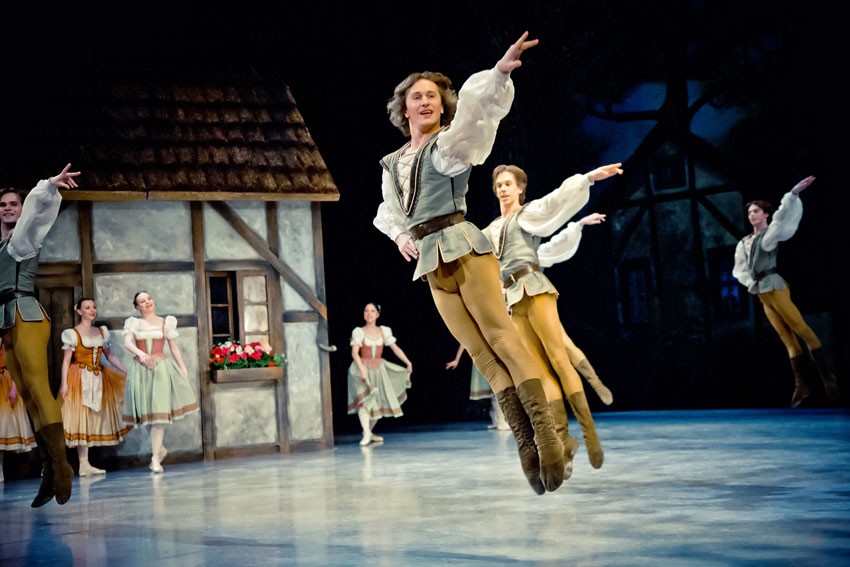
Ballet is a classic form of dance that began about 400 years ago in Italy. It became popular in France in the 17th century, which is why so many ballet steps have French names. The dancers are trained athletes who move with skill and precision in a very graceful way. They perform specially composed movements, known as choreography, to tell a story or show feelings and moods, with a musical accompaniment.
Learning ballet
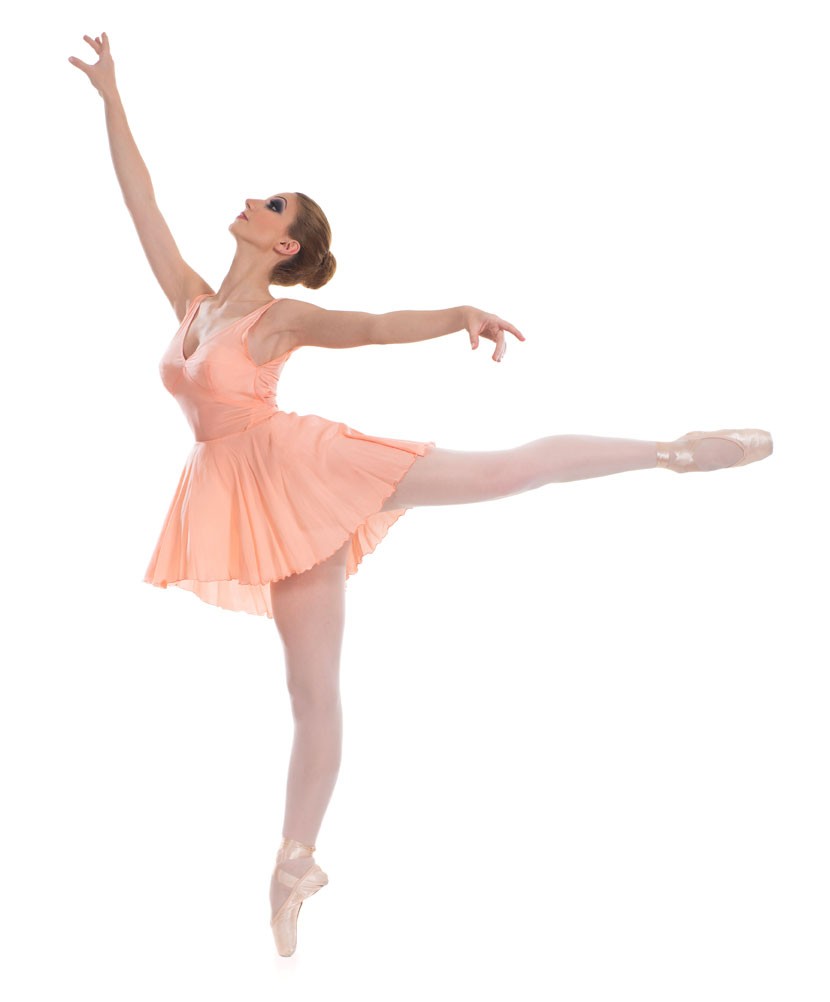
There are five basic positions for the feet and the arms. Dancers are taught turn-out—turning the legs outwards, away from the hips—to make them look elegant and allow more movement of the legs. They practise their steps in a room with large mirrors, to check what they are doing, and a sprung floor that reduces the risk of injuries. They hold on to a railing called the barre while they warm up and do practice exercises. More advanced dancers learn jumps and turns. They are taught to dance en pointe, wearing special blocked shoes that allow them to dance on the very tips of their toes.
Putting on a show
Ballet is the name both for the dance technique and for the show. A full ballet will have a group, called a troupe, of dancers in costume, with music and stage props. The movements are put together by a choreographer (which means "dance writer") who writes down the steps using choreology, which records each dancer’s position on a five-line stave, like a musical score. The best dancers in a ballet company are called the principals; they dance the leading roles. A female principal is called the prima ballerina. The second tier of dancers, the soloists, often dance alone on stage. The junior dancers perform as a group and are called the corps de ballet.

Origins
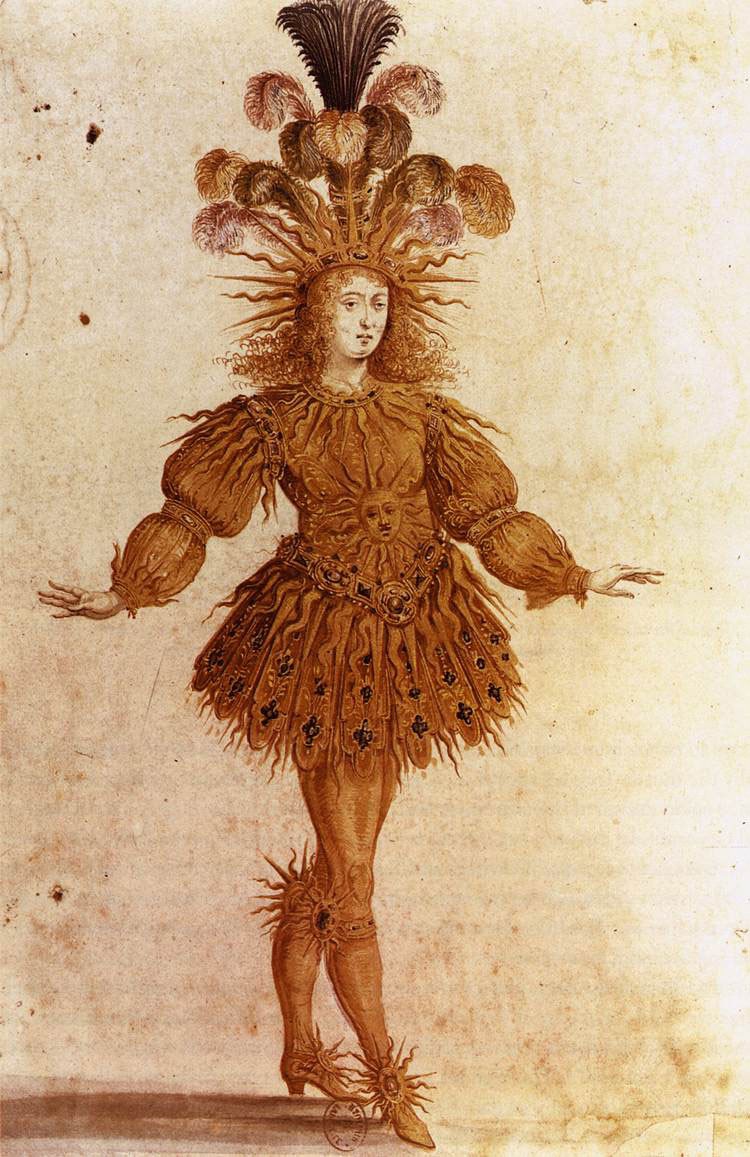
Ballet began in the Italian courts as entertainment for the very rich. When Catherine de' Medici, an Italian aristocrat, married the future French king, Henry II, in 1533, she brought her enthusiasm for dance to the French court. Ballets de cour, as it was known, became popular, especially when King Louis XIV, a talented dancer himself, founded the Académie Royale de Danse (Royal Dance Academy) in 1661. Female dancers were not allowed, so males danced all of the parts. At that time, the ballets were just a selection of dances. Louis asked composers, such as Jean-Baptiste Lully, to write music especially for his dances. His dancemaster, Pierre Beauchamp, planned moves to match the music: he was the first choreographer of ballet. He defined the five basic positions that ballerinas still learn today.
Romantic ballet
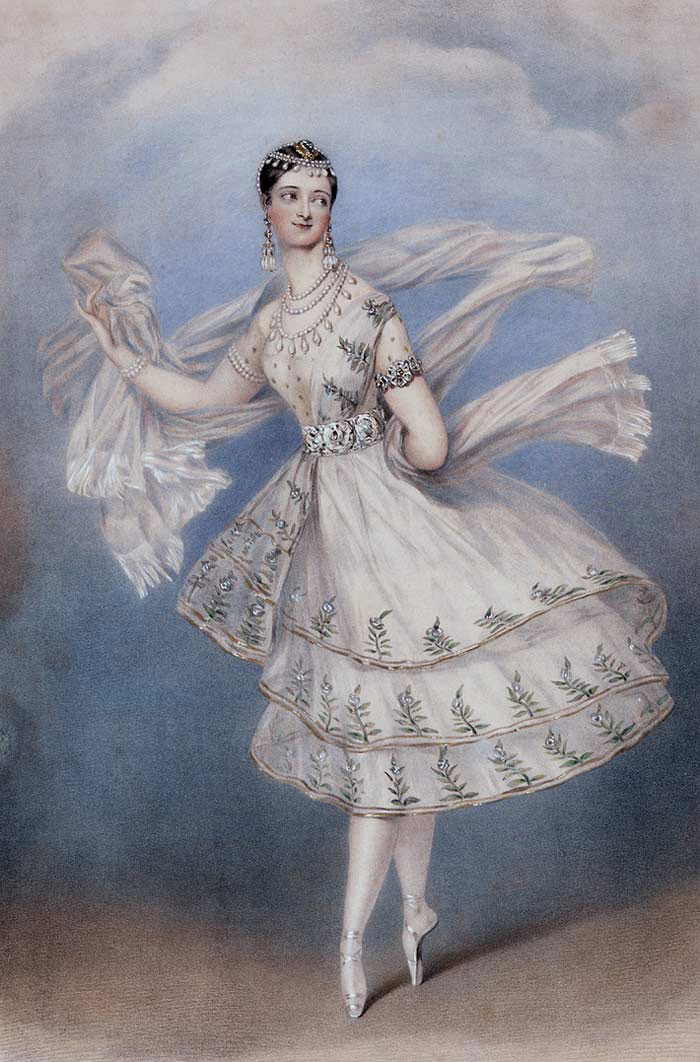
By the 18th century, ballet had become a dramatic art form, and began to be included during operas. In the 19th century, as part of the Romantic movement, ballet developed its own style of mimed "language" that revealed to the audience what the dancers were doing or feeling. One of the first Romantic ballets was performed in 1832 in Paris. It was called La Sylphide and was written especially for the female lead, Marie Taglioni. She was one of the first dancers to dance en pointe. Ballerinas would be lifted almost effortlessly, as if they were floating, which was perfect for the fantasy characters of Romantic ballets.
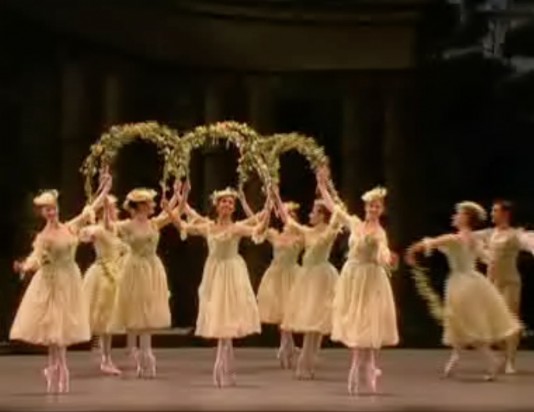
Classical ballet
Over time, ballets became longer with more complicated storylines and dance steps that showed off the dancers’ skills. They were extremely popular in Russia, where the composer Pyotr Tchaikovsky (1840–93) wrote musical scores that captivated the audience. He wrote Swan Lake, The Nutcracker and Sleeping Beauty, three ballets that are still popular today.
These ballets are now known as Classical ballets. They require immense strength and control as well as perfect arm and feet movements from the dancers. Many techniques taught today are named after the teacher who created the Classical styles of this period, for example, Agrippina Vaganova (1879–1951). The female dancers' tutu appeared at this time. It was a stiff skirt that revealed the acrobatic legwork but came to somewhere between the knee and ankle, so only the lower part of the leg could be seen—which was important for 19th-century values.
Ballets Russes
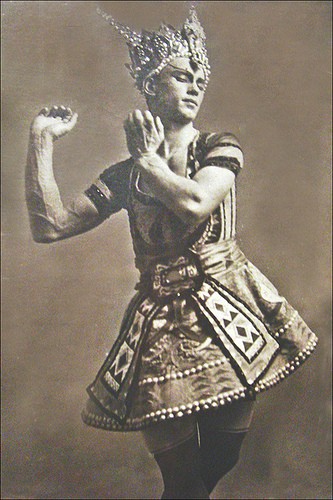
A Russian company transformed ballet at the start of the 20th century. The Ballets Russes, founded by Sergei Diaghilev (1872–1929), brought together some of the best Russian ballet dancers in short, single-act ballets that shocked audiences with their exotic settings and daring choreography. Composers were asked for striking new music to accompany the ballets. They included Igor Stravinsky (1882–1971), who wrote The Firebird and The Rite of Spring for Diaghilev’s company. The ballets showed off the male lead as much as the prima ballerina. Vaslav Nijinsky (1890–1950) was one of the greatest ballet dancers of all time.
Neoclassical and contemporary ballet
Neoclassical ballet first appeared in the 1920s with Diaghilev's Ballets Russes company. It uses the same technique and steps as Classical ballet, but choreographers such as George Balanchine (1904–83) stripped away the story and the drama, leaving the dance and steps to speak for themselves.

Contemporary ballet is influenced by Classical ballet but also by modern dance. Choreographers such as Twyla Tharp (born 1941) and Robert Joffrey (1930–88) created lively, fun ballets with pop music and dances inspired by Broadway musicals.

Ballet steps
The French for "step" is pas, so a dance for two people is known as a pas de deux. The pas de chat (step of the cat) is a sideways jump where the dancer bends both legs in mid-air, as seen in, for example the Dance of the Cygnets from Swan Lake. Other steps include the pas de basque (step of the Basques), pas de cheval (step of the horse), pas de poisson (step of the fish) and pas de valse (waltz step).
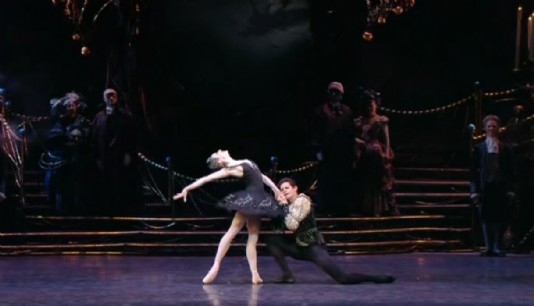
Dancers at the barre will practise pliés (knee bends) in the different feet positions, and attitudes, standing on one leg with the other leg bent at the knee and lifted behind, in front or to the side. An arabesque also involves lifting one leg behind the body, with the knee straight. Battements are various types of beating movement of the leg, where the foot may slide along the floor or be lifted off the ground. The rond de jambe is a half-circle movement of the pointed foot, as if writing the letter D on the floor. Away from the barre, dancers perform jetés (jumps) including brisés, changements and chassés, and turns such as a deboulé, demi-detourné or pirouette, a full spin of the body on one foot. A fouetté en tournant is a full spin with the raised foot whipped round; this is a real test of technique and strength. A ballerina dancing the Black Swan pas de deux from Swan Lake has to perform 32 fouettés in a row.
Consultant: Philip Wilkinson
Ballet positions
First position
The heels are together and the feet form a straight line. The arms are held gracefully in front, bent at the elbow.
Second position
Similar to first, but with the feet apart. The arms are out to the sides with the hands slightly rounded.
Third position
One foot is in front of the other. The heel of the front foot touches the middle of the foot behind. One arm is held to the side, the other in front forming a semicircle.
Fourth position
The dancer moves from third to fourth by taking the front foot a step away from the back foot. One arm is held in front and while the other is raised to an elegant curve above the head.
Fifth position
The toes of each foot are next to the heel of the other foot. Both arms are held high with the fingers nearly touching.
pics

Without in any way limiting Q-files Ltd’s exclusive rights under copyright, any use of this publication to “train” generative artificial intelligence (AI) technologies to generate text is expressly prohibited. Q-files Ltd reserves all rights to license use of this work for generative AI training and development of machine learning language models.