
Pirates & galleons

CITE
We have made every effort to follow citation style rules, but there may be some minor differences. If in doubt, please refer to the appropriate citation style manual.
How pirates attacked. (2025). In Q-files Encyclopedia, History, Pirates & galleons. Retrieved from
https://www.q-files.com/history/pirates-galleons/how-pirates-attacked
"How pirates attacked." History, Pirates & galleons, Q-files Encyclopedia, 28 Jul. 2025.
https://www.q-files.com/history/pirates-galleons/how-pirates-attacked.
Accessed 2 Sep. 2026.
How pirates attacked 2025. History, Pirates & galleons. Retrieved 2 September 2026, from
https://www.q-files.com/history/pirates-galleons/how-pirates-attacked
History, Pirates & galleons, s.v. "How pirates attacked," accessed September 2, 2026.
https://www.q-files.com/history/pirates-galleons/how-pirates-attacked


How pirates attacked
In the 17th century, the Spanish treasure fleet carried gold, silver and jewels from the Americas back to Spain. The loaded Spanish galleons always sailed in convoy, escorted by several warships. But a galleon would become vulnerable to attack by privateers and pirates if she became separated from the rest of the convoy. In a one-to-one confrontation with a pirate ship, the straggler might make a run for it, stay and fight, or even deliberately run the ship aground, with the hope of retrieving her cargo later.

Sighting
On sighting a sail, the pirates went into action. First of all, they identified the ship, assessed her fighting strength and decided whether she was a potential prize. A Spanish galleon was usually slower than a small, slight pirate ship, so the pirates would happily chase another ship at speed. But they would also be ready to turn and run if that ship turned out to be significantly stronger than they were in terms of cannon and crew size.
The chase
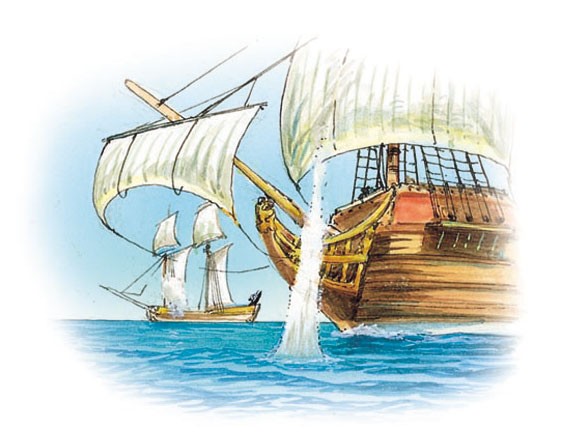
A chase could last several hours. Both pursuer and prey used their seamanship and judgment of the wind direction to make the chase longer or shorter. The galleon might have hoped to prolong the chase until nightfall and then escape under cover of darkness. If the pirate ship succeeded in closing in on its target, the pirate captain, having already made his own ship ready for battle, fired a shot across the bow of the pursued ship.
Preparing for battle
The boatswain (most senior crewman on deck) and his crew furled (rolled up) the mainsail and topsails in preparation for battle. This kept the vessel stable in strong winds, improved visibility and made sure the vessel could be sailed with only a few men. The rest might be needed to board the enemy vessel.
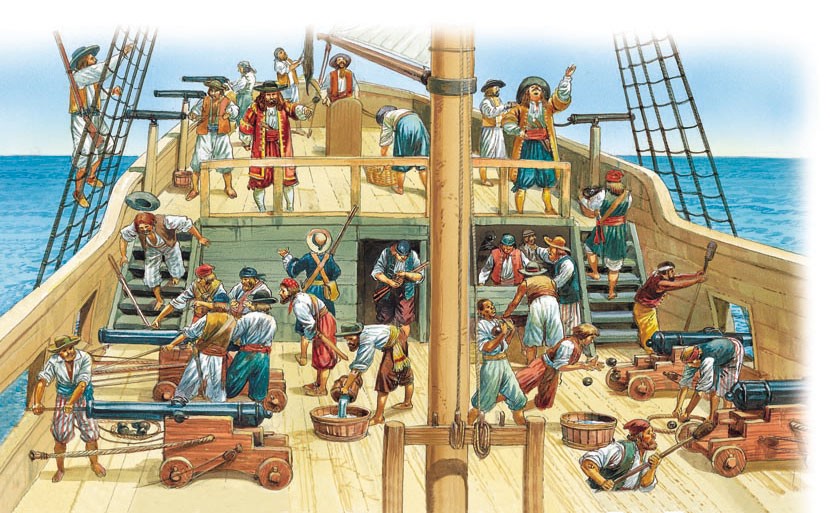
A pirate captain made his ship “clear for engaging”. He ordered the crew to prepare "closed quarters", which were defensive measures that protected the ship from enemy fire and from being boarded, such as by sealing up all openings. He ensured the guns were ready for firing, piling up shot and cartridges next to each cannon. Tubs were filled with seawater for fighting fires.
Hailing
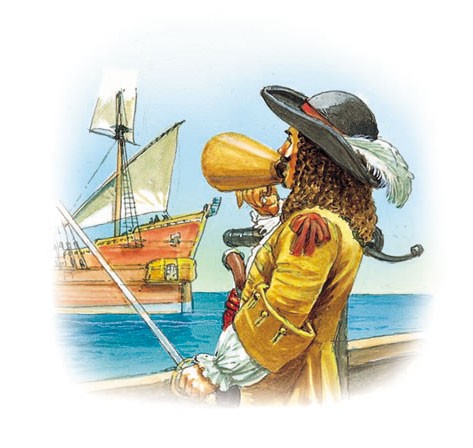
The pirate captain hailed—called out to the captain of the pursued ship—when the two ships were close enough. He would call for his opposite number to surrender without a fight. On seeing the pirate crew heavily armed, the Skull and Crossbones flag fluttering on the masthead and gunports opened, a terrified captain would often decide to do just that.
First shots
If the galleon refused to strike (lowering her sails, meaning that it surrendered), then battle began. The pirate ship tried to manoeuvre to windward of its quarry, meaning that it lay between her and the oncoming wind, to gain what was called the "weather gauge". From here, the pirate ship "raked" her, lying across the stern and firing down the length of the galleon from stern to bow with muskets and occasionally cannon, damaging her while making it difficult to be fired upon in return, since cannon could fire only from the sides of the ships. The pirate gunners also aimed to hole the enemy ship’s hull below the waterline.
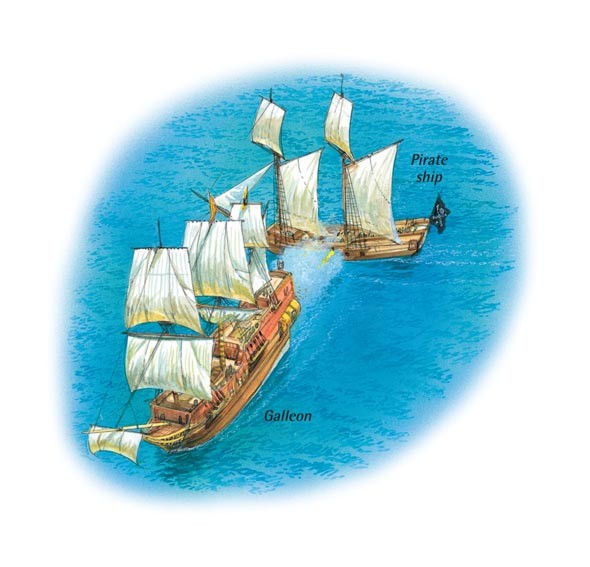
The pirates were anxious to avoid a prolonged gun battle. If they damaged the galleon too much, her prized cargo might be lost. Their own ship, more lightly built, might herself suffer damage from cannonfire and be unable to escape at speed. So they preferred to board the enemy vessel without delay.
Lying alongside
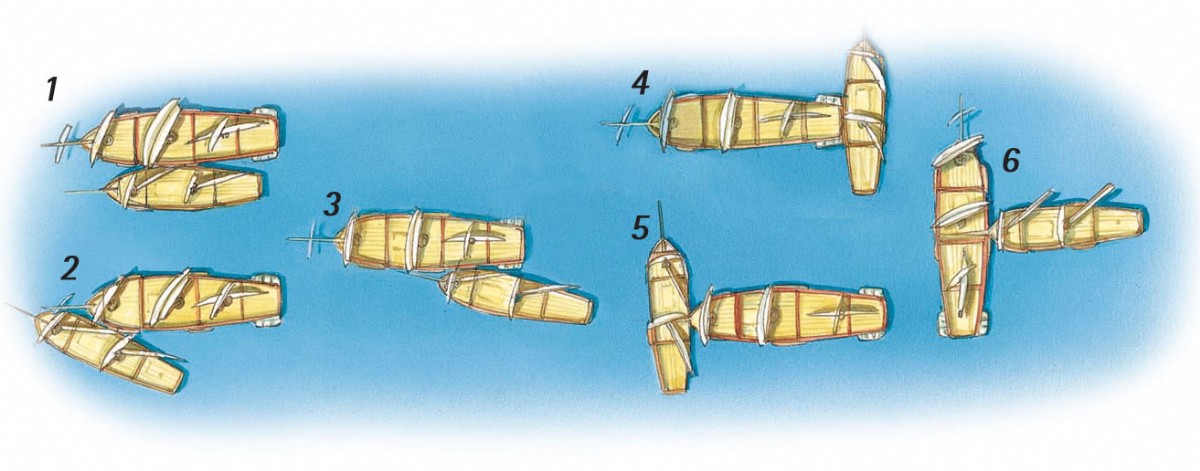
Before they could board, the pirates had to lay their ship alongside their prey. Amidships (1) or at the bow (2) were the best places. The worst place was at the stern (3), since the aftcastle (top deck, containing the captain's cabin) was the vessel’s highest point—although lying across the stern was the best place from which to fire cannon at her (4). Boarding across the bow (5) or from the bow to amidships (6) was unwise, the first because the men were forced to board one or two at a time, the second because the pirates would be dangerously exposed to enemy cannonfire.
Clearing the decks
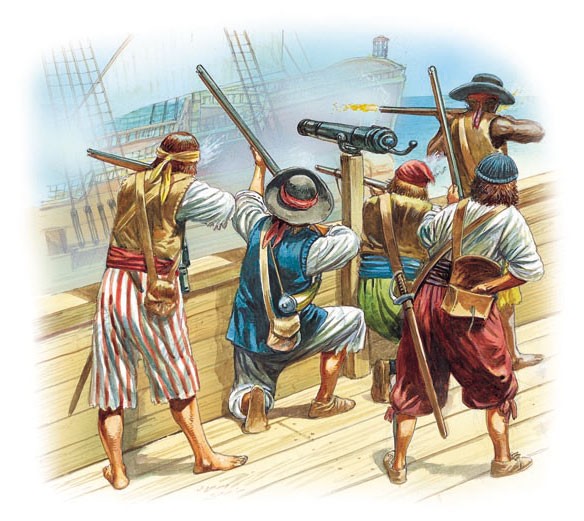
Before they boarded, the pirates had to clear the galleon’s decks and force her gunports to stay closed. This they could achieve with musket fire. A large crew could fire a fusillade (continuous firing by the whole crew on command) of up to 100 shots a minute at the decks of the enemy vessel.
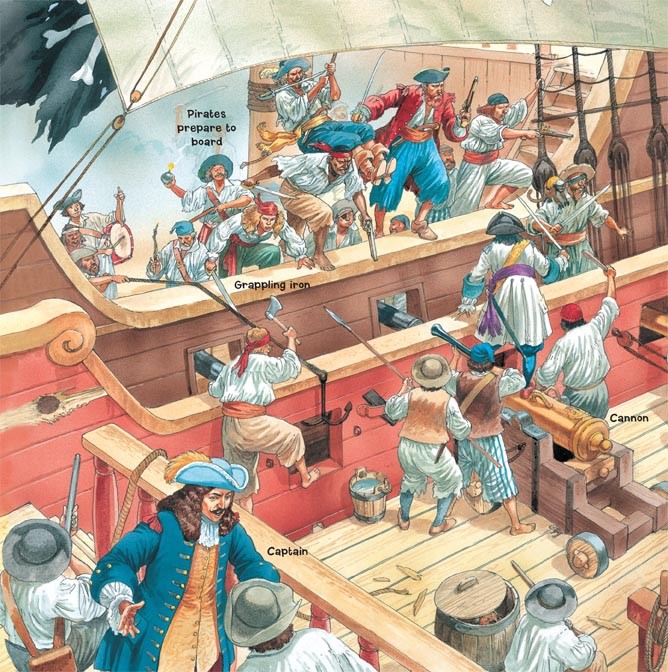
Preparing to board
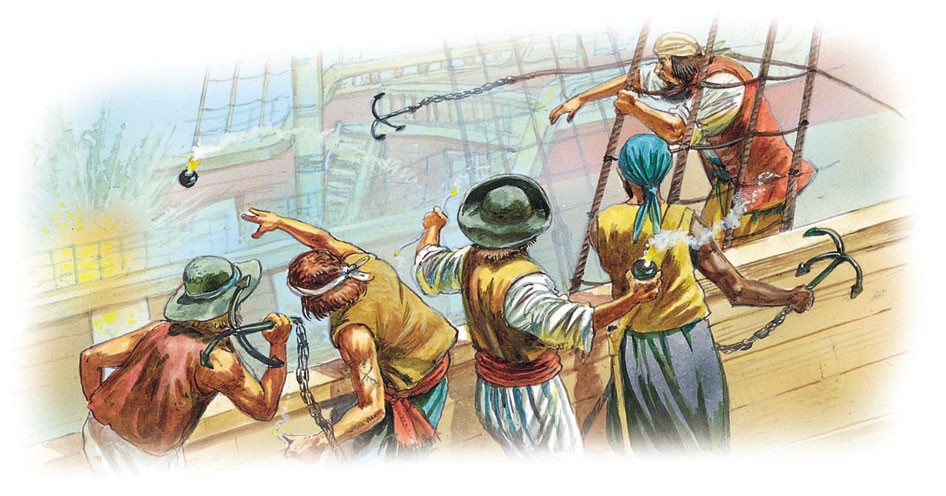
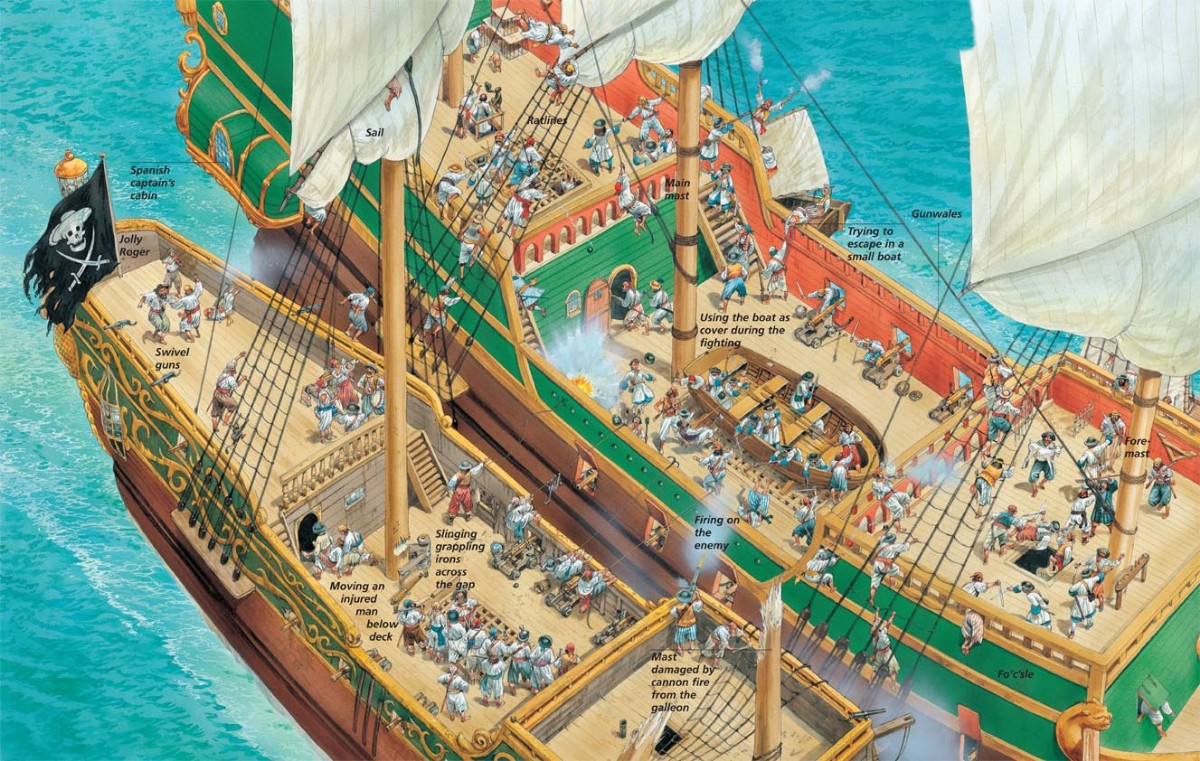
Having kept the enemy from returning fire long enough to draw alongside, the pirates now prepared to board. When the two ships were only metres apart, the pirates lit the fuses of their grenades (iron cylinders or glass bottles filled with gunpowder) and hurled them on to the galleon’s decks. They also threw fire bombs. Others slung grappling irons, large claw-shaped hooks on the ends of chains, over the rails, and pulled the ships closer so they could be roped together.
Going aboard
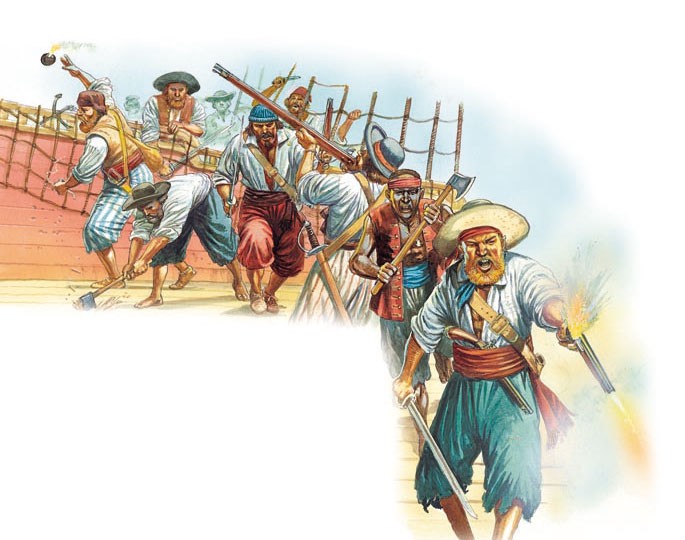
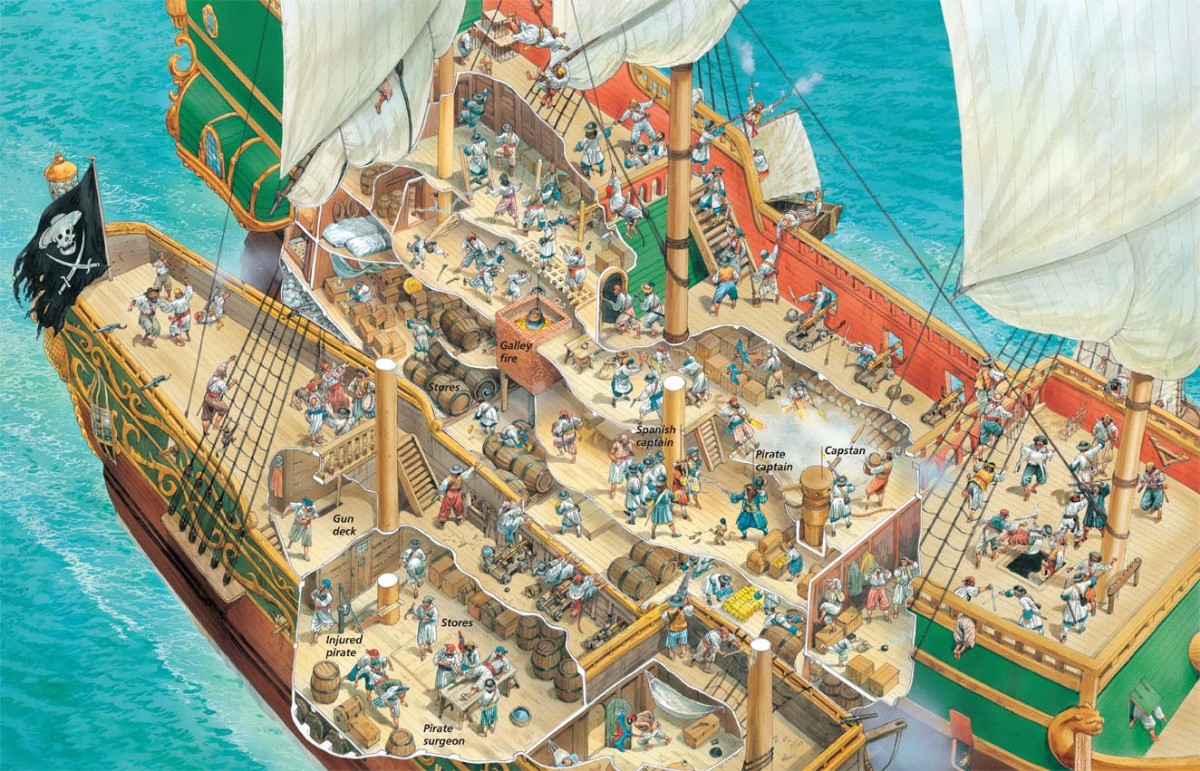
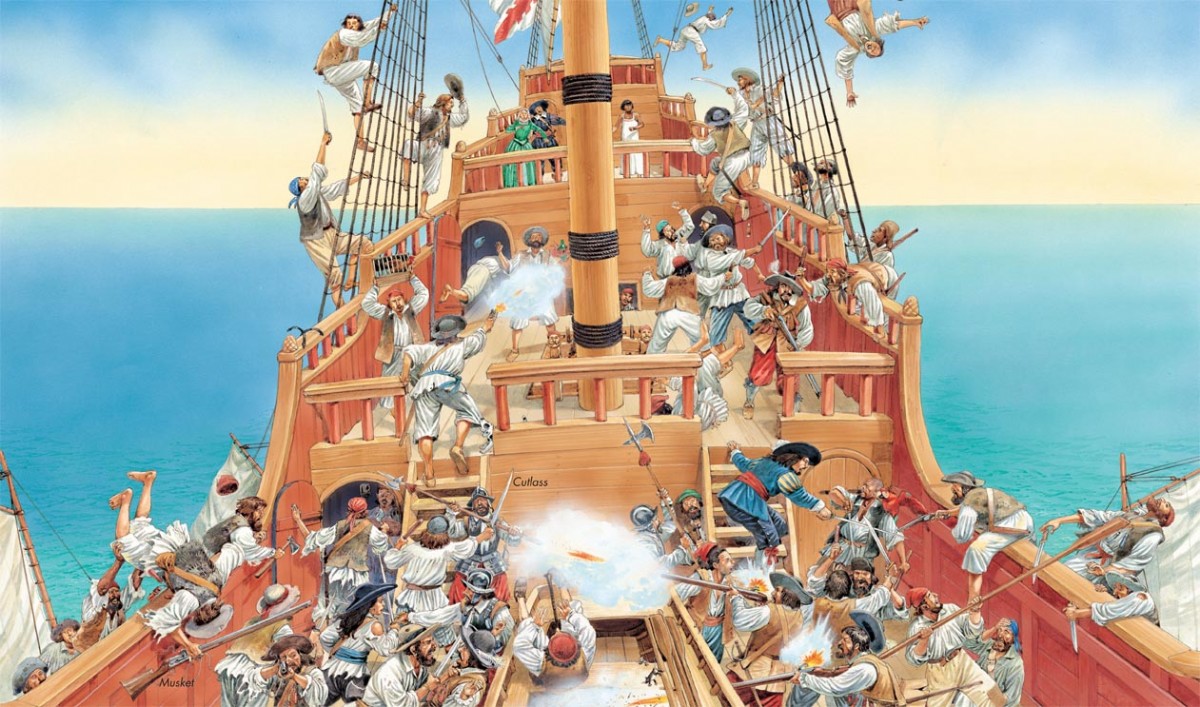
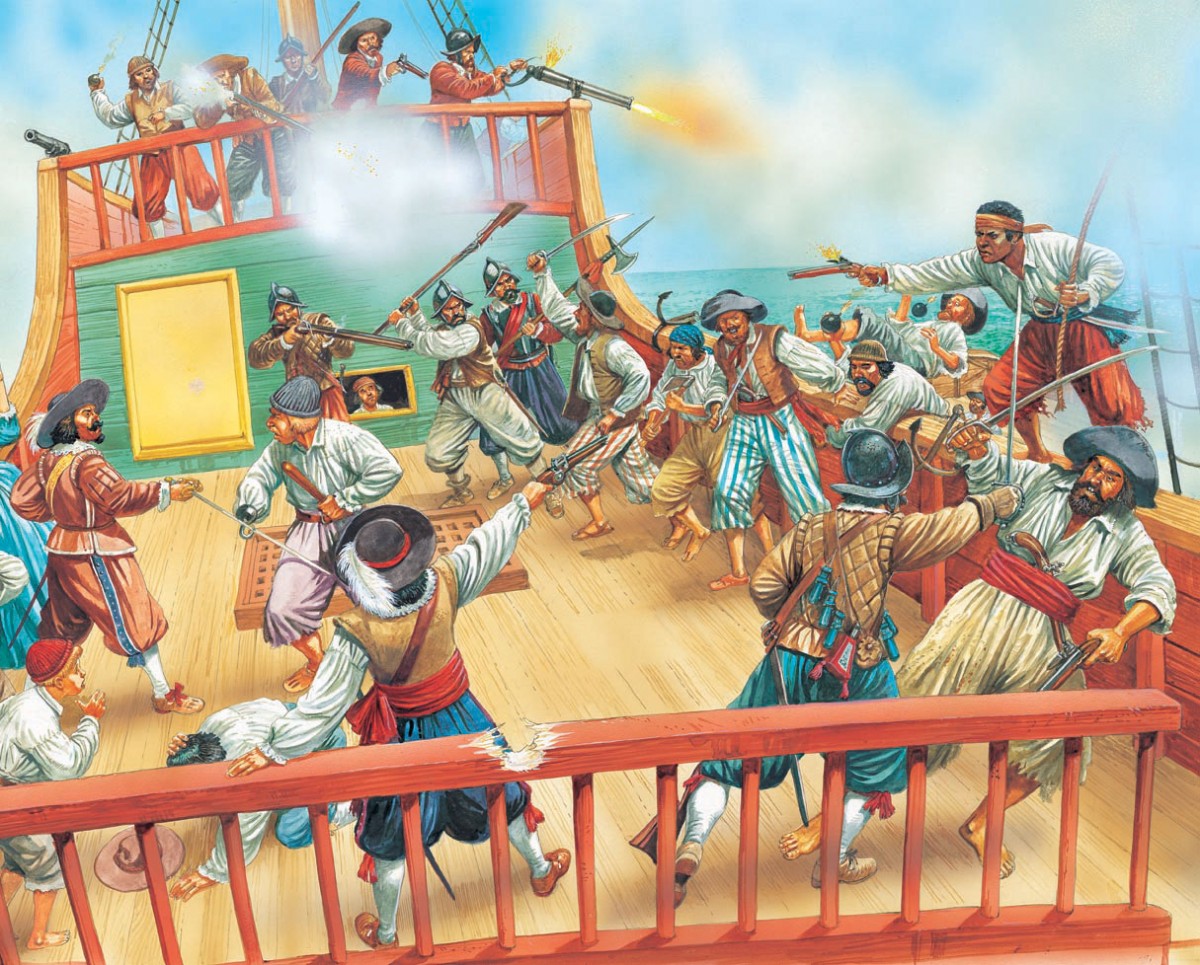
Through the cover of smoke, the pirate captain “entered” his men aboard. They might need to slash their way through boarding netting with axes and knives. Musketeers fired at tubs of gunpowder that had been positioned ready to drop from the yardarms. They also took aim at enemy marksmen lurking high in the rigging. Some of the pirates carried boarding axes which they use for smashing holes in the decks and for chopping through ropes. The boarders kept up their musket fire on the defending crew through these axed holes. The battle on deck could be a bloody affair.
The battle
Fighting could go on both on the deck and in the rigging. The defenders of the galleon could gain an advantage by firing down on the pirate attackers from positions high on the ratlines (rope ladders). Boarding pirates armed with axes would therefore chop through the galleon’s ropes, cutting down the ratlines and bringing the mainsail tumbling on to the deck to cause great confusion. But even with guards, the galleon stood little chance against a large crew of battle-hardened pirates. Wielding cutlasses and firing pistols, the pirates were usually victorious.
Surprise attack
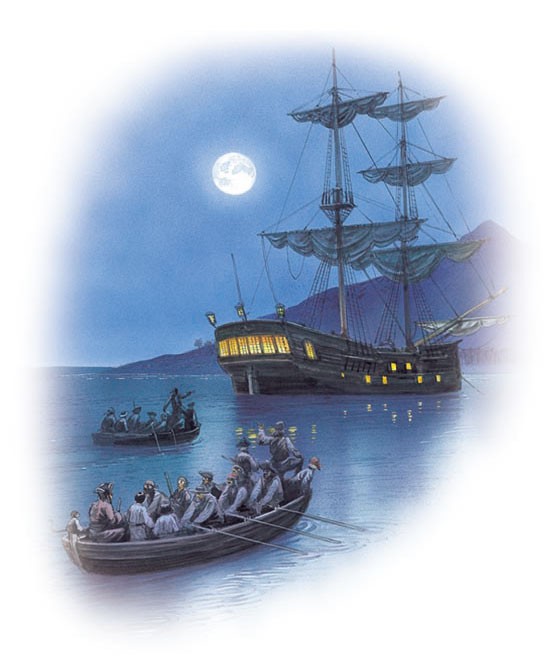
One of the least risky ways for pirates to capture a ship was by surprise, especially at anchor and at night. In calm water, rowing boats could approach a vessel undetected, particularly if the watch (sailors on lookout duty) was inattentive. The operation needed careful planning, because if they were discovered the pirates would be unable to retreat to their own ship quickly.
After the battle
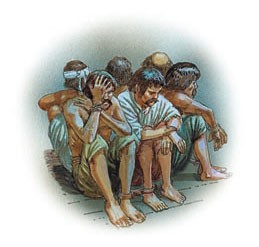
The battle won, the pirates cast off the lashings binding the two ships together, chiefly as a precaution against fire. The crew of the defeated ship were ordered to haul down or furl their sails, and then, along with their officers, they were secured under guard. The pirates would be wary at all times for any sign of treachery or of an uprising by the crew against them.
Pillage and plunder
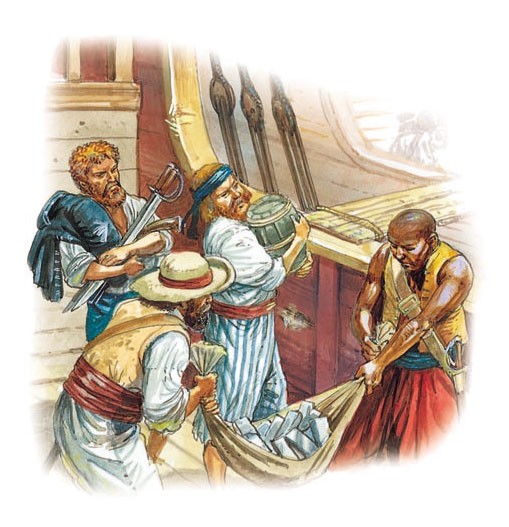
The pillaging started straight away. The victorious crew seized their prisoners’ clothing, jewellery, weapons and any other “moveable” items. The cargo itself was regarded as plunder, and was shared out between the officers and crew strictly according to the "articles" (the rules laid down aboard that ship for who took what size share of all valuables).
Once their prize had been plundered, the pirates either set the ship free, burnt it, took it over as a replacement for their own, or sold it for ransom.
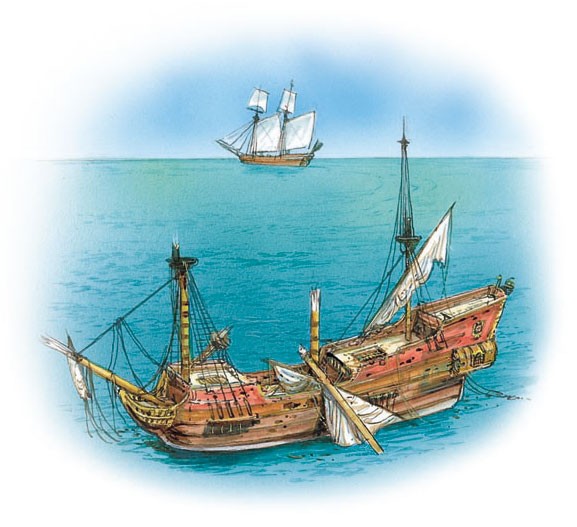
If the pirates chose to set the defeated ship and its crew free, they would first cut down the ship’s masts and damage her rudder, which made sure she could not quickly alert other ships to the whereabouts of the pirates.
Consultant: Philip Parker
pics
Without in any way limiting Q-files Ltd’s exclusive rights under copyright, any use of this publication to “train” generative artificial intelligence (AI) technologies to generate text is expressly prohibited. Q-files Ltd reserves all rights to license use of this work for generative AI training and development of machine learning language models.