
Pirates & galleons
Inside a pirate ship
A brigantine was a medium-sized vessel with two masts. Brigantines were favoured by pirates because they were fast and easy to control. They could sail in shallow waters where heavier warships could not follow. These features were advantageous for chasing prey or escaping danger. At the bow, the forecastle was set higher than the rest of the upper deck to give a good view. It was also a useful platform from which to board taller ships. Spanish galleons were no match for the speed of pirates aboard a brigantine, especially when weighed down by cargo and the many guns needed for defence.

Decks

The stern, or rear, of the ship, had four decks and housed the captain’s quarters and some of the stores. At the bow, the front of the ship, was the fo’c’sle (short for forecastle), or front deck. This was often higher than the rest of the top deck to give a good view. Most of the crew had their sleeping quarters here. Some slept in hammocks slung from the ceilings. Below deck was the ship’s kitchen, or galley, reached from above by stairs called a companionway. Here also was the capstan, a winding machine used for raising or lowering the anchor.
Captain's quarters
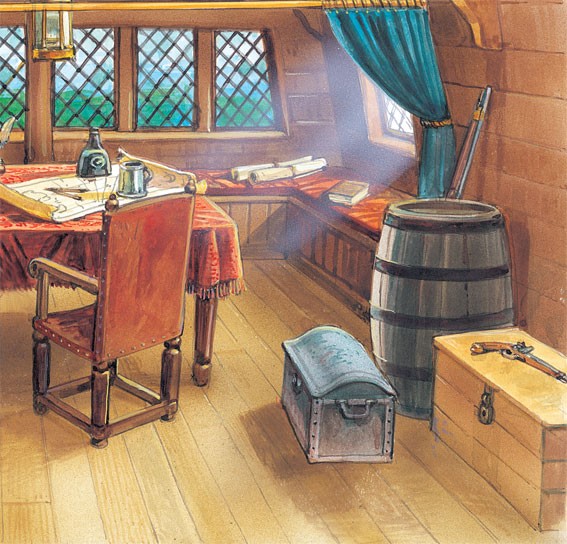
The captain had use of the Great Cabin, the largest room on the ship. This was where he entertained guests. The Great Cabin served both as a dining room for the captain and his senior crew members, and as a map room, where the captain could spread out navigational charts on the large table.
Ship's guns
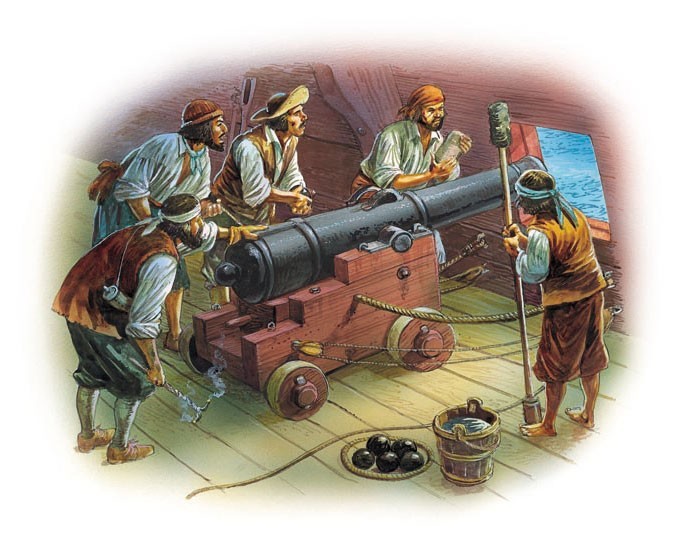
The pirate ship had several cannon. These were simple guns mounted on a wheeled carriage. This made them easy to roll back for loading with gunpowder and shot. This ship also had swivel guns mounted on the gunwales (the edges of the deck, pronounced "gunnels"). They could be turned from side to side to aim.
Hold
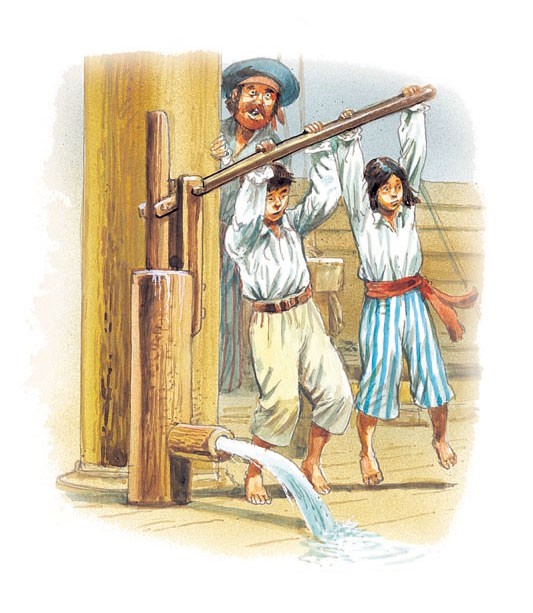
The hold below the lower deck contained the ship's stores: food (biscuit, grain and salted meat), water and beer, gunpowder, cannonballs, spare sails and ropes. At the bottom of the ship were the bilges, containing ballast, the name given to heavy rocks that helped keep the ship stable. The bilges tended to fill up with smelly water, so they were drained using bilge pumps.
Steering the ship
The ship was steered by the rudder, a large wooden paddle at the stern. It was controlled either by a wooden rod called a tiller, or via a connecting rod called a whipstaff, by the helmsman on the gun deck. On some ships, the rudder was controlled by a wheel on the main deck instead of a whipstaff. The sails were also adjusted to help change direction.
Jolly Roger
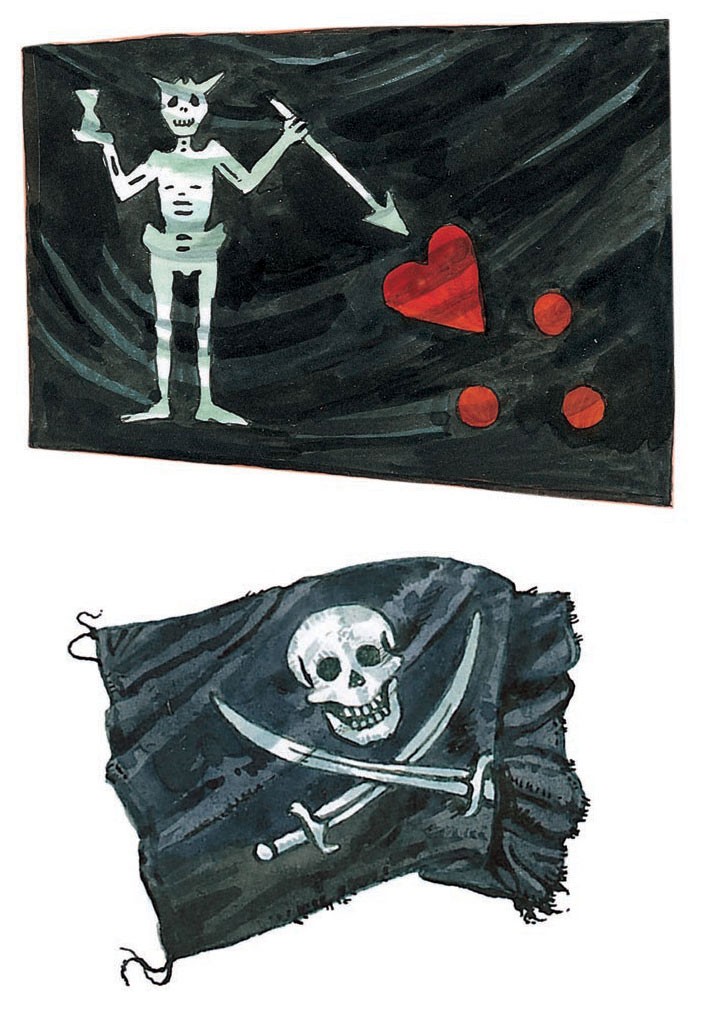
Each pirate captain had his own flag design, but skulls and cutlasses were always popular subjects. When pirates raised their Skull and Crossbones flag, it was a sign that no mercy would be shown. Known as the Jolly Roger, it was used by pirates all over the world. Pirates would often take a treasure ship by surprise, swapping a friendly flag for the Jolly Roger only moments before their attack.
Different flags had different meanings. A white flag was hoisted when pirates were willing to “parley” (negotiate). A red flag symbolized bloodshed and indicated that they would give no "quarter" (mercy). Black flags meant death.
Consultant: Philip Parker