
United States history
American Revolution
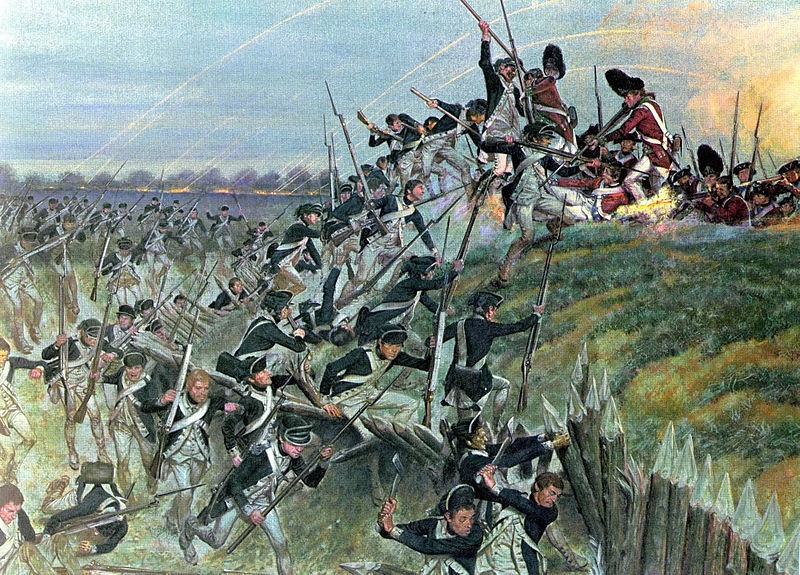
The American Revolutionary War took place between 1775 and 1783. The Thirteen Colonies in North America rejected the British monarchy and the authority of the British parliament. Issuing the Declaration of Independence in 1776, they broke free from the British Empire and combined to become the United States of America. A war was fought between the rebel colonists and the British, ending in defeat of the British army in 1781, although the war did not officially end until 1783.
British rule in North America
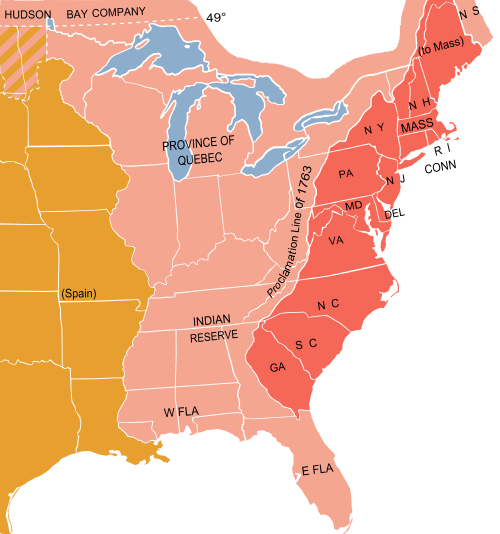
From the early 16th century onwards, North America had been settled by groups of colonists from various European countries. During the French and Indian War (1754–1763), British and French colonists fought over territory in North America. Britain emerged victorious, with control of a vast area of land. By this time, a number of British colonies (not including Canada), grouped together along North America's eastern seaboard, had been established. They were known as the Thirteen Colonies.
The revolt of the Thirteen Colonies
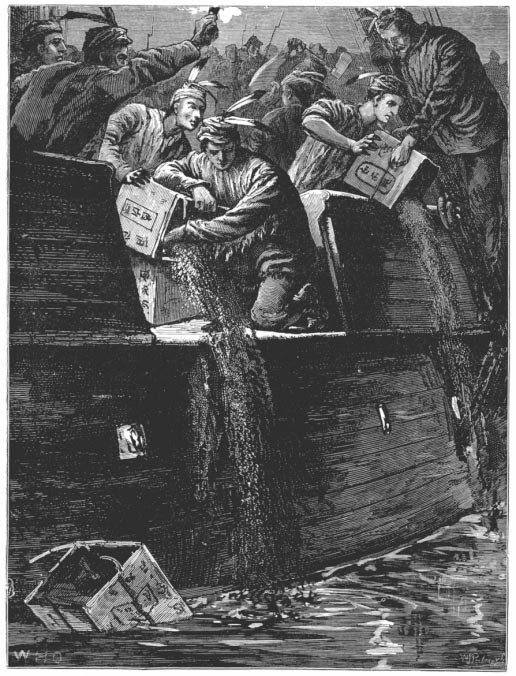
The colonists were under British rule, but had no say in how they were governed. During the years after the French and Indian War, the British government imposed many different taxes on the colonists. These taxes provoked protests against what the colonists called “taxation without representation”. On 16th December 1773, colonists boarded ships in Boston harbour and threw chests of tea into the sea in a protest against tea taxes.
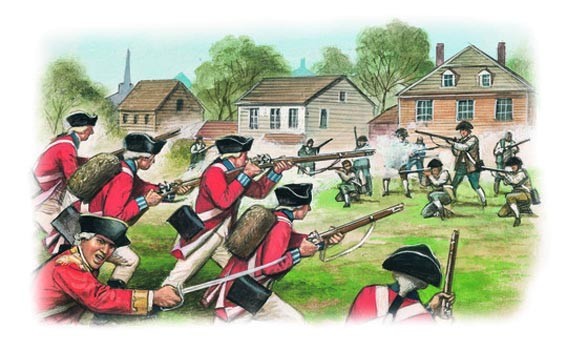
The first shots between British troops and American colonists were fired in Lexington, Massachusetts on 19th April 1775, marking the opening of the war. In July 1776 the colonists issued the Declaration of Independence and the United States of America was born. British troops finally surrendered at Yorktown, Virginia, in 1781, although the war did not officially end until September 1783, when a peace treaty, the Treaty of Paris, was signed.
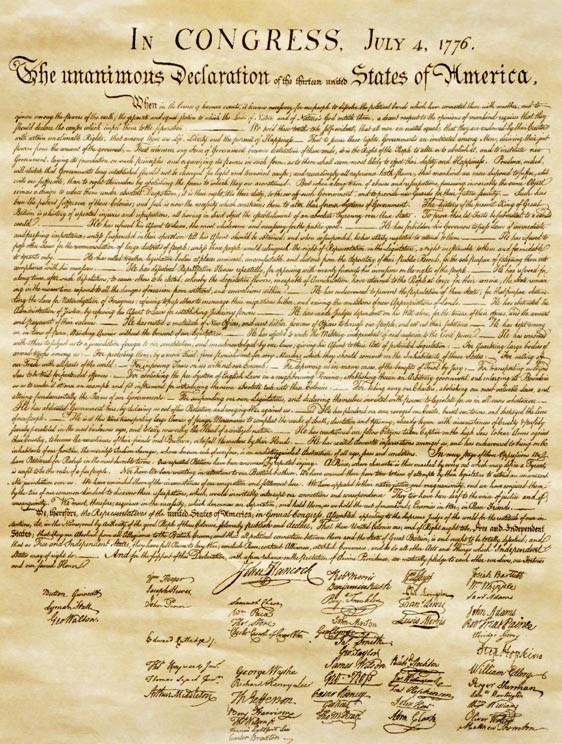
Declaration of Independence
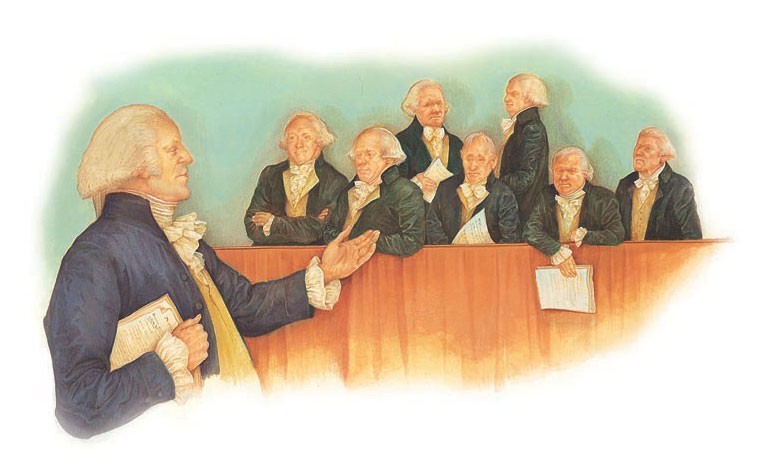
A meeting of leaders of the American colonists in the Second Continental Congress took place in July 1776. The Congress issued the Declaration of Independence, which they dated 4th July. It was drawn up by Thomas Jefferson (1743–1826) and it asserted the independence of the American colonies from Britain. The Declaration was not recognized by Britain until the signing of the Treaty of Paris in 1783 after the end of the war, in which British forces were defeated by American troops commanded by George Washington (1732–99).
Consultant: Philip Parker
American Revolution timeline
10th February 1763
The Treaty of Paris marks the end of the French and Indian War (1756–63, known as the Seven Years’ War in Europe). Britain gains all France’s North American territories east of the Mississippi River, and Florida from Spain in exchange for Cuba. Spain keeps its territory to the west of the Mississippi River.
7th October 1763
King George III's Proclamation, declaring that all land west of a line running along the crest of the Appalachian Mountains is Indian territory, and barred to settlement. The Royal Proclamation runs against the Thirteen Colonies' claim that they have the right to govern this land.
5th April 1764
The British Parliament passes the Sugar Act, imposing taxes on a number of goods exported by the Thirteen Colonies. These measures lead to widespread protests in the colonies.
22nd March 1765
Under the terms of the Stamp Act, Parliament requires all legal documents, newspapers and pamphlets to use watermarked, or “stamped” paper, for which they have to pay a tax.
August 1765
A group called the Sons of Liberty is formed. They use public demonstrations and threats of violence to ensure that the British tax laws are unenforceable.
October 1756
Representatives from nine of the thirteen colonies object to the Stamp Act, because they say it is a tax imposed without their consent.
18th March 1766
Parliament repeals (cancels) the Stamp Act, but declares that it still has the right to tax colonies.
29th June 1767
Townshend Revenue Act. Tax is imposed on tea, glass, paper, lead and paint. This is to help pay for the administration of the colonies. Colonial assemblies condemn taxation without representation.
February 1768
Assembly of Massachusetts Bay issues a letter to the other colonies, urging them to organize resistance.
October 1768
British troops arrive in Boston in response to political unrest there.
5th March 1770
Boston Massacre. Angered by the presence of troops, a crowd begins harassing a group of soldiers guarding the customs house. One soldier is knocked over by a snowball. The other soldiers then fire into the crowd, killing five people.
June 1772
The revenue schooner Gaspee runs aground near Providence, Rhode Island, and is burnt by locals angered by trade laws.
10th May 1773
Parliament passes the Tea Act, granting the East India Company the right to ship its tea to the North American colonies free of tax, although the tax imposed by the Townshend Act and collected in the colonies remains in force.
16th December 1773
Boston Tea Party. Angered by the Tea Acts, a group of American Patriots (colonists who opposed British rule) disguised as Mohawk Native Americans dump £9000 of East India Company tea into Boston harbour.
May 1774
The British government responds to the Boston Tea Party by imposing what are called the Intolerable Acts, measures which strip Massachusetts of self-governing powers.
September 1774
Patriot leaders meet to organize opposition to the Intolerable Acts. They set up their own government, called the Continental Congress, to co-ordinate resistance efforts.
February 1775
A state of rebellion is declared in Massachusetts. The British garrison receives orders to disarm the rebels and arrest their leaders.
19th April 1775
Battles of Lexington and Concord. First shots of the Revolutionary War exchanged between British troops and Patriot troops, known as Minutemen, who had been warned of the attack by Paul Revere. The Patriots lay siege to Boston.
16th June 1775
Continental Congress appoints George Washington commander-in-chief of the Continental Army.
17th June 1775
Battle of Bunker Hill. The first major battle of the Revolutionary War of Independence takes place outside Boston. It is a British victory, but at the cost of 1054 casualties from the British garrison against 367 American casualties.
5th July 1775
Continental Congress proposes the ending the Intolerable Acts in exchange for a ceasefire, but King George III rejects the proposal.
March 1776
The Continental Army forces the British to evacuate Boston.
May 1776
Continental Congress calls on all colonies, now referred to as states, to write their own constitutions.
4th July 1776
The Declaration of Independence, drafted largely by Thomas Jefferson, is unanimously adopted by the Continental Congress, marking the formation of the United States of America.
27th August 1776
Battle of Long Island (also known as Battle of Brooklyn). British forces defeat Washington’s Continental Army and occupy New York.
11th September 1776
Staten Island Peace Conference. The British demand a withdrawal of the Declaration of Independence. This is refused by the Americans, and negotiations end.
26th December 1776
Battle of Trenton, New Jersey. Having been pushed back into Pennsylvania, Washington leads the Continental Army across the Delaware River and defeats the British. He regains control of most of New Jersey and provides a valuable boost to American morale.
13th October 1777
Battle of Saratoga. British army becomes trapped in northern New York state. Lacking essential supplies, 5700 troops under Major General John Burgoyne have no option but to surrender to Major General Horatio Gates. It is a turning point in the Revolutionary War.
6th February 1778
France becomes the first country to recognize US independence.
16th August 1780
The Americans are defeated at the Battle of Camden, South Carolina, giving Britain control of most of Georgia and South Carolina.
1st March 1781
Ratification of the Articles of Confederation, a new constitution, by the Continental Congress.
18th October 1781
Surrender of British forces under Charles Cornwallis at Yorktown, Virginia after a siege by the combined French and Continental armies under Washington. The Revolutionary War is effectively over.
5th March 1782
British Government begins peace negotiations.
3rd September 1783
Treaty of Paris is signed, formally ending the Revolutionary War and confirming the United States as completely separate from the British Empire. The US takes possession of nearly all British territory east of the Mississippi River and south of the Great Lakes. The British retain control of Canada, while Spain retakes Florida.