
EASY READ Mini-beasts
How do beetles live?
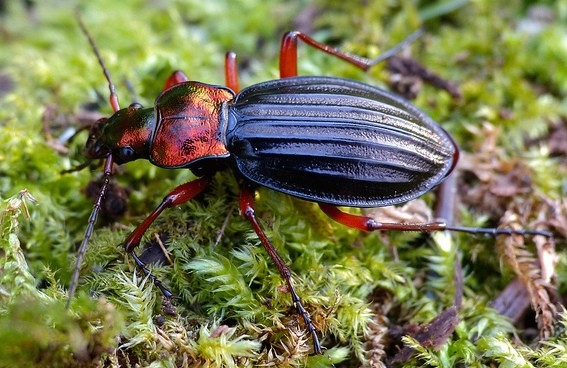
Beetles make up the largest group of insects. There are least 350,000 known kinds. There is a huge variety in colours and shapes. All beetles have wings. When they are not in flight, the wings are folded away under hard wing-cases for protection.

Mandibles
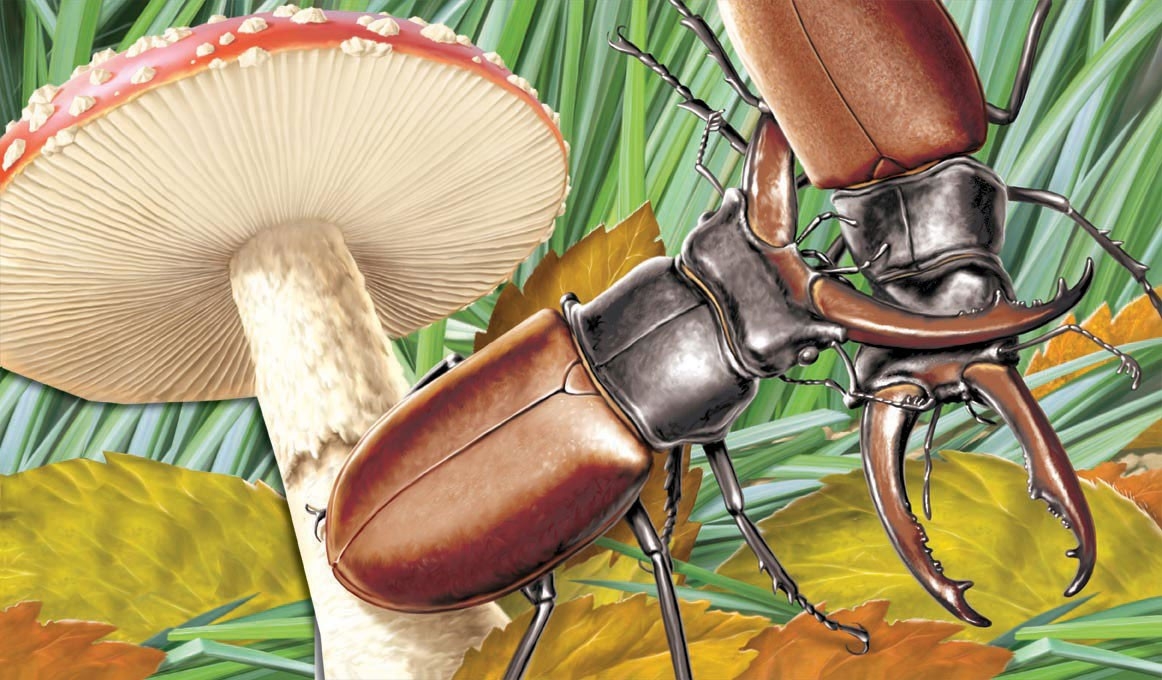
The beetles' mouthparts include large mandibles: these are jaws that move from side to side to grasp their prey or cut up their food. When stag beetles fight one another, they use their giant jaws to lift their opponent into the air.
Life cycle
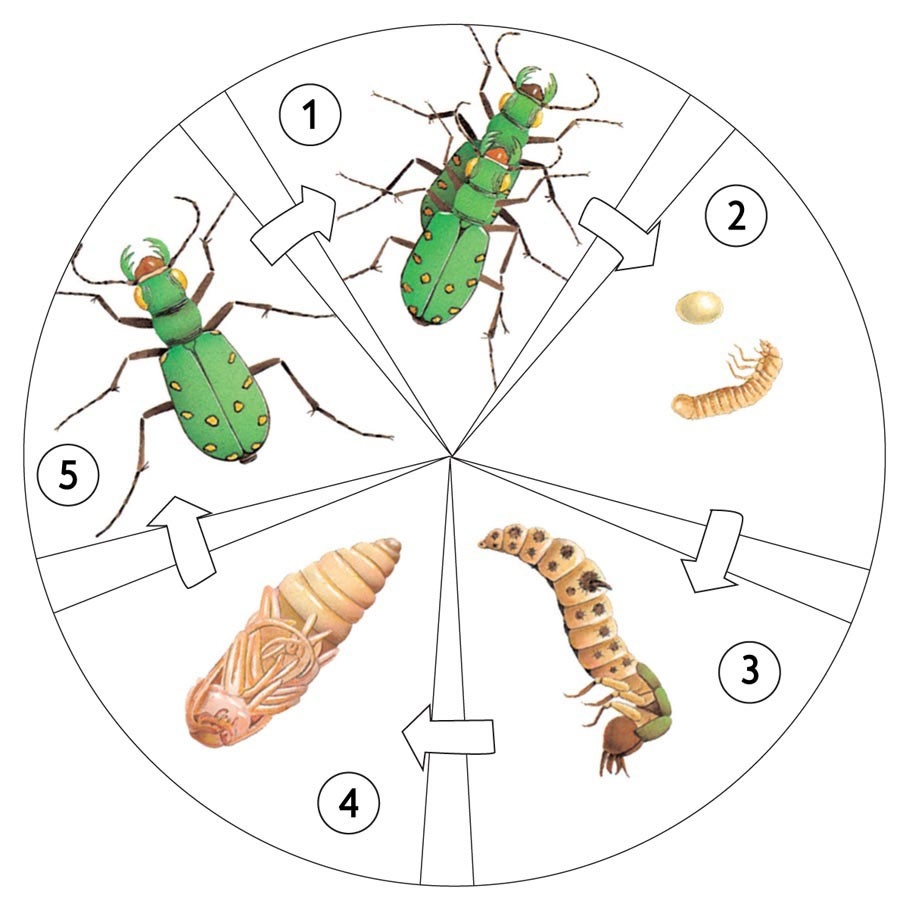
Beetles hatch from their eggs as larvae, also known as grubs. The larvae eat fast. As they increase in size, they shed, or moult, their old skins. Finally the larvae pupate, emerging as fully-grown adults. Some beetle larvae have legs and large jaws for catching their prey.
Ladybirds
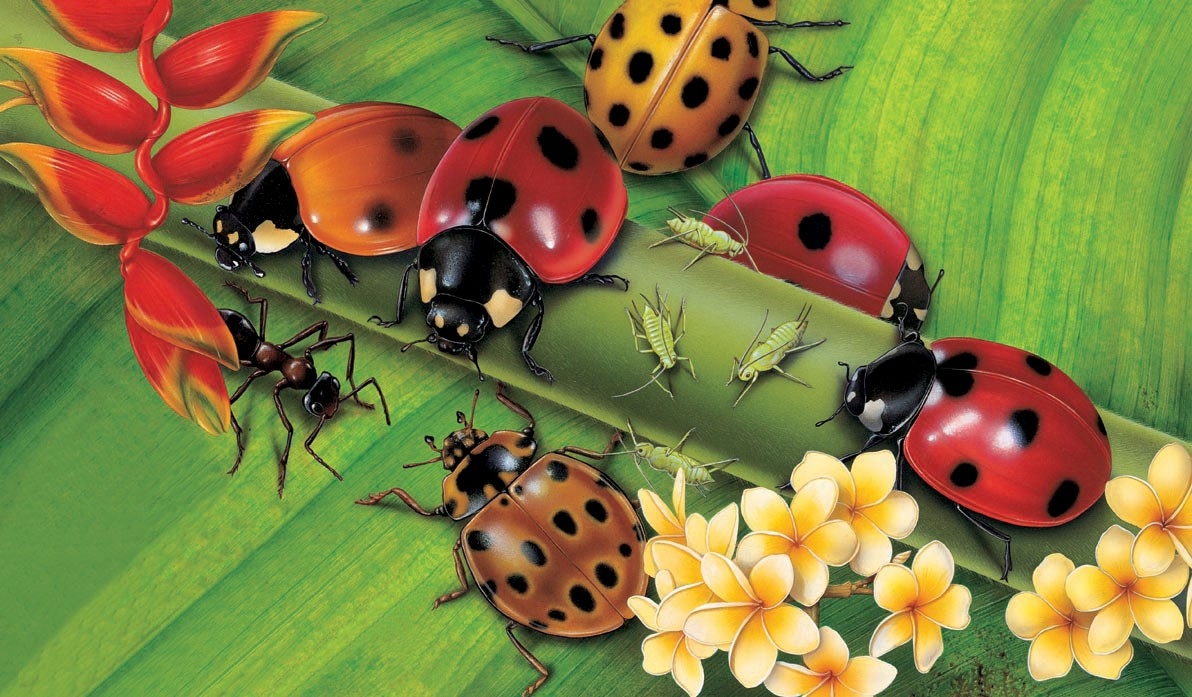
Ladybirds are types of beetle. A ladybird's red or yellow body and black spots are a warning to a hungry bird that it tastes very bad, and so will not eat it. Many types of ladybird are useful to gardeners and farmers because they feed on pests, such as aphids, mites and caterpillars, that damage plants and crops.
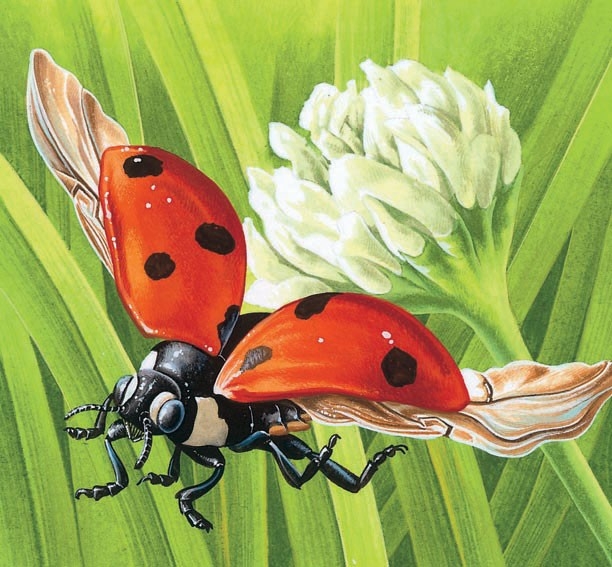
Like all beetles, ladybirds have hard cases that cover their wings when they are not flying. When ladybirds take off, the cases open, allowing their long wings to unfold. Like many other kinds of insect, they need it to be warm before they can fly.
Scarab beetles
Scarab beetles are large, oval-shaped beetles. They have thick, front legs for digging. Many species have a bright, metallic sheen. Scarab beetles include the rhinoceros, dung, goliath, stag and chafer beetles.
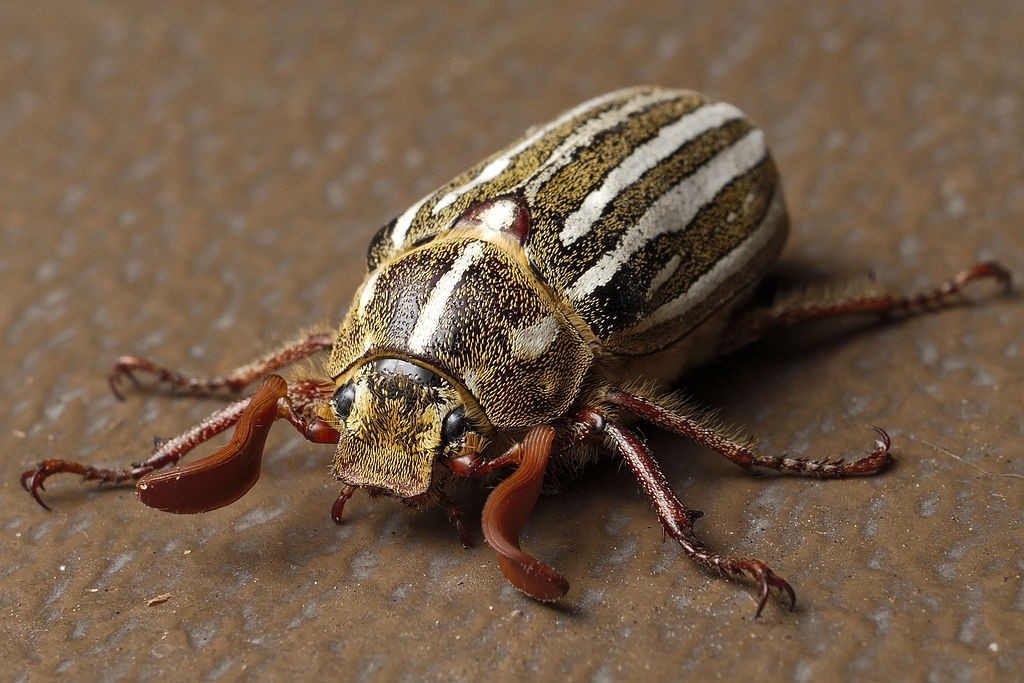

Dung beetles
Dung beetles live in grasslands. They feed off the dung (poo) of grassland animals. In some kinds, the adults use their legs to mould the dung into balls. Then they roll the ball to their underground burrows, usually travelling backwards. They lay their eggs in inside it. Their larvae feed on it when they hatch out.
Water beetles
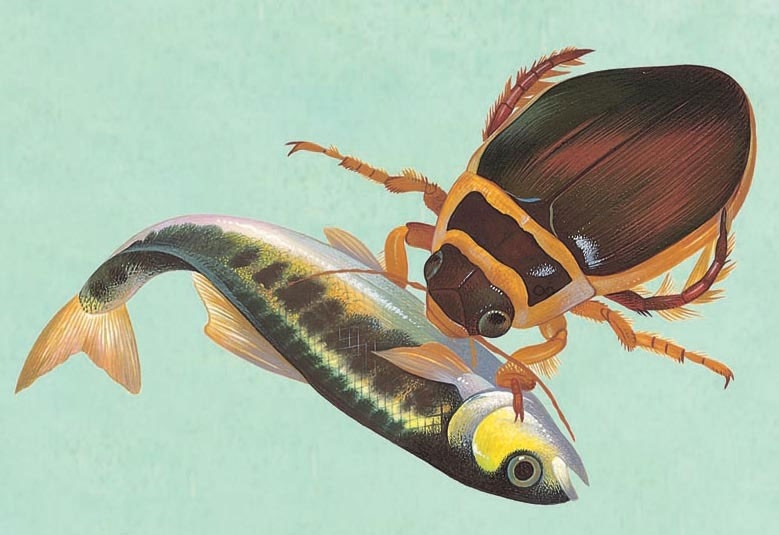
The great diving beetle has powerful back legs lined with hairs. It uses them to pull itself through the water in search of insects, tadpoles and even small fish to catch. Although it spends most of its time in the water, it can also fly well.
Tiger beetles
Like its namesake, the tiger beetle is a ferocious predator. It is one of the fastest insects on the ground. Adults chase and catch their prey, devouring them with their powerful, curved mandibles. Tiger beetle larvae are just as dangerous. They hide in burrows, seizing passing insects to eat.

Consultant: Chris Jarvis
Ready to find out more?
Here are some pages in other parts of Q-files you might like to explore:
Beetles
Ladybirds
Beetles A-Z