
Insects
Bugs
Bugs, often known as the true bugs, differ from other insects because they have long, beak-like mouthparts instead of biting jaws. They use them to pierce their food and suck up the liquid contents. Most feed on plant juices, but some hunt and feed on other animals. Carnivorous bugs either suck the blood of their victims or inject saliva into their bodies, liquefying the insides so they can be sucked out. Many live in water, either underwater or skipping across the thin film of the surface on their long legs. They grasp their prey with their forelegs in a similar way to a mantis.

Species
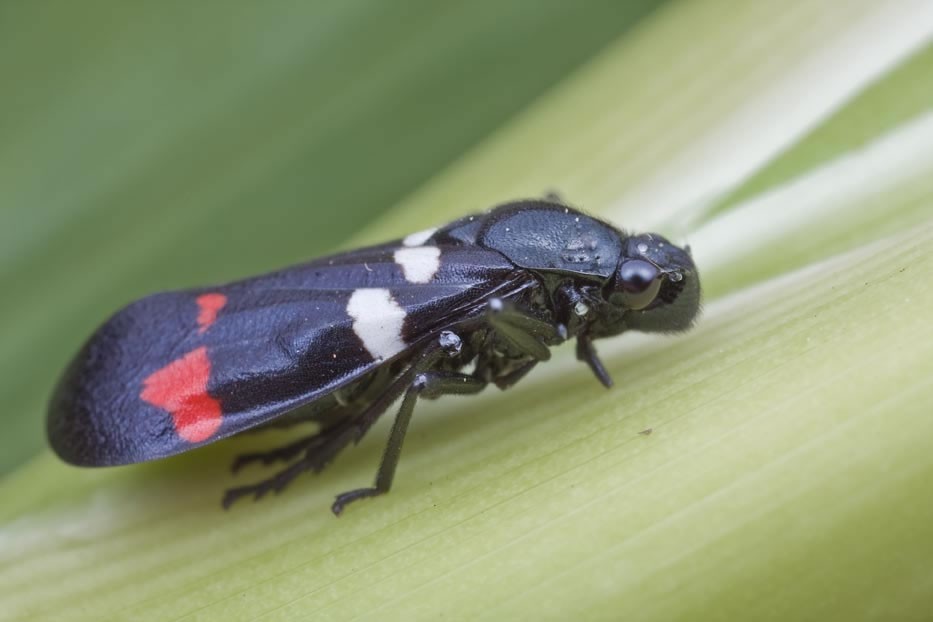
With around 50,000 to 80,000 species, bugs include aphids, leafhoppers, treehoppers, froghoppers, shield bugs and cicadas. Most bugs feed on plant sap, while a few are predatory, feeding on other insects or small vertebrates. Some, including bed bugs and kissing bugs, are parasites: they feed on the blood of larger animals.

Water bugs, such as the water boatmen and water scorpions, live in ponds or streams. They are usually carnivores. They use their legs like paddles to move through the water.
Shield bugs
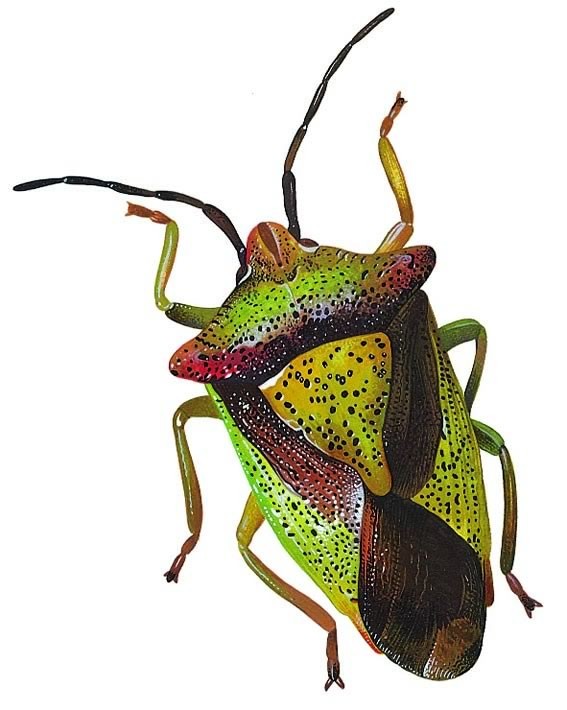
Shield bugs are so-called because when their wings are closed they look like the coats of arms on a shield. They come in a range of colours and patterns. Their bright colours tell predators that they are poisonous to eat—to the benefit of both predator and potential prey. Many kinds of shield bug stay with their eggs until they hatch out to protect them, an unusual trait in insects. If attacked, the shield bug squirts out a terrible-smelling fluid sometimes further than 30 centimetres (1 foot), giving them the alternative name "stink bug".
Treehoppers
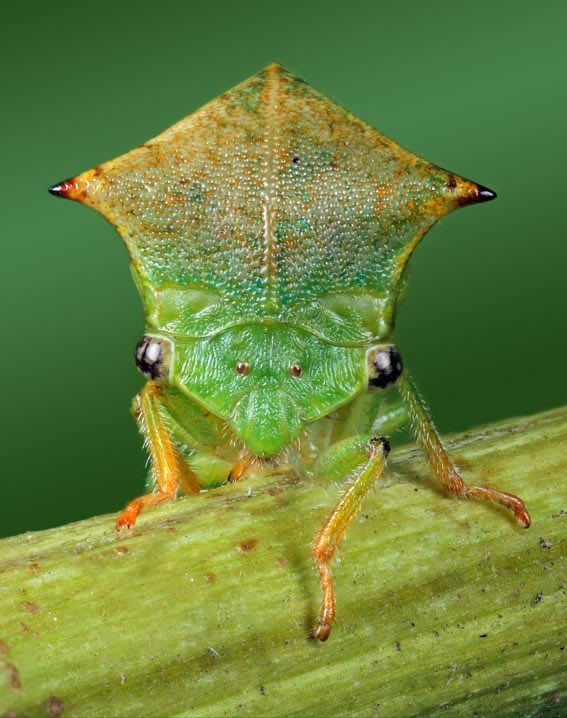
Treehoppers, or thornbugs, are best known for their enlarged pronotum, the segment on top of their thorax. These mimic the appearance of thorns and help to camouflage the insects on a branch. Sometimes the pronotum mimics the appearance of stinging ants, so predators will keep away. In some species, the pronotum grows elaborate, strange-looking extensions.
Treehoppers pierce plant stems with their beaks and feed on sap. The sap they excrete, known as honeydew, attracts ants. Both types of insects benefit from this arrangement: the ants carry away the honeydew as food and the ants provide protection from predators for the treehoppers.
Cicadas
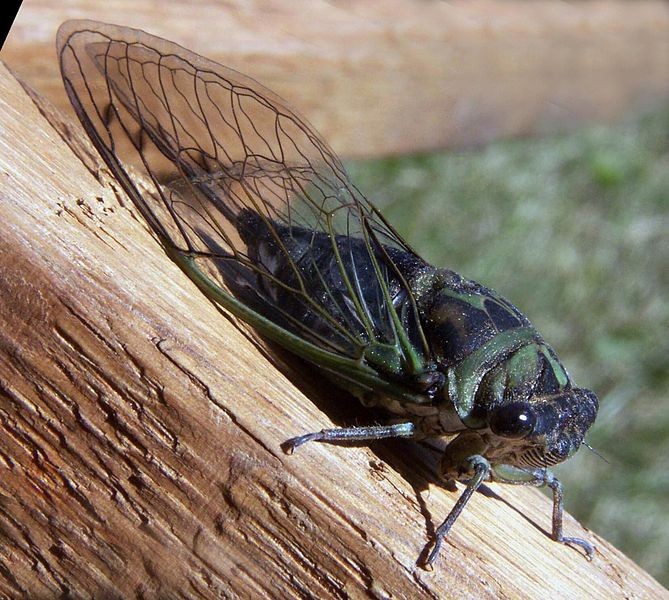
Cicadas are insects with stout bodies, broad heads, clear-membraned wings and large compound eyes. There are more than 3000 species spread around the world, concentrated in tropical and warm temperate regions. Most are between 2 and 5 centimetres (1 to 2 inches) in length, with the largest being the empress cicada, which is around 7 centimetres (2.8 inches) long.
Adult cicadas typically live in trees, feeding on watery sap. Coloured like tree bark, many are well camouflaged to evade predators, especially birds.
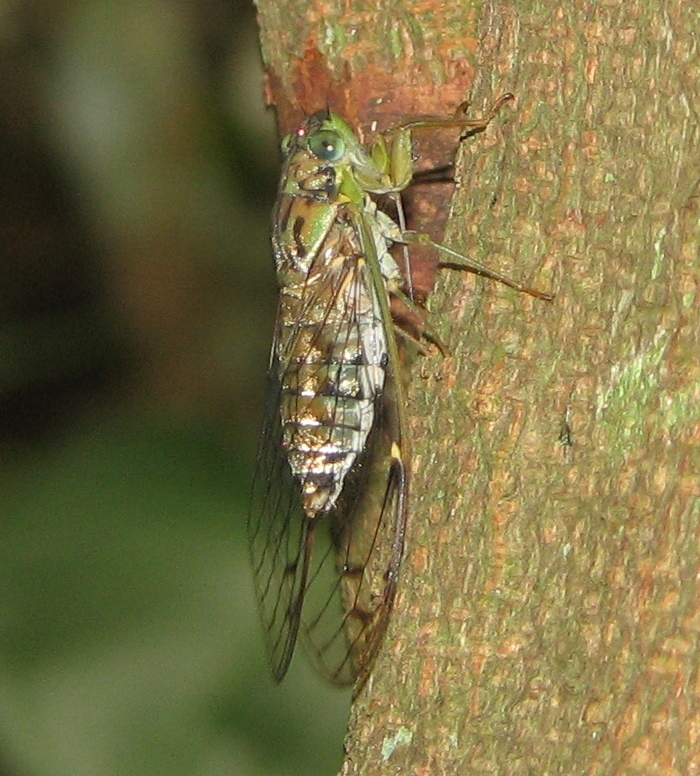
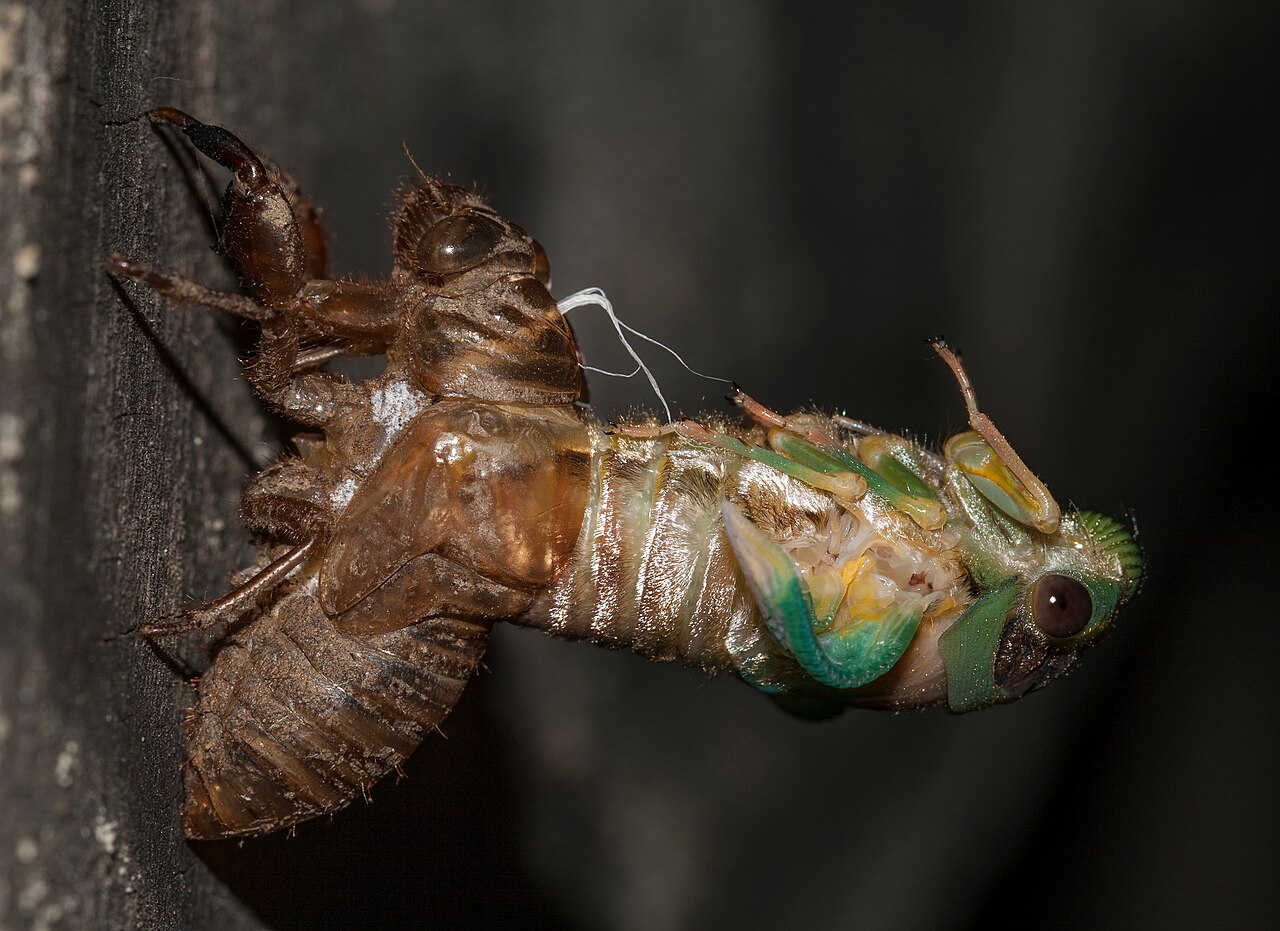

Female cicadas lay their eggs in a slit they make in the tree's bark. The newly hatched nymphs drop to the ground and burrow into the soil, using their strong front legs to dig underground dens. There they remain for between two and five years, sucking the liquid from plant roots. Eventually they emerge at the surface, moulting their exoskeleton (shell) to become winged adults. They mate and lay eggs, but live as adults for only between four and six weeks.
Some species of cicadas from North America, known as periodical cicadas, spend much longer underground as nymphs. They emerge as adults all at the same time every 13 or 17 years, depending on the species.
Male adult cicadas have an extremely loud "song" to attract females. It is produced by the rapid buckling and unbuckling of drum-like organs called tymbals. These lie at the front of abdomen, one on each side. The greengrocer, an Australian species, is probably the world's loudest land invertebrate, reaching a volume of 120 decibels at close range—the equivalent of a jet aeroplane at take-off.
Bed bugs

Bed bugs feed on the blood of human hosts. They inject saliva into the bloodstream of their host to thin the blood and to prevent it from clotting before digesting their meal. It is the bed bug's saliva that causes itching and welts on the skin. Bed bug infestations are mostly from one of two species: the common bed bug and the tropical bed bug. They may survive for up to 70 days without feeding. Adults are reddish-brown, flat, oval and have no hind wings.

Lice
Lice (the plural of louse) are related to bugs. They are a group of over 3000 species of wingless insects, most of which are scavengers on warm-blooded animals: birds and mammals, including humans.
Lice feed on the flakes of dead skin found on the host's body. Most lice species will live only on a specific animal host. The head louse lives only on human scalp hair. Each of its short legs has a single claw and opposing "thumb" which it uses to grasp tightly the hair shaft. A louse's egg is called a nit. The lice attach their eggs to the hair with a sticky saliva.
Consultant: Chris Jarvis