
Insects

CITE
We have made every effort to follow citation style rules, but there may be some minor differences. If in doubt, please refer to the appropriate citation style manual.
Dragonflies. (2026). In Q-files Encyclopedia, Life, Insects. Retrieved from
https://www.q-files.com/life/insects/dragonflies
"Dragonflies." Life, Insects, Q-files Encyclopedia, 24 Mar. 2026.
https://www.q-files.com/life/insects/dragonflies.
Accessed 30 Oct. 2026.
Dragonflies 2026. Life, Insects. Retrieved 30 October 2026, from
https://www.q-files.com/life/insects/dragonflies
Life, Insects, s.v. "Dragonflies," accessed October 30, 2026.
https://www.q-files.com/life/insects/dragonflies


Dragonflies
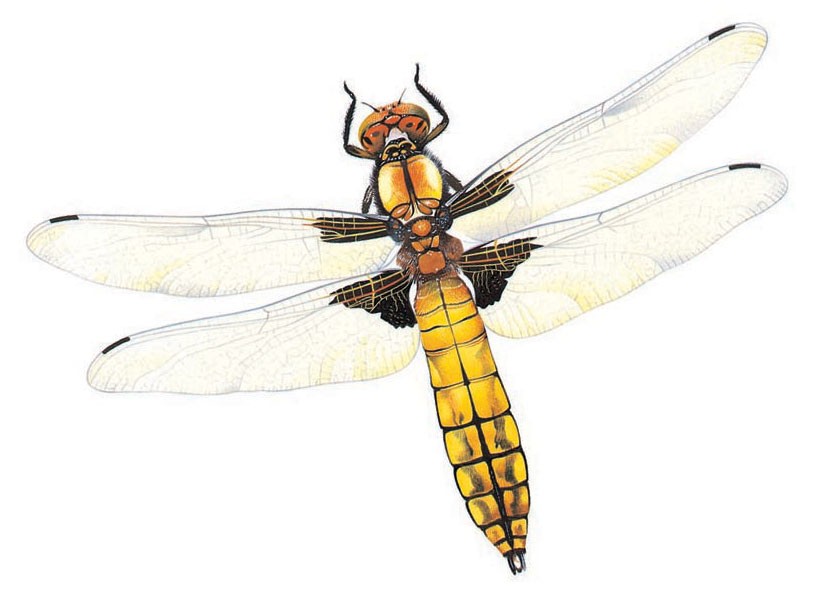
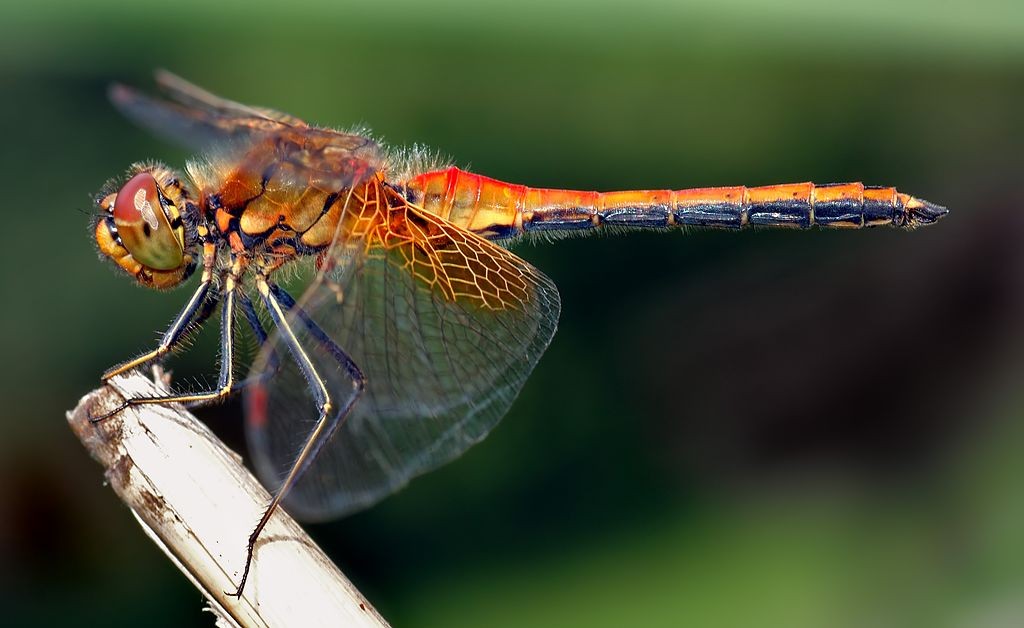
Dragonflies are fast-flying insects that live near rivers or ponds. They have long abdomens, large eyes and two pairs of transparent wings, of which the hind wings are broader. Their wings cannot be folded away, so they are always ready for flight. Dragonflies are among the quickest flyers. They are able to carry out split-second changes of pace and direction, hover and even fly backwards. Dragonflies feed on other insects, chasing them through the air and catching them with their legs, or plucking them off plants.
Nymphs
Dragonflies lay their eggs under the water, on the stalks of plants. The young dragonflies that hatch out are called nymphs. They live underwater for up to five years, hunting insects, worms, crustaceans, tadpoles and small fish. As they grow, nymphs shed their skin several times, going through several stages, called instars.
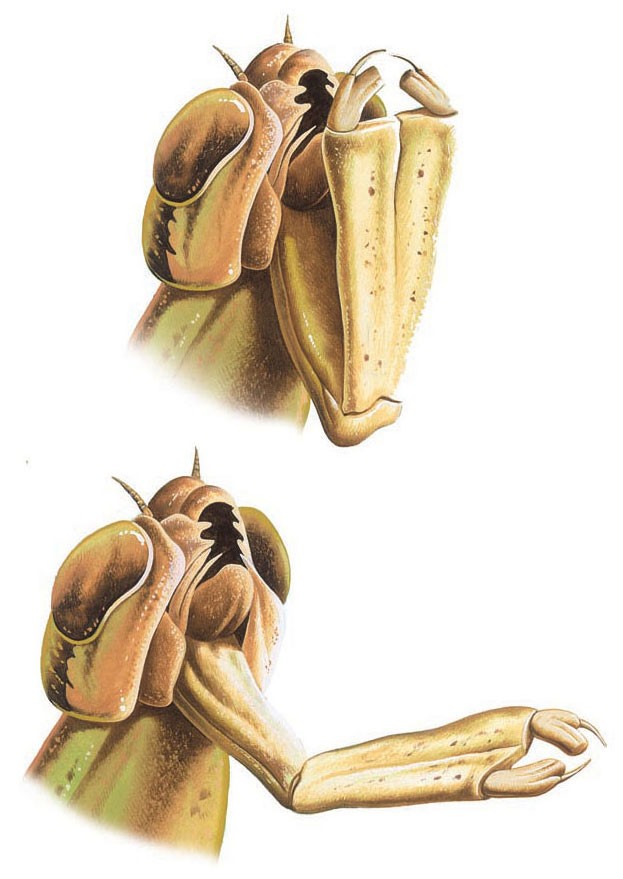
Dragonfly nymphs have a clawed “mask” on their faces, which they use to catch prey and pull it into their mouths. The mask is normally folded under the head and thorax when at rest. The nymph remains motionless, but when its prey draws near, the mask unfolds in an instant—about 25 milliseconds. The claws at the mask's tip grasp the prey.
Becoming an adult

The dragonfly nymph may spend as long as five years hunting underwater (1). Then, on a warm day, the nymph climbs out of the water and hauls itself out of its old skin for the last time (2). It emerges as a fully-grown dragonfly in its bright adult colours. It takes an hour or so for a dragonfly to gain strength and for its crumpled new wings to flatten out and harden (3). It flies away as soon as it can. It catches its insect prey while in flight, seizing its catch in its front limbs (4).
Nearly all the dragonfly's head is taken up by its huge compound eyes, each of which is made up of up to 30,000 lenses. It can see in nearly every direction, except directly behind.
Damselflies
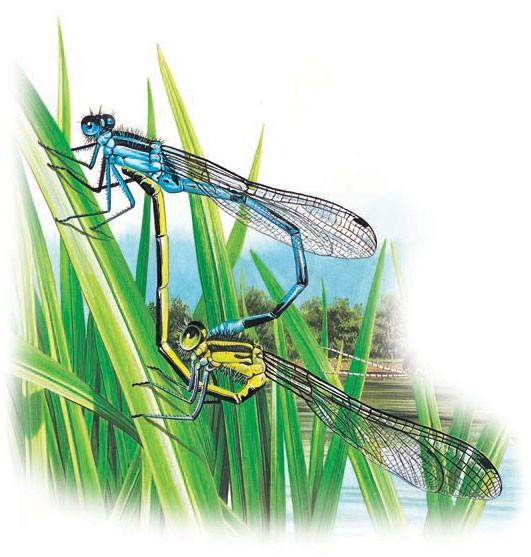
Damselflies are carnivorous insects, related to dragonflies, but smaller and weaker in flight. They can be distinguished from dragonflies as their wings are held alongside their bodies when at rest. They lay their eggs in slits cut into the stems of water plants. The nymphs have extendable "masks" just like dragonfly young. The adults feed on water fleas, mosquitoes and other small insects. Some tropical species feed on spiders, hovering over their webs and plucking them off.

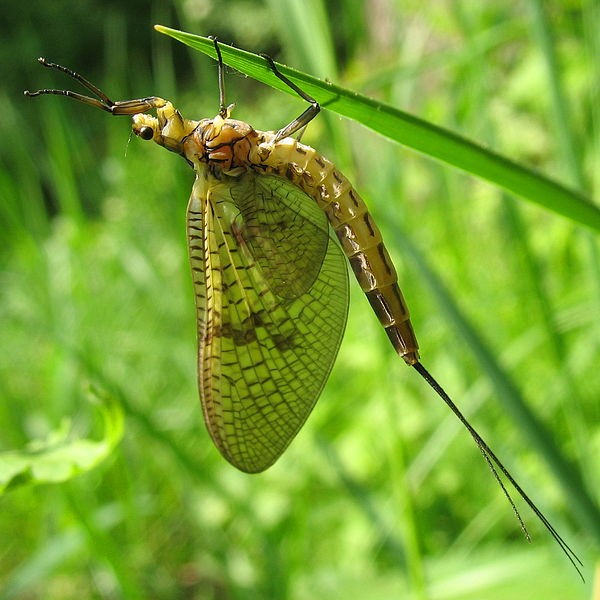
Mayflies
Mayflies are delicate plant-eating relatives of dragonflies. They may spend a year or more as nymphs, but their adult life only lasts a day or two. This is because they cannot feed; their only goal is to mate and lay eggs before they die. Mayflies emerge from streams, ponds and lakes in the early spring in their thousands. The males form large swarms; when a female flies into the swarm, she is seized by a male, who mates with her.
Consultant: Chris Jarvis
pics

Without in any way limiting Q-files Ltd’s exclusive rights under copyright, any use of this publication to “train” generative artificial intelligence (AI) technologies to generate text is expressly prohibited. Q-files Ltd reserves all rights to license use of this work for generative AI training and development of machine learning language models.